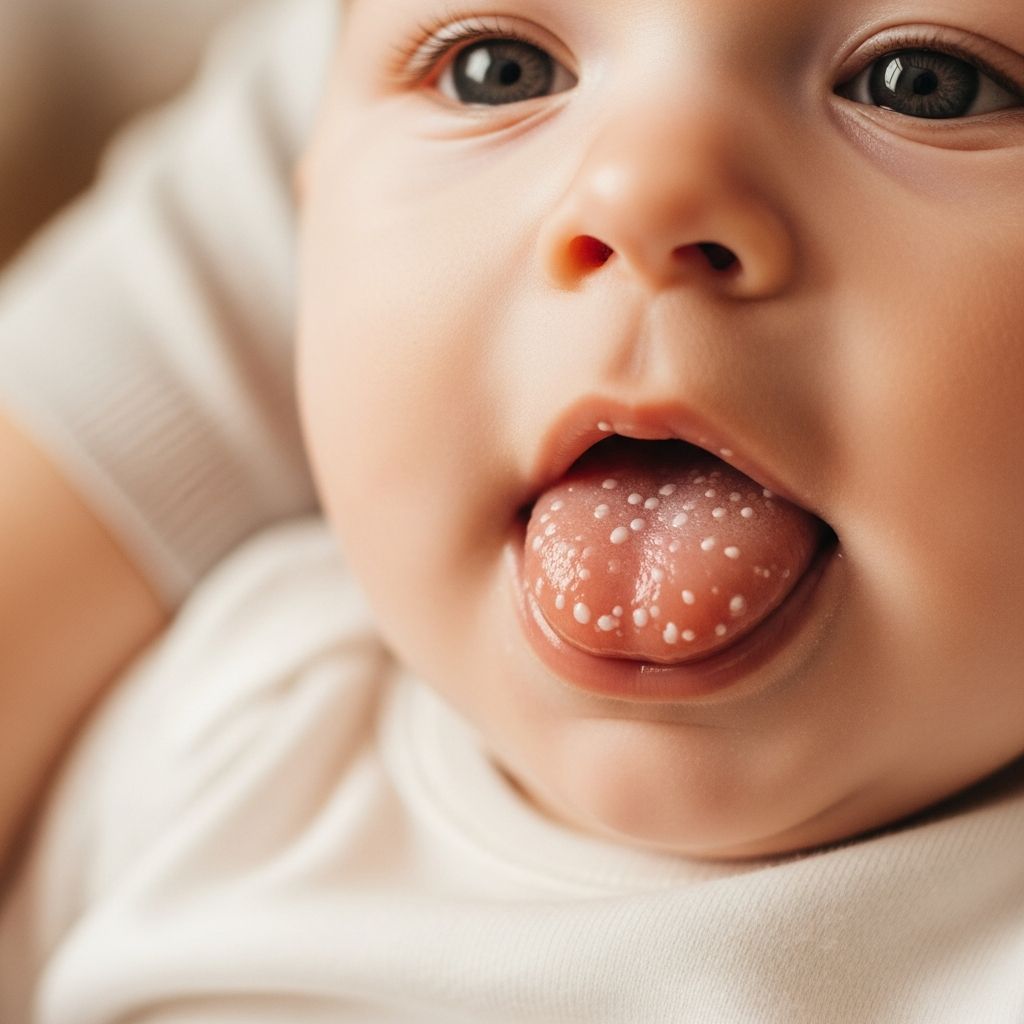
Oral thrush is a common mouth infection in babies and young children that can look alarming but is usually mild and treatable. It often clears with simple medicines and good home care once it is correctly identified and managed by a health professional.
What Is Oral Thrush?
Oral thrush is a yeast (fungal) infection inside the mouth, most often caused by an overgrowth of a fungus called Candida. This fungus normally lives harmlessly on the skin and in the mouth and gut, but when it grows too much, it can cause white patches and irritation.
In babies and toddlers, oral thrush most often appears on the tongue, inner cheeks, and sometimes the gums or roof of the mouth. It can make feeding uncomfortable and may cause fussiness, but many children still act fairly well otherwise.
Why Babies and Children Get Thrush
Babies have developing immune systems that are still learning to control everyday germs, including yeast. Because of this, they are more likely than older children and adults to get mouth infections like thrush.
Young children may also be at higher risk if they recently took antibiotics, use pacifiers for long periods, or have other health issues that affect the immune system or saliva flow.
Common Triggers and Risk Factors
- Immature immune system in newborns and young infants.
- Recent use of antibiotics that disturb the normal balance of germs in the mouth.
- Frequent or prolonged pacifier or bottle use, especially if nipples are not cleaned well.
- Dry mouth or reduced saliva, which makes it easier for yeast to grow.
- Underlying medical conditions that weaken the immune system (less common).
How Oral Thrush Looks and Feels
Because thrush can resemble milk residue or formula, it can be hard for parents to tell the difference at first glance. Paying attention to how easily the patches wipe away and whether the skin underneath looks sore can provide useful clues.
Some babies with thrush seem only mildly bothered, while others can be very fussy, especially during feeding times. Older toddlers may complain that their mouth hurts or that it is hard to eat.
Typical Signs and Symptoms
- White or creamy patches on the tongue, inner cheeks, gums, or roof of the mouth.
- Patches that do not wipe off easily and may leave red, irritated areas if rubbed.
- Baby pulling away from the breast or bottle, or refusing feeds due to discomfort.
- Increased fussiness, especially during or right after feeding.
- Cracked, red skin at the corners of the mouth in some children.
Thrush vs. Milk Residue
Milk or formula can also leave white coating in a baby’s mouth, which sometimes makes parents worry about thrush when no infection is present. There are a few practical differences that can help guide you, although only a health professional can make a firm diagnosis.
Milk usually wipes away more easily and does not leave red, irritated areas underneath. Thrush tends to cling more firmly to the lining of the mouth and may look thicker and more patchy.
| Feature | Oral Thrush | Milk / Formula Residue |
|---|---|---|
| How it looks | Thick, patchy white or creamy spots on cheeks, tongue, gums, or roof | Thin, uniform white coating mainly on the tongue |
| Wiping test | Hard to wipe off; may leave red, sore areas if rubbed | Usually wipes away easily with gentle cloth or gauze |
| Baby’s comfort | May cause pain or fussiness, especially when feeding | Usually no pain; baby feeds normally |
| Duration | Lasts several days or longer if untreated | Comes and goes quickly after feeding and mouth cleaning |
When to Call the Doctor
Any time you notice persistent white patches in your child’s mouth that do not wipe away easily, it is wise to contact your child’s healthcare provider. A quick exam can usually confirm whether it is thrush or something else.
You should seek prompt medical advice if your baby has trouble feeding, seems unusually sleepy or irritable, has a fever, or if you have concerns about dehydration, such as few wet diapers or a very dry mouth.
Red Flag Symptoms
- White mouth patches that last longer than a few days or seem to be spreading.
- Signs of pain while swallowing or refusing most feeds.
- Fever, poor weight gain, or less frequent wet diapers.
- Thrush that keeps returning soon after it clears.
How Doctors Diagnose Oral Thrush
Diagnosis is usually based on a visual exam of the mouth. The healthcare provider looks at the color, thickness, and location of the patches and may gently try to remove a small area to see how the skin underneath looks.
In healthy babies, further tests are rarely needed. In older children or in those with other health issues, the provider may ask more detailed questions or order additional tests to rule out other concerns.
Treatment Options for Oral Thrush
Most cases of thrush in healthy infants and children are managed with antifungal medications prescribed by a doctor. These medicines are designed to target yeast and help restore balance in the mouth.
The exact treatment depends on the child’s age, overall health, and how severe the infection appears. Some mild cases may clear on their own, but medical guidance helps ensure proper care and reduces the chance of recurrence.
Common Antifungal Medications
- Liquid antifungal solutions: Often given with a dropper or applicator and swished or painted onto the affected areas several times a day.
- Gels or lozenges (for older children): Used when a child is old enough to safely dissolve them in the mouth without choking.
- Oral antifungal tablets: Reserved for selected cases, usually in older kids or when topical treatments are not enough.
Thrush and Breastfeeding
Thrush can move back and forth between a breastfeeding baby’s mouth and the nursing parent’s nipples. When this happens, both may need treatment so they do not keep reinfecting each other.
Parents who notice shiny, itchy, or burning nipples, or sharp, shooting breast pain during or after feeds, should speak with a healthcare provider or lactation consultant. Treating both sides together often leads to quicker relief.
Care Tips for Nursing Parents
- Follow all treatment instructions for any prescribed breast creams or ointments.
- Change breast pads frequently and keep the nipple area as dry as comfortably possible.
- Wash bras, towels, and reusable breast pads in hot water and dry them thoroughly.
Comfort Measures at Home
While medicine works on the infection itself, you can take simple steps at home to help your child feel better. Gentle care and patience are especially important during feeds.
Always ask your child’s healthcare provider before starting any home remedy, particularly for newborns and very young infants.
Simple Soothing Strategies
- Offer smaller, more frequent feeds to reduce discomfort and give the mouth time to rest.
- Hold your baby in a calm, upright position and take breaks if they seem fussy or in pain.
- For older children, offer cool (not frozen) soft foods or sips of cool water if appropriate for age.
Keeping Bottles and Pacifiers Clean
Because yeast can live on damp surfaces, careful cleaning of items that go into your child’s mouth is an important part of managing and preventing thrush. This includes bottle nipples, pacifiers, teething toys, and breast pump parts.
Good hygiene does not mean sterilizing endlessly, but it does mean following clear, consistent cleaning routines that fit your child’s age and your healthcare provider’s recommendations.
Hygiene Checklist for Parents
- Wash bottle parts, pacifiers, and teethers with warm soapy water and rinse well after each use.
- Allow items to air-dry completely before storing or using them again.
- Replace pacifiers and worn bottle nipples regularly, especially during or after a thrush episode.
- Clean breast pump parts according to the manufacturer’s instructions after every pumping session.
Can Oral Thrush Come Back?
Some babies and children experience more than one episode of oral thrush, especially in the first months of life. This can happen when risk factors remain or when treatment is stopped too soon.
If thrush returns frequently, the healthcare provider may review recent medications, feeding habits, and hygiene practices to look for patterns that might be encouraging yeast overgrowth.
Prevention Tips for Parents and Caregivers
Prevention focuses on supporting a healthy balance of germs in the mouth and reducing the conditions that help yeast grow. Simple daily habits often make a meaningful difference.
While thrush cannot always be prevented, especially in very young infants, these steps may lower the chance or severity of future outbreaks.
Daily Habits That May Help
- Gently clean inside your baby’s mouth with a soft, clean cloth or gauze as recommended by your healthcare provider.
- Limit how long a pacifier or bottle stays in the mouth once feeding is done.
- For older children, encourage regular toothbrushing with a soft brush and age-appropriate toothpaste.
- Avoid sharing utensils, cups, or toothbrushes among family members.
Frequently Asked Questions About Oral Thrush
Is oral thrush dangerous?
In most healthy babies and children, oral thrush is not dangerous and is considered a mild infection. It can be uncomfortable, however, so evaluation and proper treatment are important to help your child feed and feel better.
How long does thrush usually last?
With appropriate antifungal medicine and good mouth care, many cases improve noticeably within several days. Your child’s healthcare provider will tell you how long to continue treatment, which often extends a bit beyond the point when patches visibly clear.
Can I keep breastfeeding if my baby has thrush?
In most situations, breastfeeding can and should continue, but you may need treatment as well if there are signs of yeast on your nipples or in breast tissue. Talk with your baby’s doctor and your own healthcare provider to coordinate a plan that supports both effective treatment and your feeding goals.
Will thrush affect my child’s long-term health?
For healthy children, an episode of oral thrush does not usually cause lasting problems. Once the infection is treated and any underlying triggers are addressed, your child’s mouth should return to normal.
When should I seek urgent care?
Seek immediate medical help if your child is very drowsy, has trouble breathing, shows signs of severe dehydration, develops a high fever, or if you are worried that the infection is spreading beyond the mouth. Trust your instincts and contact a healthcare professional whenever you feel unsure.
Supporting Your Child Through Thrush
Seeing white patches in your baby’s mouth can be unsettling, but thrush is a well-known condition with established treatments. Staying calm, following medical advice, and offering extra comfort during feeds can make a big difference for both you and your child.
By maintaining good hygiene, watching for early signs, and working closely with your child’s healthcare provider, you can help manage oral thrush effectively and reduce the chances of it returning.