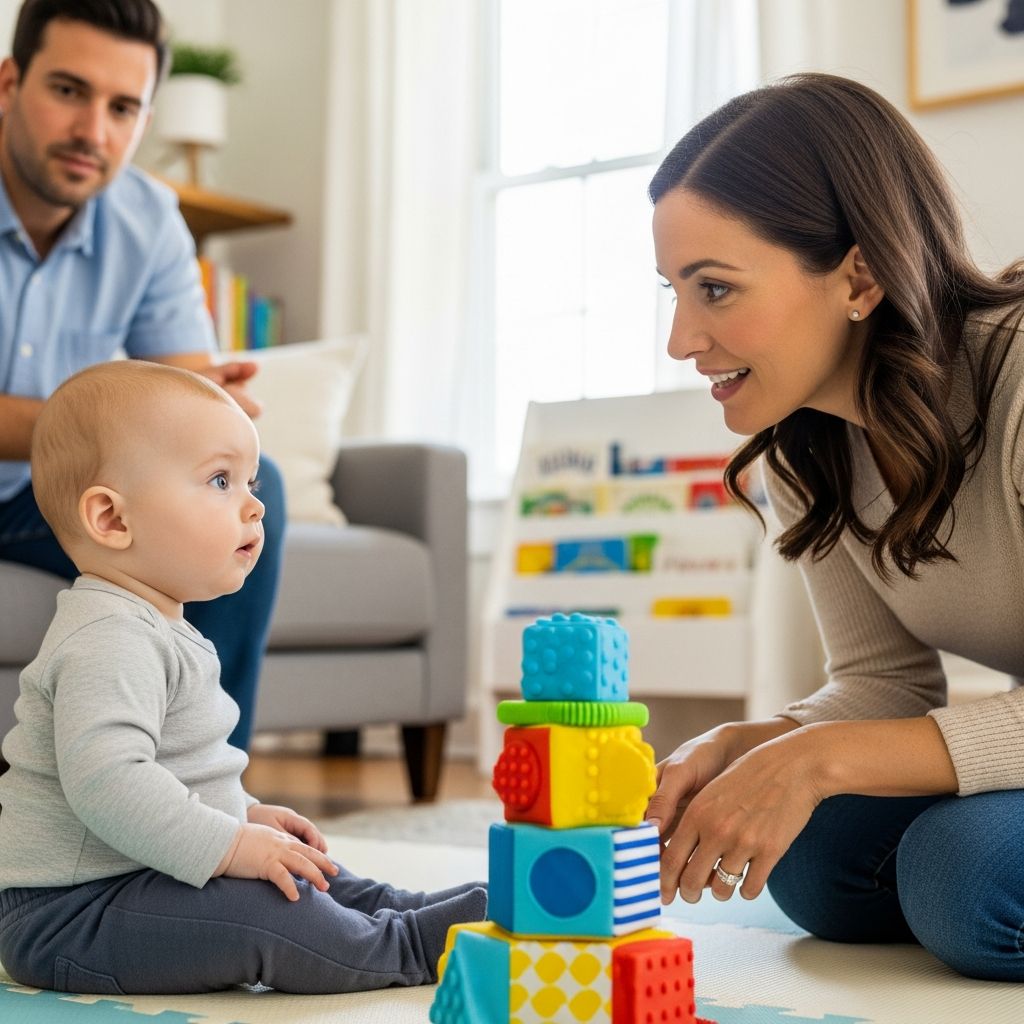
During the transformative period from 9 to 15 months, infants begin actively seeking emotional signals from caregivers to make sense of their surroundings. This process, known as social referencing, marks a pivotal shift in emotional and social growth, enabling babies to regulate their actions based on trusted adults’ reactions.
Defining Social Referencing: A Core Infant Skill
Social referencing occurs when infants glance at parents or primary caregivers in uncertain or novel scenarios to gauge how to respond. Rather than reacting instinctively, babies use facial expressions, vocal tones, and body language as guides for their own emotions and behaviors. This skill typically solidifies between 8 and 12 months, peaking around 15 months, as infants become more mobile and exploratory.
Research shows that by 10-13 months, infants not only look to parents but also adjust their toy interactions based on observed emotions. For instance, fearful parental reactions prompt hesitation, while joyful ones encourage engagement. This regulatory function underscores social referencing’s role in fostering safe decision-making.
The Developmental Timeline: From Emergence to Mastery
Social referencing evolves progressively. Infants aged 6-9 months show initial glances, often non-selective, toward any part of the caregiver during positive affects. By 10-13 months, looks become targeted at faces, especially during fearful stimuli, with behavioral inhibition emerging.
- 6-9 Months: Broad looks to caregivers, primarily in response to joy or neutral cues.
- 10-13 Months: Selective facial referencing; initial toy behavior regulation.
- 14-22 Months: Full inhibition before acting, preference for positively signaled objects.
Mobility milestones like crawling (around 8-9 months) heighten this need, as independent movement exposes infants to more unknowns, prompting frequent ‘check-ins’ with caregivers. Transition to walking may temporarily reduce referencing in favor of social bidding.
How Caregivers Shape Infant Responses
Caregivers serve as emotional anchors. Infants interpret joy as safety signals and fear as warnings, aligning their affects and actions accordingly. Multimodal cues (voice plus face) influence younger infants more than visual alone, maturing to facial reliance by 12 months.
| Age Group | Preferred Cue Type | Behavioral Outcome |
|---|---|---|
| 6-9 Months | Positive affect (any look) | Increased exploration |
| 10-13 Months | Fearful faces/voice | Toy hesitation |
| 14+ Months | Facial fear | Inhibition + avoidance |
This table illustrates cue specificity growth, drawn from longitudinal studies. Secure attachment enhances referencing efficacy, linking to better toddler social skills.
Key Benefits for Emotional and Social Growth
Building Emotional Regulation
Social referencing equips infants to self-regulate by modeling caregiver responses. A fall eliciting calm parental reassurance teaches resilience; exaggerated concern amplifies distress. This extends to understanding others’ emotions, foundational for empathy.
Enhancing Decision-Making Foundations
In ambiguous settings, like novel toys, infants seek approval before proceeding, building trust in guidance. Dr. Joseph Campos’ visual cliff experiments demonstrated infants avoiding ‘fearful’ drops after maternal warnings, even post-crawling experience.
Supporting Joint Attention and Imitation
Interwoven with joint attention—following caregiver gaze to shared foci—social referencing advances social cognition. By 12 months, infants imitate voluntarily and reference socially, strengthening bonds. CDC milestones note 15-month-olds copying peers and showing objects, reflecting these skills.
Observing Social Referencing in Everyday Moments
Daily life brims with referencing opportunities:
- Baby encounters a stranger: Looks to parent’s smile for reassurance.
- New toy activates: Checks joyful reaction before grabbing.
- Loud noise startles: Seeks calm tone to settle.
At 15 months, milestones include clapping excitedly, hugging toys, and affectionate displays, all potentially modulated by caregiver cues.
Practical Strategies for Parents and Caregivers
Amplify healthy development through intentional cues:
- Exaggerate Expressions: Use clear, close-up faces and tones for clarity.
- Respond Consistently: Match reactions to true feelings to build trust.
- Encourage Exploration: Positive signals during play promote confidence.
- Model Empathy: Verbalize emotions (“Mommy’s happy!”) alongside faces.
During joint activities like peek-a-boo (12 months) or peer copying (15 months), reinforce with affirming responses. Avoid over-dramatizing to prevent undue caution.
Potential Challenges and Red Flags
While normative, atypical patterns warrant attention. Infrequent referencing by 12 months may signal attachment issues or developmental delays. Excessive caution post-negative cues could indicate anxiety. Securely attached infants show robust skills, predicting positive outcomes. Consult professionals if milestones lag, per CDC guidelines.
Frequently Asked Questions (FAQs)
What age does social referencing typically begin?
It emerges around 8-10 months, strengthening through 15 months as infants seek caregiver cues in novel situations.
Why do crawling infants reference more?
Crawling increases independence and exposure to distant stimuli, heightening the need for distal emotional guidance.
Can social referencing affect attachment?
Yes, it thrives in secure attachments, correlating with better social skills and trust in relationships.
How can parents encourage it?
Use expressive faces, consistent tones, and positive play responses to model emotional navigation.
Is lack of social referencing concerning?
By 12-15 months, minimal referencing may indicate delays; monitor alongside CDC milestones like showing objects or affection.
Long-Term Impacts on Child Development
Social referencing lays groundwork for empathy, theory of mind, and peer relations. Infants mastering it by 15 months engage more in pretend play and exhibit trust. As toddlers, they navigate groups adeptly, copying behaviors and sharing joys. This early skill influences lifelong emotional intelligence, underscoring caregiver roles in nurturing it.
References
- The development of social referencing — Hornik J, Riesenhoover N. 1987-01-01. https://pubmed.ncbi.nlm.nih.gov/3168639/
- 4.4 Social Development in Infants and Toddlers — OpenStax. 2023. https://openstax.org/books/lifespan-development/pages/4-4-social-development-infants-and-toddlers
- Social Referencing during Infancy and Early Childhood across Cultures — Fawcett C, Liszkowski U. 2015. https://pure.mpg.de/rest/items/item_1835620_3/component/file_2628556/content
- What Is Social Referencing in Child Development? — Rasmussen University. 2023. https://www.rasmussen.edu/degrees/education/blog/what-is-social-referencing-in-child-development/
- Social and Emotional Development in Infancy — ROTEL Pressbooks. 2023. https://rotel.pressbooks.pub/whole-child/chapter/social-and-emotional-development-in-infancy/
- Milestones by 15 Months — Centers for Disease Control and Prevention (CDC). 2023-11-21. https://www.cdc.gov/act-early/milestones/15-months.html