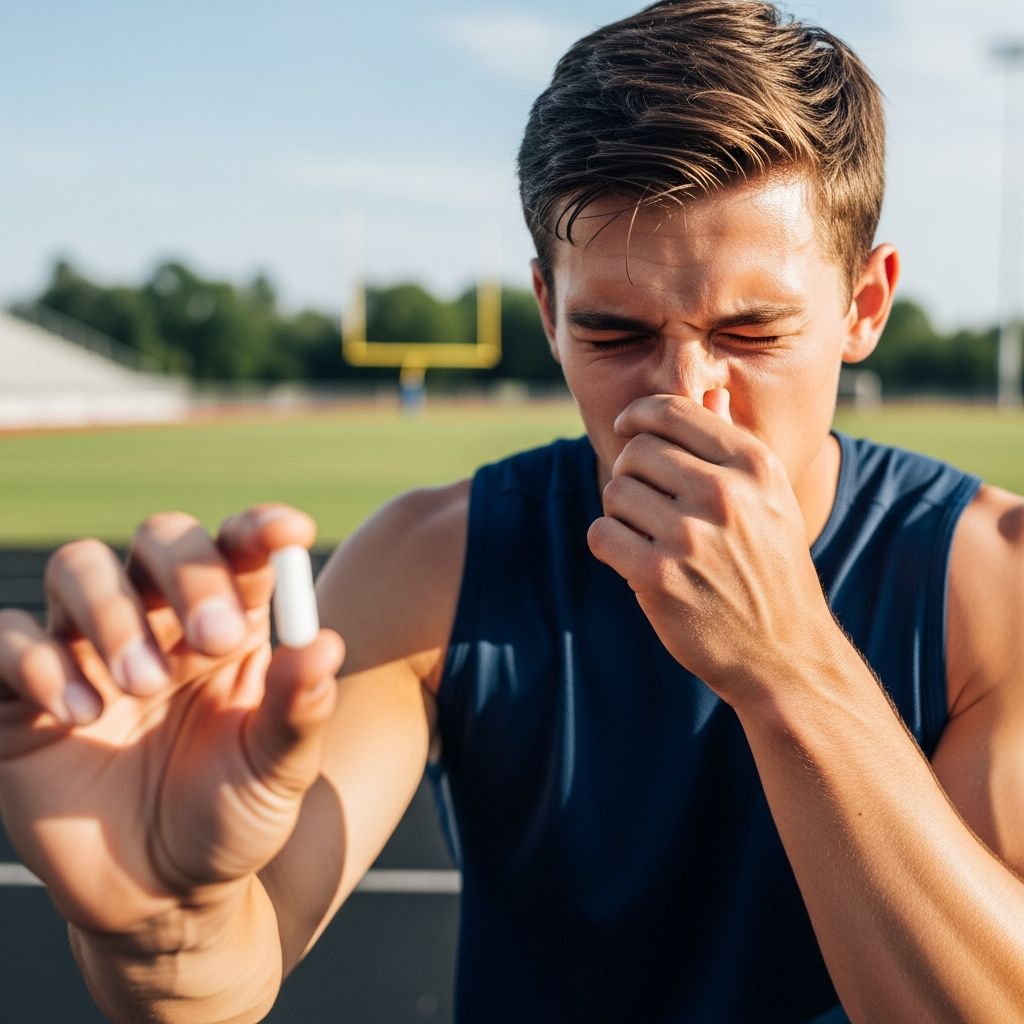
Smelling salts, packets of ammonia gas popular among athletes seeking a quick alertness boost, are gaining traction among teenagers in high school sports. While they deliver a sharp sensory jolt, medical experts highlight substantial health concerns, particularly for developing bodies.
What Are Smelling Salts and How Do They Affect the Body?
These inhalants release ammonia gas upon activation, irritating the nasal passages and trigeminal nerve to trigger a reflexive deep breath and surge in heart rate. This mimics an adrenaline rush, heightening perceived arousal without delivering actual physiological strength gains.
The pungent odor, akin to strong cleaning chemicals, causes immediate tearing eyes, coughing, and a burning sensation in the airways. For short exposures in healthy adults, effects are typically transient, but repeated or intense use can lead to more severe outcomes.
- Immediate physiological response: Involuntary inhalation, elevated blood pressure, and brief focus enhancement.
- No proven ergogenic aid: Studies confirm no improvements in strength, speed, or endurance metrics.
Why Teens in Sports Are Drawn to Ammonia Inhalants
High school football, wrestling, and weightlifting teams increasingly incorporate smelling salts into routines, inspired by professional athletes. Teens report using them to combat fatigue during practices or before lifts, believing they sharpen mental edge under pressure.
Social media amplifies this trend, with videos showcasing dramatic reactions fueling curiosity. However, unlike pros with medical oversight, adolescents lack the maturity to gauge safe usage limits, heightening vulnerability.
| Sport | Common Usage Scenario | Reported Motivation |
|---|---|---|
| Football | Pre-play or post-hit recovery | Quick energy jolt |
| Weightlifting | Before heavy sets | Enhanced focus |
| Wrestling | Match preparation | Fatigue resistance |
Immediate Health Hazards of Inhaling Ammonia
Direct exposure risks airway inflammation, headaches, dizziness, and nausea. Teens with undiagnosed asthma or allergies face exacerbated breathing difficulties, potentially triggering wheezing or bronchospasm.
A documented case involved a powerlifter suffering severe allergic reaction post-inhalation: runny nose progressed to respiratory distress requiring emergency epinephrine. Such incidents underscore ammonia’s irritant potency.
- Respiratory effects: Coughing, throat burn, potential mucous membrane damage.
- Neurological: Dizziness, migraines in susceptible individuals.
- Ocular: Watery eyes, temporary vision blur.
Long-Term Concerns for Adolescent Users
Chronic low-dose exposure’s cumulative impact remains understudied, but ammonia’s toxicity raises alarms for lung tissue and nasal epithelium over time. No longitudinal data confirms safety in youth, where respiratory systems are still maturing.
Peer-reviewed analysis deems ammonia inhalants offer “limited benefit” for performance with no medical utility for head trauma recovery. Repetitive use may foster psychological dependence, undermining natural arousal techniques.
Dangerous Interaction with Concussions and Injuries
A critical peril lies in smelling salts masking concussion symptoms. The reflexive jolt can spur movement in dazed athletes, complicating accurate injury assessment and risking secondary brain trauma.
The NFL banned team-provided salts in 2024, citing FDA discouragement and lack of benefits alongside downsides like symptom concealment. College and high school programs echo this caution, prioritizing neurological safety.
“Using smelling salts post-impact can mimic recovery, delaying proper concussion protocols and worsening outcomes.” — Dr. Allen Sills, NFL Chief Medical Officer
Regulatory Stance and Sports Organization Policies
Not listed as banned substances by NCAA or Olympics, yet FDA warns against unproven energy claims. Professional leagues restrict access to mitigate risks, influencing youth trends variably.
Athletic trainers advocate education on alternatives, emphasizing nutrition, hydration, and rest over chemical stimulants. Weekly player briefings on safe practices are standard in proactive programs.
Safer, Evidence-Based Alternatives for Performance
Teens can achieve sustainable boosts through proven methods without health trade-offs:
- Caffeine: 3-6mg/kg bodyweight from coffee or gels enhances endurance safely.
- Proper warm-ups: Dynamic stretches improve neuromuscular readiness.
- Mental training: Visualization and breathing exercises build focus resilience.
- Sleep and nutrition: 8-10 hours nightly plus balanced carbs/protein fuel recovery.
Research favors these over ammonia, with measurable gains in alertness and output minus irritant effects.
Guidance for Parents, Coaches, and Teens
Parents should discuss risks openly, monitoring for usage signs like persistent coughing or ampule trash. Coaches must enforce no-tolerance policies during events, modeling evidence-based training.
Consult physicians before any supplement trial, especially with pre-existing conditions. Empowering youth with knowledge fosters informed choices prioritizing long-term health over short bursts.
Frequently Asked Questions
Are smelling salts banned in high school sports?
No universal ban exists, but many districts discourage them due to safety concerns. Check local athletic association rules.
Can smelling salts improve strength or speed?
No, studies show no objective enhancements; benefits are perceptual only.
What if a teen has asthma?
Strictly avoid—ammonia can provoke severe attacks.
How to recognize overuse symptoms?
Watch for chronic headaches, nasal irritation, or reliance before every activity.
What’s the NFL’s position?
Prohibited team provision since 2024 to prevent injury masking.
References
- Smelling Salts for Athletes: Do They Work and Are They Safe? — Hope Not Nope. 2025. https://hopenotnope.org/smelling-salts-for-athletes-do-they-work-and-are-they-safe/
- What happens when you inhale smelling salts, and is it safe? — Chemical & Engineering News (C&EN). 2025-08. https://cen.acs.org/safety/happens-inhale-smelling-salts-safe/103/web/2025/08
- Smelling salts may have health risk for football players — WDIO.com. 2024. https://www.wdio.com/sports/smelling-salts-may-have-health-risk-for-football-players/
- Are Smelling Salts Safe? — WebMD. 2025. https://www.webmd.com/brain/are-smelling-salts-safe
- Are Smelling Salts Bad for You? — Poison Control. 2025. https://www.poison.org/articles/are-smelling-salts-bad-for-you
- Ammonia Inhalants: Use, Misuse, and Role in Sports Performance — PubMed (PMID: 38148665). 2023-12-20. https://pubmed.ncbi.nlm.nih.gov/38148665/
- Ammonia Inhalants: Use, Misuse, and Role in Sports Performance (PDF) — SimpleVAS. 2025-04. https://www.simplevas.net/wp-content/uploads/2025/04/Ammonia-Inhalants-Use-Misuse-and-Role-in-Sports-Performance.pdf