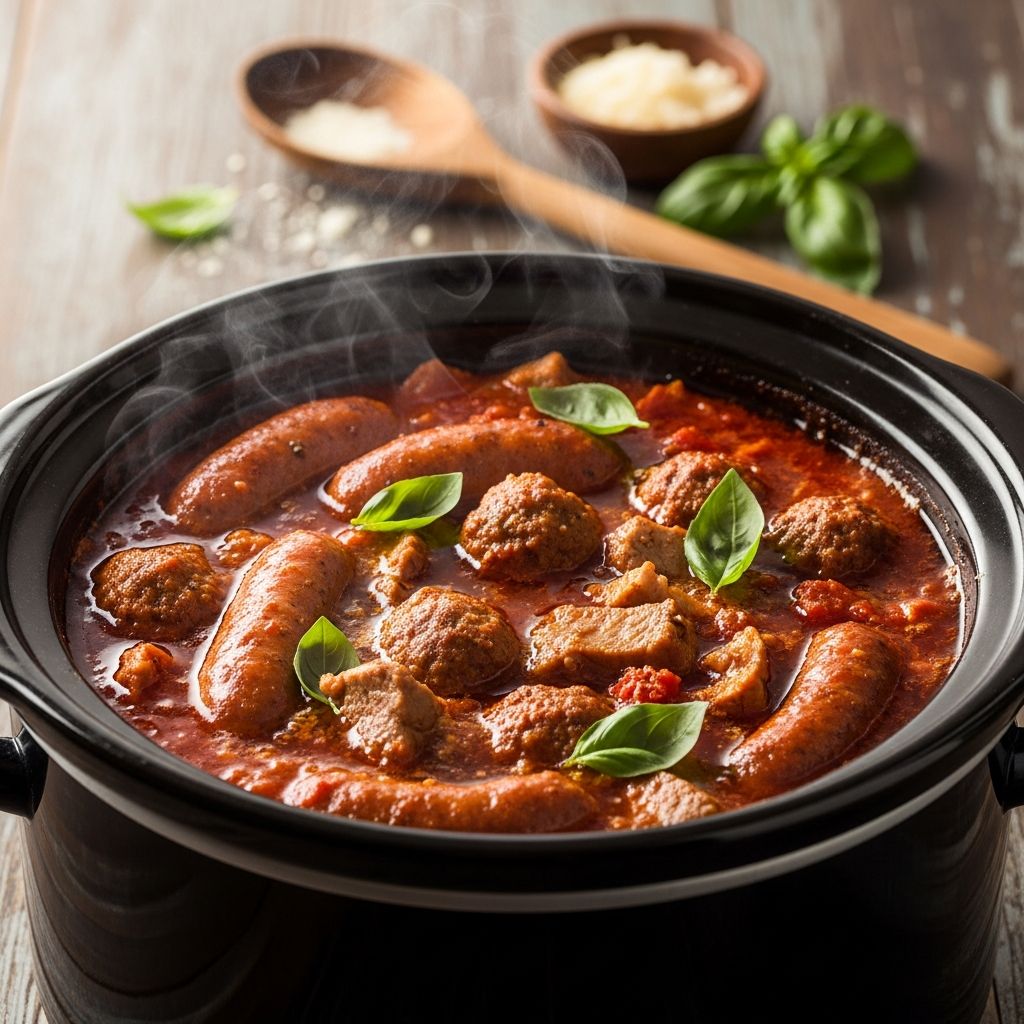
Slow cooker Italian Sunday gravy is the kind of meal that makes the whole house smell like comfort and warmth. Rich tomato sauce, slow-simmered meat, and plenty of Italian sausage come together in one pot, turning everyday ingredients into a special, hearty dinner.
This article walks through everything needed to create a deeply flavored, sausage-studded gravy in the slow cooker, from choosing ingredients and layering flavors to serving suggestions, storage tips, and answers to common questions. The goal is simple: big flavor, low effort, and a recipe that fits both busy weeknights and relaxed Sunday suppers.
What Is Italian “Gravy”?
In many Italian-American homes, the word “gravy” is used for a tomato-based sauce loaded with meat that simmers for hours. While it looks similar to a marinara or meat sauce, it usually includes several types of meat and cooks longer, giving it a deeper, richer flavor.
The slow cooker version captures that all-day simmer without needing constant attention on the stove. Instead of hovering over a pot, everything goes into the slow cooker to gently bubble away while other things on the to-do list get handled.
Why Make It in a Slow Cooker?
A slow cooker is perfect for this kind of recipe because the long, gentle cooking time allows tough cuts of meat to become tender and lets the flavors meld into a silky, cohesive sauce. It also keeps the stove free and the kitchen cooler compared to an all-day simmer.
- Hands-off cooking: Once prepped, the slow cooker does most of the work.
- Reliable results: Low, steady heat helps prevent scorching or sticking.
- Flexible timing: The gravy can hold on the warm setting, waiting for everyone to be ready to eat.
Core Ingredients and How to Choose Them
The beauty of Sunday gravy is that it is both generous and flexible. There is a basic structure, but there is also plenty of room to customize based on what is on hand or on sale.
Tomatoes and Liquids
A good gravy starts with good tomatoes. Look for high-quality canned crushed tomatoes or tomato passata for a smooth texture, and diced tomatoes if some chunkiness is preferred. A bit of tomato paste boosts richness and helps the sauce cling to pasta.
- Crushed or passata for body and smoothness.
- Diced tomatoes for texture and visible tomato pieces.
- Tomato paste for concentrated flavor and thickness.
Meats and Sausages
Sausage is the star here, but adding one or two other meats layers in even more depth. A combination of sausage, beef, and pork is traditional, though there is no single “right” mix.
- Italian sausage: Use sweet, hot, or a mix. Links hold shape; bulk sausage breaks into crumbles.
- Beef: Chuck roast, short ribs, or meatballs add richness and a different texture.
- Pork: Country-style ribs or pork shoulder become spoon-tender and shred nicely into the sauce.
Aromatics and Seasoning
Onion, garlic, and herbs are essential for building flavor. Sautéing them briefly before they enter the slow cooker helps mellow sharpness and adds sweetness.
- Yellow or sweet onion, diced.
- Plenty of garlic, minced or thinly sliced.
- Dried oregano and basil for slow-cooked flavor; fresh basil for finishing.
- Salt, freshly ground black pepper, and a pinch of red pepper flakes if some heat is welcome.
Optional Flavor Boosters
A few small additions can dramatically boost flavor without complicating the recipe. These are optional but highly recommended.
- Red wine for depth and complexity (cook off the alcohol in the pan first).
- A piece of Parmesan rind to simmer in the sauce for a nutty, savory note.
- A touch of sugar, only if the tomatoes taste very acidic.
Step-by-Step: Building Slow Cooker Italian Gravy
While this is a slow cooker recipe, a bit of stovetop prep makes a big difference. Browning meat and softening aromatics before they go into the slow cooker creates a more layered, restaurant-style flavor.
1. Brown the Sausage and Meats
Start by searing the sausage and any additional meats in a hot skillet with a thin film of oil. Allow each side to develop a deep brown crust before turning. This browning step builds flavor through caramelized bits, which will later be deglazed into the sauce.
- Work in batches to avoid crowding the pan.
- Transfer browned meat to the slow cooker, leaving drippings in the skillet.
2. Sauté Onions, Garlic, and Herbs
Using the same pan, add onions and cook until they turn soft and translucent, scraping up browned bits from the bottom. Stir in garlic for the last minute so it softens without burning. Dried herbs can also be briefly warmed in the pan to release their aroma.
Once fragrant, these aromatics go into the slow cooker on top of the browned meats, bringing along all the flavorful pan drippings.
3. Build the Tomato Mixture
In a bowl or directly in the slow cooker, combine crushed tomatoes, diced tomatoes, and tomato paste. If using wine, pour it into the still-warm skillet to deglaze, then add that liquid to the tomatoes. Season with salt, pepper, and optional red pepper flakes.
- Taste the tomato mixture before cooking to adjust seasoning.
- Add the Parmesan rind now so it has time to infuse the sauce.
4. Slow Cook Until Tender
Pour the tomato mixture over the meats and aromatics in the slow cooker, ensuring everything is mostly submerged. Cover and cook on low for 7 to 9 hours, or on high for about 4 to 5 hours, depending on the slow cooker and the cut of meat.
The gravy is ready when the meat pulls apart easily with a fork and the sauce has thickened into a glossy, rich consistency.
5. Finish and Adjust
Before serving, remove any bones, the Parmesan rind, and excess fat from the surface. Shred larger pieces of meat and slice sausages if needed. Stir everything back into the sauce so each bite contains a mix of meat and gravy.
- Stir in chopped fresh basil or parsley right before serving for a fresh, herbal lift.
- Adjust salt and pepper only at the end, after the sauce has concentrated.
Sample Ingredient Blueprint
The amounts below provide a rough guideline for building a family-sized batch of gravy. Adjust quantities according to appetite and slow cooker size.
| Component | Suggested Amount | Notes |
|---|---|---|
| Italian sausage (links or bulk) | 900 g (about 2 lb) | Mix of sweet and hot adds complexity. |
| Additional meat (beef or pork) | 450–900 g (1–2 lb) | Chuck roast, ribs, or meatballs work well. |
| Crushed or passata tomatoes | 1.4–1.8 kg (48–64 oz) | Use more for extra sauce. |
| Diced tomatoes | 400–800 g (14–28 oz) | Optional for texture. |
| Tomato paste | 2–3 tbsp | Deepens color and flavor. |
| Onion | 1 large | Finely diced for even cooking. |
| Garlic | 4–6 cloves | Adjust to taste. |
| Dried herbs | 2–3 tsp total | Oregano, basil, and thyme are classic. |
| Red wine (optional) | 120–180 ml (1/2–3/4 cup) | Cook off briefly in the pan first. |
| Parmesan rind (optional) | 1 piece | Remove before serving. |
Serving Ideas and Pairings
Once the gravy is ready, it can be served in several ways, making it a versatile recipe that stretches over multiple meals. Choose one main style for the first night, and transform leftovers later in the week.
- Classic pasta dinner: Toss hot pasta with some sauce, then top with sliced sausage and shredded meat.
- Polenta bowl: Spoon gravy over creamy polenta for a cozy alternative to pasta.
- Sub sandwiches: Pile sausage and sauce into toasted rolls with melted mozzarella or provolone.
- Baked casserole: Combine cooked pasta and gravy in a baking dish, top with cheese, and bake until bubbling.
Make-Ahead, Freezing, and Leftovers
Sunday gravy is a natural make-ahead meal. The flavor actually improves after a night in the refrigerator as the ingredients rest and meld together.
- Refrigerating: Cool completely, then store in airtight containers for up to 4 days. Remove solidified fat from the top before reheating if desired.
- Freezing: Divide into meal-sized portions and freeze for up to 3 months. Leave a bit of headspace in containers to allow for expansion.
- Reheating: Warm gently on the stove over low heat or in the microwave, adding a splash of water if the sauce has thickened too much.
Customization Ideas and Variations
Every household ends up putting its own spin on gravy. Once the basic method is understood, it becomes easy to adapt the recipe to specific tastes, dietary needs, or what the pantry offers.
- Spicier gravy: Use mostly hot Italian sausage and add extra red pepper flakes.
- Milder, kid-friendly version: Stick with sweet sausage, reduce garlic slightly, and skip red pepper flakes.
- Vegetable boost: Add sliced bell peppers, mushrooms, or finely diced carrots and celery for a heartier, more vegetable-forward sauce.
- Richer texture: Stir in a small knob of butter or drizzle of good olive oil at the end.
Frequently Asked Questions
Can this be made without browning the meat first?
It is possible to place raw sausage and meat directly into the slow cooker with the other ingredients, but browning first creates deeper, more complex flavor and better texture. Skipping that step simplifies the process but loses some of the caramelized notes that make the gravy special.
How can the sauce be thickened if it is too thin?
If the sauce is thinner than desired at the end of cooking, remove the lid and let it cook on high for 20 to 30 minutes, stirring occasionally, so excess liquid can evaporate. Another option is to blend a small ladle of sauce (without meat) until smooth, then stir it back in to thicken naturally.
Is it safe to cook raw sausage in the slow cooker?
Yes, raw sausage cooks safely in the slow cooker as long as the appliance reaches and maintains proper temperatures. However, pre-browning gives better flavor and color, and also renders some of the fat so the finished sauce is less greasy.
What type of pasta works best?
Hearty shapes that can hold chunky sauce work especially well, such as rigatoni, penne, ziti, or thick spaghetti. Short, ridged shapes grip the gravy and capture bits of meat in their hollows.
Can this recipe be adapted for a smaller slow cooker?
Absolutely. Simply scale down all ingredients proportionally so the cooker is between half and three-quarters full. Cooking time usually remains similar, but it is wise to check early the first time and adjust as needed.
Final Tips for Success
Slow cooker Italian Sunday gravy rewards a few basic habits: taste and adjust seasoning at the end, remove excess fat for a cleaner flavor, and give the sauce time to rest whenever possible. Most importantly, treat the recipe as a flexible template rather than a rigid formula.
With this approach, a pot of sausage-rich gravy can become a dependable favorite, ready for busy weekdays, relaxed weekends, and everything in between.