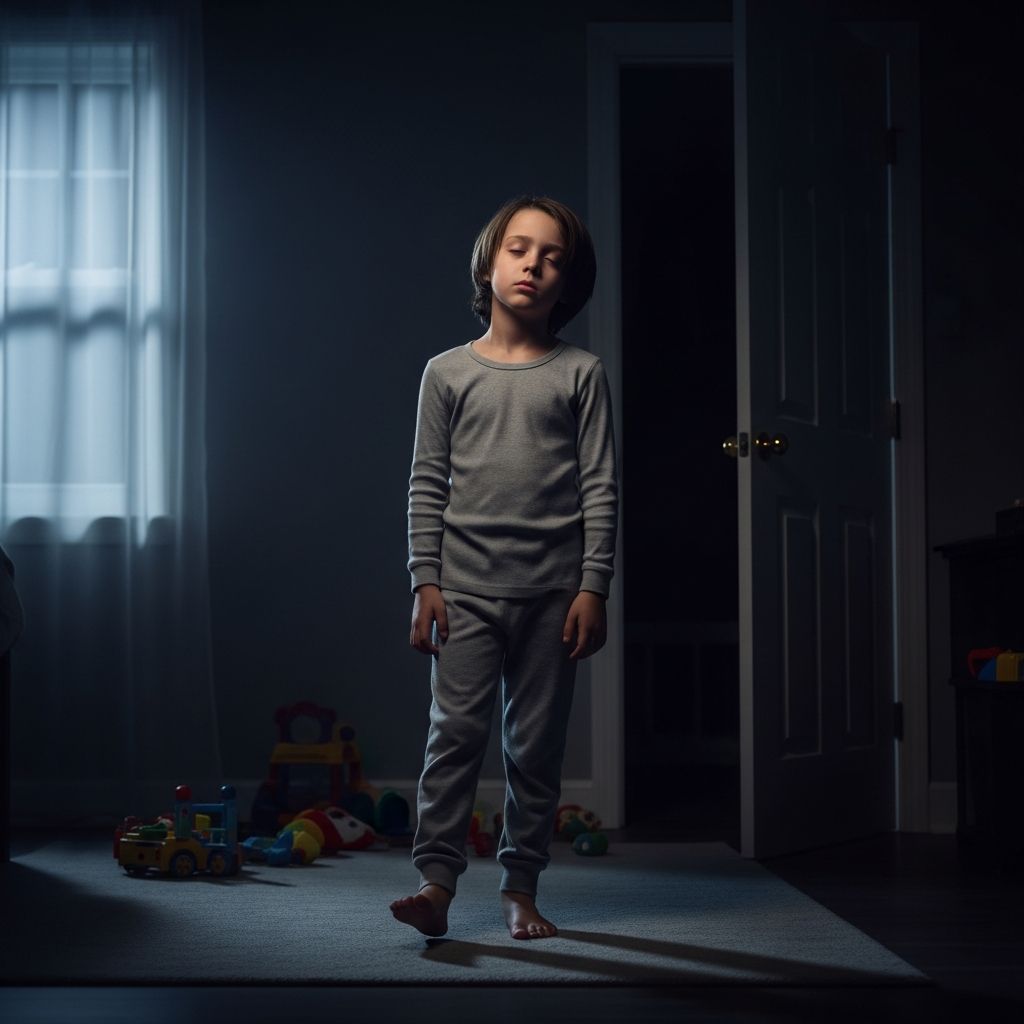
Sleepwalking, medically termed somnambulism, involves a child rising from bed and performing activities while remaining in a state of deep sleep, unaware of their actions. This parasomnia affects up to 15% of children at some point, typically emerging between ages 3 and 8, and often resolves by adolescence without intervention.
Recognizing the Signs of Sleepwalking
Children who sleepwalk usually initiate episodes within the first few hours of sleep, during non-REM deep sleep stages. They may sit up, walk around the room or house, or engage in simple tasks like opening doors or rearranging objects, all with eyes open but glassy and unfocused.
Key indicators include:
- Slow, clumsy movements without full coordination.
- Incoherent mumbling or unresponsive to questions.
- Returning to bed independently or needing gentle guidance.
- Little to no recollection upon full awakening.
Unlike nightmares, which provoke distress and recall, sleepwalking episodes pass quietly, though they can lead to mishaps like bumping into furniture.
Common Triggers and Risk Factors
Several elements can provoke sleepwalking. Genetics play a significant role; if parents or siblings have a history, a child’s likelihood increases substantially.
| Trigger Category | Examples | Impact on Sleepwalking |
|---|---|---|
| Sleep-Related | Sleep deprivation, irregular schedules, apnea | Increases deep sleep intensity, heightening episode risk |
| Environmental | Fever, illness, travel, unfamiliar settings | Disrupts normal sleep cycles |
| Lifestyle | Stress, anxiety, alcohol (in older kids), certain meds | Alters brain arousal patterns |
Conditions like restless legs syndrome or gastroesophageal reflux can exacerbate it, pushing the brain into partial arousal states where motor functions activate before consciousness.
Potential Dangers and Complications
While many episodes are harmless, risks escalate with episode frequency or complexity. Children might descend stairs, exit doors, or handle objects unsafely, leading to falls, cuts, or other injuries.
- In rare cases, violent confusion upon arousal.
- Daytime fatigue from fragmented sleep, impacting school performance.
- Associated parasomnias like sleep terrors.
Adults face higher risks, including driving or sexual behaviors during episodes, but in children, the focus remains on immediate household safety.
Safety Measures for Peaceful Nights
Prevention prioritizes hazard removal over cure. Create a secure sleep environment to minimize injury during episodes.
- Secure the bedroom: Use gates on stairs, lock exterior doors/windows, and remove sharp objects or clutter.
- Bedtime safeguards: Place mattresses on the floor, employ bed alarms for movement detection.
- Routine optimization: Ensure consistent sleep schedules, adequate duration (9-11 hours for school-age kids), and calm pre-bed rituals like reading.
- Gentle intervention: Guide the child back to bed quietly without startling; awakening is safe but may cause brief disorientation.
Avoid restraints or forceful waking, as they heighten distress. Stress reduction through play, talks, or relaxation aids like warm baths proves effective.
When to Consult a Pediatrician
Most cases self-resolve, with 80% of children outgrowing by teens. Seek professional input if:
- Episodes exceed 2-3 weekly or last over 30 minutes.
- Injuries occur or dangerous behaviors emerge (e.g., leaving home).
- Daytime symptoms like excessive sleepiness appear.
- Family history suggests underlying disorders like apnea.
Doctors may recommend sleep studies (polysomnography) to rule out apnea or other issues, especially if snoring or breathing pauses are noted.
Effective Management Strategies
Treatment targets triggers rather than symptoms. Start with lifestyle tweaks; escalate if needed.
Scheduled Awakenings
Track episodes to predict timing, then gently rouse the child 15-30 minutes prior for a short wake period. This disrupts the sleep cycle, reducing occurrences over weeks.
Stress Management Techniques
Cognitive behavioral approaches, including hypnosis or relaxation training, help anxious children. Parents can foster open discussions about school or family worries.
Medical Interventions
Rarely, low-dose benzodiazepines or melatonin suppress deep sleep stages. Always under specialist supervision, as some sedatives paradoxically worsen episodes.
For linked conditions like GERD or RLS, targeted therapies (e.g., CPAP for apnea) often eliminate sleepwalking.
Family Experiences and Long-Term Outlook
Many parents report initial alarm turning to manageable routine. One strategy: soft music or nightlights to orient wandering kids safely. Long-term, most children develop normally, with episodes fading as the brain matures.
Monitor for persistence into adulthood, where it signals deeper issues like migraines or hyperthyroidism in 5-10% cases.
Frequently Asked Questions (FAQs)
Is it harmful to wake a sleepwalking child?
No, it’s safe, though they may feel confused briefly. Gently guide them back to bed to avoid distress.
Can diet influence sleepwalking?
Caffeine or heavy evening meals disrupt sleep; opt for light, balanced nutrition and hydration.
How common is sleepwalking in families?
Genetic predisposition raises odds 3-7 fold if a first-degree relative is affected.
Does fever always trigger episodes?
Not always, but illness-related deep sleep rebound often does.
Can screens before bed cause it?
Blue light delays sleep onset, compounding deprivation risks.
References
- Sleepwalking – Diagnosis and treatment — Mayo Clinic. 2023-10-15. https://www.mayoclinic.org/diseases-conditions/sleepwalking/diagnosis-treatment/drc-20353511
- Sleepwalking – Symptoms and causes — Mayo Clinic. 2023-10-15. https://www.mayoclinic.org/diseases-conditions/sleepwalking/symptoms-causes/syc-20353506
- What Is Sleepwalking? Understanding Causes, Symptoms, and Treatments — National Council on Aging. 2024-05-20. https://www.ncoa.org/article/what-is-sleepwalking-understanding-causes-symptoms-and-treatments/
- Sleepwalking — NHS. 2023-08-10. https://www.nhs.uk/conditions/sleepwalking/
- Sleepwalking: What Is Somnambulism? — Sleep Foundation. 2024-02-28. https://www.sleepfoundation.org/parasomnias/sleepwalking
- Sleepwalking — MedlinePlus. 2023-11-05. https://medlineplus.gov/ency/article/000808.htm
- Sleepwalking & Sleep Talking — American Academy of Sleep Medicine. 2022-06-01. https://aasm.org/resources/factsheets/sleepwalkingtalking.pdf