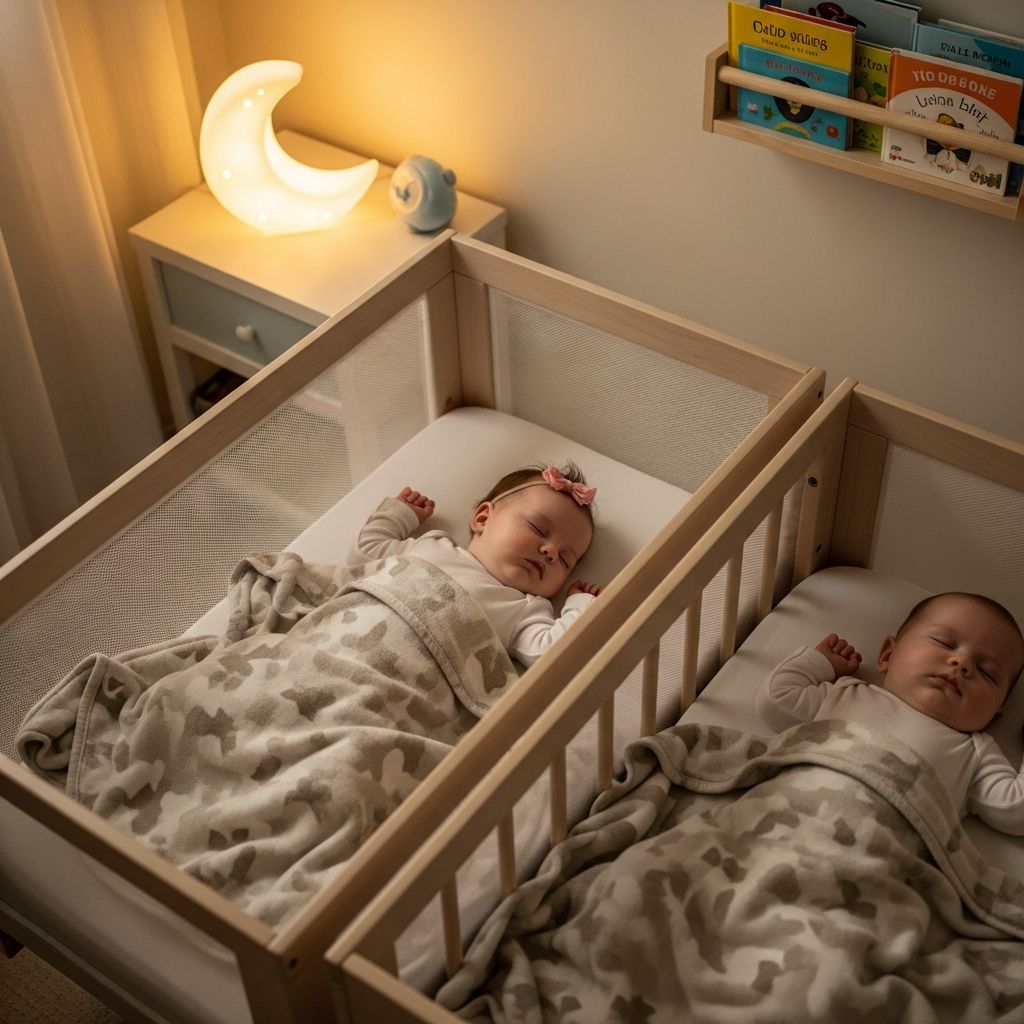
Welcoming twins is exciting and overwhelming, especially when it comes to sleep. Two babies with different temperaments and needs can make nights feel endless, but with a clear plan and realistic expectations, healthy sleep is absolutely possible for both of them.
This guide walks through how to prepare for sleep training, choose an approach that fits your family, support each twin as an individual, and maintain progress once your babies start sleeping more predictably.
Why Twin Sleep Training Feels So Different
Sleep training twins adds a layer of complexity because you are balancing two sets of cues, two personalities, and often one shared sleep space. What works for one baby may not work exactly the same way or on the same timeline for the other, and that is normal, not a failure.
Instead of trying to force your twins into identical patterns immediately, think of sleep training as guiding two separate journeys that you are gently steering toward the same destination: independent, predictable sleep for both babies.
When Twins Are Ready for Sleep Training
Every baby develops at a unique pace, but most families begin some form of structured sleep training after the newborn stage, once basic feeding is established and babies can go slightly longer between feeds. Before starting, check in with your pediatric provider if your twins were premature or have medical needs that affect sleep or feeding.
Readiness signs may include somewhat predictable wake windows, longer night stretches between feeds, and your ability to distinguish between hunger cries and fussing related to fatigue or overstimulation.
Foundations to Put in Place First
Before you make any big sleep changes, set up a solid foundation. These basics make any method more effective and less stressful for you and your babies.
- Create a consistent sleep environment: dark room, comfortable temperature, and a safe crib or bassinet for each baby.
- Use white noise to soften household sounds and help each twin sleep through the other’s brief noises.
- Follow age-appropriate wake windows so babies are tired enough but not overtired when you put them down.
- Separate feeding from falling asleep whenever possible so feeding is not the only sleep association.
Designing a Flexible Daily Rhythm
Twins do not need perfectly identical schedules, but a shared rhythm makes your days far more manageable. Think of your day in blocks: wake time, feed, play, wind-down, nap, then repeat.
Instead of aiming for clock-perfect timing, work within a 15–30 minute range. This allows you to respect each baby’s cues while still keeping their general pattern aligned enough that you are not tending to two completely different timetables all day long.
Sample Daytime Structure for Twins (Not Exact Times)
| Block | Typical Activities | Goal for Both Babies |
|---|---|---|
| Morning wake block | Wake, feed, short play, first nap | Start day at roughly the same time and align first nap window |
| Late morning block | Feed, tummy time, cuddle, second nap | Keep wake windows similar, gently wake the other twin within 10–20 minutes if one has a much shorter nap |
| Afternoon block | Feed, quieter play, third nap (if still needed) | Prevent overtiredness in the more sensitive sleeper |
| Evening block | Feed, calming routine, bedtime | Place both babies in their sleep spaces awake but calm |
Choosing Where Twins Sleep
Many parents begin with twins sharing a room, while others separate them temporarily during training. The best option depends on your space, your babies’ temperaments, and your own stress level.
- Room sharing: Helps twins get used to each other’s sounds and simplifies nighttime checks if you are training both at once.
- Temporary separation: Can be helpful if one twin is significantly more vocal or needs more time to settle for naps.
- Long-term plan: Start in the arrangement you want to end up with if possible, so you do not need to retrain during another big transition.
Building a Calming Bedtime Routine for Two
A predictable, soothing bedtime routine helps signal to each baby that sleep is coming. Twins can share much of the same routine, but you may need to adjust the order slightly depending on who tends to get more stimulated or more sleepy.
- Offer a final feed that ends at least 15–30 minutes before sleep.
- Dim lights and lower stimulation for both babies at the same time.
- Include simple, repeatable steps such as a diaper change, sleep sack, a short song, or a brief story.
- Say the same few calming phrases each night so your babies begin to associate them with sleep.
End the routine by placing both babies in their own safe sleep spaces while drowsy but awake, giving them the chance to practice falling asleep independently.
Gentle Approaches to Twin Sleep Training
There is no single “twin method.” Instead, you can adapt common sleep training approaches to fit two babies at once. What matters most is consistency, emotional attunement, and choosing a plan you can realistically follow through on for several nights in a row.
Responsive Check-Ins
Responsive check-ins involve putting your twins down awake and then returning at planned intervals to reassure without fully resettling them. This can be more manageable with a partner, but solo parents can still use it with a bit of planning.
- Decide ahead of time how often you will go in and who will respond to which baby.
- Keep check-ins brief: soothing voice, a gentle touch, and a simple phrase, then leave again.
- Avoid picking babies up unless you suspect hunger or discomfort that needs attention.
In-Room Comfort (Chair Method)
Some families prefer to stay in the room while babies learn to fall asleep, gradually decreasing their physical presence over days or weeks. This can be especially helpful if one or both babies are very sensitive or easily overstimulated.
- Start by sitting near the cribs, offering quiet reassurance without constant eye contact or touch.
- Every couple of nights, move the chair a bit farther away until you are near the door, then outside the room.
- Use the same calm responses for each baby so they learn consistent cues from you.
Minimal-Intervention Approach
Families who are comfortable with less frequent intervention may choose a more hands-off method, checking only occasionally to ensure safety and briefly reassure. This approach typically works best when babies are developmentally ready, well-fed, and have strong sleep foundations in place.
- Watch the clock as well as your babies’ cues so you are not rushing in too quickly or staying away longer than you planned.
- Make sure both parents or caregivers agree on limits and how they will respond during the night.
- Expect a few nights of louder protests, and pair the method with extra cuddles and connection during daytime hours.
Treating Each Twin as an Individual
Even with the same genetics and environment, twins often have very different sleep personalities. One may fall asleep easily while the other needs more help regulating. Rather than fighting this, build it into your plan.
- Identify the more sensitive sleeper and prioritize their ideal wake windows and nap times.
- Gently align naps by waking the other twin within a short window so your day does not drift too far apart.
- Keep notes for a week to spot patterns for each baby: how long they can stay comfortably awake and what helps them settle.
Common Challenges and Strategies
No matter how well you plan, sleep training twins almost always comes with curveballs. Understanding what is typical can make it easier to stay consistent without second-guessing every decision.
When One Twin Wakes the Other
It is nearly impossible to prevent all waking between twins, but you can reduce the impact. Many babies gradually learn to sleep through their sibling’s brief fussing over time.
- Use steady white noise and keep the room as dark as possible.
- If one baby is consistently louder, consider switching crib placement or temporarily separating for specific naps.
- Resist the urge to always intervene the second one cries, or both will depend heavily on your presence to fall back asleep.
Sickness, Growth Spurts, and Regressions
Twins will go through phases of illness, teething, and developmental leaps that can unsettle even the strongest sleepers. The goal during these times is to support them while protecting your core routines as much as possible.
- Offer extra comfort when they are unwell but keep bedtime rituals and sleep locations consistent.
- Once they are feeling better, return to your sleep training plan within a day or two.
- Expect temporary night wakings during big milestones, and focus on getting back on track rather than starting from scratch.
Sample Twin Bedtime Workflow
Below is a sample workflow you can adapt, depending on whether you have a partner helping and how your twins respond. The goal is to create a predictable order that you repeat every evening.
- Start winding down 30–45 minutes before the target bedtime by lowering lights and noise in the home.
- Give a final feed for both babies, either together (bottle) or one after the other (breastfeeding).
- Change diapers, put on sleep sacks, and complete any brief soothing activities like a short book.
- Place Twin A in the crib, then Twin B, keeping interactions calm, brief, and similar for both.
- Leave the room (or sit quietly if using an in-room method) and begin your chosen response plan for any crying.
Realistic Expectations for Progress
With consistency, many families see noticeable change within a few nights, but twins may not progress at the same pace. One may begin sleeping in long stretches quickly while the other still wakes more often.
Measure progress over a week at a time rather than night to night: shorter settling times, fewer night wakings, and less intense crying are all signs that your approach is working even if sleep is not yet perfect.
Taking Care of Yourself While Training Twins
Sleep training twins can be emotionally and physically draining. Planning for your own support is just as important as the plan for your babies. Exhaustion makes it much harder to stay consistent or calm when crying feels intense.
- Share night duties if possible, assigning one baby to each adult for check-ins.
- Prepare simple snacks and water near your bed so you maintain your own energy.
- Set a specific goal for how many nights you will trial a method before deciding whether to adjust.
Frequently Asked Questions About Sleep Training Twins
Do twins really need separate cribs?
For safe sleep, each baby should have their own crib or bassinet once they are out of the immediate newborn stage. Separate sleep spaces reduce the risk of overheating, accidental rolling onto each other, and entangled limbs, and they also give each baby room to move and self-soothe.
Should I always wake the second twin when the first wakes?
In the early months, waking the second twin within a short window can help you keep feeds and naps loosely aligned, which protects your own sleep and prevents your day from turning into a 24-hour rotation. As they grow older and naps consolidate, you can allow more independent sleep lengths as long as bedtime does not drift too late for either baby.
Can I sleep train twins if one is much smaller or was premature?
Yes, but you may need to move more slowly and base your plan on adjusted age and medical guidance. Focus first on ensuring that both babies are growing well and cleared by their health provider for longer night stretches between feeds before making big changes to their sleep schedule.
What if I cannot listen to both babies cry at once?
It is completely understandable to find this overwhelming. Choose a method that allows more presence, such as in-room comforting, and remind yourself that the goal is not to ignore your babies but to guide them as they learn a new skill. Short-term protests often lead to much more restful, predictable sleep for everyone in the long run.
How do I know if sleep training is working for my twins?
Signs of progress include shorter settling times at bedtime, fewer night wakings, more predictable naps, and calmer moods during the day. If you are not seeing any improvement after a consistent effort over 7–10 days, it may be time to adjust wake windows, your method of response, or the sleep environment.
Key Takeaways for Twin Parents
- Twins can absolutely learn to sleep independently, even if their timelines and temperaments differ.
- Strong foundations — safe sleep space, predictable routines, and age-appropriate wake windows — matter more than the exact method you choose.
- Consistency, empathy, and realistic expectations will carry you further than any one “perfect” technique.
With patience and a clear plan, peaceful nights with twins move from wishful thinking to an everyday reality, giving your babies the rest they need to grow — and giving you the space to enjoy them more fully during the day.