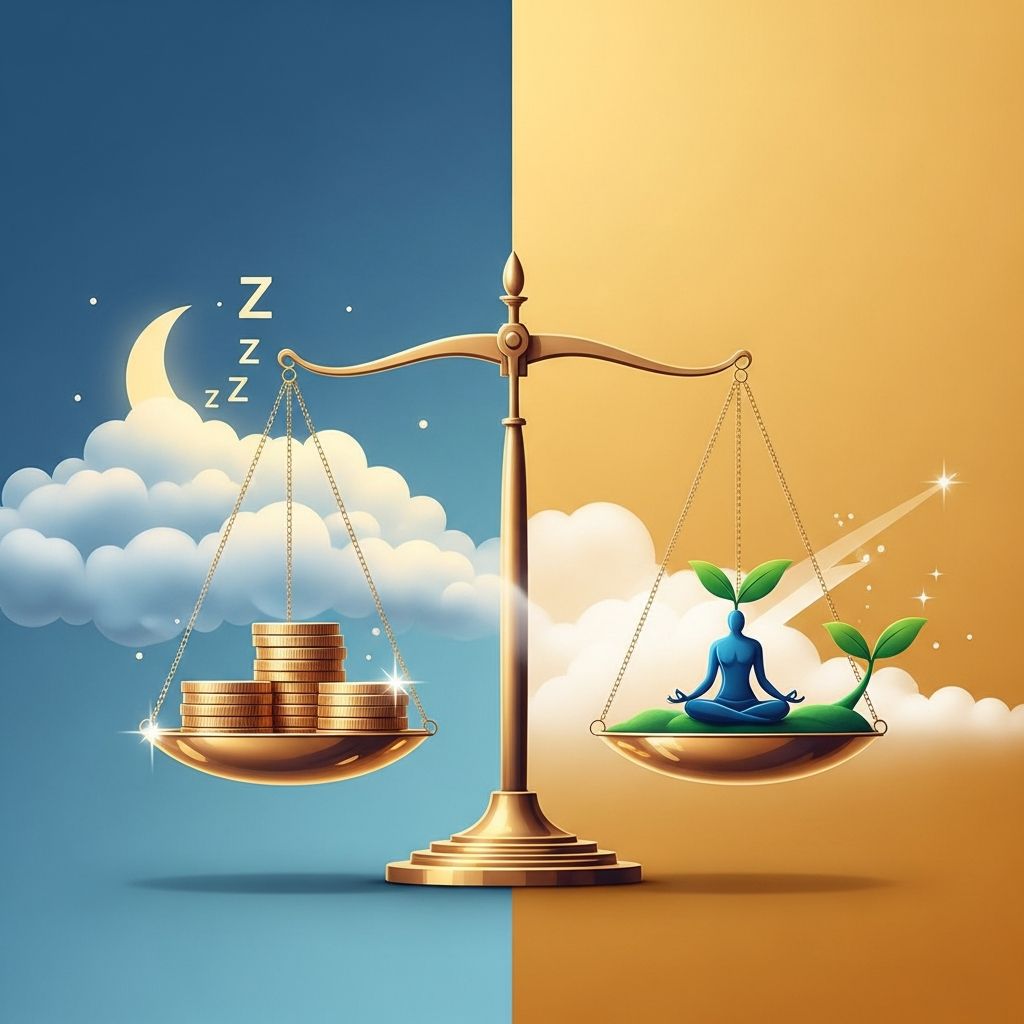
In the journey through adulthood, turning 30 often prompts reflection on life’s priorities. While career ambitions and financial stability dominate conversations, emerging evidence suggests that sleep quality and intimate connections play far larger roles in fostering lasting happiness than accumulating wealth. This article delves into scientific findings revealing these dynamics, offering practical guidance for those navigating this pivotal decade and beyond.
The Science Linking Rest to Joy
Quality sleep stands as a cornerstone of emotional well-being. Research demonstrates a robust correlation between adequate rest and subjective happiness across populations. For instance, nations with longer average sleep durations report higher life satisfaction scores, with statistical analysis showing a correlation coefficient of 0.54 (p < 0.001).
Individuals who achieve consistent, restorative sleep—typically 7-9 hours nightly—experience elevated mood, reduced stress, and sharper cognitive function. Chronic sleep deprivation, conversely, mirrors the effects of financial overspending: it accrues a deficit in mental and physical health. Well-rested people score significantly higher on well-being indices, often by 15 points compared to those plagued by insomnia.
- Neurobiological Ties: Sleep regulates serotonin systems, which govern emotion and stress responses, directly influencing daily happiness levels.
- Global Patterns: Factors like governance quality and education positively correlate with both sleep duration and happiness, explaining up to 54% of variance in well-being metrics.
- Daily Impact: Even marginal improvements in sleep hygiene yield measurable boosts in life satisfaction, surpassing many material gains.
Wealth’s Limited Grip on Fulfillment
Conventional wisdom posits money as a happiness multiplier, yet data paints a more nuanced picture. Quadrupling household income—from modest levels to comfortable ones—yields only marginal improvements in well-being scores, often just 2 points on standardized indices. Higher earners do report elevated evaluative well-being, but the curve flattens considerably beyond basic needs.
Perceived economic inequality complicates this further. When individuals sense widening gaps in wealth distribution, upward social comparisons trigger stress, eroding sleep quality and overall joy. Longitudinal studies confirm that subjective perceptions of inequality predict poorer rest more reliably than objective measures.
| Factor | Well-Being Impact (Index Points) | Source Correlation |
|---|---|---|
| Income Quadrupling (£12.5k to £50k) | +2 | Low |
| Optimal Sleep Satisfaction | +15 | Strong (r=0.54) |
| High Perceived Inequality | -7 to -10 | Mediated by Stress |
This table illustrates the disproportionate influence of non-financial elements. While financial security provides a foundation, it rarely catalyzes profound happiness without supportive lifestyle habits.
Intimacy as a Happiness Amplifier
Beyond rest, satisfying sexual relationships emerge as another potent driver of contentment. Those deeply content with their intimate lives score 7 points higher on happiness metrics than the dissatisfied. This association holds across demographics, underscoring intimacy’s role in emotional resilience.
In the 30s, life stages like parenthood or career pressures can strain partnerships. Yet, prioritizing physical and emotional closeness fosters oxytocin release, buffering stress and enhancing mood stability. Studies link frequent, fulfilling encounters to lower cortisol levels and heightened relationship satisfaction, indirectly bolstering sleep through reduced anxiety.
- Frequency Matters: Regular intimacy correlates with better mental health outcomes, independent of income.
- Quality Over Quantity: Emotional connection amplifies benefits, turning physical acts into profound well-being enhancers.
- Post-30 Relevance: As libidos stabilize, intentional nurturing prevents dissatisfaction dips common in midlife.
Navigating Inequality’s Sleep-Stealing Effects
Economic disparities don’t just affect bank accounts; they infiltrate bedrooms via psychological pathways. Perceived inequality sparks upward comparisons—measuring oneself against wealthier peers—which breed stress and fragmented sleep. Structural models reveal this chain: inequality perception → social comparison → heightened stress → diminished sleep quality.
In community and student samples, this mediation fully explains the link, with no direct effect remaining once psychological factors are accounted for. Good governance and job security mitigate these by fostering predictability, allowing better rest and happiness. For those in unequal environments, mindfulness practices disrupt the comparison cycle, reclaiming nocturnal peace.
Practical Strategies for Midlife Balance
Armed with this knowledge, actionable steps emerge to prioritize high-impact areas:
- Optimize Sleep Environment: Maintain consistent bedtimes, limit screens, and create cool, dark spaces. Track progress with journals to quantify mood gains.
- Reevaluate Financial Goals: Aim for security over excess; redirect energy from wealth-chasing to relational investments.
- Cultivate Intimacy: Schedule date nights, communicate desires openly, and explore non-sexual touch to build foundations.
- Combat Inequality Stress: Practice gratitude journaling to counter comparisons; seek communities emphasizing collective well-being.
- Monitor Holistically: Use apps integrating sleep, mood, and relationship trackers for data-driven adjustments.
These habits compound over time, yielding dividends far exceeding monetary pursuits.
Cultural and Socio-Economic Influences
Happiness-sleep nexus varies by context. Individualistic cultures with high indulgence scores show stronger positive ties between rest and joy, while power distance negatively impacts both. Urbanization and education extend sleep duration, amplifying national happiness rankings.
Obesity and inequality counteract these, with poorer governance exacerbating short sleep cycles. Policymakers targeting well-being should thus champion sleep-friendly labor laws and equity initiatives, as these yield broad societal returns.
Long-Term Outlook: Sustaining Gains Past 30
By 40 and beyond, early investments in sleep and intimacy pay off exponentially. Mental health correlations with rest reach 79% in inequality analyses, highlighting prevention’s power. Those mastering these elements report sustained high life ladders, per Cantril scales.
In essence, midlife thrives not on opulence but on rhythms of rest and connection. Shifting focus here redefines success, aligning daily choices with enduring fulfillment.
Frequently Asked Questions (FAQs)
Does money ever contribute to happiness after 30?
Yes, up to a threshold covering essentials; beyond that, gains plateau while sleep and relationships drive further improvements.
How much sleep is ideal for peak happiness?
7-9 hours nightly correlates strongest with well-being; consistency trumps perfection.
Can perceived inequality really ruin sleep?
Absolutely—via stress and comparison, as confirmed in large-scale studies.
Is intimacy’s happiness boost age-specific?
No, but it gains importance post-30 amid life stressors; satisfaction gaps widen without effort.
What if I can’t control socio-economic factors?
Personal habits like routines and mindset shifts offer agency, mitigating external drags.
References
- Forget getting rich – sex and sleep are the real keys to happiness — The Telegraph. 2017-09-19. https://www.telegraph.co.uk/news/2017/09/19/forget-getting-rich-sex-sleep-real-keys-happiness/
- Sleep and happiness: socio-economic, population and cultural differences across 131 countries — Frontiers in Sleep. 2023. https://www.frontiersin.org/journals/sleep/articles/10.3389/frsle.2023.1118384/full
- Perceived economic inequality is linked to poorer sleep quality — PMC / BMC Psychology. 2025. https://pmc.ncbi.nlm.nih.gov/articles/PMC12487066/
- Sleep Deprivation Consequences — American Psychological Association. Accessed 2026. https://www.apa.org/topics/sleep/deprivation-consequences
- Experienced well-being rises with income, even above $75,000 per year — PNAS. 2021. https://www.pnas.org/doi/10.1073/pnas.2016976118