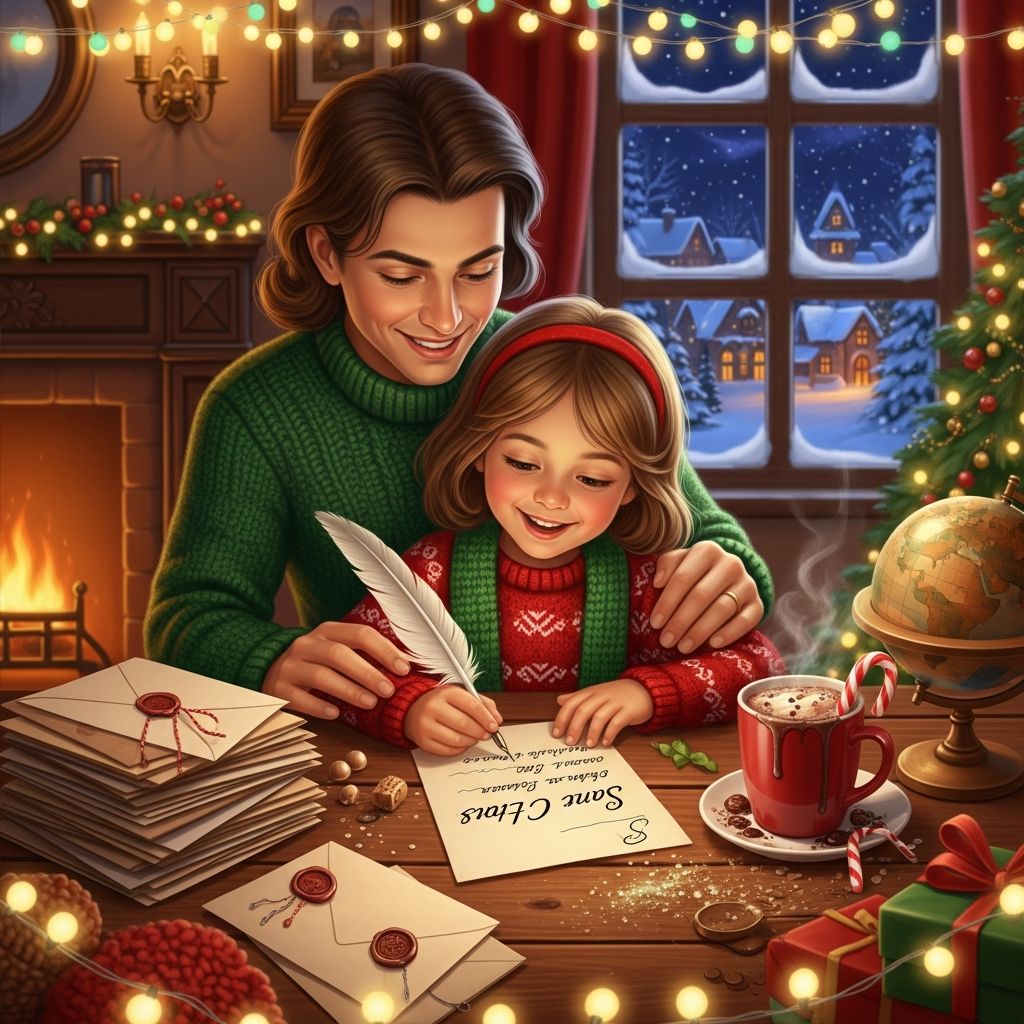
Writing a letter to Santa can be far more than a quick wish list. When you slow down and turn it into a little ritual, it becomes a cozy family tradition, a writing lesson in disguise, and a keepsake you will treasure for years.
This guide walks you through how to help kids create meaningful letters to Santa, how grown-ups can quietly support the magic, and simple ways to store, send, or respond to these special notes.
Why Letters to Santa Matter More Than the Gifts
On the surface, a letter to Santa is about requests. In reality, it can nurture gratitude, reflection, creativity, and basic writing skills all at once. Research on family rituals shows that simple repeated traditions help children feel secure, create shared identity, and build lasting memories.
- Emotional connection: Kids practice expressing hopes, worries, and excitement in a safe, playful way.
- Reflection: Thinking back on the year teaches children to notice growth and good moments, not only gifts.
- Gratitude: Thanking Santa and others supports empathy and appreciation.
- Literacy: Without feeling like homework, kids practice handwriting, spelling, and organizing thoughts.
Even very young children who can’t yet write can join in by dictating their words or adding drawings.
Planning Your Family’s Letter-to-Santa Tradition
Before anyone picks up a pencil, decide what you want this tradition to feel like in your home. Calm and cozy? Silly and loud? Quick and simple? There is no single right way.
Choose the Right Moment
Letters feel most magical when they are not rushed. Try one of these timing ideas:
- After decorating the tree, as a way to “tell Santa the tree is ready.”
- On the first snowy day or on a weekend morning with hot cocoa.
- At the start of December, so there is plenty of time to mail or display the letters.
For younger children, keep the letter session brief and upbeat. Older kids may enjoy taking more time, revising, or decorating.
Gather Simple Supplies
You do not need fancy materials. A basic setup might include:
- Paper or a printable template (lined or unlined)
- Pencils, crayons, or pens
- Stickers, stamps, or colored tape (optional but fun)
- Envelopes and a stamp if you plan to mail the letter
If you like structure, you can print or design a gentle template (for example, with spaces for greeting, gratitude, wish list, and signature). If your child prefers to draw, leave open space for artwork.
Helping Kids Write Their Letter Step by Step
Most children write more confidently when they have a simple structure to follow. You can share this as a checklist or talk it through out loud.
| Letter Part | What to Include | Example Prompts for Kids |
|---|---|---|
| Greeting | A warm hello to Santa (and maybe Mrs. Claus or the elves). | “How do you want to say hi to Santa?” |
| About Me | Name, age, where they live, or favorite holiday traditions. | “What would you like Santa to know about you this year?” |
| Looking Back | Something they are proud of or kind things they did. | “What is one way you helped someone this year?” |
| Gratitude | Thanks for last year’s gifts or for Santa’s hard work. | “What are you thankful to Santa for?” |
| Wish List | A short list of gifts or experiences, phrased kindly. | “What are the most important things you’d love this year?” |
| Extras | Questions for Santa, notes to the reindeer, or drawings. | “Anything you’d like to ask Santa about the North Pole?” |
| Closing | A friendly goodbye and signature. | “How do you want to sign your name?” |
Gentle Prompts for Different Ages
Consider tailoring your approach based on your child’s age and comfort with writing:
- Preschoolers: Let them draw a toy, pet, or Santa himself. You can add a short caption of their words underneath.
- Early elementary: Offer sentence starters such as “This year I learned…,” “I tried to be kind by…,” or “If it’s possible, I would love…”.
- Older kids: Encourage full paragraphs, reflections on their year, or even questions they have always wanted to ask about the North Pole.
Balancing Wish Lists, Gratitude, and Kindness
It is natural for kids to focus on toys, but you can gently guide them toward balance—without dampening their excitement.
Encouraging Thoughtful Wish Lists
To avoid an endless list, suggest categories or limits:
- “Pick three things: something you want, something you need, and something to read.”
- “Choose one big wish and two smaller wishes.”
- “Tell Santa which gift is most important to you.”
Remind kids that Santa may not bring everything, and that surprises can be part of the fun. This helps manage expectations while keeping the tone hopeful.
Adding a Gratitude Section
You can build a quick gratitude habit right into the letter:
- Ask children to thank Santa for last year’s gifts, even if they do not remember every detail.
- Encourage them to acknowledge people as well as things: “Thank you for helping my family have a special Christmas.”
- Invite them to share something non-material they are thankful for, such as time with family or a new skill.
These small moments of thanks support emotional well-being and perspective, especially during an advertising-heavy season.
Making the Letter Look and Feel Special
Kids are often more invested when the page feels festive. Simple extras can transform plain paper into a keepsake.
Decorating Ideas Kids Can Do Themselves
- Draw tiny elves or reindeer in the margins.
- Add snowflakes, stars, or candy canes around the edges.
- Use stickers, washi tape, or rubber stamps for borders.
- Include a small photo or self-portrait so Santa “remembers” them.
Children who have trouble writing a lot may enjoy expressing themselves mostly through drawings; Santa appreciates pictures too.
Using Printables and Templates Wisely
A printable letter sheet can lower pressure for reluctant writers by offering gentle prompts and defined spaces. When choosing or designing a template, look for:
- Plenty of blank space for creativity.
- Short, clear prompts instead of long instructions.
- Large lines for beginner handwriting.
- Room for a drawing or a small photo.
You can print multiple copies so kids can practice or start over if they want to change their minds.
Sending, Saving, or “Delivering” Your Letters
What you do with the letters after they are finished is up to your family’s style and beliefs. Here are a few options, from official mail programs to low-key at-home magic.
Mailing a Letter to Santa
If your child is excited about sending real mail, you can address an envelope in the traditional way, add a return address and stamp, and drop it into a mailbox. Postal services in some countries run Santa letter programs that respond to children’s letters when mailed by a certain date.
- Help your child write their name and return address clearly on the letter and envelope.
- Take a photo before mailing if you want to save a record.
- Talk about how long mail can take, helping kids practice patience.
Check your national postal service’s official website for current Santa letter guidelines, dates, and addresses.
At-Home Delivery Traditions
If you prefer not to mail the letters, consider creative alternatives:
- Place letters under the tree for “night-time pickup.”
- Slip them into stockings for Santa to find.
- Leave them next to the cookies and milk on Christmas Eve.
You can quietly collect the letters afterward and tuck them away as keepsakes.
Saving Letters as Family Time Capsules
Before you tuck the envelopes away, take a moment to label them. Over the years, a folder of Santa letters becomes a record of changing handwriting, shifting wishes, and growing personalities.
- Write the year and child’s age on the back in pencil.
- Store letters in a holiday box, binder sleeves, or a simple envelope marked “Letters to Santa.”
- Revisit older letters together when kids are older; it often sparks funny stories and warm nostalgia.
Quietly Writing Back from Santa
Many caregivers enjoy leaving a short reply from Santa. This can be a handwritten note, a typed letter, or a few lines added at the bottom of the child’s original page.
Elements of a Gentle “Santa Response”
- Warm greeting: Use the child’s name or nickname so it feels personal.
- Specific praise: Mention a real action you noticed (helping a sibling, working hard in school).
- Encouragement: Support ongoing efforts, such as being kinder, more patient, or brave.
- North Pole peek: Include a light detail about elves, reindeer, or snowy weather.
- Reassurance: Emphasize that love is not tied to perfection or the number of gifts.
Keeping the response short and kind makes it easier to repeat the tradition each year without pressure.
Frequently Asked Questions (FAQs)
How early should kids write and send their letters to Santa?
Writing in late November or early December works well. Postal services that offer Santa replies usually set early December deadlines to allow for processing and return mail, so earlier is often better if you plan to mail the letter.
What if my child asks for something unrealistic or impossible?
You can acknowledge the wish while gently introducing the idea that Santa sometimes brings surprises or alternatives. Encourage adding a mix of big dreams and simpler, more achievable requests, and remind kids that Christmas is about more than presents.
My child can’t write yet. Can we still do a letter?
Absolutely. Let your child draw while you act as their “secretary,” writing down their words. You can use simple phrases like “I love…” or “I hope…” and invite them to dictate short answers.
Is it okay to use a template or printable instead of blank paper?
Yes. Templates with clear sections for greeting, gratitude, wishes, and signature can make the task feel easier, especially for emerging writers. As long as there is room for the child’s own ideas and drawings, you are still nurturing creativity.
Should I keep my child’s Santa letters?
Many families find that saving the letters creates a priceless collection over time. Keeping them in a labeled folder or binder turns them into a casual time capsule you can revisit together in future years.
References
- How to Write the Perfect Letter to Santa — United States Postal Service (USPS). 2022-11-01. https://about.usps.com/holidaynews/pdf/How-Write-Letters-Santa_Infog-508.pdf
- Sylvamo’s Guide to Writing the Perfect Letter to Santa — Sylvamo Corporation. 2023-11-15. https://www.sylvamo.com/us/en/news/sylvamos-guide-to-writing-the-perfect-letter-to-santa
- How to Write the Perfect Letter to Santa (That Gets a Response!) — SantaClausWrites.com. 2023-12-01. https://santaclauswrites.com/blog/how-to-write-perfect-letter
- How to Write a Letter from Santa — One Simple Party. 2022-12-05. https://onesimpleparty.com/letter-from-santa/
- Santa letter program — Canada Post. 2024-10-01. https://www.canadapost-postescanada.ca/cpc/en/our-company/write-letter-to-santa.page
- Tips and Tricks for Writing to Santa Claus! — Christmas Light Fest. 2021-11-20. https://christmaslightfest.com/tips-and-tricks-for-writing-to-santa-claus/
- Family Routines and Rituals — American Academy of Pediatrics (HealthyChildren.org). 2015-09-21. https://www.healthychildren.org/English/family-life/family-dynamics/Pages/Family-Routines-and-Rituals.aspx