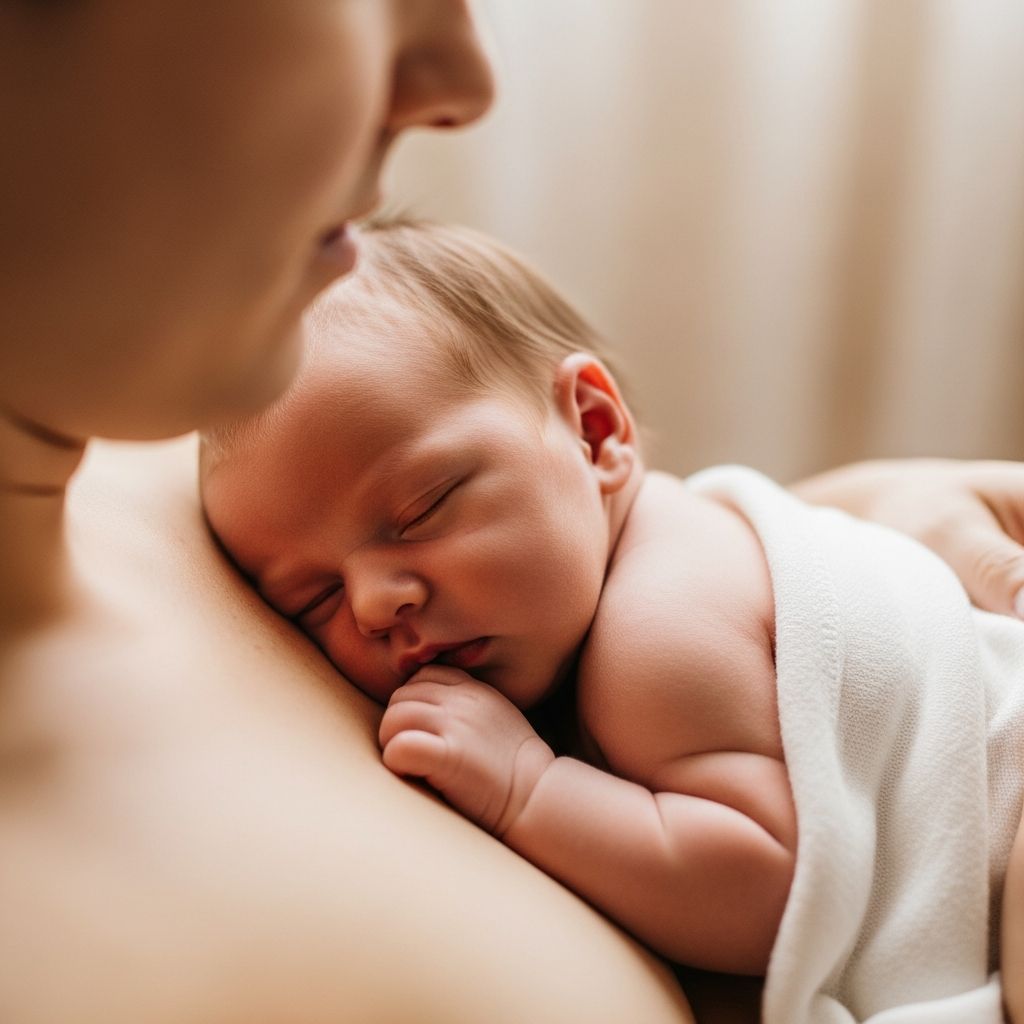
Placing a newborn directly on a parent’s bare chest, known as skin-to-skin contact (SSC), is a simple yet powerful practice with far-reaching impacts on infant health and family dynamics. This immediate closeness mimics the womb’s environment, aiding newborns in transitioning to life outside while fostering profound emotional ties.
Understanding the Practice of Skin-to-Skin Contact
Skin-to-skin contact involves positioning the undressed baby, typically wearing only a diaper, against the parent’s exposed torso. This method, often called kangaroo care in neonatal settings, promotes sensory exchange through touch, warmth, scent, and sound. Recommended by global health authorities, SSC should ideally begin within the first hour post-birth, even after cesareans or in complicated deliveries when feasible.
Far from a fleeting trend, SSC is endorsed as standard care due to overwhelming evidence from systematic reviews involving thousands of mother-infant pairs. It stabilizes vital signs and sets the foundation for breastfeeding and attachment, making it a cornerstone of modern perinatal protocols.
Physiological Advantages for Newborns
Newborns experience dramatic environmental shifts at birth, and SSC acts as a natural regulator. Babies placed skin-to-skin maintain optimal body temperature more effectively than those separated, as the parent’s heat synchronizes with the infant’s needs.
- Temperature Regulation: Infants achieve stable thermoregulation, reducing hypothermia risk.
- Cardiorespiratory Stability: Heart rate and breathing patterns normalize faster, with improved SCRIP scores measuring newborn adaptation.
- Blood Glucose Levels: SSC elevates blood sugar, preventing neonatal hypoglycemia—a critical concern for at-risk infants.
- Stress Reduction: Lower cortisol levels and less crying indicate reduced stress, aiding overall acclimation.
A Cochrane review of 69 trials confirms these effects, noting higher blood glucose (mean difference 10.49 mg/dL) and better stabilization in SSC groups. In low-resource areas, SSC has proven lifesaving for low-birth-weight babies, prompting early trial halts due to evident survival gains.
Boosting Breastfeeding Initiation and Duration
SSC profoundly influences lactation success. Proximity to the breast cues instinctive rooting and sucking reflexes, leading to earlier and more effective first feeds.
Mothers practicing SSC are far more likely to breastfeed exclusively. At one month, 75% of SSC babies were exclusively breastfed versus 55% in control groups, with benefits persisting up to six months. Oxytocin release during contact ejects milk and reinforces the let-down reflex, while proximity enhances milk supply confidence.
| Time Point | SSC Group Exclusive Breastfeeding Rate | Control Group Rate |
|---|---|---|
| 1 Month | 75% | 55% |
| 6 Weeks to 6 Months | Significantly Higher | Lower |
This table summarizes key findings from high-quality reviews, underscoring SSC’s role in sustaining breastfeeding—a practice linked to reduced infant infections, better growth, and maternal health gains.
Emotional and Psychological Gains for Parents and Babies
Beyond physiology, SSC ignites bonding through oxytocin, the ‘love hormone,’ which surges in both parent and child. This promotes calmness, reduces parental anxiety, and diminishes postpartum blues, particularly after surgical births.
For mothers post-cesarean, SSC alleviates guilt and fear, fostering empowerment. Fathers and partners benefit equally, reporting stronger attachments and involvement when participating.
- Enhanced maternal self-efficacy in caregiving tasks.
- Improved parent-infant reciprocity and responsiveness.
- Reduced maternal stress hormones, aiding recovery.
Longitudinal data reveal these effects endure, with SSC families showing sustained interaction quality years later.
Lasting Developmental Impacts into Childhood
Early SSC yields benefits extending to middle childhood. A study tracking dyads from infancy to age 9 found SSC children exhibited superior cognitive development, autonomic nervous system maturity, and richer mother-child dialogues about emotions.
SSC groups displayed greater conversational engagement and reciprocity, attributing outcomes to oxytocin-driven neurodevelopmental pathways. Prenatal-like stimuli from parental heartbeat and scent likely wire stress-resilient brains.
These findings imply SSC influences attachment security, potentially lowering behavioral issues and enhancing emotional intelligence over time.
Practical Guidelines for Implementing Skin-to-Skin Contact
To maximize benefits, initiate SSC promptly after birth, ensuring the baby is dried and covered except for the back. Sessions should last at least 60 minutes uninterrupted, repeatable multiple times daily.
- Position baby vertically on chest, head turned to side.
- Cover both with a blanket for warmth.
- Monitor for cues like hand-to-mouth movements signaling readiness to feed.
- Involve all caregivers, including dads and grandparents.
In hospitals, advocate for SSC even in NICU via kangaroo care adaptations. Home practice post-discharge reinforces gains.
Addressing Common Challenges and Myths
Some worry SSC delays medical assessments, but evidence supports delaying non-urgent interventions. Myths about interference with bonding if fathers participate are unfounded—paternal SSC offers parallel benefits.
For preterm or ill infants, modified SSC remains viable and recommended, with precautions like monitoring oxygen levels.
Frequently Asked Questions About Skin-to-Skin Contact
Is skin-to-skin contact safe immediately after a C-section?
Yes, it’s highly recommended and safe when the mother is stable, reducing emotional distress and aiding recovery.
How long should skin-to-skin sessions last?
Aim for at least one hour initially, extending as tolerated; multiple daily sessions amplify benefits.
Can fathers or partners do skin-to-skin contact?
Absolutely—partners experience similar hormonal responses, strengthening family bonds.
Does SSC help with babies who have low blood sugar?
Yes, meta-analyses show a large reduction in neonatal hypoglycemia incidence.
What if my baby is preterm—can we still do SSC?
Kangaroo care is a proven, lifesaving method for preterm infants, improving survival and growth.
Why SSC Should Be Universal Standard Care
With robust evidence from Cochrane (2025 update) and UNICEF-backed research, withholding SSC is now deemed unethical in ethical trials. Its low-cost, high-impact nature makes it ideal globally, from high-resource hospitals to remote clinics. Parents embracing SSC report intuitive confidence, while babies thrive physiologically and emotionally. Integrating SSC into birth plans ensures optimal starts, paving pathways for healthy development.
This practice transcends trends—it’s a biologically attuned ritual affirming human connection at life’s dawn.
References
- Strong evidence supports skin-to-skin contact after birth as standard care — Cochrane. 2025. https://www.cochrane.org/about-us/news/strong-evidence-supports-skin-skin-contact-after-birth-standard-care
- Strong Evidence Supports Skin-to-Skin Contact After Birth — Center for Breastfeeding. 2025. https://centerforbreastfeeding.org/cochrane-review-2025/
- Skin-to-skin contact for the prevention of neonatal hypoglycaemia: a systematic review and meta-analysis — UNICEF UK Baby Friendly Initiative. 2023. https://www.unicef.org.uk/babyfriendly/news-and-research/baby-friendly-research/research-supporting-breastfeeding/skin-to-skin-contact/
- Mother–Infant Skin-to-Skin Contact: Short‐ and Long-Term Effects — PMC (PubMed Central). 2020. https://pmc.ncbi.nlm.nih.gov/articles/PMC7485314/
- The Benefits of Skin-to-Skin Contact During and After Your Hospital Stay — University of Utah Health. 2024-08. https://healthcare.utah.edu/healthfeed/2024/08/benefits-of-skin-skin-contact-during-and-after-your-hospital-stay