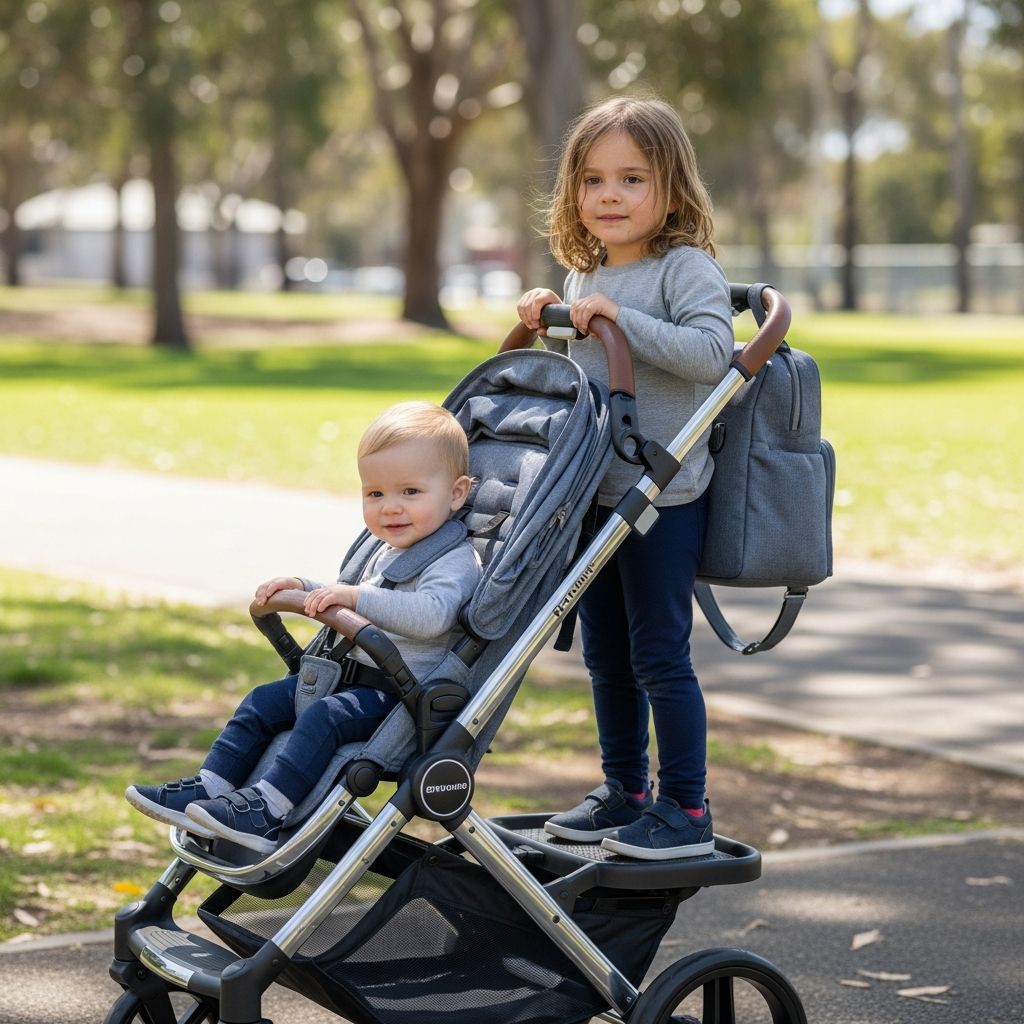
Managing a baby and an energetic older child on the go can feel like a logistics puzzle. A sit-and-stand stroller is designed to solve that puzzle by giving your younger child a full seat while offering your older one the freedom to sit, stand, or hop off when they feel more independent.
What Is a Sit-and-Stand Stroller?
A sit-and-stand stroller is a type of in-line double stroller built for two children of different ages. The front usually has a traditional stroller seat, while the rear combines a small bench seat with a standing platform so the older child can ride in multiple ways.
Instead of two full-size seats, these models trade a second traditional seat for a more compact design and a back area that lets an older sibling quickly climb on or off during errands, school runs, or walks around the neighborhood.
Who Benefits Most From a Sit-and-Stand?
This style of stroller is ideal for families with an infant or young toddler and an older child who is mostly walking but still tires easily. The older child may resist a regular stroller seat yet still needs occasional rides when distances get longer or days get busier.
Parents who frequently navigate shops, public transportation, or narrow sidewalks often appreciate the streamlined length and width, which are typically more manageable than side-by-side double strollers.
Key Advantages for Everyday Life
Sit-and-stand strollers offer practical benefits for real-world parenting, especially when juggling two children’s different needs. For many caregivers, the balance between structure for the younger child and freedom for the older one is the main selling point.
Below are some standout advantages you can expect from most sit-and-stand designs.
- Versatility for different ages: The front seat accommodates infants or younger toddlers, while the rear bench and platform suit preschoolers or older toddlers who like to hop on and off.
- Smaller footprint than many doubles: With only one traditional seat plus a compact rear area, these strollers tend to be narrower and sometimes shorter than standard double models.
- Easy on-and-off for older kids: The standing platform and low bench simplify quick rides between walking stretches, which is useful in parking lots, at theme parks, or during long outings.
- Compatible with infant car seats on many models: Many designs allow the front seat to hold an infant car seat, letting your baby ride rear-facing while the older child rides in back.
- Cost-conscious compared with some doubles: Because there is less hardware than two full premium seats, many sit-and-stand options are more affordable than high-end double strollers.
Limitations and Trade-Offs to Consider
Despite their many strengths, sit-and-stand strollers are not perfect for every family. Understanding their limitations helps you decide whether this style fits your lifestyle or if a different double stroller might be better.
Consider these common trade-offs before committing.
- Not ideal for twins or same-age siblings: Because the rear is a bench or platform rather than a full reclining seat, it is less comfortable and less secure for very young children.
- Limited recline for the older child: The standing or bench area is designed for short rests, not full naps, so long days out may be less cozy for your older child.
- Weight and length still noticeable: Although often slimmer than some doubles, sit-and-stand strollers remain heavier and longer than a single stroller, which you will notice when lifting into a trunk or turning sharp corners.
- Uneven weight distribution at times: With one seated child and one standing or hopping off, the stroller can feel a bit unbalanced if not loaded and pushed thoughtfully.
Main Features to Look For
Not all sit-and-stand strollers are built the same way. Looking closely at key features will help you choose a model that fits both your children’s needs and your daily routines.
The following elements deserve special attention when you compare options.
Seating and Weight Limits
Check the manufacturer’s age and weight guidelines for each position, including any car seat compatibility. The front seat often supports infants when paired with a car seat, while the bench and platform are meant for older children who can sit or stand independently.
Knowing each position’s weight limit can prevent premature outgrowing and ensure that the stroller safely supports both children for as long as possible.
Fold Mechanism and Portability
Because you will fold and lift the stroller frequently, the fold method matters. Some designs collapse with a single hand, while others require two hands and multiple steps.
Ideally, the folded stroller should fit easily in your car trunk or hallway storage space and not feel overwhelmingly heavy when lifted.
Storage and Parent Convenience
Families with two children generally carry more gear, so an ample basket and accessible pockets are helpful. Think about how often you bring diaper bags, snacks, or extra clothing.
Extras such as cup holders, parent trays, or organizer pockets can turn everyday outings into smoother experiences by keeping essentials within easy reach.
Wheels, Suspension, and Maneuverability
Wheel design affects how the stroller handles on different surfaces. Smaller swivel wheels typically excel on smooth indoor floors and sidewalks, while larger, more rugged wheels are better suited to grass and uneven paths.
If you regularly cross bumpy sidewalks or park trails, look for a model with suspension or cushioned wheels to keep the ride comfortable for both children.
Canopy and Weather Protection
Sun coverage matters, especially when one child rides up front and the other stands behind. Some strollers have a single large canopy, whereas others offer extended or dual canopies.
Consider how much shade each child will receive in different positions and whether additional accessories like rain covers are available for the model you like.
Comparing Sit-and-Stand to Other Double Strollers
Deciding between stroller types can be confusing, especially when you see tandem, side-by-side, and wagon-style doubles on the market. A quick comparison can clarify where sit-and-stand models shine and where another style may be better.
The table below highlights typical differences between sit-and-stand strollers and two other common double stroller categories.
| Feature | Sit-and-Stand | Side-by-Side Double | Traditional Tandem Double |
|---|---|---|---|
| Best for | Children of different ages where one likes to walk part-time | Twins or children close in age who both need full seats | Two full-time riders where both need full seats, often car-seat compatible |
| Width | Usually similar to a single stroller | Wider; may be tight in narrow aisles and doorways | Narrower than side-by-side but longer in length |
| Rear rider position | Bench seat and standing platform | Full second seat with recline | Full second seat, usually one behind the other |
| Independence for older child | High; easy to hop on and off | Lower; typically strapped in like younger child | Moderate; still a regular seat, less freedom |
| Storage space | Often a large basket plus some pockets | Varies; baskets can be generous but sometimes harder to access | Usually good basket capacity but partly blocked by seats |
Safety and Comfort Tips
Safety with a sit-and-stand stroller depends on both the design and consistent, thoughtful use. A few established habits can make rides safer and more comfortable for both children.
Focus on how your children use the stroller, not just how it is built.
- Use harnesses and straps every time: Buckle the younger child in the front seat, and if the rear bench has a strap or belt, use it whenever your older child chooses to sit.
- Teach safe standing rules: Show the older child where to hold on, explain that they must stand facing forward, and remind them to stay still while the stroller is moving.
- Engage brakes before loading or unloading: Set the parking brake whenever a child climbs on or off to prevent rolling.
- Distribute weight with care: Avoid hanging heavy bags solely on the handlebar, which can cause tipping, especially if the rear rider hops off unexpectedly.
- Check for pinch points: Keep curious fingers away from folding mechanisms and hinges, and demonstrate that only adults operate the fold.
Practical Buying Checklist
When browsing sit-and-stand options online or in-store, it helps to have a checklist that reflects your own routine rather than generic specifications. Thinking through your daily life ensures you choose features that you will actually use.
Ask yourself the following questions before you purchase:
- Will the folded stroller fit comfortably in my car trunk or entryway?
- Is it compatible with the infant car seat brand I already own, if I plan to use one?
- Does the total weight of the stroller feel manageable when I need to lift it alone?
- Are the handlebars comfortable for the tallest and shortest regular pushers in the family?
- Is the basket large and accessible enough for diaper bags, snacks, and jackets?
- Do both children get at least some sun and rain protection in their riding positions?
- Are the brakes easy to operate while wearing everyday shoes or sandals?
Using Your Sit-and-Stand in Real Life
Once you bring your stroller home, a few simple strategies will help it integrate smoothly into everyday life. The goal is to make leaving the house feel less like a production and more like a natural part of the day.
Small routines and adjustments can significantly improve how the stroller feels to push and how much your children enjoy riding.
Setting Up for Different Outings
For short errands, keep the stroller as light as possible by packing only essentials in the basket or a compact parent organizer. A lighter load often makes steering easier in crowded or tight spaces.
For longer days, such as zoo visits or theme parks, plan for rotation: let the older child alternate between walking, sitting on the bench, and standing on the platform to avoid fatigue and restlessness.
Teaching Your Older Child the Routine
Explain clearly how and when your older child may stand, sit, or step off. Predictable rules, such as “no getting off until the stroller stops and the brake is on,” create safer habits.
You can also make the rear position feel like a special “big kid spot” by involving your older child in small jobs, such as holding a snack bag or helping watch a favorite toy stored in the basket.
Frequently Asked Questions About Sit-and-Stand Strollers
At what age can my child use the standing platform?
Most manufacturers design the standing platform and bench seat for older toddlers and preschoolers who can stand steadily and follow basic safety instructions. Always check the specific age and weight recommendations listed for your stroller, and only allow standing when your child seems stable and ready.
Can I use a sit-and-stand stroller with twins?
While it may be technically possible in some configurations, sit-and-stand models are generally not the most comfortable or secure choice for twins, especially if both children are still young. A double stroller with two full seats or a twin-specific design usually offers better support and equal comfort for both riders.
Is a sit-and-stand stroller hard to push?
Any double stroller will feel heavier than a single, but many sit-and-stand designs roll smoothly on flat ground when used within weight limits. Steering can be more challenging on hills or rough surfaces, so choosing appropriate wheels and being mindful of added bags in the basket helps keep handling pleasant.
Do sit-and-stand strollers work for tall parents?
Some models include adjustable handlebars, which can make a big difference in comfort for parents of different heights. If you are particularly tall or short, testing the handle height in person, or carefully checking measurements, can prevent back or shoulder strain on longer walks.
How long will my family use a sit-and-stand stroller?
Families often use this type of stroller from the baby’s first months—when combined with a compatible car seat—through the preschool years of the older child. The exact timeline depends on your children’s sizes, walking stamina, and interest in riding versus walking independently.
Final Thoughts for Confident Stroller Shopping
A sit-and-stand stroller fills a unique niche for families with children at different stages of mobility. It offers a blend of structure and freedom that can transform chaotic outings into more manageable adventures.
By focusing on safety, fit, storage, and how the stroller aligns with your daily routines, you can choose a model that not only transports your children but also supports smoother, more enjoyable time together outside the home.