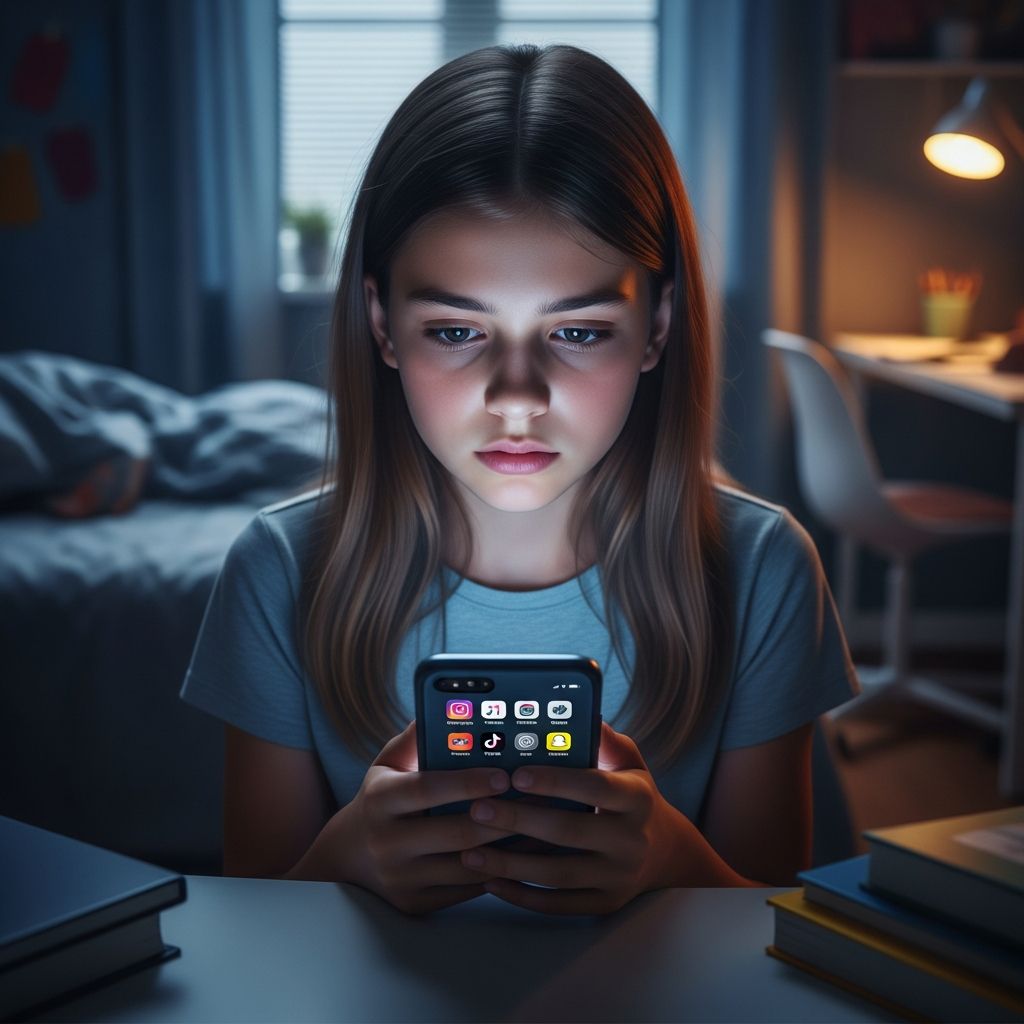
Young girls aged 10 to 13 are facing unprecedented mental health challenges as online platforms amplify unrealistic beauty ideals and transformation challenges. Recent data reveals that nearly 43% of teen girls experience persistent sadness, with social media playing a central role in exacerbating these issues.
The Surge in Mental Health Concerns Among Preteens
Mental health disorders affect one in seven adolescents globally, representing 15% of the disease burden in this age group. In the U.S., 18% of youth aged 12-17 have experienced a major depressive episode in the past year, totaling about 4.5 million individuals. For girls specifically, the figures are more alarming: 53% of high school girls report persistent feelings of sadness or hopelessness, a rate far exceeding that of boys at 30%.
Pre-pandemic baselines showed lower distress levels, but post-2020 trends indicate a sustained elevation. Emergency visits for self-harm among teen girls remain significantly higher than before 2020, highlighting acute crises. While some 2026 data notes modest declines in overall youth depression from 42% to 40% persistent sadness, adolescent girls still face roughly twice the prevalence of depression compared to boys, peaking at three times higher odds between ages 13-15.
| Age Group | Depression Rate (Girls) | Depression Rate (Boys) | Source |
|---|---|---|---|
| 12-17 | 5.8% (12-month) | 3.5% (12-month) | |
| High School | 43% persistent sadness | ~30% persistent sadness | |
| 10-14 | 1.3% diagnosed | N/A |
These disparities underscore a gendered crisis, with girls comprising 54% of youth psychiatric inpatient admissions despite lower completed suicide rates than boys.
How Digital Platforms Amplify Beauty Pressures
Social media has become a double-edged sword for young users. A 2025 Pew Research survey found 45% of teens believe they spend too much time on these platforms, up from 36% in 2022. Girls report disproportionately negative impacts: 25% say social media harms their mental health (vs. 14% of boys), 20% note damage to confidence (vs. 10% boys), and 50% link it to poorer sleep (vs. boys).
Platforms promote rapid ‘makeovers’ through filters, tutorials, and challenges that glorify physical changes. This content trains young minds to prioritize appearance, leading to dissatisfaction. Girls are more likely to feel worse about their lives after scrolling, with 34% reporting this effect compared to 20% of boys. Increased screen time correlates with doubled depression rates over the pre-pandemic decade.
- Persistent exposure to edited images distorts self-perception.
- Viral trends encourage extreme dieting or makeup routines unsuitable for developing bodies.
- Comparison culture fosters inadequacy, especially during puberty.
Key Risk Factors for Tween Girls
Several intertwined factors heighten vulnerability. Puberty brings hormonal shifts that biologically increase depression odds for girls. Combined with online bullying, body shaming, and the pressure to conform, these create a perfect storm. LGBTQ+ girls face even steeper risks, with 52% reporting poor mental health and 22% attempting suicide.
Racial disparities persist: Black preteens show the highest suicide rates, while Latinx youth have low treatment access at 29.2%. Nearly 61% of teens with major depression receive no care, compounding issues. Social isolation from the pandemic lingers, with every second student feeling lonely despite school reopenings.
Recognizing Warning Signs Early
Parents must watch for subtle shifts. Common indicators include withdrawal from activities, irritability, sleep disturbances, and preoccupation with appearance. Girls may obsess over weight, skin, or clothing to match influencers. Academic decline or sudden interest in restrictive diets signals deeper distress.
- Monitor for excessive device use exceeding 3 hours daily.
- Note changes in eating habits or secretive behaviors around phones.
- Observe social withdrawal, even from close friends.
Early intervention is critical, as untreated depression in preteens predicts chronic issues into adulthood.
Practical Strategies for Parents and Guardians
Empowering families requires proactive steps. Start with open dialogues about media literacy: discuss how images are manipulated and beauty is diverse. Set screen time limits using built-in device tools, aiming for under 2 hours of recreational use daily.
Model healthy habits—prioritize sleep (9-11 hours for tweens), balanced nutrition, and physical activity. Enroll in programs teaching digital wellness and self-esteem. If signs persist, consult pediatricians or therapists specializing in youth anxiety.
- Co-view content to unpack unrealistic standards together.
- Encourage offline hobbies like sports or arts for fulfillment.
- Build resilience through praise of effort over appearance.
Building Resilience Against Digital Pressures
Fostering emotional strength involves nurturing intrinsic value. Programs emphasizing mindfulness reduce symptoms; consistent sleep alone lowers depression risk significantly[10]. Schools play a role with mental health curricula, as broader awareness has increased help-seeking.
Positive trends emerge: 36% of 2026 students report high well-being, up from pandemic lows. Yet, sustained efforts are needed, especially for underserved groups.
Frequently Asked Questions
How does social media specifically harm tween girls’ mental health?
Girls experience higher rates of negative effects like reduced confidence and poor sleep from exposure to idealized images and comparison.
What percentage of teen girls feel persistent sadness?
Approximately 43-53% of high school girls report ongoing sadness or hopelessness, double the rate for boys.
Are mental health rates improving in 2026?
Modest declines noted, but rates remain elevated above pre-pandemic levels, particularly for girls.
How can parents limit social media’s impact?
Implement time restrictions, discuss content critically, and promote offline activities and sleep hygiene[10].
Who faces the highest risks?
LGBTQ+ youth (52% poor mental health) and girls during ages 13-15 show the steepest vulnerabilities.
Long-Term Outlook and Community Action
Addressing this requires collective effort: policymakers for platform regulations, educators for integrated support, and communities for stigma reduction. With 20.3% of 12-17-year-olds diagnosed with mental issues, investing now prevents future crises. Parents’ vigilance, paired with evidence-based tools, can steer girls toward healthy self-image amid digital noise.
References
- The State of Teen Mental Health: A 2025 Statistical Report — Huntington Psychological Services. 2025. https://huntingtonpsych.com/blog/teen-mental-health-statistics
- Current Depression Statistics Among Youth — National Depression Hotline. 2026. https://nationaldepressionhotline.org/current-depression-statistics-among-youth/
- Student Mental Health Statistics 2026 — Brighterly. 2026. https://brighterly.com/blog/student-mental-health-statistics/
- Teens, Social Media and Mental Health — Pew Research Center. 2025-04-22. https://www.pewresearch.org/internet/2025/04/22/teens-social-media-and-mental-health/
- Youth Mental Health Statistics — Annie E. Casey Foundation. 2023. https://www.aecf.org/blog/youth-mental-health-statistics
- Depression Rates Rising in Preteens — American Medical Association. 2023. https://www.ama-assn.org/public-health/population-health/depression-rates-rising-preteens-mental-fitness-tools-can-help
- Mental Health of Adolescents — World Health Organization. Recent. https://www.who.int/news-room/fact-sheets/detail/adolescent-mental-health