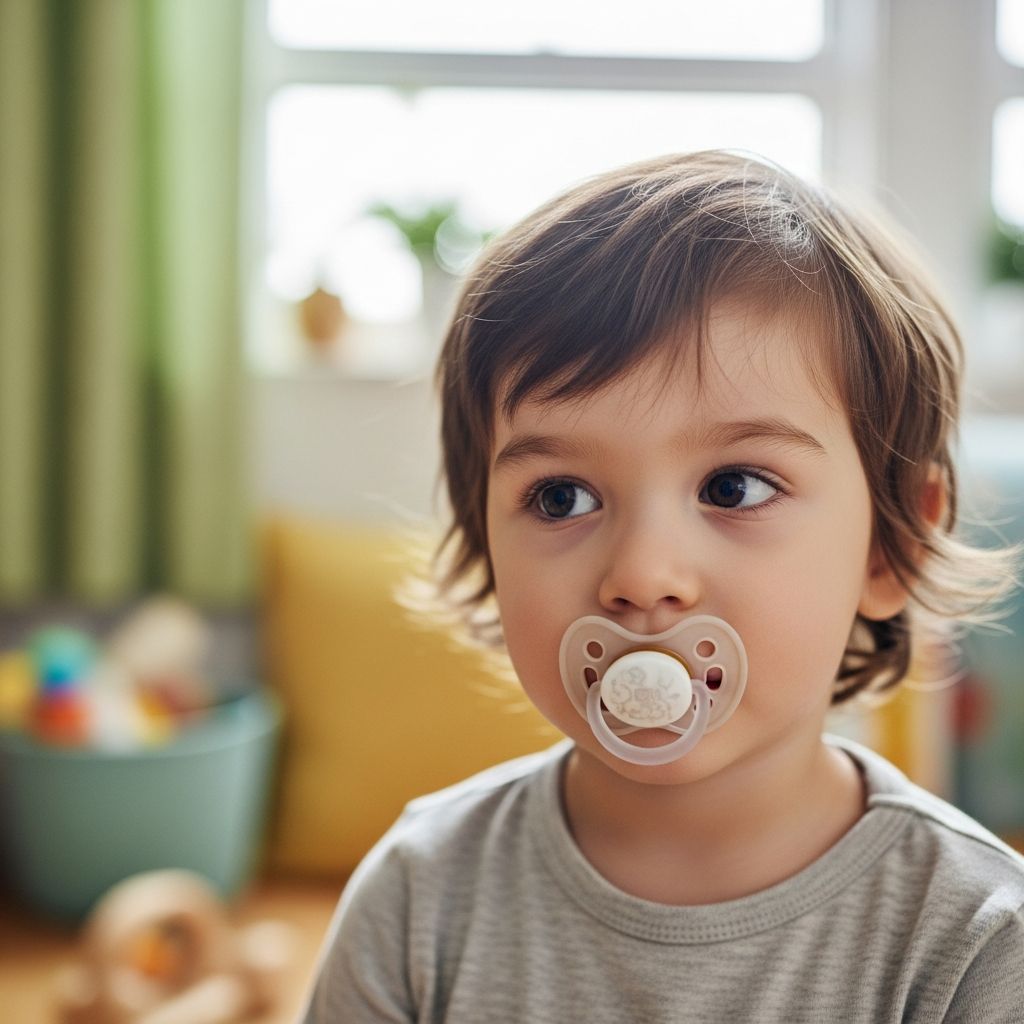
Seeing a four-year-old walk into the room with a pacifier can stir up a surprising mix of emotions—worry, embarrassment, guilt, even defensiveness. You know your child is not a baby anymore, yet this little piece of plastic still feels like a lifeline in your home.
This guide is for parents who are living in that in-between place: past babyhood, but not ready for a battle over the pacifier. It will help you understand what the pacifier really means to your child, what the actual risks are, and how to make decisions that respect both their needs and your own sanity.
Why Older Kids Still Cling to Pacifiers
By preschool age, a pacifier usually means much more than “something to suck on.” It has become a shortcut to calm, a familiar ritual, and one of the few things in your child’s world they can fully control.
- Emotional regulation: Many preschoolers use their pacifier to cope with big feelings—transitioning to preschool, a new sibling, moves, or even just the daily storms of being four.
- Predictable comfort: A pacifier is reliable. Adults have coffee, scrolling, or comfort food. Kids have stuffed animals, routines—and sometimes, pacifiers.
- A symbol of “my thing”: For some kids, the pacifier becomes a personal possession that nobody else can control, especially in a life where almost everything is decided for them.
Understanding the emotional weight of the pacifier helps shift the question from “Why won’t they stop?” to “What need is this meeting right now?” That shift is powerful when you start thinking about limits or weaning.
Common Feelings Parents Have (You’re Not Alone)
Parents of older pacifier users rarely feel neutral about it. You might be torn between what professionals say, what relatives think, and what works at 9 p.m. after an exhausting day.
- Embarrassment in public: Worrying that strangers silently judge your child—or your parenting—when they see a preschooler with a pacifier.
- Guilt about “bad habits”: Feeling like you’ve failed by “letting it go on this long,” even though the pacifier may have helped everyone get more sleep and less screaming.
- Fear of future problems: Concerns about teeth, speech, self-esteem, and whether this means your child is too dependent or anxious.
These feelings are valid, but they’re not the whole story. It’s possible to be a loving, competent parent and still have a four-year-old with a pacifier. What matters most is what you choose to do from here, not how you got here.
Real Risks vs. Internet Panic
Not every dramatic headline about pacifiers applies equally to every child. The reality is more nuanced. Long-term pacifier use can carry some risks, but severity depends on how often, how long, and in what situations it’s used.
| Concern | What Might Happen | What Really Matters |
|---|---|---|
| Dental alignment | Teeth may shift forward; bite can become open or misaligned if use is frequent and strong. | Occasional use for sleep is less risky than constant daytime use and hard sucking. |
| Speech and language | If a pacifier is in the mouth for much of the day, kids may talk less clearly or talk less in general. | Making sure your child talks without the pacifier in their mouth during play and conversation reduces this risk. |
| Ear infections | Some studies connect heavy pacifier use to more ear infections. | If your child has frequent ear infections, your pediatrician may recommend cutting back. |
| Social perception | Peers or adults might see pacifier use as “babyish.” | Kids vary widely; some don’t care, others feel self-conscious. Your child’s temperament matters. |
For many families, the critical line is not “pacifier or no pacifier,” but rather how the pacifier is used. A pacifier that’s in the mouth all day is different from one used only at bedtime or during intense stress.
Questions to Help You Decide If It’s a Problem
Before launching into a weaning plan, it helps to assess your actual situation. The answers can guide whether you focus on gentle limits, full weaning, or simply watching and waiting.
- Is the pacifier interfering with speech? Do you often hear muffled speech around the pacifier, or does your child take it out to talk clearly?
- Is your child using it all day? Or is use mostly limited to sleep, long car rides, and especially tough moments?
- Are there repeated health issues? Recurring ear infections, dental concerns, or advice from a pediatrician or dentist to cut back?
- What else is happening in life? New sibling, school transition, divorce, a move, or other major changes can make now the wrong time for a big push.
These questions are not a test you pass or fail. They’re simply tools to help you choose a realistic and compassionate direction.
When Keeping the Pacifier (For Now) Makes Sense
There are seasons when the benefits of keeping the pacifier a little longer outweigh the risks and stress of forcing a change. This can be particularly true when family stress is already high.
- Major life transitions: During events like starting preschool, welcoming a new baby, or navigating a move, keeping one strong coping tool can help your child feel anchored.
- High-anxiety or sensitive kids: Some children are wired more sensitively. Removing a key comfort too abruptly can backfire, leading to more clinginess, night waking, or behavior struggles.
- Your own capacity: If you are burnt out, grieving, or overwhelmed, a pacifier can be the difference between coping and falling apart. That reality matters.
Choosing not to pick a pacifier battle right now is still an intentional parenting decision. It’s not “giving in”; it’s triage—focusing on the most important needs first.
Reasonable Boundaries for a Big Kid and a Pacifier
If you decide to keep the pacifier for a while longer, you can still set thoughtful limits that protect your child’s development and your future self.
- Limit it to specific places: For example, pacifiers stay in the bed, in a special basket by the bed, or in the car seat for long drives.
- Limit it to certain times: Reserve it for sleep, illness, and very hard moments, rather than letting it drift into all-day use.
- Take it out to talk: Make a gentle family rule: “Pacis are for resting, not for talking,” and pause conversations until your child takes it out.
- No public pacifier zones: Some families decide that pacifiers don’t leave the house or don’t go to school, which helps reduce social concerns.
These boundaries work best when you state them calmly, repeat them consistently, and offer empathy when your child protests. The goal is to help your child practice life without the pacifier, not to shame them for still needing it sometimes.
Preparing for Life After the Pacifier
Even if you aren’t ready to wean today, you can lay groundwork that makes eventual weaning more successful. Think of this as gradually building the muscles your child will need for self-soothing without a pacifier.
- Strengthen other comfort tools: Introduce or highlight stuffed animals, blankets, bedtime stories, music, or night-lights so comfort doesn’t rely on just one object.
- Practice calming skills: Teach simple breathing (“smell the flower, blow the candle”), squeezing a pillow, or asking for a hug when upset.
- Use language for feelings: Replace “Here’s your paci” with “You’re sad and tired; let’s snuggle.” Over time, this helps your child connect comfort with people and words, not just objects.
The more practice your child gets with other soothing strategies while the pacifier is still around, the less overwhelming it will feel when the pacifier eventually goes away.
Gentle Weaning Strategies (When You’re Ready)
When you decide it’s time to move on, a gradual and respectful approach often reduces conflict and tears. There is no single “right” method; the best one is the one you can stick with.
1. Slow and Steady Reduction
In this approach, you slowly shrink the role the pacifier plays in your child’s life until it simply no longer fits.
- Start by removing the pacifier from low-stress situations first (like TV time), keeping it only for sleep.
- After a week or two, move to naps only, then nights only.
- Talk openly about the plan in simple terms and celebrate each small reduction as a “big kid step.”
2. The “Special Occasion Goodbye”
Some families choose a specific date or event to say goodbye to the pacifier in a meaningful way.
- Pick a day in advance—a birthday, start of a new season, or a weekend with fewer obligations.
- Create a ritual: placing pacifiers in a decorated box, trading them for a special toy, or “planting” them in the garden for the “paci fairy.”
- Give your child a role in the process, such as drawing pictures of their pacifier or choosing where to put it.
3. Collaborative Problem-Solving for Older Preschoolers
Four-year-olds can participate meaningfully in decisions about their own comfort if guided thoughtfully. Collaborative conversations can turn a power struggle into a team project.
- Describe the situation neutrally: “Your pacifier has helped you for a long time. Your mouth and teeth are getting bigger now, and we need a new plan.”
- Invite ideas: Ask your child how they think they could feel cozy without the pacifier and write down their suggestions.
- Agree on a trial plan: “Let’s try this for three nights and see how it goes. We’ll talk about it together.”
No matter which approach you choose, expect some pushback. Tears and protests do not necessarily mean you are doing something wrong; they mean your child is doing the hard work of change, with you by their side.
Handling Setbacks and Second Thoughts
Even with a great plan, real life is messy. A child who was doing well without the pacifier might suddenly beg for it after an illness, a nightmare, or a difficult week at school.
- Expect regression: Emotional growth is not a straight line. Short-term setbacks do not erase progress.
- Decide in advance what’s non-negotiable: Are you willing to bring the pacifier back temporarily, or is it gone for good? There’s no universal rule, but it helps to think this through before a 2 a.m. meltdown.
- Reassure more, not less: Offer extra cuddles, presence, and verbal comfort when the pacifier is gone. Your attention is the best replacement.
If you do decide to reintroduce the pacifier temporarily, try to keep the structure clear: “We’ll use it just for sleeping this week while you’re sick, and then we’ll put it away again.” This can reduce confusion for both you and your child.
Supporting Your Own Emotions in the Process
Pacifier decisions are not just about your child. They touch on your identity as a parent, your history, and your capacity. Honoring your own feelings will help you stay calmer and more consistent.
- Notice your triggers: Is it relatives’ comments, social media, doctor’s advice, or your own perfectionism that makes you feel pressured?
- Adjust your expectations: Some kids give up the pacifier in a week. Others need months of gradual change. Both are normal.
- Seek support: Talking with other parents, a pediatrician, dentist, or therapist can provide reassurance and perspective.
Responding thoughtfully to pacifier use at four years old is a real parenting task, not a minor detail. You deserve credit for thinking carefully about it.
FAQs About Pacifiers and Preschoolers
Is it “wrong” for a four-year-old to still have a pacifier?
It’s not morally wrong, and it does not automatically mean something is “wrong” with your child or your parenting. That said, by preschool age it is reasonable to review how often the pacifier is used and whether any changes are needed to support healthy development.
Will my child’s teeth be ruined forever?
Extended, frequent pacifier use can affect how teeth line up, but many mild changes improve on their own after the habit stops. A pediatric dentist can give you personalized advice, especially if the pacifier is used a lot during the day or your child already has noticeable bite issues.
Does a pacifier cause speech delays?
Having an object in the mouth all day can limit opportunities to practice clear speech, but the pacifier itself is only one factor among many. Encouraging your child to remove the pacifier when talking and offering rich conversation, stories, and songs can help protect their language development.
Should I cut the pacifier or make it “less satisfying”?
Some families trim or puncture pacifiers so they feel different, but this can create safety concerns if pieces break off. It’s generally safer to retire old pacifiers completely and use other strategies, like gradual limits or special goodbye rituals.
What if my partner and I disagree about the pacifier?
Try to discuss your shared goals first: protecting health, preserving sleep, avoiding shaming, and staying consistent. From there, choose one plan you can both support publicly, even if you compromise behind the scenes, so your child gets a clear and united message.
Choosing a Path That Fits Your Family
A four-year-old with a pacifier is not a parenting failure; it’s a snapshot in time. The goal is not just to remove an object, but to help your child grow in their capacity to handle big feelings with your support. Whether you decide to wait, set limits, or start active weaning, you’re allowed to prioritize connection, kindness, and realistic expectations.
In the long run, your child will not be defined by how long they used a pacifier. What they will remember is how it felt to go through changes with you—seen, supported, and loved.