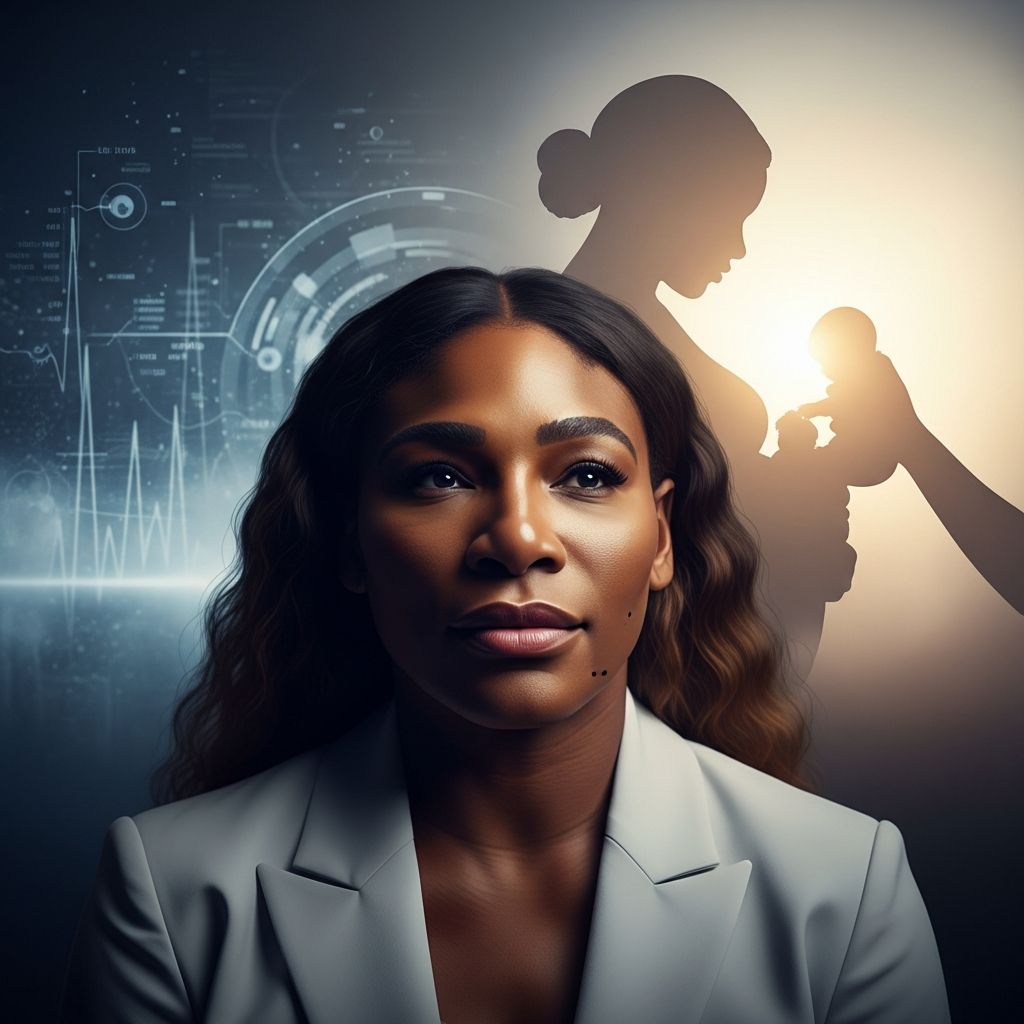
The United States faces a persistent public health emergency with maternal mortality rates that surpass those of other developed nations. Tennis icon Serena Williams, having endured life-threatening complications during childbirth, is channeling her influence into transformative investments aimed at safeguarding mothers and infants. Her efforts highlight the urgent need for systemic change, particularly in addressing racial inequities that disproportionately affect Black women.
The Alarming Reality of Maternal Deaths in America
Maternal mortality refers to deaths related to pregnancy or childbirth occurring during pregnancy or within one year of the end of pregnancy. In the U.S., approximately 700 women die annually from such complications, with three in five of these deaths deemed preventable. The rate has seen troubling increases, jumping from about 20 deaths per 100,000 live births in 2019 to 33 per 100,000 in 2021, according to data from the National Center for Health Statistics.
Racial disparities exacerbate this crisis. Black, Alaska Native, and Native American women are roughly three times more likely to die from pregnancy-related causes compared to white women, as reported by the Centers for Disease Control and Prevention (CDC). This gap persists even among women with higher education and income levels, underscoring deep-rooted issues in healthcare access, quality, and bias.
- Key Statistics:
- 700 annual pregnancy-related deaths in the U.S.
- 60% rise in maternal mortality rate from 2019 to 2021.
- Black women: 3x higher risk than white women.
- One-third of deaths occur up to a year postpartum.
The postpartum period is particularly dangerous, marked by fragmented care and limited follow-up, which leaves many women vulnerable to both physical and mental health complications.
Serena Williams’ Personal Brush with Maternal Danger
Serena Williams’ story brings a human face to these statistics. In 2017, after a smooth pregnancy, Williams experienced severe complications during labor with her daughter Alexis Olympia. Contractions caused her baby’s heart rate to drop dramatically, necessitating an emergency C-section. Post-surgery, she suffered a pulmonary embolism—a blood clot in her lungs—exacerbated by her history of deep vein thrombosis.
Despite her insistence on symptoms like shortness of breath and chest pain, initial medical responses were delayed. Williams credits her athletic background and advocacy for pushing through skepticism, ultimately saving her life. This ordeal, shared publicly in outlets like Elle and CNN, amplified national discourse on maternal health inequities, especially for high-profile Black women who still face dismissive treatment.
Strategic Investments: Mahmee Leads the Tech Charge
Motivated by her experience, Williams, via Serena Ventures, led a $3 million investment round in Mahmee in 2019. This Black-owned startup develops a digital platform delivering continuous, data-driven perinatal and postpartum care. Mahmee partners with hospitals like Cedars-Sinai and Children’s Hospital Los Angeles to provide accessible support across income levels, including Medicaid patients.
The platform offers personalized guidance from pregnancy through the baby’s first year, monitoring health metrics and flagging risks early. Founders emphasize proactive engagement: educating mothers on warning signs and facilitating timely physician interventions. With new funding, Mahmee expanded staff in engineering, clinical, and sales roles, targeting high-risk urban areas.
Co-investors included Mark Cuban, the Bumble Fund, and ArlanWasHere (a Backstage Capital and Cuban venture). Williams praised Mahmee’s evidence-based model for tackling fragmented care, stating it aligns perfectly with protecting moms and babies amid bleak mortality data.
| Investor | Contribution | Focus |
|---|---|---|
| Serena Ventures | Lead Investor | Data-driven maternal care |
| Mark Cuban | Angel Investor | Expansion in high-risk areas |
| Bumble Fund | Returning Investor | Equity for women-led startups |
| ArlanWasHere | First Lead Deal | Support for underrepresented founders |
Expanding Impact: The BirthFUND Initiative
Williams’ commitment extends beyond Mahmee. In 2024, she partnered with Elaine Welteroth to launch birthFUND during Black Maternal Health Week. This initiative funds holistic midwifery care for underserved families, covering out-of-pocket costs not insured in the U.S. Midwifery, standard in countries like the U.K. and Canada with superior outcomes, remains underutilized here due to insurance gaps and legal barriers in some states.
Welteroth, inspired by her 2021 home birth with Black midwives at Kindred Space LA, started with a birthday fundraiser. birthFUND quickly raised nearly $27,000 toward a $100,000 goal, backed by celebrities like Kelly Rowland, John Legend, Chrissy Teigen, Ashley Graham, Karlie Kloss, and Alexis Ohanian. Corporate partners like SoFi bolster its reach.
Between Williams’ 2017 birth and Welteroth’s, over 3,400 U.S. mothers died postpartum—a stark reminder of the crisis. birthFUND prioritizes Black mothers, promoting culturally competent care to mitigate biases and improve outcomes.
Broader Solutions and Systemic Reforms
Williams’ investments spotlight scalable fixes: tech platforms for continuity, midwifery expansion, and equity-focused funding. Yet, experts call for policy shifts like standardized emergency protocols, better postpartum coverage, and bias training for providers, as recommended by the CDC.
Preventive strategies include:
- Universal postpartum home visits.
- Extended Medicaid for a full year post-birth.
- Investment in community health workers.
- Data collection to track disparities.
These align with global best practices from nations with lower rates, emphasizing comprehensive, patient-centered care.
Measuring Progress and Future Outlook
Since 2019, Mahmee has scaled operations, integrating into more health systems and demonstrating risk reduction through early interventions. birthFUND’s model could inspire similar funds nationwide. Williams’ visibility drives awareness, pressuring policymakers and insurers.
Challenges remain: surging rates post-2021 and barriers to midwifery. However, celebrity-led initiatives like these catalyze change, proving private investment can bridge public health gaps.
Frequently Asked Questions (FAQs)
What is the U.S. maternal mortality rate?
The rate rose to 33 deaths per 100,000 live births in 2021, far higher than peer nations.
Why do Black women face higher risks?
Factors include healthcare biases, access barriers, and chronic conditions like hypertension, compounded by systemic inequities.
How does Mahmee work?
It provides app-based monitoring, education, and care coordination from pregnancy to one year postpartum.
What is birthFUND?
A fund covering midwifery costs for underserved families, launched by Welteroth and Williams.
Are most maternal deaths preventable?
Yes, about 60% are, through better screening, follow-up, and equitable care.
References
- Serena Williams Invests $3 Million in Reducing Maternal Mortality Rates — Philanthropy Women. 2019-07-15. https://philanthropywomen.org/events/serena-williams-invests-3-million-in-reducing-maternal-mortality-rates/
- Serena Williams and Mark Cuban Invest in Startup Fighting Maternal Mortality — Fortune. 2019-07-15. https://fortune.com/2019/07/15/mahmee-serena-williams-mark-cuban/
- Serena Williams invests in project aimed at improving women’s maternal health — Andscape. N/A. https://andscape.com/features/serena-williams-invests-in-project-aimed-at-improving-womens-maternal-health/
- Elaine Welteroth and Serena Williams take on America’s maternal health crisis — TheGrio. 2024-04-17. https://thegrio.com/2024/04/17/elaine-welteroth-and-serena-williams-take-on-americas-maternal-health-crisis/
- Serena Williams + Elaine Welteroth on Black Maternal Health — TIME. N/A. https://time.com/collections/time100-voices/6965534/serena-williams-elaine-welteroth-black-maternal-health-birthfund/
- Black Maternal Health Week: Serena Williams Shares Her Near-Fatal Birthing Story — EBONY. N/A. https://www.ebony.com/serena-williams-shares-her-near-fatal-birthing-story1/