The holiday season brings excitement for many families, but for children with sensory sensitivities, it can feel like an assault on their senses. Bright lights, bustling crowds, unfamiliar scents, and disrupted routines often lead to overwhelm. This guide offers fresh, actionable strategies to transform holidays into a time of joy and calm, drawing from expert insights on sensory processing needs.
Understanding Sensory Challenges in Holiday Settings
Sensory-sensitive children, including those with autism, ADHD, or sensory processing disorder, experience the world more intensely. Holiday environments amplify this: flashing decorations trigger visual distress, carols and gatherings cause auditory overload, and new foods introduce taste and smell aversions.
Common reactions include meltdowns, withdrawal, or anxiety spikes. Recognizing these early allows proactive adjustments. For instance, heightened sensitivity to textures might make gift-wrapping paper or festive clothing unbearable. By anticipating triggers, parents can create buffers that let kids participate without distress.
- Visual triggers: Twinkling lights, crowded displays.
- Auditory triggers: Music, bells, fireworks.
- Olfactory/gustatory: Strong perfumes, rich foods.
- Tactile: Itchy fabrics, hugs from relatives.
- Proprioceptive: Long travel, packed schedules.
Designing a Calming Home Environment
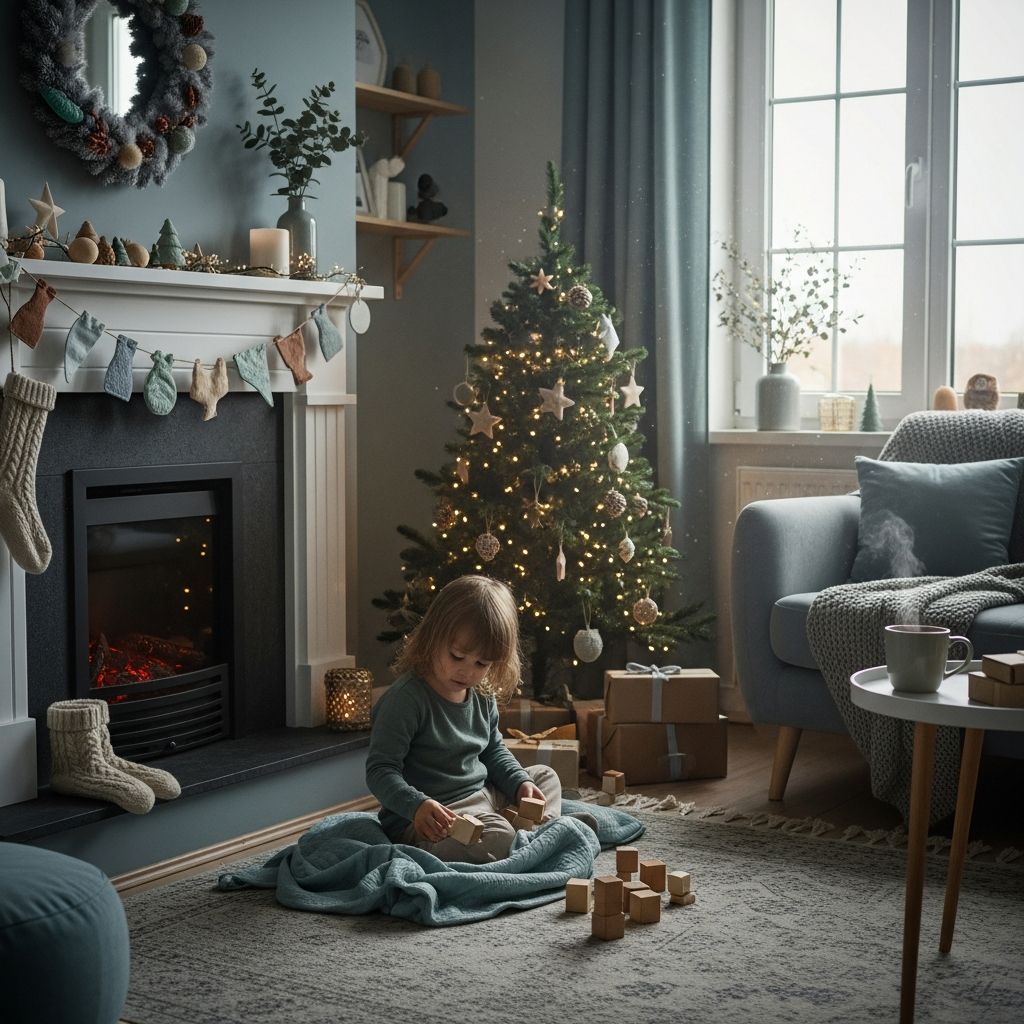
Your home is the holiday hub—make it a sanctuary. Start by curating decorations: opt for soft-glow string lights over strobing ones, and introduce items gradually over days to build tolerance. Scent management is key; use ventilation fans during cooking and choose unscented candles.
Create dedicated quiet zones in low-traffic areas. Equip them with bean bags, dim lamps, and noise-canceling headphones. These spaces teach self-regulation, empowering kids to retreat independently.
| Zone Element | Purpose | Examples |
|---|---|---|
| Seating | Comfort | Weighted blanket, rocking chair |
| Lighting | Calm visuals | Warm LED bulbs, fairy lights |
| Audio | Noise reduction | Headphones, white noise machine |
| Toys | Distraction | Fidget spinners, soft plushies |
Maintain core routines amid festivities. Anchor days with familiar mealtimes and bedtimes, using visual schedules to map events like ‘gift time’ or ‘family dinner’. This predictability reduces anxiety by 30-50% in neurodivergent kids, per sensory integration studies.
Engaging Sensory-Safe Holiday Activities
Swap high-stimulation outings for home-based pursuits that delight without overwhelming. Focus on tactile, visual, and proprioceptive play tailored to holidays.
Creative Crafts for Fine Motor Fun
Crafts build skills while keeping engagement low-key. Gather simple supplies for winter tree art: collect twigs on a calm walk, then glue onto paper and dab with Q-tip snow paint. Or craft textured ornaments using felt, yarn, and glue—no scissors needed for safety.
- Paper snowflakes: Fold, cut, unfold for magical reveals.
- Playdough cookies: Mold salt dough into shapes, bake later.
- Calm jars: Layer glitter, glue, water for shake-and-watch soothing.
These activities promote focus and pride, lasting 20-45 minutes without fatigue.
Sensory Bins and Tactile Exploration
Sensory bins are contained worlds of wonder. For holidays, fill a shallow tray with white beans as ‘snow,’ adding mini pinecones, bells, and fabric swatches. Blindfolded exploration sharpens description skills: ‘What feels crunchy? Smooth?’
Alternatives include kinetic sand for molding ‘presents’ or water beads mimicking ornaments. Limit to 15-minute sessions to avoid overstimulation.
Outdoor and Movement Breaks
Nature resets senses. Bundle up for neighborhood light-viewing walks, collecting leaves for crafts. Snow play offers deep-pressure input via packing soft snowballs—heavy work that calms the nervous system.
Indoor alternatives: Build blanket forts as ‘Santa’s workshop,’ using clothespins for clipping ‘stockings.’ Pretend play encourages imagination safely.
Navigating Social Gatherings and Travel
Family events and trips spike stress. Prep with social stories: Use photos and scripts to rehearse ‘Auntie’s hug? I say ‘high-five please”. Choose smaller meetups or host at home for control.
For gift-opening, pace it—one per 10 minutes, with breaks. Suggest quiet gifts like books or puzzles to relatives via a polite wishlist.
Travel kits are essential:
- Chewelry for oral soothing.
- Sunglasses and hoodies for shielding.
- Preferred snacks, avoiding new tastes.
- Timers for ‘quiet time’ in lines.
Practice short mock trips to desensitize.
Incorporating Sensory Diets Daily
A sensory diet—custom inputs for regulation—is vital. Integrate ‘heavy work’ like carrying wrapped boxes or jumping on a mini-trampoline before events. Follow with calming inputs: deep pressure hugs or swinging.
Track effectiveness in a simple journal: Note activity, child’s response (scale 1-5 calm), duration. Adjust weekly for optimal results.
Self-Care for Parents and Siblings
Supporting a sensory child drains energy—prioritize yours. Tag-team events, use respite care, and connect with online communities for solidarity. Teach siblings empathy: ‘Your brother’s ears hurt from noise; let’s play quietly together.’
Model calm: Deep breaths visibly signal ‘reset time’ for all.
Frequently Asked Questions (FAQs)
What if my child refuses all activities?
Observe silently first, then offer two choices: ‘Snow bin or book?’ Patience builds participation over time.
Are sensory tools expensive?
Many are DIY: Bean bags from rice-filled socks, calm jars from recyclables. Community libraries often lend headphones.
How do I handle meltdowns at events?
Remove to quiet zone calmly, no scolding. Use a ‘safe word’ for escape signals. Debrief later positively.
Can these tips help non-autistic kids?
Yes—routines and breaks benefit all, reducing general holiday fatigue.
What about virtual celebrations?
Ideal for sensitivities: Short Zoom calls with muted mics, familiar backgrounds.
Implementing these strategies fosters inclusive holidays where every child shines. Small changes yield big joy, turning potential chaos into cherished memories.
References
- A Calm and Bright Holiday: How to Create a Sensory-Friendly Celebration — Cultivate BHE. 2023. https://cultivatebhe.com/a-calm-and-bright-holiday-how-to-create-a-sensory-friendly-celebration/
- A Guide to a Sensory-Friendly Holiday Season for Autism — Rise Up for Autism. 2023. https://riseupforautism.com/blog/a-guide-to-a-sensory-friendly-holiday-season-for-autism
- Sensory-Friendly Holiday Activities: Calming Tips for Families — Lumiere Children’s Therapy. 2023. https://www.lumierechild.com/blog/sensory-friendly-holiday-activities-kids/
- Holiday Sensory-Friendly Kids Activities — Dashi Rivers Autism Care. 2023. https://www.dashirivers.com/blog/holiday-sensory-friendly-kids-activities
- How to Celebrate a Sensory-Friendly Holiday — TEAM4Kids. 2023. https://www.team4kids.com/how-to-celebrate-a-sensory-friendly-holiday-2/
- 5 Holiday Inspired Sensory Activities — Brain Balance Centers. 2023. https://www.brainbalancecenters.com/blog/holiday-inspired-sensory-activities