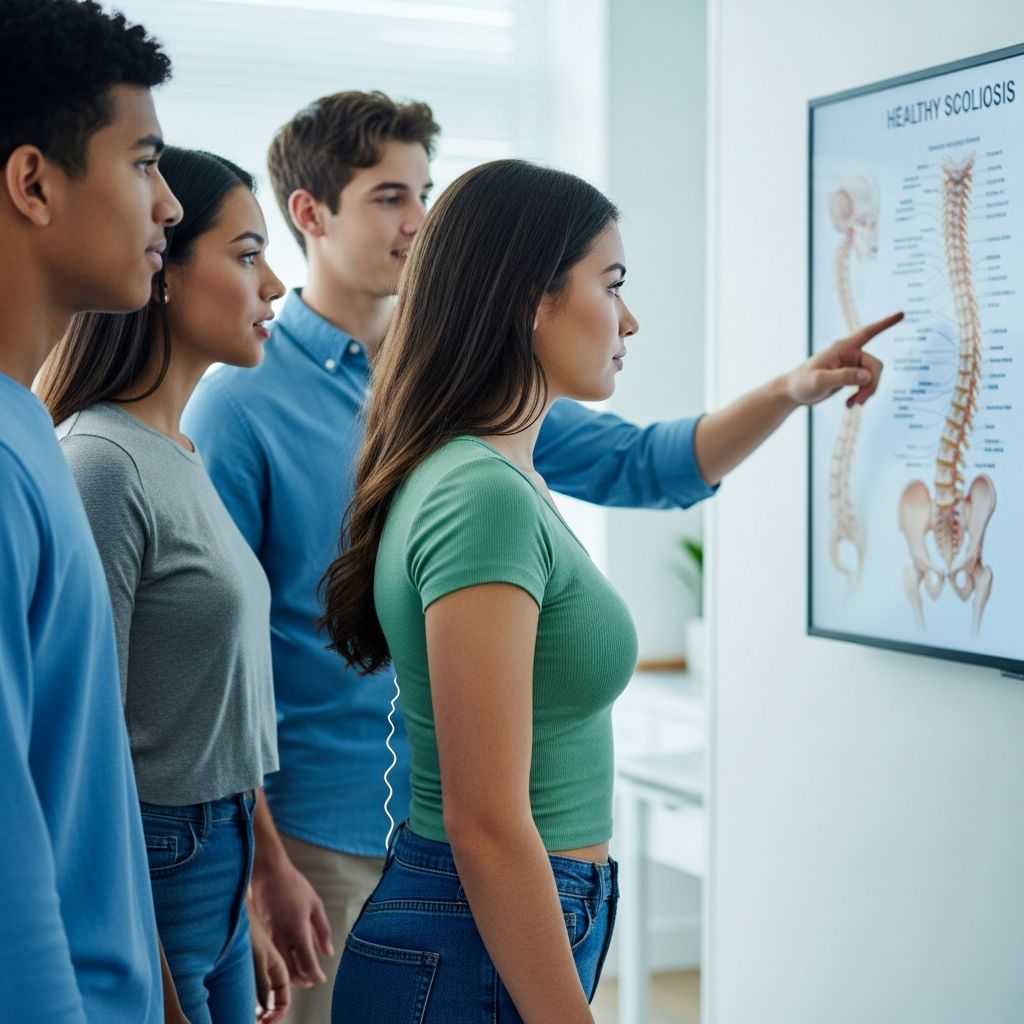
Scoliosis can sound scary when you first hear the word, especially if a doctor mentions it during a school physical or sports checkup. In reality, most spine curves are mild, can be safely monitored, and never stop you from doing the things you love. This guide explains scoliosis in clear, teen-friendly language so you know what it is, how it is treated, and how to handle school, sports, and body image with confidence.
What Exactly Is Scoliosis?
Your spine has natural front-to-back curves that help absorb shock and keep you balanced. With scoliosis, the spine curves sideways in a C or S shape when viewed from behind, and often twists slightly as well.
Doctors generally use the term scoliosis when the curve is at least about 10 degrees on an X-ray and the bones are still growing. In many teens, the curve is mild and never causes serious problems.
| Spine Type | How It Looks | What It Means |
|---|---|---|
| Typical spine | Appears straight from behind; gentle curves from the side | Normal front-to-back curves that help with balance and movement |
| Scoliosis | Sideways C- or S-shaped curve when seen from behind | Abnormal lateral curve; may or may not need treatment |
Different Kinds of Scoliosis
Scoliosis is not one single condition. Doctors group it by what seems to be causing the curve and when it appears.
Idiopathic scoliosis (most common in teens)
The word idiopathic means “no clear cause.” Adolescent idiopathic scoliosis is the most common type and usually shows up between ages 10 and 18, often during growth spurts.
- Cause is unknown but likely involves a mix of genes, hormones, and how cells grow.
- Often found in otherwise healthy kids and teens.
- Curves may stay small or may slowly increase while you are still growing.
Congenital scoliosis
Congenital scoliosis is present from birth. Some of the vertebrae, the small bones in the spine, did not form or separate normally while the baby was developing in the womb.
- Can involve missing parts of a vertebra or two vertebrae being partly fused together.
- Curves can worsen as the child grows, so close monitoring is important.
Neuromuscular scoliosis
Neuromuscular scoliosis develops when a condition affects the nerves or muscles that support the spine, such as cerebral palsy, muscular dystrophy, or spina bifida.
- Muscles may be too weak or unbalanced to hold the spine straight.
- Curves can be more severe and may require specialized care.
Degenerative (adult) scoliosis
Degenerative scoliosis usually affects older adults, not teens. It happens when age-related changes, arthritis, or disc wear cause the spine to tilt and curve.
- More common after age 40 or 60, often linked with spinal stenosis (narrowing of the spinal canal).
- Back pain and leg pain can be more of an issue than the curve itself.
Why Does Scoliosis Happen?
For most teens, there is no single easy answer. In idiopathic scoliosis, researchers believe several factors interact rather than one clear cause.
Possible factors in idiopathic scoliosis
- Genetics: Curves may run in families, suggesting a genetic component.
- Hormones: Differences in growth and hormone levels during puberty may influence how the spine develops.
- Cell and tissue changes: Subtle differences in bone, muscle, or connective tissue can affect spine alignment.
Other causes of scoliosis
Sometimes scoliosis is part of another medical situation.
- Spine formation differences before birth (congenital scoliosis).
- Neuromuscular conditions that weaken or unbalance the muscles, such as cerebral palsy or muscular dystrophy.
- Injuries or infections that damage the spine.
- Tumors or growths that push the spine out of alignment.
Common Signs and Symptoms in Teens
Many teens with scoliosis feel completely fine and notice no pain at all. Often, a school nurse, sports doctor, or pediatrician spots the curve during a routine exam.
Changes you might see in the mirror
- One shoulder looks higher than the other.
- One shoulder blade sticks out more.
- One hip appears higher or sticks out more.
- Your waistline looks uneven or one side of your torso seems more “curved.”
- When you bend forward, one side of your rib cage or lower back sticks up higher.
- Your clothes hang oddly, or the hemlines look uneven.
Other possible symptoms
- Feeling like you lean slightly to one side when standing or walking.
- Mild back discomfort or tiredness after standing for a long time (more common in older teens and adults).
- Very rarely, trouble breathing in severe, untreated curves because the rib cage can crowd the lungs.
Most mild curves do not cause severe pain or disability, especially in younger teens. If you notice any of these signs, it is worth getting checked, but it does not automatically mean you will need a brace or surgery.
How Doctors Check for Scoliosis
Diagnosing scoliosis usually starts with a simple physical exam and may include imaging tests.
The physical exam
During a scoliosis check, a doctor, nurse, or physical therapist may:
- Look at your back, shoulders, hips, and ribs while you stand and bend forward.
- Use a small measuring device (scoliometer) along your spine while you bend to estimate how much rotation there is.
- Check your height and compare it with past visits to see how fast you are growing.
- Test your reflexes, strength, and sensation to rule out nerve problems if needed.
Imaging and measurements
If the exam suggests scoliosis, the next step is usually an X-ray of your spine.
- X-rays show the full spine from the neck to the pelvis.
- Doctors measure the curve in degrees using a method called the Cobb angle.
- The location, size, and pattern of the curve help guide treatment decisions.
Occasionally, other tests like MRI are used if there are unusual symptoms or concerns about the spinal cord, but many teens do not need them.
Treatment Options: Watching, Bracing, and Surgery
Treatment depends on how big the curve is, where it is, whether it is likely to get worse, and how much growing you have left. The main goals are to keep the curve from getting significantly larger and to maintain a healthy, active life.
Observation (watchful waiting)
For many mild curves, especially in younger teens, doctors recommend just keeping an eye on the spine over time.
- Regular checkups every few months during growth spurts.
- Repeat X-rays when needed to see whether the curve is changing.
- No brace or surgery if the curve stays small and stable.
Bracing
If the curve is moderate and you are still growing, a back brace may be recommended to slow or stop the curve from getting worse.
- Braces are usually worn under clothes for many hours a day.
- Most modern braces are made of lightweight plastic and are custom-fitted.
- They do not usually straighten the spine completely, but they can greatly reduce the chance of needing surgery by preventing progression.
Getting used to a brace can be challenging at first. Many teens worry about appearance or comfort, but over time, most learn how to hide the brace under clothing and adjust to daily wear.
Surgery
Surgery is reserved for curves that are large, clearly getting worse, or causing significant problems.
- The most common surgery is spinal fusion, where the surgeon straightens the spine as much as is safely possible and joins certain bones together using bone grafts and hardware.
- Rods, screws, or hooks hold the spine in place while the bones fuse.
- Newer techniques and careful planning aim to protect flexibility and let teens return to many activities over time.
Surgery decisions are never rushed. You and your family will usually meet with a spine specialist, ask questions, and consider the benefits and risks together.
Living Your Life With Scoliosis
Having a curved spine does not define who you are. With the right support, most teens with scoliosis enjoy sports, social life, and future plans just like their peers.
Sports and physical activity
- Many teens with scoliosis can continue regular physical education and sports.
- Activities that build strength and flexibility, such as swimming, yoga, or core exercises, may help you feel better and support your back.
- Always follow your doctor’s guidance, especially if you wear a brace or have had surgery.
Dealing with body image and emotions
Changes in your back or wearing a brace can make you feel self-conscious. These feelings are normal, but they do not have to control your life.
- Talk openly with trusted friends or family about how you feel.
- Ask your doctor about support groups or online communities for teens with scoliosis.
- Remember that most people notice your smile, interests, and personality more than your back.
School tips for teens with scoliosis
- Let the school nurse or counselor know you have scoliosis, especially if you wear a brace.
- Ask about a locker location that makes carrying books easier if you have back discomfort.
- Plan how to change into gym clothes or brace-friendly outfits comfortably.
When to Call the Doctor
Contact your health care provider if you notice:
- New or worsening unevenness in shoulders, hips, or ribs.
- Sudden back pain that does not improve with rest.
- Numbness, weakness, or tingling in your legs.
- Any trouble breathing or chest tightness, especially if you already have a large curve.
Most follow-up visits are routine and quick. Keeping appointments helps catch any changes early, which gives you more options and better outcomes.
Frequently Asked Questions About Scoliosis
Does bad posture or carrying a heavy backpack cause scoliosis?
No. Slouching, using a phone, or carrying a backpack might make your back feel tired, but these habits do not cause scoliosis. In idiopathic scoliosis, the curve develops for reasons that are not related to posture or backpack weight.
Can scoliosis be cured with exercises alone?
Exercise is great for staying strong and flexible, but it usually cannot fully correct an established scoliosis curve. Physical therapy or specific exercise programs may support overall spine health and sometimes complement bracing, but they do not replace medical monitoring or treatment when needed.
Will I be able to have children someday if I have scoliosis?
Most people with scoliosis, including those who had bracing or surgery, can have healthy pregnancies and births. Your future obstetrician and spine specialist can work together to plan any special care if needed.
Can I still grow if I wear a brace?
Yes. A brace is designed to guide the way your spine grows, not stop your growth. Many teens continue to grow taller while wearing a brace; the brace mainly aims to slow down curve progression during that growth period.
Will scoliosis shorten my life?
For the vast majority of people with mild to moderate scoliosis, especially when monitored and treated appropriately, life expectancy is normal. Severe, untreated curves may cause more complications, which is why regular follow-up with your care team matters.
References
- Scoliosis — National Institute of Arthritis and Musculoskeletal and Skin Diseases (NIAMS). 2021-09-20. https://www.niams.nih.gov/health-topics/scoliosis
- Scoliosis — American Association of Neurological Surgeons (AANS). 2018-06-01. https://www.aans.org/patients/conditions-treatments/scoliosis/
- Scoliosis — NHS (National Health Service, UK). 2023-11-23. https://www.nhs.uk/conditions/scoliosis/
- Scoliosis: What It Is, Types, Causes, Symptoms & Treatment — Cleveland Clinic. 2023-05-17. https://my.clevelandclinic.org/health/diseases/15837-scoliosis
- Scoliosis, Symptoms, Causes, & Treatments — University of Utah Health. 2022-08-15. https://healthcare.utah.edu/spine/conditions/scoliosis