Menstruation is a natural part of growing up for people with uteruses, often beginning between ages 10 and 15, with 12 being the average starting point. Many experience their first period unexpectedly at school, making preparation key to staying comfortable and confident.
Understanding When and Why Periods Start
Periods signal the body’s readiness for potential pregnancy, typically arriving about two years after puberty signs like breast development begin. Cycles occur roughly monthly, lasting 3 to 7 days, though early cycles may be irregular for 2-3 years. Tracking via calendar helps predict flows, noting heavier or lighter days for better planning.
Factors like family history influence timing, but variations are normal—as early as 9 or as late as 14. Pre-period signs include clear vaginal discharge 6 months to a year prior.
Recognizing Signs Your Period Might Start Soon
Before bleeding, many notice bodily changes. Common premenstrual indicators include:
- Bloating and abdominal discomfort
- Breast tenderness
- Mood shifts like irritability or sadness
- Fatigue or low energy
- Acne flare-ups
These PMS symptoms typically resolve after a few days of bleeding. Awareness helps students prepare a kit for school.
Building Your School Period Survival Kit
A compact kit in your backpack or locker prevents panic. Essentials include:
- Several pads or preferred products
- Spare underwear and pants
- Wet wipes for cleaning
- Panty liners for light days
- Small sealable bag for used items
- Pain relievers like ibuprofen (with parental approval)
Keep it discreet in a cute pouch. Schools often supply products via nurses or bathrooms.
Types of Menstrual Products and How to Choose
| Product | Best For | Pros | Cons | Change Frequency |
|---|---|---|---|---|
| Pads | Beginners, heavy flows | Easy to use, no insertion | Bulkier, possible leaks if not changed | Every 4-6 hours |
| Tampons | Swimming, active days | Discreet, allows activity | Learning curve, risk if left too long | Every 4-8 hours |
| Menstrual Cups | Eco-friendly, long wear | Reusable, cost-effective | Requires practice, washing | Every 8-12 hours |
| Period Underwear | Light flows, backups | Comfortable, washable | May need layering for heavy days | Wash after use |
Pads suit most starters; experiment to find fits. Change frequently to avoid odor or infection—aim between classes or lunch. School nurses provide extras.
Step-by-Step: What to Do If Your Period Starts at School
If spotting underwear mid-class:
- Stay calm: Excuse yourself quietly to the bathroom.
- Assess: Use toilet paper to check flow.
- Protect: Apply pad or insert tampon/cup.
- Clean up: Wipe with wipes; change underwear if needed.
- Dispose: Wrap used items in bag, trash discreetly.
- Seek help: Visit nurse for supplies or spare clothes.
Practice at home builds confidence. Inform a trusted teacher if accidents happen.
Managing Discomfort and Pain During School
Cramps, headaches, or backaches affect focus. Strategies:
- Heat pads or warm water bottles (if allowed)
- Over-the-counter pain meds
- Hydration and light snacks
- Rest positions or stretching
- Nurse visits for advice
Severe pain warrants a doctor’s check, as it could signal issues.
Navigating School Policies and Free Resources
Many districts mandate free products in bathrooms, especially grades 4+. Laws like NYC’s ensure access without stigma. Ask nurses before breaks for supplies. Normalize by discussing in health classes.
Talking to Teachers, Friends, and Family
Share with parents early for support; they can pack kits. Tell gym teachers for activity adjustments. Friends form support networks. Conversations reduce embarrassment.
Period Myths Busted for School Life
- Myth: You can’t exercise on your period. Fact: Activity eases cramps; use tampons for sports.
- Myth: Periods are dirty. Fact: Normal body process; hygiene prevents issues.
- Myth: Everyone starts at the same time. Fact: Ages vary widely.
Long-Term Cycle Tracking for School Schedules
Apps or calendars predict periods around exams or events. Note patterns: average 28 days, but 21-35 normal for teens. Share with parents for backups.
Frequently Asked Questions (FAQs)
What if I leak through my clothes at school?
Tie a sweater around waist, visit nurse for spares. Most have spare uniforms.
Can I swim in gym class during my period?
Yes, with tampons or cups.
How often should I change products?
Every 4-6 hours or when full to avoid health risks.
What if my period is very irregular?
Normal first years; see doctor if absent 90+ days or severe pain.
Are school products free and private?
Yes, in many places—no questions asked.
Empowering Yourself Through Education
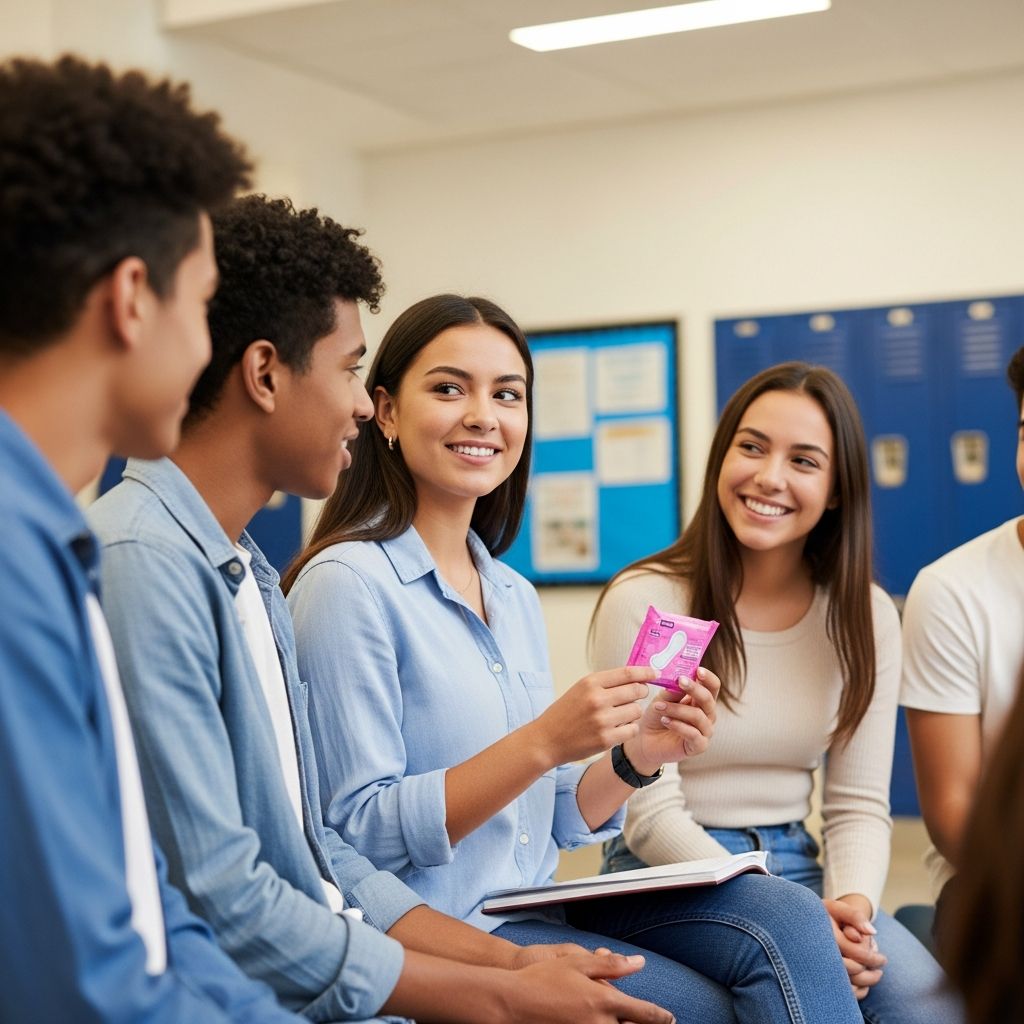
School workshops demystify periods, covering stigma, products, and pain management. Talk openly with caregivers; use books/videos. Periods mean health—celebrate this milestone.
(Word count: 1678)
References
- Your Period: A Short Guide for Young Students — MFHS.org. 2023. https://mfhs.org/period/
- Education — Period.org. 2024. https://period.org/education
- Normal teen menstrual cycles: When to see a gynecologist — University of Chicago Medicine. 2025-09. https://www.uchicagomedicine.org/forefront/pediatrics-articles/2025/september/getting-your-period-normal-menstrual-cycle-teens-preteens
- Talking to Your Child About Periods — Nemours KidsHealth. 2024. https://kidshealth.org/en/parents/talk-about-menstruation.html
- Know Your Period: The NYC Student Guide — NYC Department of Education. 2024. https://pwsblobprd.schools.nyc/prd-pws/docs/default-source/default-document-library/health-and-wellness/knowyourperiod-cge-english.pdf?sfvrsn=c8b46d6_4
- Menstrual Period — Nationwide Children’s Hospital. 2024. https://www.nationwidechildrens.org/family-resources-education/health-wellness-and-safety-resources/helping-hands/menstrual-period
- Period Education Guide — OHSU. 2024-05. https://www.ohsu.edu/sites/default/files/2024-05/Period%20Education%20Guide%20Full%20final.pdf
- A parent’s ultimate guide to periods — CHOC. 2024. https://health.choc.org/a-parents-ultimate-guide-to-periods/
- Healthy Habits: Menstrual Hygiene — Centers for Disease Control and Prevention (CDC). 2024. https://www.cdc.gov/hygiene/about/menstrual-hygiene.html