Understanding the Complexity of School Masking Discussions
The question of whether children should wear masks in educational settings has become one of the most contentious policy debates in recent years. As school districts across the nation have grappled with evolving guidelines, parents, educators, medical professionals, and policymakers have found themselves at odds over what constitutes the best approach for protecting children’s health while preserving their developmental and educational experiences. This multifaceted discussion extends far beyond simple health considerations, touching on psychological wellbeing, social development, academic performance, and fundamental questions about parental rights and governmental authority.
The Foundation of the Masking Debate
When pandemic-related masking policies were first implemented in schools, the intention was straightforward: reduce transmission of respiratory viruses among a vulnerable population in close quarters. However, as the pandemic evolved and new variants emerged, the scientific understanding of mask effectiveness and the long-term implications of masking for children remained subjects of genuine scientific inquiry and professional disagreement.
Leading health organizations provided guidance intended to inform school policies, yet this guidance was interpreted differently across jurisdictions. Some districts embraced universal masking requirements, viewing them as a necessary precaution. Others adopted more flexible approaches, allowing families to make individual decisions based on their circumstances. Still others prohibited masks entirely, prioritizing what they viewed as normal childhood experiences.
Developmental Considerations and Communication Concerns
Among the primary concerns raised by developmental specialists and educators is the potential impact of mask-wearing on children’s ability to learn through facial expressions and nonverbal communication. From infancy through early childhood, individuals develop crucial social and emotional competencies by observing faces—watching how teachers express approval, disappointment, enthusiasm, or confusion provides essential feedback that guides learning and behavior.
When masks obscure these critical communication channels, children may struggle to read social cues from peers and authority figures. This concern becomes particularly acute for younger students whose communication skills are still developing and for children with language delays or hearing impairments who may rely more heavily on visual information and lip-reading.
Educational researchers have noted that masked instruction removes one layer of information that traditionally supported classroom learning. Teachers who typically use animated facial expressions, smiles of encouragement, or concerned looks to communicate with students found themselves relying more heavily on vocal inflection and body language—channels that may not convey the same nuance or emotional authenticity.
Competing Perspectives on Risk and Protection
Medical professionals offered divergent assessments regarding the actual threat posed by COVID-19 to school-aged children and the protective value of masks. Some experts emphasized that children generally experienced less severe disease outcomes compared to older populations and questioned whether the developmental costs of masking justified the protective benefit.
Conversely, other medical authorities raised concerns about long-term effects of infection that remained poorly understood at the time policy decisions were being made. They argued that regardless of immediate symptom severity, the unknown risks of long-term complications warranted protective measures, particularly in communal settings where transmission risks were elevated. These experts contended that the temporary inconvenience of masking was a reasonable trade-off for potential protection against unknown future health consequences.
Social and Emotional Impacts
Beyond academic learning, the masking debate touched on fundamental aspects of childhood social development. School environments serve purposes extending far beyond academic instruction—they provide spaces for peer interaction, friendship formation, and the development of social skills essential for healthy psychological development.
Critics of masking policies highlighted concerns about social isolation and the difficulty of forming connections when faces remained hidden. They noted that masked peer interactions might intensify feelings of disconnection, particularly during formative years when peer relationships become increasingly important for self-identity and emotional wellbeing.
Proponents of masking policies countered that the broader disruptions caused by pandemic-related school closures and remote learning posed far greater threats to social development than mask-wearing itself. They argued that having schools remain fully open with masking requirements was preferable to the alternative of hybrid or fully remote instruction, which had documented negative effects on children’s mental health and social development.
The Question of Parental Authority and Individual Choice
A significant dimension of the masking debate centered on who should make decisions about children’s protective measures—parents or government health authorities. Families with different risk tolerances, medical histories, and philosophical perspectives about risk management arrived at varied conclusions about appropriate masking policies.
Some advocates for parental choice argued that individual families were best positioned to assess their unique circumstances and decide whether masking aligned with their values and their child’s needs. They viewed mandatory masking as governmental overreach that violated parental decision-making authority. Others contended that in communal settings, universal policies were necessary to prevent individuals from making choices that affected others’ health and safety.
This tension between individual autonomy and collective welfare remained largely unresolved throughout policy debates, reflecting deeper disagreements about the proper role of government in public health decision-making.
Legal and Political Dimensions
The masking question moved beyond health and education into legal and political arenas. Various jurisdictions implemented contradictory approaches—some states banned mask mandates while nearby districts defied state orders to implement protective measures. Legal challenges questioned whether health department authority extended to mandating specific protective measures in schools, while other court cases examined whether schools had authority to require masks despite state directives prohibiting such requirements.
Governors, state health officials, school boards, and courts found themselves navigating competing claims about constitutional authority, established public health powers, and educational governance. Political divisions largely aligned with party affiliation, with mask mandates becoming symbolic of broader disagreements about pandemic response and government’s appropriate role in shaping citizen behavior.
The Challenge of Incomplete Scientific Evidence
A persistent difficulty throughout the masking debate was the incomplete scientific understanding of several key questions. While laboratory studies demonstrated that masks could reduce respiratory droplet transmission, real-world effectiveness in school settings with varying compliance rates and mask types remained less precisely quantified. Questions about long-term developmental effects of mask-wearing in childhood also remained inadequately researched.
Different experts reasonably interpreted existing evidence differently. Some viewed the available research as demonstrating sufficient protective benefit to justify masking policies. Others concluded that existing evidence was insufficient to support mandating masking, particularly given potential developmental costs. This genuine scientific disagreement meant that reasonable people could examine the same studies and reach different policy conclusions.
Broader Pandemic Impacts on Child Wellbeing
Many experts emphasized that masking policies, whether implemented or not, represented just one of numerous pandemic-related stressors affecting children’s development. Extended school closures, remote learning periods, reduced peer contact, and the general anxiety surrounding pandemic uncertainty likely imposed greater developmental costs than mask-wearing itself.
Seen in this broader context, debates about masking sometimes obscured the larger picture of how pandemic disruptions affected children’s mental health, educational progress, and social-emotional development. Whether children were masked or unmasked, the fundamental reality remained that pandemic conditions disrupted normal childhood experiences in significant ways.
Student Perspectives in Policy Debates
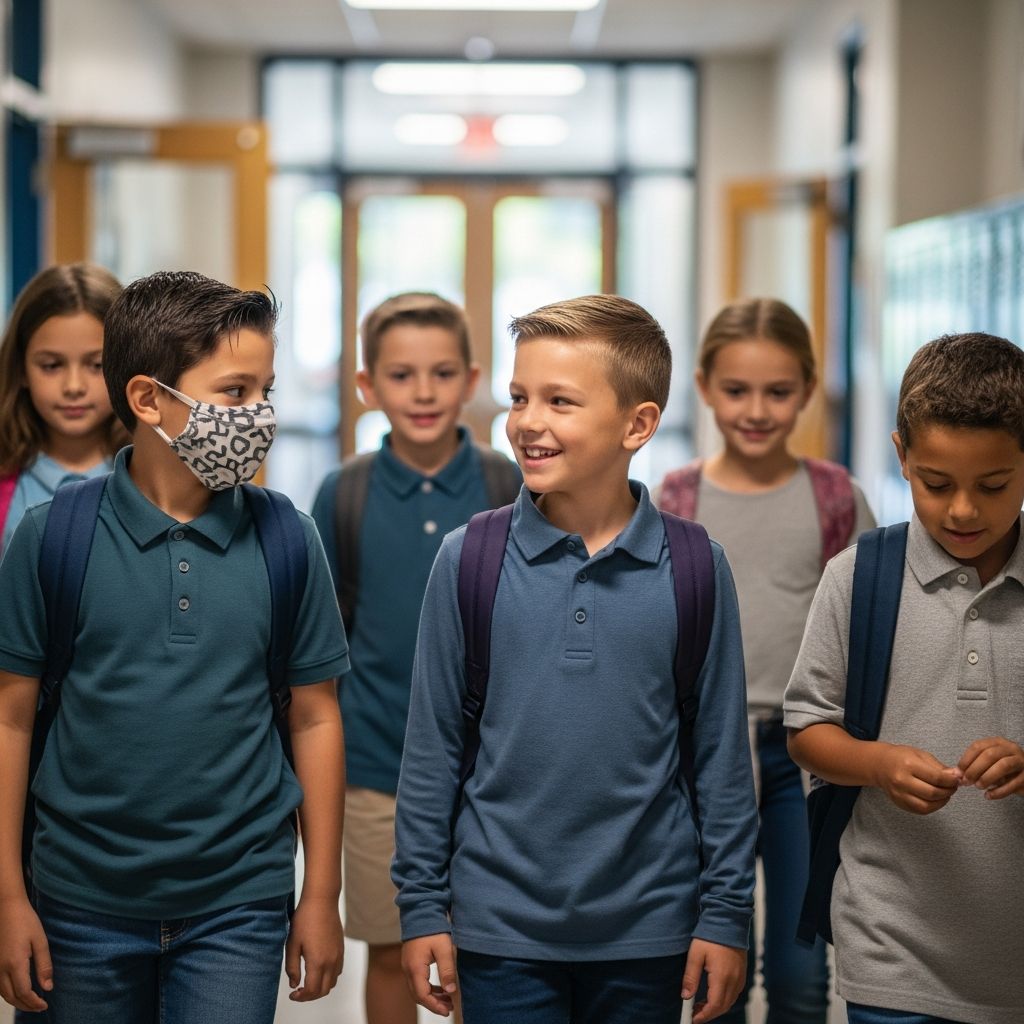
Notably, children themselves—the individuals most directly affected by masking policies—often remained peripheral to policy discussions dominated by adults. Some students advocated passionately for mask mandates, explaining that they felt safer with protective measures in place. Others argued equally passionately that they wanted to see their classmates’ faces and experience normal peer interactions.
This diversity of student perspectives highlighted that masking preferences were not monolithic even among children in the same school. Some students worried about COVID-19 transmission, while others felt anxious about social disconnection. Some struggled with the physical sensation of wearing masks for extended periods, while others felt vulnerable without this protection.
Moving Forward: Balancing Competing Concerns
As pandemic emergency phases concluded and schools moved toward normalcy, the masking question gradually receded from intense policy scrutiny. However, the underlying tensions it exposed—between individual liberty and collective welfare, between protective caution and normal living, between parental authority and institutional health decisions—remain relevant for future public health situations.
Creating educational policies that effectively address health concerns while supporting children’s developmental, social, and emotional wellbeing requires moving beyond polarized positions. It demands recognizing legitimate concerns on multiple sides of the debate while honestly acknowledging uncertainty and incomplete knowledge.
Frequently Asked Questions
Q: Did mask-wearing in schools actually reduce COVID-19 transmission?
A: Research on real-world effectiveness in school settings provided mixed results. Laboratory studies showed masks could reduce droplet transmission, but variation in compliance, mask types, and ventilation made quantifying actual effectiveness in diverse school environments challenging. Experts reasonably disagreed about whether observed effectiveness justified mandates.
Q: What were the documented developmental impacts of masking on children?
A: Limited research specifically examined developmental effects of school masking. Concerns raised included potential impacts on facial recognition skills, social communication development, and peer bonding. However, comprehensive longitudinal studies documenting actual developmental harm remained insufficient, making evidence-based conclusions difficult.
Q: Why did different states adopt such different masking policies?
A: Policies reflected different interpretations of public health authority, varying political philosophies about government’s role, different risk assessments, and diverse community values regarding individual choice versus collective protection. Legal frameworks also differed regarding whether state versus local authorities controlled school health policies.
Q: Did masking policies affect student mental health?
A: Some students reported anxiety or social difficulties with masking, while others felt reassured by protective measures. Mental health impacts appeared highly individual and context-dependent, making broad generalizations unreliable. The broader pandemic disruption likely posed greater mental health challenges than masking policies specifically.
Q: Should schools bring back masking policies if new variants emerge?
A: Future decisions would likely benefit from incorporating lessons learned, including establishing clearer evidence thresholds before implementing policies, maintaining genuine dialogue with diverse stakeholder groups, and designing flexible approaches allowing individual choice when protective benefits are uncertain.
References
- Experts debate masking children as validity of mandate in limbo — Medill School of Journalism, Northwestern University. 2022-02-01. https://dc.medill.northwestern.edu/blog/2022/02/01/experts-debate-masking-children/
- Face Masks and Kids: Separating Fact From Fiction — Education Week. 2021-08. https://www.edweek.org/leadership/face-masks-and-kids-separating-fact-from-fiction/2021/08
- How school board meetings have become emotional battlegrounds debating mask mandates — ABC News. 2021. https://abcnews.com/US/school-board-meetings-emotional-battlegrounds-debating-mask-mandates/story?id=79657733
- Please parents, mask your children as they return to school — Healthy Debate Canada. 2022-08. https://healthydebate.ca/2022/08/topic/mask-children-return-to-school/
- How the mask debate affects our kids — Care to Change. https://caretochange.org/how-the-mask-debate-affects-our-kids/
- Centers for Disease Control and Prevention COVID-19 Guidance for Schools — CDC. https://www.cdc.gov/coronavirus/2019-ncov/community/schools-childcare/index.html