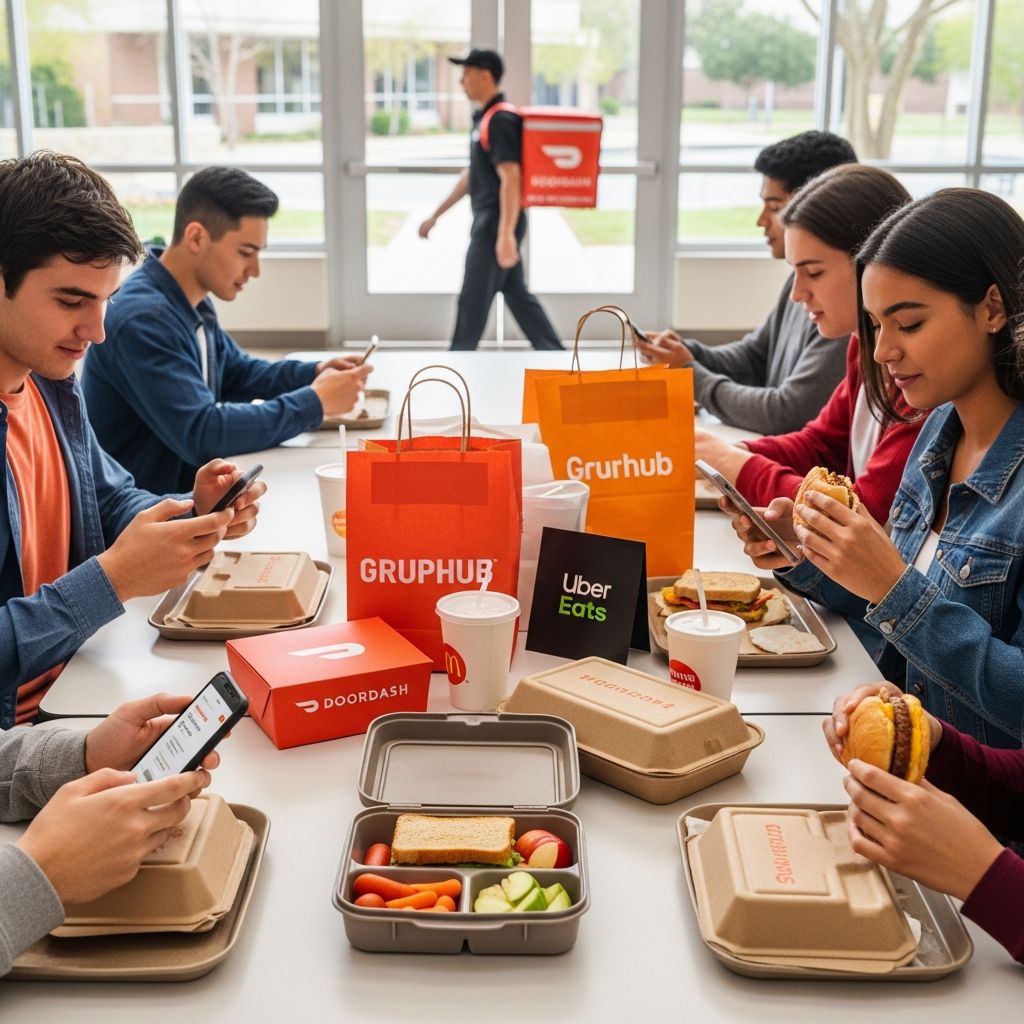
Today’s students are bypassing traditional cafeteria lines and packed lunches by ordering food directly to school through apps like Uber Eats, DoorDash, and Grubhub. This shift offers convenience for busy families but raises concerns about nutrition, safety, and school policies.
The Surge in On-Campus Food Deliveries
Food delivery services have exploded in popularity among K-12 students, transforming school lunch routines across the U.S. Parents, tired of the daily grind of preparing nutritious meals, are embracing these apps as a quick fix. Services deliver everything from burgers to sushi straight to school entrances, where students pick them up during lunch breaks.
This trend stems from the post-pandemic boom in delivery apps, now extending into educational settings. Teens with smartphones coordinate orders seamlessly, often sharing costs via group chats. While some view it as a harmless treat, it signals deeper issues with conventional school meal options.
Why Parents Are Outsourcing School Lunches
Packing lunches ranks high on many parents’ stress lists. Morning rushes leave little time for creative, balanced meals, leading to repetitive sandwiches that kids often discard. Delivery apps provide variety—pasta, salads, or ethnic foods—without the prep work.
Emerging businesses cater specifically to this pain point. For instance, services like Red Apple Lunch deliver pre-packed healthy meals to homes mid-week, giving parents a break from daily packing. Parents report immense relief, with some forgetting it’s a delivery day and feeling joy at the realization. Similarly, Kiddos Catering partners with restaurants to supply school cafeterias, offering diverse menus that kids actually finish.
- Time savings: No nightly prep or morning assembly.
- Variety boost: Access to restaurant-quality options kids prefer.
- Less waste: Students eat more when excited about the meal.
School Policies: Allowance vs. Prohibition
Schools respond variably to this phenomenon. Some districts outright ban third-party deliveries, citing security risks from unknown drivers entering campuses. Directors emphasize that unannounced arrivals disrupt operations and pose threats to students and staff.
Others permit it informally, especially for forgotten lunches. In one case, a parent arranged a Panera delivery after confirming with the school, which provided timing tips—even suggesting a tip for the driver. Students in policy-gray areas use it for schedule conflicts, preferring subs over cafeteria fare.
| Policy Type | Examples | Reasons |
|---|---|---|
| Strict Ban | Gwinnett County, GA | Security risks, robust on-site nutrition |
| Case-by-Case | Canal Winchester, OH | Helpful for emergencies, family norm |
| No Formal Rule | Bexley High School, OH | Convenience during busy schedules |
Safety Concerns with Delivery Drivers on Campus
The primary worry is stranger access. Delivery personnel arriving without vetting could compromise secure environments, especially in elementary and middle schools. Staff must monitor entrances, track orders, and notify students—diverting time from education.
Incidents of drivers wandering hallways or clashing with security have prompted bans. Schools prioritize controlled environments, arguing their nutrition programs suffice. Yet, in under-resourced areas, apps fill gaps when cafeteria food falls short.
Nutrition Challenges Amid Delivery Convenience
While convenient, app-ordered meals often skew unhealthy—high in sodium, fats, and sugars. This clashes with school efforts to promote balanced diets. Recent surveys show 73% of programs pushing local foods, scratch cooking, and culturally relevant options to combat this.
Meal prices rose slightly, with elementary breakfast up 5.6%, amid procurement hurdles like delays and shortages. Programs offering universal free meals report higher satisfaction, reducing unpaid debt concerns. Parents opting for deliveries may unwittingly undermine these initiatives.
Emerging Alternatives to App Deliveries
Beyond apps, specialized services are gaining traction. Home-delivery lunch packs use local ingredients for freshness, while school-contracted caterers bring restaurant meals directly to cafeterias. These handle logistics, payments, and distribution, easing school burdens.
Chartwells K12 predicts 2026 trends like bold flavors and global fusions appealing to Gen Alpha and Z, based on AI-driven insights. Project Bread highlights vegetarian dishes, build-your-own stations, and sauces as top draws, emphasizing sustainability.
- Locally sourced produce for freshness and education.
- Scratch entrees (71% of programs offer daily/weekly).
- Culturally connected meals (65% priority).
2026 School Food Trends Parents Should Watch
Looking ahead, K-12 menus will feature innovative, student-approved items. Data analytics reveal preferences for clean labels, local sourcing, and interactive formats. Challenges persist—higher local food costs (69%) and processing limits (49%)—but innovation drives progress.
Universal meals correlate with better outcomes, with 65.9% of such programs thriving vs. 50% others. Parents can advocate for these by engaging school boards.
Pros and Cons of Delivery Lunches at School
| Pros | Cons |
|---|---|
| Exciting variety kids eat | Potential unhealthy choices |
| Parent time relief | Security vulnerabilities |
| Backup for forgotten meals | Disrupts school routines |
| Supports local eateries | Costly for families |
Expert Tips for Healthier School Meals
To balance convenience and wellness:
- Choose apps with healthy filters—salads, grilled options.
- Combine with school programs offering local, scratch foods.
- Discuss nutrition with kids; involve them in choices.
- Support policies for safe, on-site alternatives.
Parents like those using catering services note kids finish meals more often, reducing waste.
Frequently Asked Questions
Is it safe for kids to order food deliveries to school?
Safety varies by policy. Many schools ban it due to driver access risks; check your district’s rules and opt for pre-approved services.
Why do students prefer delivery over cafeteria food?
Variety, taste, and excitement—restaurant meals feel like treats, unlike standard options.
Are there healthy delivery alternatives for school lunches?
Yes, services deliver balanced, local meals to homes or schools, focusing on nutrition without app risks.
What food trends will shape 2026 school menus?
Expect local foods, scratch cooking, cultural options, and bold flavors per industry forecasts.
How can parents reduce lunch-packing stress?
Outsource to weekly delivery packs or school caterers; prioritize kid-approved, waste-free choices.
Balancing Convenience, Safety, and Nutrition
The rise of school deliveries reflects real family needs but demands thoughtful policies. Schools enhancing menus with trends like local sourcing (73% adoption) and universal access can minimize reliance on apps. Parents play a key role by choosing wisely and advocating for better options.
This evolution promises more engaging midday meals, supporting student focus and health. Stay informed on district rules and emerging services to navigate it effectively.
References
- Food Deliveries Are Remaking School Lunch — Food Manufacturing. 2023-05-01. https://www.foodmanufacturing.com/consumer-trends/news/13166925/food-deliveries-are-remaking-school-lunch
- 10 food trends that will be popular with K-12 students in 2026 — Foodservice Director. 2025-12-12. https://www.foodservicedirector.com/k-12-schools/10-food-trends-that-will-be-popular-with-k-12-students-in-2026
- SY 2025/26 School Nutrition Trends Report — School Nutrition Association. 2026-01. https://schoolnutrition.org/wp-content/uploads/2026/01/SY-25-26-School-Nutrition-Trends-Report.pdf
- Top 7 Trends for School Meals — Project Bread. 2025-08-15. https://projectbread.org/news/top-7-trends-for-school-meals