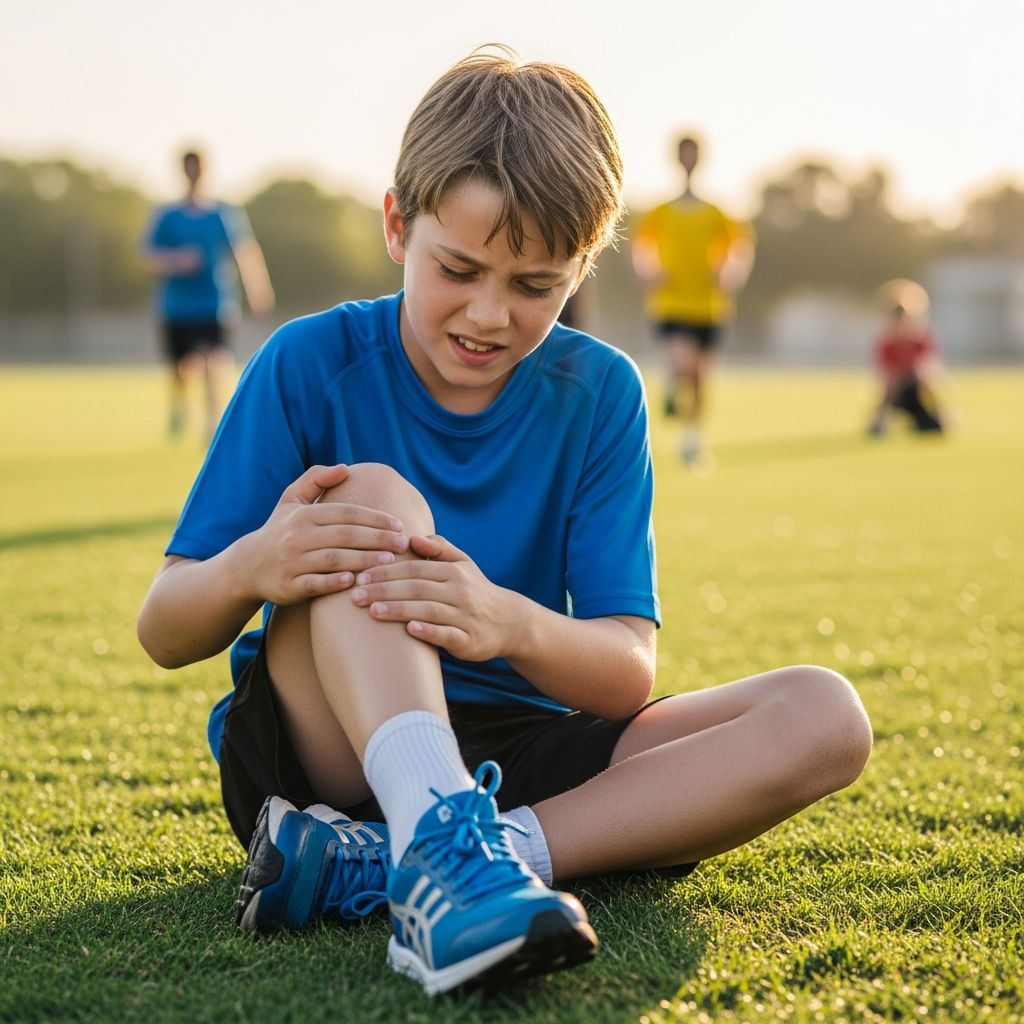
Active kids and teenagers often spend hours running, jumping, and playing sports. Sometimes this leads to a common overuse problem called runner’s knee, a frequent cause of pain around the front of the knee. Doctors often refer to this condition as patellofemoral pain syndrome (PFPS).
This guide explains, in plain language, what runner’s knee is, why it happens, how it is treated, and how you can help your child stay active safely.
What Is Runner’s Knee?
Runner’s knee is a broad term for pain around or behind the kneecap (patella) that gets worse with activities that bend the knee, such as running, squatting, or going up and down stairs.
In many kids and teens, the pain comes from irritation where the kneecap moves along the groove at the end of the thigh bone (the femur). When this movement is not smooth, or the knee is stressed too often, the tissues around the kneecap can become inflamed and painful.
Who Gets Runner’s Knee?
- Kids and teens who run frequently for sports like track, soccer, basketball, or cross-country
- Young athletes who recently increased training intensity or duration
- Teens going through a growth spurt who have tight or weak muscles around the hips and knees
- Children who play sports that involve a lot of jumping and squatting (for example, volleyball or dance)
Typical Symptoms Parents May Notice
Runner’s knee usually develops slowly rather than from a single accident. Watch for these common signs:
- Dull, aching pain in the front of the knee, around or behind the kneecap
- Pain that worsens with activity like running, jumping, kneeling, or squatting
- Discomfort when walking up or down stairs or walking downhill
- Pain or stiffness after sitting for a long time with knees bent, such as during class or car rides
- A feeling of grinding, popping, or crackling under the kneecap when bending or straightening the knee
- Mild swelling around the kneecap in some cases
In most cases, the knee still feels stable, and your child can move it normally, but movement is uncomfortable.
Why Does Runner’s Knee Happen?
There is rarely one single cause. Instead, several factors usually work together to strain the joint between the kneecap and thigh bone.
Common Contributing Factors
- Overuse and training errors: Rapidly increasing running distance, speed, or training days without enough rest can overload the knee joint.
- Muscle weakness or imbalance: Weak quadriceps (front thigh muscles), hip muscles, or core muscles can cause the kneecap to track slightly off center, increasing pressure on one part of the joint.
- Tight muscles: Tight hamstrings, calves, or iliotibial (IT) band change how forces are applied to the knee.
- Foot and leg alignment: Flat feet, feet that roll inward (overpronation), or leg alignment differences can all affect how the kneecap moves.
- Inadequate shoes: Worn-out or poorly supportive shoes make it harder to control foot motion and absorb impact.
- Hard or uneven training surfaces: Repeated running on hills, concrete, or sloped surfaces increases stress on the front of the knee.
Is It a Serious Injury?
Runner’s knee is usually not dangerous, but ignoring the pain and continuing intense activity can make it worse and prolong recovery. Early rest and proper treatment help most kids return to sports without long-term problems.
How Doctors Diagnose Runner’s Knee
If knee pain does not ease with a few days of rest, or is affecting normal activities, a medical visit is important. A pediatrician or sports medicine specialist will usually:
- Ask about when the pain started, what activities make it worse, and any recent training changes
- Examine the knee, hips, and feet for tenderness, swelling, and alignment
- Check strength, flexibility, and balance of the leg muscles
Often, a detailed physical exam is enough to diagnose runner’s knee. Imaging like X-rays or an MRI may be ordered to rule out other problems (like a fracture, cartilage injury, or tendon tear) if the pain is severe, there was a clear injury, or symptoms do not improve.
Treatment: Helping the Knee Calm Down
Most children and teens with runner’s knee recover with non-surgical care. Treatment usually combines activity changes, pain control, and physical therapy.
1. Rest and Activity Changes
- Have your child avoid activities that trigger pain, such as running, jumping, deep squats, or lunges.
- Replace these with low-impact activities when allowed by the doctor, such as swimming or cycling with minimal resistance.
- Short rest periods (days to a few weeks) are often needed to break the pain cycle.
2. Ice and Comfort Measures
- Apply an ice pack or bag of frozen peas wrapped in a thin towel to the front of the knee for 15–20 minutes, several times per day, especially after activity.
- Have your child elevate the leg on pillows when resting to help with swelling.
3. Medications
Your child’s doctor may suggest:
- Nonsteroidal anti-inflammatory drugs (NSAIDs) such as ibuprofen, if appropriate for your child, to help ease pain and reduce inflammation for a short period.
Always follow dosing instructions given by your child’s healthcare provider and avoid giving multiple medicines with the same ingredient.
4. Physical Therapy and Exercises
Physical therapy is often the key to recovery. A therapist will design a program based on your child’s age, sport, and specific weaknesses.
Typical goals include:
- Strengthening the quadriceps, especially the inner portion, to help guide the kneecap smoothly
- Strengthening the hip abductors and external rotators (side and back of the hip) to keep the knee from collapsing inward
- Improving core strength for better overall leg control
- Stretching tight hamstrings, calves, quadriceps, and IT band
- Correcting movement patterns such as inward knee collapse during landing or squatting
5. Supportive Devices
Depending on the child’s anatomy and sport, the healthcare provider may suggest:
- Shoe inserts (orthotics) to improve foot alignment and reduce stress on the knee
- Knee taping or a patellar brace to support the kneecap during activity
Surgery is rarely needed in children and teens with runner’s knee and is usually considered only if many months of proper non-surgical treatment have failed and another specific problem is found.
Home Care Tips for Parents
Beyond following the treatment plan from your child’s doctor or physical therapist, you can help at home by:
- Encouraging your child to report pain early instead of trying to “push through it”
- Setting a reasonable schedule for practices, games, and additional workouts
- Helping your child remember to do home exercises from physical therapy
- Making sure your child has supportive, sport-appropriate footwear and replaces shoes when worn out
Safe Return to Sports
It is tempting for a young athlete to go right back to full activity as soon as the knee feels a bit better, but returning too quickly can cause symptoms to flare again.
| Stage | What It Looks Like | Key Goals |
|---|---|---|
| 1. Pain relief | Rest, ice, medication if needed; limited or no sports. | Reduce pain and swelling; protect the knee. |
| 2. Early rehab | Gentle stretching and basic strengthening. | Restore flexibility, start building muscle support. |
| 3. Advanced rehab | More challenging strength, balance, and sport-like drills. | Regain power, control, and proper movement patterns. |
| 4. Gradual return | Short periods of running, then adding cutting, jumping, and full practice. | Return to full play without pain or swelling. |
Most providers recommend that your child:
- Has no pain with daily activities
- Can hop, jog, and climb stairs without pain or limping
- Has regained strength and flexibility similar to the other leg
before going back to full sports participation.
Preventing Runner’s Knee in Young Athletes
Not every case can be prevented, but smart habits can lower the risk of knee pain.
Smart Training Habits
- Increase activity gradually: Build mileage, intensity, or practice time slowly, usually no more than 10% per week.
- Plan rest days: At least one or two rest days per week help tissues recover and grow stronger.
- Mix activities: Encourage cross-training (for example, cycling, swimming, or strength training) instead of only high-impact sports.
Strength and Flexibility
- Include hip, thigh, and core strengthening as part of weekly training, not just sport-specific drills.
- Make warm-up and cool-down routines standard, with dynamic stretching before and gentle stretching after exercise.
- Address muscle tightness regularly, especially in the hamstrings and calves.
Equipment and Surfaces
- Use properly fitted, supportive shoes and replace them when they are worn down.
- Whenever possible, train on softer, even surfaces rather than only concrete or steep hills.
- Consider orthotics if a healthcare provider identifies flat feet or other foot alignment concerns.
When to Call the Doctor
Contact a healthcare provider if your child or teen has:
- Knee pain that lasts more than a few days or keeps returning
- Pain that interferes with walking, climbing stairs, or daily activities
- Noticeable swelling, warmth, or redness around the knee
- A feeling that the knee is giving way or locking
- Severe pain after a specific injury, such as a fall or twist
Prompt evaluation helps rule out more serious conditions and gets your child started on the right treatment plan.
Frequently Asked Questions About Runner’s Knee
Q1: Can kids who are not runners still get runner’s knee?
Yes. Despite its name, runner’s knee can affect any active child or teen whose knees are repeatedly stressed, including those who play soccer, basketball, volleyball, or do dance and gymnastics. The term mainly describes where the pain is, not the sport your child plays.
Q2: How long does runner’s knee take to heal?
Recovery time varies. Some kids feel better in a few weeks with proper rest and exercises, while others need several months, especially if they have had symptoms for a long time before getting help. Sticking to the treatment plan and avoiding painful activities speeds healing.
Q3: Will my child need surgery?
Almost never. Most children and teens improve with non-surgical care such as activity changes, physical therapy, and supportive footwear or braces. Surgery is considered only if there is another correctable problem and months of well-done conservative treatment have not helped.
Q4: Is it dangerous for my child to keep playing with some pain?
Continuing high-impact activity with ongoing knee pain can worsen irritation, prolong recovery, and potentially lead to other movement problems. It is better to rest, get evaluated, and follow a guided plan to return safely to play.
Q5: Should my child stop sports altogether?
In most cases, no. The goal is to reduce pain, correct contributing factors, and help your child return to the activities they love. Temporary breaks or switching to low-impact exercise are usually part of treatment, but long-term sports participation is often still possible once symptoms are controlled and strength is restored.
References
- Patellofemoral pain syndrome (Runner’s knee) — Columbia Orthopedic Surgery. 2022-04-01. https://www.columbiaortho.org/patient-care/specialties/pediatric-orthopedics/conditions-treatments/sports-medicine/runners-knee-patellofemoral-pain-syndrome
- Patellofemoral pain syndrome: Symptoms and causes — Mayo Clinic. 2023-06-14. https://www.mayoclinic.org/diseases-conditions/patellofemoral-pain-syndrome/symptoms-causes/syc-20350792
- Runner’s Knee: Symptoms, Pain, Causes, and Treatment — WebMD. 2023-02-10. https://www.webmd.com/pain-management/knee-pain/runners-knee
- Knee pain and other running injuries — NHS. 2022-09-15. https://www.nhs.uk/live-well/exercise/knee-pain-and-other-running-injuries/
- Patellofemoral Pain Syndrome — American Academy of Orthopaedic Surgeons (AAOS). 2019-03-01. https://orthoinfo.aaos.org/en/diseases–conditions/patellofemoral-pain-syndrome/
- How to Recognize, Treat, and Prevent Runner’s Knee — Princeton Orthopaedic Associates. 2021-08-05. https://www.princetonorthopaedic.com/how-to-recognize-treat-and-prevent-runners-knee/