Understanding the Foundation: What Scaffolding Parenting Really Means
Parenting approaches have evolved significantly over the decades, moving away from overly restrictive methods and equally problematic permissive styles. One approach gaining recognition among parents and educators alike is the scaffolding method, a technique grounded in developmental psychology that transforms how we support children’s growth. Unlike helicopter parenting, which hovers and controls every decision, or hands-off parenting that leaves children to navigate challenges alone, scaffolding creates a balanced middle ground where parents serve as temporary supports that gradually diminish as children develop competence.
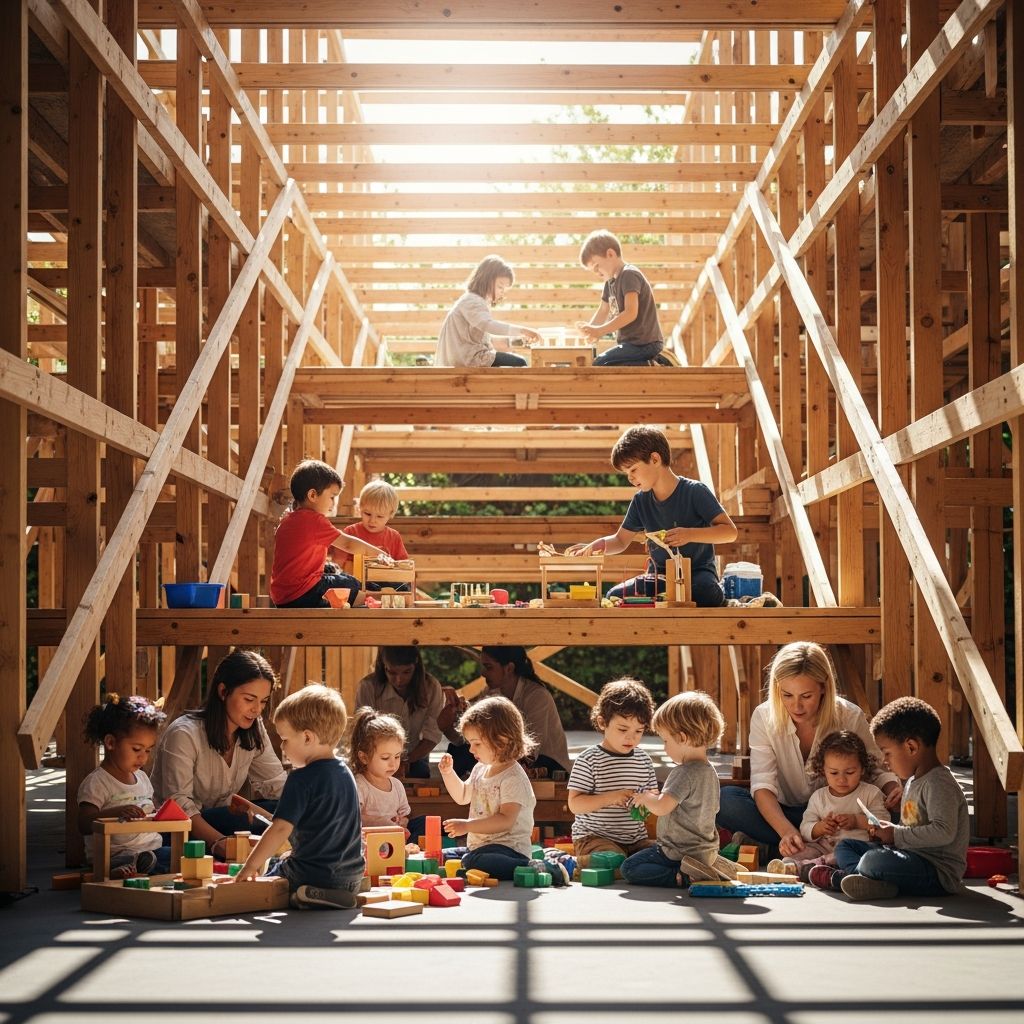
The term scaffolding draws its metaphor from construction sites. Just as temporary scaffolding provides workers with the framework to reach higher elevations safely, parental scaffolding offers children the structure they need to accomplish tasks beyond their current capabilities. As construction progresses and workers gain height, the scaffolding can be incrementally removed. Similarly, as children develop skills and confidence, parental support adapts and reduces, allowing them to stand independently while knowing the safety net remains available when needed.
The Three Pillars: Support, Structure, and Encouragement
Effective scaffolding parenting rests on three fundamental pillars that work together to create an environment conducive to growth and learning.
Support involves actively demonstrating skills and providing empathetic responses to your child’s struggles. This means being present during challenging moments, validating their feelings, and offering practical assistance when appropriate. Support doesn’t mean doing tasks for children, but rather standing beside them as they work through difficulties. When a child struggles with a math problem, a scaffolding parent might work through similar examples together, rather than simply providing the answer or leaving the child to figure it out completely alone.
Structure creates the predictability and security children need to take risks and explore learning opportunities. This includes establishing routines, maintaining consistent boundaries, and organizing the environment in ways that support skill development. Structure might involve creating a homework station with necessary materials, establishing a consistent bedtime routine, or setting clear expectations for behavior. This framework helps children understand what to expect and where they fit within the family system, reducing anxiety and uncertainty.
Encouragement fuels motivation and builds self-efficacy. This extends beyond simple praise to include constructive feedback that helps children understand their efforts, acknowledge progress, and identify areas for growth. Encouragement recognizes attempts and effort, not just successful outcomes, helping children develop resilience when facing setbacks. A scaffolding parent might say, “I noticed you tried a different strategy this time, and you got further than before,” rather than simply saying “Good job.”
How Scaffolding Transforms Learning and Development
The scaffolding approach fundamentally changes how children engage with learning and new challenges. Rather than presenting information or tasks in isolation, scaffolding builds bridges between what children already know and new concepts they’re encountering. This gradual progression makes complex ideas manageable and achievable, allowing children to absorb information more effectively and retain it longer.
The process involves several key mechanisms:
- Breaking down complex tasks into smaller, manageable steps that align with current abilities
- Providing hints, prompts, or questions that guide thinking rather than directing answers
- Modeling desired behaviors and skills so children can observe and emulate them
- Gradually releasing responsibility as competence increases
- Adjusting the level of support based on moment-to-moment observations of the child’s engagement and success
This dynamic process means scaffolding isn’t a static parenting style but rather a responsive approach that evolves continuously. Parents using this method regularly assess where their children are developmentally and calibrate their support accordingly. When a child has mastered a skill, the parent removes that particular scaffold, allowing the child to practice independence. When new challenges emerge, support reappears, providing the necessary framework for growth.
The Development of Self-Regulation and Independence
One of the most significant outcomes of scaffolding parenting is the development of self-regulation and independent problem-solving capabilities. When parents gradually reduce support as children demonstrate competence, children internalize the strategies and approaches they’ve observed and practiced. Rather than becoming dependent on parental direction, children develop confidence in their own abilities and learn to approach challenges methodically.
Research indicates that children receiving consistent parental scaffolding develop stronger self-regulatory abilities and demonstrate fewer behavioral problems. This occurs because children aren’t simply following directives but rather learning the thought processes and emotional management strategies their parents model. When a parent helps a child work through frustration by suggesting breathing techniques or breaking a task into steps, the child gradually learns to apply these strategies independently.
This transfer of regulatory skills represents a core benefit of the scaffolding approach. Parents essentially teach children how to think through problems, manage emotions, and persist through difficulty, equipping them with tools they’ll use throughout life.
Creating an Environment Where Learning Flourishes
Scaffolding extends beyond direct interaction between parent and child to encompass the broader learning environment. A supportive physical space with appropriate materials and activities encourages independent exploration and discovery. This might include age-appropriate books, educational games, art supplies, or tools for hands-on learning. The environment should invite curiosity while containing enough structure that children know what’s available and how to use it.
Equally important is the emotional climate of the home. When children feel safe, valued, and confident that mistakes are learning opportunities rather than failures, they’re more willing to attempt new things and persist through challenges. Parents create this climate through consistent responses, genuine interest in their child’s endeavors, and the modeling of problem-solving and resilience when facing their own challenges.
Collaboration and social interaction also play significant roles in scaffolded learning. When children work alongside peers under guided supervision, they develop social skills, learn from observing others’ approaches, and benefit from explaining concepts to one another. This collaborative environment extends learning beyond the parent-child relationship and teaches children that learning is a social process.
Tailoring Scaffolding to Individual Developmental Needs
Every child develops at their own pace and possesses unique learning preferences, temperaments, and challenges. Effective scaffolding requires parents to understand their individual child’s developmental stage and adjust support accordingly. This individualized approach proves particularly valuable for children facing additional challenges.
Children with anxiety, ADHD, or autism spectrum disorders often benefit significantly from scaffolding approaches, as the structured support and encouragement help reduce meltdowns, manage transitions, and build confidence in their abilities. For these children, the predictability of consistent structure and the emotional validation provided through empathetic support create safer learning environments where they can take risks and develop new skills without becoming overwhelmed.
Similarly, children from socioeconomically disadvantaged backgrounds benefit tremendously from intentional parental scaffolding. Research suggests that when parents use supportive teaching approaches rather than relying primarily on directives, children develop stronger self-regulatory and inhibitory abilities. The scaffolding approach helps level learning opportunities by providing the intentional guidance and support that might otherwise be missing.
Practical Implementation: Bringing Scaffolding Into Daily Life
Understanding scaffolding theory is one thing; implementing it effectively in daily parenting is another. Several practical strategies help parents apply scaffolding principles consistently:
Model the behaviors and skills you want to develop. Children learn tremendously through observation, so actively demonstrating how to approach problems, manage emotions, handle failure, and persist through difficulty teaches more powerfully than verbal instruction alone. When you solve a problem while thinking aloud, your child learns your problem-solving process and can later apply similar approaches independently.
Ask guiding questions rather than providing answers. Instead of telling a child what to do, ask questions that prompt them to think through solutions: “What do you think might happen if you try that? What other approaches could work here?” This develops critical thinking and helps children recognize themselves as capable problem-solvers.
Use visual aids and real-world examples. Making abstract concepts concrete helps children understand and remember them better. Using manipulatives, drawings, photographs, or real-life examples anchors learning in experiences children can grasp.
Observe closely and adjust support continuously. Pay attention to moments when your child is struggling versus succeeding, and provide support precisely when needed. When a child is working on-task, providing encouragement and supportive teaching extends learning opportunities. When a child is becoming frustrated, offering specific hints or breaking tasks into smaller steps prevents overwhelming them.
Build routines and predictability. Consistent daily routines provide the structure children need to feel secure and confident. When children know what to expect and understand expectations for behavior, they can focus energy on learning rather than trying to navigate uncertainty.
Measuring Progress: When to Reduce Support
A central challenge in scaffolding parenting involves recognizing when children have developed sufficient competence to require less support. Removing scaffolding too quickly leaves children struggling without necessary support, potentially damaging confidence. Maintaining scaffolding too long prevents children from developing independence and self-efficacy.
Several indicators suggest a child is ready for reduced support:
- Successfully completing tasks with fewer prompts or hints
- Attempting new challenges without immediately asking for help
- Explaining their thinking or problem-solving process accurately
- Responding positively to challenges and demonstrating persistence
- Seeking help strategically rather than avoiding tasks or demanding immediate assistance
When these indicators appear, gradually reduce support by asking fewer leading questions, providing fewer reminders, or stepping back physically to observe rather than actively guide. This graduated release of responsibility builds self-efficacy and demonstrates to children that you trust their developing abilities.
Scaffolding in an Uncertain World
Periods of significant change or disruption, whether pandemic-related or otherwise, create anxiety that affects children’s ability to learn and develop. During such times, scaffolding becomes even more valuable. The increased support, structured routines, and encouragement provide stability and emotional security children need to navigate uncertainty. Gradually reintroducing social interaction and exposure to normal activities, with parental support, helps children rebuild confidence and resilience.
Rather than shielding children from life’s challenges, scaffolding prepares them to face difficulties with confidence, knowing they have tools and support systems to draw upon. This approach builds genuine resilience rooted in actual capability rather than false security.
The Broader Impact on Family Engagement and Growth
Scaffolding principles benefit not only children but entire families. When parents themselves receive scaffolding support—through education, community resources, or collaboration with schools—their own confidence and self-efficacy increase. This creates positive cycles where more confident parents provide better scaffolding to their children, who in turn develop stronger capabilities and confidence.
When schools and early learning programs partner with families to explain and support scaffolding approaches, the benefits multiply. Children experience consistent methodologies across home and school, and parents become active partners in their child’s education rather than passive observers. This collaboration builds community and shared investment in children’s success.
Frequently Asked Questions
Q: How is scaffolding parenting different from helicopter parenting?
A: Helicopter parenting involves hovering and controlling every aspect of a child’s life, preventing them from developing independence. Scaffolding parenting provides strategic support that gradually decreases as children gain competence, specifically designed to build independence rather than prevent it.
Q: Can scaffolding work for all ages of children?
A: Yes, scaffolding principles apply across childhood development. The specific strategies adjust based on developmental stage—toddlers might need support with tasks like dressing, while older children might need scaffolding for complex academic or social challenges—but the core principle of graduated support remains consistent.
Q: What if my child resists my attempts to scaffold?
A: Resistance often indicates that the level of support doesn’t match the child’s needs—either too much or too little. Observe more carefully, ask what would help, and adjust your approach. Sometimes children resist because they want independence; in these cases, reducing support slightly can help.
Q: How much time does scaffolding parenting require?
A: Scaffolding doesn’t necessarily require extra time; rather, it involves being intentional about existing interactions. Working alongside your child during regular activities, asking thoughtful questions, and observing closely integrate scaffolding into daily routines rather than requiring separate time commitments.
Q: Is scaffolding parenting permissive?
A: No, scaffolding includes clear structure, consistent boundaries, and expectations. It balances support with appropriate limits, ensuring children know what’s expected while receiving help meeting those expectations.
References
- What Is Scaffolding Parenting and How Can It Help Your Child? — Select Counseling. 2024. https://selectcounseling.com/what-is-scaffolding-parenting-and-how-can-it-help-your-child/
- Scaffolding in Early Childhood Education and Development — Procare Solutions. 2024. https://www.procaresoftware.com/blog/scaffolding-early-childhood-education-and-development/
- Scaffolding Parenting: Key to Adjusting to Post-Pandemic Life — Amy Zier. 2023. https://amyzier.com/blog/scaffolding-parenting/
- What is Scaffolding in Early Childhood Education? — Lillio. 2024. https://www.lillio.com/blog/what-is-scaffolding-in-early-childhood-education
- What is Scaffold Parenting and is it Right for Your Family? — Mom Fabulous. 2023. https://www.momfabulous.com/what-is-scaffold-parenting-and-is-it-right-for-your-family/
- The Dynamics of Maternal Scaffolding Vary by Cumulative Risk Status — National Institutes of Health. 2021. https://pmc.ncbi.nlm.nih.gov/articles/PMC8012400/
- Why Parental Scaffolding Matters for Great Family Engagement — ParentPowered. 2024. https://parentpowered.com/blog/family-engagement/scaffolding-parental-engagement/