Preparing infant formula requires careful attention to water quality to protect newborns from contaminants and ensure proper nutrition. Using the right water source and preparation method is crucial for babies under six months, who are particularly vulnerable to bacteria, nitrates, and excess minerals.
Understanding Water Sources for Infant Feeding
Water for formula must come from reliable sources free of harmful bacteria, chemicals, or excessive minerals. Common options include municipal tap water, private wells, and bottled varieties, each with specific safety considerations.
- Municipal Tap Water: Generally safe if from a regulated public supply, but verify local safety through health departments. Fluoridated tap water supports dental health but requires monitoring for infants.
- Private Well Water: Prone to contamination by nitrates, bacteria, or heavy metals like lead and arsenic. Annual testing for coliforms, nitrates (>10 mg/L risky), and pH is recommended.
- Bottled Water: Not inherently sterile unless labeled as such and marketed for infants. Opt for low-fluoride types like purified or distilled for routine use.
In emergencies such as floods or boil-water advisories, prioritize commercially bottled water or boil tap water for one minute (three minutes above 6,500 feet elevation).
Boiling Water: When and How for Formula
Boiling eliminates microbes but is not always necessary. The American Academy of Pediatrics (AAP) advises boiling for infants younger than two months, premature babies, or those with compromised immunity.
| Infant Age/Group | Boiling Recommendation | Duration |
|---|---|---|
| <2 months, premature, weak immune system | Required | 1 minute (3 min >6,500 ft) |
| 2-6 months, healthy | Optional, but boil if concerned | <1 minute |
| >6 months | Not needed for healthy babies | N/A |
After boiling, cool water for five minutes to room temperature before adding formula powder to avoid clumping or nutrient loss. Boiling concentrates fluoride, so use low-fluoride alternatives if this is a concern.
Fluoride Concerns in Formula Preparation
Fluoride prevents tooth decay but excess can cause fluorosis, leading to white spots on developing teeth. Powdered and liquid concentrate formulas often contain added fluoride, so pairing with fluoridated tap water (>0.7 mg/L) increases risk.
- Use low-fluoride bottled water (deionized, distilled) for formula if tap exceeds safe levels.
- Check local water reports via CDC tools or utilities.
- After six months, consult pediatricians for fluoride supplements if using low-fluoride sources.
Studies link high fluoride to potential neurodevelopmental effects, though AAP notes risk diminishes post-permanent teeth eruption.
Types of Infant Formula and Water Mixing Rules
Formula comes in three forms, each dictating water use:
| Type | Water Needed | Key Instructions |
|---|---|---|
| Ready-to-Feed | None | Do not dilute; pouring extra water risks malnutrition. |
| Liquid Concentrate | Equal volume | Mix precisely per label to avoid dehydration or under-nutrition. |
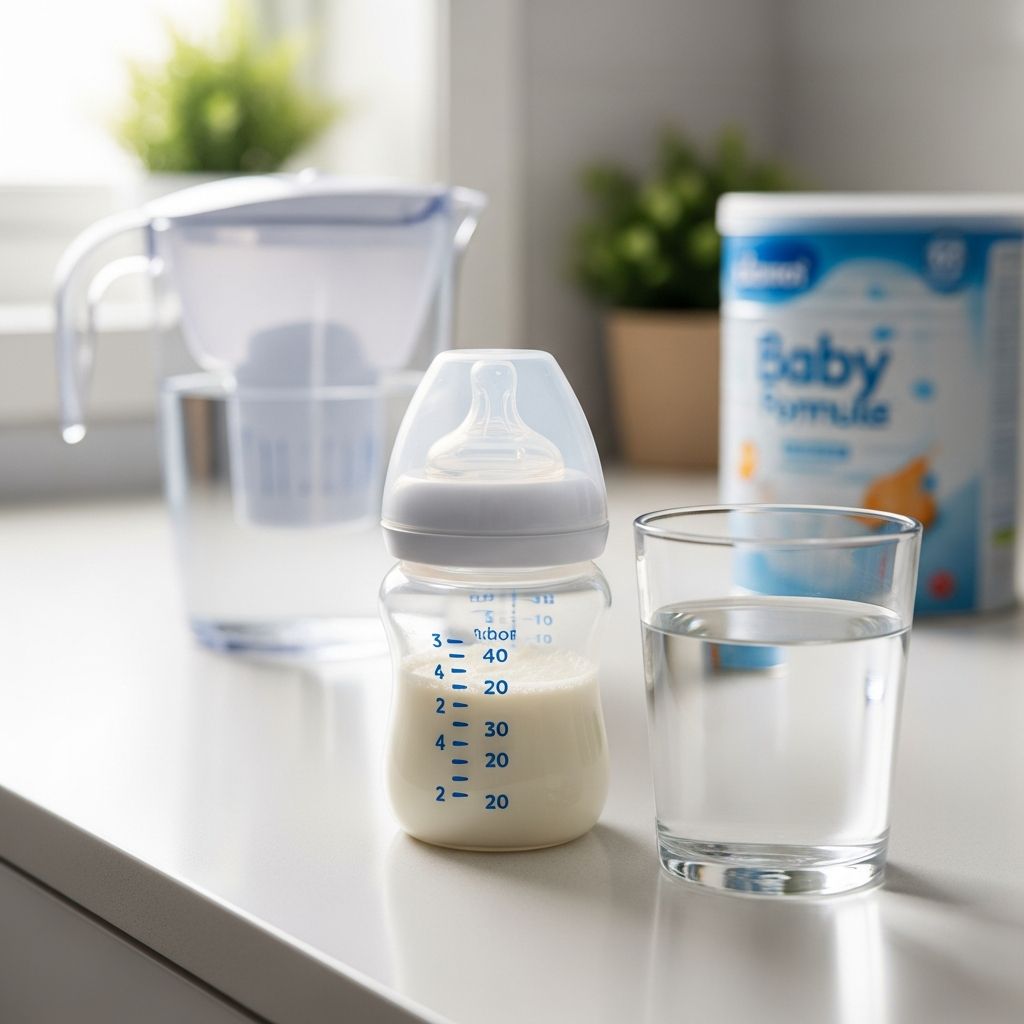
| Powder | Specific ratio | Add powder to water (not vice versa); shake well. |
Incorrect ratios harm babies: too much water causes electrolyte imbalances and growth delays; too little leads to dehydration.
Health Risks from Unsafe Water Practices
Contaminated water poses severe threats. Nitrates in well water (>10 mg/L) cause methemoglobinemia (blue baby syndrome), impairing oxygen transport and potentially fatal.
- Bacterial Infections: E. coli or viruses from unboiled water can cause diarrhea or sepsis in infants.
- Heavy Metals: Lead from old pipes or copper in hot tap water accumulates, affecting development.
- Water Intoxication: Extra water dilutes formula nutrients, disrupting sodium/potassium balance and risking seizures.
Avoid hot tap water, which leaches metals, and never give plain water to babies under six months unless medically advised.
Step-by-Step Guide to Safe Formula Preparation
- Wash hands and sterilize bottles/utensils.
- Select and prepare water: boil if needed, cool to room temp.
- Pour exact water amount into clean bottle.
- Add precise formula scoops (level, not packed).
- Cap and shake gently until dissolved.
- Refrigerate unused portions; discard after 24 hours.
For WIC participants or budget concerns, adhere strictly to labels—diluting saves money short-term but endangers long-term health.
Special Scenarios: Emergencies and Travel
During water outages or disasters, stock ready-to-feed formula or sterile bottled water. If boiling tap water, do so post-pollution alerts.
For travel, carry purified bottled water or use hotel boiling facilities. Test well water post-flooding before resuming use.
Frequently Asked Questions
Is tap water safe for baby formula without boiling?
For healthy babies over two months in areas with safe municipal water, yes—but boil for younger or vulnerable infants.
Can I use sparkling or mineral water for formula?
No; carbonation and high minerals interfere with nutrition and digestion.
How do I test well water for safety?
Contact local health departments for kits checking nitrates, bacteria, and metals annually.
Does boiling remove fluoride from water?
No, it concentrates it—use low-fluoride options for formula.
What if my baby shows signs of illness after formula feeds?
Consult a pediatrician immediately; symptoms may indicate contamination.
Expert Recommendations Summary
Pediatric experts from FDA, AAP, and Mayo Clinic emphasize safe sources, precise mixing, and boiling when indicated to safeguard infant health. Regular water quality checks empower parents to make informed choices.
References
- Handling Infant Formula Safely: What You Need to Know — FDA. 2023-10-01. https://www.fda.gov/food/buy-store-serve-safe-food/handling-infant-formula-safely-what-you-need-know
- How to Safely Prepare Baby Formula With Water — American Academy of Pediatrics (AAP). 2024-05-15. https://www.healthychildren.org/English/ages-stages/baby/formula-feeding/Pages/how-to-safely-prepare-formula-with-water.aspx
- What to Know About Water for Baby Formula — WebMD. 2024-02-20. https://www.webmd.com/parenting/baby/what-to-know-about-water-for-baby-formula
- What Kind Of Water Is Safe For Mixing Formula Powder For My Baby? — Fed is Best Foundation. 2023-11-10. https://fedisbest.org/resources-for-parents/what-kind-of-water-is-safe-for-mixing-formula-powder-for-my-baby/
- Are you preparing your baby’s bottles correctly? — AAP News. 2020-10-01. https://publications.aap.org/aapnews/article/31/10/37/9030/Are-you-preparing-your-baby-s-bottles-correctly
- Infant formula: 7 steps to prepare it safely — Mayo Clinic. 2024-08-05. https://www.mayoclinic.org/healthy-lifestyle/infant-and-toddler-health/in-depth/infant-formula/art-20045791