Many kids are naturally drawn to blasters, launchers, and anything that shoots foam, water, or light, but not every toy gun is a good fit for a family that values safety and age-appropriate play.
Choosing bright, clearly fake toy blasters helps preserve the excitement of pretend battles while cutting down on confusion, misidentification, and conversations you might not be ready to have with your child.
This guide explores how to pick toy guns that look like toys, the features that matter most, and how to set ground rules so pretend battles stay fun, active, and respectful.
Why Avoid Realistic-Looking Toy Guns?
Realistic toy weapons can be mistaken for the real thing, especially from a distance or in low light, which can create unnecessary risk for children and the adults around them.
Even when a toy has an orange tip or a small safety marking, dark colors, metallic finishes, and military styling may still cause confusion in public spaces.
By choosing obviously fantastical blasters instead, parents reduce the likelihood of misidentification and send a clear signal that these objects are toys meant purely for play.
Core Principles for Safer Toy Blasters
When looking for toy guns that do not look like real firearms, several simple principles can guide you toward better options.
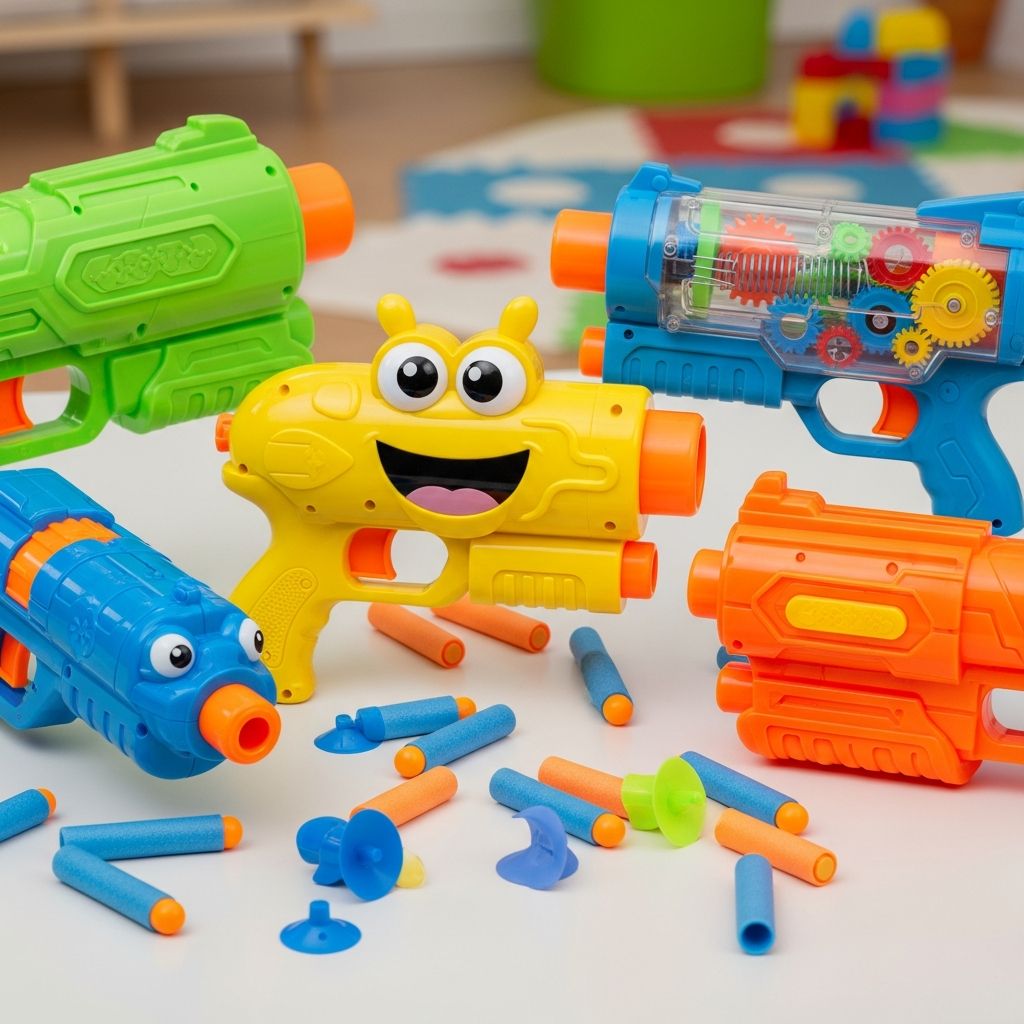
- Prioritize bright, non-military colors such as neon greens, oranges, purples, and blues instead of matte black, camo, or metallic finishes.
- Favor exaggerated, sci-fi, or cartoonish shapes over models that copy real pistols, rifles, or tactical gear.
- Choose gentle projectiles like soft foam darts, foam balls, or light water streams designed for safe, close-range play.
- Look for adjustable power or short range so kids can play in yards or indoor spaces without excessive force.
- Check the box for age recommendations, warning labels, and clear safety instructions from the manufacturer.
Key Features to Look For
Parents can quickly narrow down better toy blasters by focusing on a few specific design and safety features printed on packaging or product pages.
- Color palette: High-visibility neon or pastel colors with no attempt to imitate real-world weapons.
- Projectile type: Soft foam darts, squishy balls, foam-tipped missiles, or water streams rather than hard plastic pellets.
- Size and shape: Chunky, rounded bodies, oversized barrels, and whimsical details like wings, fins, or stylized scopes.
- Power source: Spring-powered or pump-action mechanisms that limit force, or low-pressure water pumping rather than high-impact systems.
- Accessories: Targets, safety goggles, and obstacles for games instead of tactical vests or realistic magazines.
Types of Non-Realistic Toy Blasters
Not all toy guns work the same way, and some categories naturally lean toward bright, clearly playful designs that are easier to recommend for younger kids.
- Foam dart blasters: Classic spring-powered launchers that fire soft darts and often come in neon colors and exaggerated shapes.
- Water blasters: Squirt guns or pump blasters in unusual silhouettes that emphasize summer fun rather than combat styling.
- Foam missile launchers: Handheld or shoulder-style toys that launch large, soft rockets or arrows for dramatic but gentle play.
- Light and sound blasters: Toys that focus on flashing lights, sound effects, or imaginary energy beams instead of projectile power.
Design Comparison: Realistic vs. Playful
The table below highlights how realistic-style toy guns differ from playful, fantasy-inspired blasters across several important dimensions for families.
| Aspect | Realistic-Style Toy Guns | Playful, Fantasy Blasters |
|---|---|---|
| Colors | Dark, camo, or metallic finishes that resemble real weapons. | Neon, pastel, and multi-color designs that clearly look like toys. |
| Shape | Modeled after pistols, rifles, or tactical gear. | Rounded, exaggerated, or sci-fi shapes with fictional styling. |
| Perceived risk in public | Higher risk of misidentification as a real weapon. | Lower risk because designs are clearly toy-like and whimsical. |
| Play focus | May encourage mimicry of military or law-enforcement scenarios. | Emphasizes fantasy, adventure, or sci-fi stories. |
| Best use location | Strictly private spaces; unsafe for public parks or streets. | More acceptable in backyards and supervised play areas, though public caution is still important. |
Age-Appropriate Choices
Age guidelines on the box are not just legal fine print; they reflect testing for safe projectile strength, small parts, and ease of use.
For toddlers and preschoolers, simple water sprayers or large-foam launchers with oversized triggers are safer than fast-firing dart systems intended for older children.
As children grow, more complex blasters with multiple firing modes or larger capacities can make sense, but they should still retain bright, toy-like appearances and gentle projectiles.
Promoting Healthy, Active Play
Pretend battles can support fitness, coordination, and teamwork when paired with clear rules and structured games rather than chaotic free-for-all shooting.
Parents can encourage kids to set up obstacle courses, capture-the-flag scenarios, or target challenges that reward strategy, movement, and problem-solving.
- Use soft foam targets, hanging bottles, or cardboard cutouts instead of aiming at faces or animals.
- Introduce team roles like medic, scout, or engineer to add storytelling and cooperation.
- Limit play sessions, especially in hot weather, so excitement stays fun rather than overwhelming.
Safety Rules Every Family Should Set
Even the most toy-like blaster benefits from clear ground rules about where, how, and with whom it can be used.
- Never aim at faces or heads; keep shots below the shoulders whenever possible.
- Always wear protective eyewear for higher-powered dart or ball blasters, especially in close quarters.
- Use toy guns only in private yards, homes, or clearly designated play spaces, not in public streets or crowded parks.
- Store blasters in a toy bin or closet, separate from any household tools or sporting equipment that resemble real weapons.
- Pause play immediately if anyone feels scared, overwhelmed, or singled out by the game.
Talking to Kids About Pretend Gun Play
Open conversations help children understand the difference between fantasy battles in the yard and real-world situations involving weapons.
Parents can explain that toy blasters are for fun storytelling and games, while real firearms are adult tools that must never be treated as toys.
- Use age-appropriate language about safety and respect for others’ feelings.
- Encourage kids to check in before involving new friends in blaster play to ensure everyone is comfortable.
- Revisit the conversation as children grow, adjusting details to match their maturity and questions.
Ideas for Toy Blasters That Look Nothing Like Real Guns
Parents searching online or in stores will see a broad range of toy blasters, and focusing on playful aesthetics can quickly filter out overly realistic designs.
- Rainbow foam dart launchers: Brightly colored, chunky bodies with multi-color darts, oversized barrels, and silly sound effects.
- Space-themed energy blasters: Sci-fi silhouettes, light-up panels, and imaginary “plasma” or “starlight” beams instead of tactical styling.
- Creature cannons: Blasters shaped like dragons, sharks, or robots that “spit” foam balls or water jets.
- Target-focused sets: Compact launchers packaged with standing targets, scoreboards, or sticky dart boards to shift focus away from shooting at people.
- Inflatable rocket launchers: Pump-action bases that send large, foam-tipped rockets into the air for cooperative distance challenges.
Setting Boundaries Around Where Toys Can Be Used
Location rules matter as much as the toy design, because even an obviously fake blaster can alarm neighbors or strangers if used in the wrong setting.
Many families restrict toy gun play to backyards, private indoor spaces, or supervised events and avoid using them near streets, apartment hallways, or community areas.
- Clarify which parts of the home or yard are “blaster zones” and which are off-limits.
- Avoid bringing toy guns to playgrounds, shopping centers, or public events, even if they look silly and bright.
- Remind kids to leave blasters at home when visiting friends unless other parents agree in advance.
Cleaning, Maintenance, and Durability
Well-maintained blasters are safer because they fire predictably and are less likely to break in a way that creates sharp edges or small parts.
Parents should periodically check toy guns for cracks, loose screws, or damaged springs and retire any model that no longer functions as intended.
- Rinse water blasters after use, especially if filled from pools or sandy areas, and allow them to dry before storage.
- Collect stray darts or balls after each session to prevent tripping hazards and reduce temptation for pets to chew them.
- Follow manufacturer instructions when replacing batteries, and keep spent batteries out of reach of young children.
Frequently Asked Questions
Do toy guns encourage real-life violence?
Research suggests that pretend gun play alone does not reliably predict future interest in real firearms, especially when parents provide guidance and clear rules.
The context of play, family conversations about safety, and overall exposure to media violence are more influential than the toys themselves.
Are foam dart blasters safe for younger kids?
Foam dart blasters can be safe when matched to age recommendations, used under supervision, and paired with rules against aiming at faces or close-range shots.
For very young children, simple water sprayers or large, slow-moving foam projectiles are often a better starting point.
Can my child bring a toy blaster to a friend’s house?
It is courteous to ask the other family first, as some households prefer to avoid toy guns completely or may have stricter rules about pretend weapons.
Agreeing on boundaries ahead of time prevents misunderstandings and ensures every child feels safe and respected.
Should toy guns ever be used in public places?
Using toy guns in public spaces is risky because passersby or authorities might misinterpret what they see, especially if the toy is large or carried at a distance.
Keeping toy blaster play limited to private, supervised areas is the safest approach for most families.
How can I tell if a toy gun looks too realistic?
If a toy uses dark, matte colors, realistic proportions, or styling based on real-world firearms, it is more likely to be mistaken for the real thing.
When in doubt, choose designs that look playful at a glance, with bright hues, oversized elements, and fictional themes rather than real brands or models.
Helping Kids Play Boldly and Safely
Parents do not have to choose between banning all blasters and accepting ultra-realistic toy weapons; there is a wide middle ground of imaginative, clearly fake options that keep children active and engaged.
By focusing on bright colors, playful designs, soft projectiles, and thoughtful family rules, caregivers can support the joy of pretend adventures while minimizing confusion and risk.