Medicines play a vital role in maintaining health, but improper handling can lead to serious accidents, especially in homes with young children. Each year, tens of thousands of children end up in emergency rooms due to unintentional exposure to adult medications, vitamins, and supplements. By adopting simple yet effective habits, parents can significantly lower these risks and create a safer environment.
Understanding the Risks of Medicine Access
Children are naturally curious explorers, often mistaking pills for candy or liquids for juice. Statistics reveal that around 60,000 children require emergency care annually for medicine-related incidents in the U.S., with most cases involving accessible adult prescriptions left within reach.86% of these visits stem from children accessing grown-up medications, highlighting a critical gap between knowledge and practice among caregivers.
Beyond obvious prescriptions, everyday items like hand sanitizers, eye drops, diaper creams, and gummy vitamins pose hidden dangers. These products, often stored casually, contribute to 60% of poisoning cases where medicines were easily reachable. Heat, humidity, and convenience-driven habits further complicate safe storage, making proactive measures essential from infancy onward.
Core Principles for Secure Storage
The foundation of medicine safety rests on three key rules: store **up and away**, use **child-resistant packaging**, and **return items immediately after use**. High cabinets or locked boxes keep items out of sight and reach, ideally at or above counter height. Original containers with safety caps provide an extra barrier, though no cap is fully childproof—always twist until it clicks securely.
- Up and Away: Select spots too high for climbing children to access, even if they stand on stools.
- Out of Sight: Visibility tempts exploration; concealment discourages it.
- Original Packaging: Avoid transferring to non-resistant pill organizers unless locked away.
- Immediate Return: Never leave doses out ‘for later’—put away every time.
Supervision evolves with age: for teens, track pill counts and refills to prevent misuse, using logs for controlled substances like pain relievers or ADHD meds.
Room-by-Room Storage Strategies
Different home areas present unique challenges. Tailor storage to each space for comprehensive protection.
Kitchen Safeguards
Kitchens often house vitamins and over-the-counter remedies. Avoid counters and low cabinets where kids climb or rummage.
| Location | Risk | Safe Alternative |
|---|---|---|
| Countertops | Easy access while parents cook | Upper cabinets, out of sight |
| Under-sink cabinets | Unlocked, frequently opened | High shelves or locked box |
| Grocery bags | Unpacked meds tempt quick grabs | Empty bags first, store immediately |
Opt for upper cabinets to keep items invisible and inaccessible.
Bathroom Best Practices
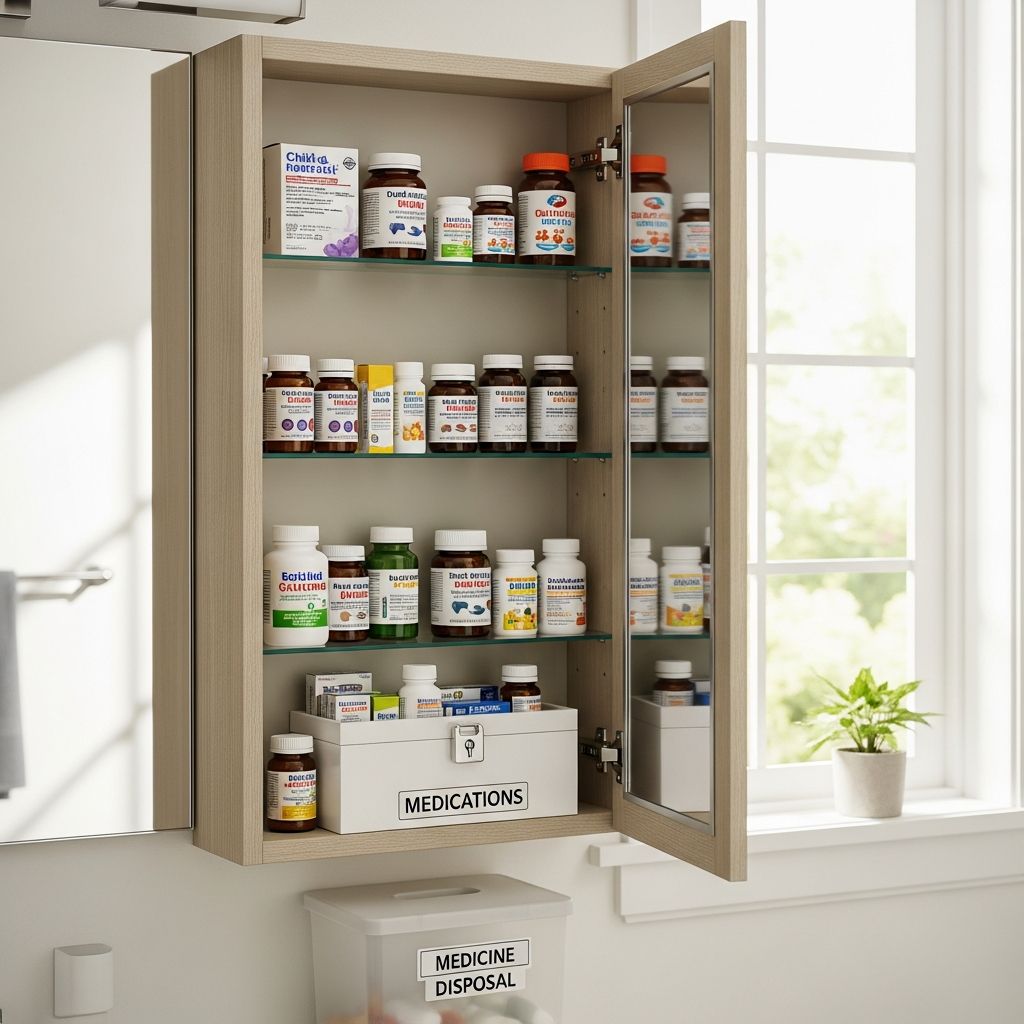
Humidity can degrade medications, so minimize storage here. If necessary, prioritize security.
- Install childproof latches on medicine cabinets.
- Clear sink counters after every use.
- Relocate under-sink items to elevated, dry spots.
Avoid floor-level storage entirely.
Bedroom and Personal Spaces
Private areas feel secure but often harbor purses, nightstands, and dropped pills—prime targets for crawlers.
- Hang bags high or use lockable storage.
- Check nightstands and dressers regularly, especially after guests.
- Vacuum under beds for stray tablets.
Bedrooms demand vigilance, as children play here unsupervised.
Other High-Risk Zones
Guest rooms, home offices, and cars require equal attention. Educate visitors and babysitters to secure their items. For travel, use portable lockboxes.
Disposal Methods to Protect the Planet and People
Expired or unused medicines clutter homes and risk accidental ingestion. Never flush them down toilets or drains, as this contaminates water supplies and harms wildlife. Instead, follow these eco-friendly steps:
- Take-Back Programs: Drop off at pharmacies, hospitals, or law enforcement sites—search local DEA events.
- At-Home Neutralization: Mix pills with unappealing substances like coffee grounds or cat litter, seal in bags, and trash.
- Remove Labels: Black out personal info on bottles before discarding.
- Refrigerated Meds: Use lockable boxes separate from food.
These practices prevent environmental damage and diversion to misuse.
Building a Culture of Medicine Safety
Start habits early—at your child’s birth—and involve the whole family. Discuss risks openly, model secure behavior, and audit storage monthly. Remind relatives and caregivers: no exceptions for visitors’ bags or jackets. For older kids, teach responsibility while maintaining oversight.
Lockboxes or small safes offer ultimate security for high-risk households. Track usage with apps or logs to spot discrepancies early.
What to Do in Case of Exposure
Act fast if a child accesses medicine: note the name, amount, and time ingested. Call Poison Control at 1-800-222-1222 immediately—do not wait for symptoms. Provide details calmly; experts guide next steps, often avoiding unnecessary ER visits. Keep the number posted and programmed.
Prevention saves lives, but preparedness ensures the best outcomes. Poisoning remains a top injury cause for kids and teens.
Frequently Asked Questions (FAQs)
Where is the best place to store medicines at home?
The ideal spot is a high cabinet or locked box out of children’s sight and reach, in original child-resistant containers.
Are child-resistant caps truly effective?
They resist most young children but aren’t childproof. Always secure tightly and store away.
How do I dispose of old prescriptions safely?
Use take-back programs or mix with waste like dirt in sealed bags; never flush.
Should I use pill organizers for kids?
Only if child-resistant and stored securely; prefer original packaging.
What about vitamins and supplements?
Treat them like medicines—up and away, as they cause many poisonings.
Can I store meds in the fridge?
Yes, in a lockable box away from food.
This comprehensive guide empowers families to minimize risks. Implement these strategies today for peace of mind tomorrow.
References
- Medication Safety at Home: How and Where to Safely Store Medicine — GetReliefResponsibly. 2023. https://www.getreliefresponsibly.com/safety-in-the-home
- Where Do You Store Your Medicine? — Safe Kids Worldwide. 2023. https://www.safekids.org/blog/where-do-you-store-your-medicine
- Medication Safety Tips for Families — HealthyChildren.org (American Academy of Pediatrics). 2024-01-15. https://www.healthychildren.org/English/safety-prevention/at-home/medication-safety/Pages/Medication-Safety-Tips.aspx
- Safe Medicine Storage and Disposal to Prevent Misuse — Seattle Children’s Hospital. 2024. https://www.seattlechildrens.org/health-safety/injury-prevention/safe-medicine-storage-and-disposal/
- Put your Medicines Up and Away and Out of Sight — UpAndAway.org. 2023. https://upandaway.org/en/
- Up and Away Campaign Resources — Centers for Disease Control and Prevention (CDC). 2024-06-01. https://www.cdc.gov/medication-safety/php/toolkit/index.html
- Up and Away Campaign — Poison Help (HRSA). 2024. https://poisonhelp.hrsa.gov/what-you-can-do/up-away-campaign