Understanding the Fundamentals of Safe Infant Sleep Environments
Creating a secure sleep space for your baby requires more than just choosing a crib and mattress. Parents often struggle with the desire to make their child’s sleeping area feel warm and welcoming while simultaneously adhering to safety standards that medical professionals have established based on decades of research. The challenge becomes even more complex when considering comfort items like stuffed animals and toys, which can seem innocent but pose genuine risks when placed in a baby’s sleep area.
The foundation of safe infant sleep rests on principles developed by leading pediatric organizations and health authorities. These guidelines exist because research has consistently shown that certain practices significantly reduce the risk of Sudden Unexplained Infant Death Syndrome (SUID) and other sleep-related complications. Understanding these principles helps parents make informed decisions about what belongs in their baby’s crib and what should remain in other areas of the nursery.
The Core Principles of Safe Sleep Setup
Medical professionals have distilled safe sleep practices into memorable frameworks that guide parents through the decision-making process. The most widely recognized approach uses the ABCD model: Alone, Back, Crib, and Don’t Smoke. Each component addresses a specific aspect of sleep safety and, when combined, creates an environment that significantly reduces infant mortality risks.
The “Alone” principle establishes that your baby should sleep independently without other people, pets, or objects sharing their sleep surface. This means the crib or bassinet should contain only your baby and a fitted sheet. No additional items should be placed in this space, regardless of their perceived purpose or safety features.
Placing your baby on their back for sleep—the “Back” component—has proven to be one of the most effective interventions for reducing SIDS risk. This position should be maintained for all sleep periods, including naps, until your child reaches one year of age.
The “Crib” element emphasizes using an appropriate sleep surface with specific characteristics. Your chosen sleep surface must be firm and flat, never angled or inclined. This firmness is critical because soft surfaces create an environment where babies can inadvertently bury their faces and restrict their airflow.
Finally, “Don’t Smoke” reminds parents that environmental tobacco smoke exposure increases SUID risk, even when smoking occurs with windows open. Creating a smoke-free environment extends to all caregivers and visitors.
Why Toys and Soft Objects Present Genuine Safety Concerns
The exclusion of toys and soft objects from infant sleep spaces stems from specific physiological concerns rather than arbitrary rules. Babies lack the muscular development and awareness to move objects away from their faces if they become obstructed. Their airway coordination is still developing, making them vulnerable to positional asphyxiation—a situation where their breathing becomes compromised due to the position of their head or surrounding objects.
Stuffed animals, while beloved by parents and children alike, represent a particular risk. Even small, soft toys can shift during sleep and partially cover a baby’s nose and mouth. Additionally, they can contribute to overheating, which research indicates may be associated with SUID risk.
Blankets, pillows, and bumper pads carry similar concerns. What adults find comforting—the softness of a blanket or the cushioned sides of a crib bumper—actually increases risks for babies. These items can create pockets where babies become entrapped or develop unsafe sleeping positions that compromise their breathing.
Even products specifically marketed for infants, such as Boppy pillows and Dock-a-Tots, should not be used as sleep surfaces. While these items may seem designed for safety, independent research and pediatric organizations have determined they don’t meet the safety standards required for infant sleep.
Setting Up the Crib: What Should and Shouldn’t Be Included
Creating a safe crib requires a minimalist approach. The sleeping surface should contain only the baby and a fitted sheet that covers the mattress snugly with no gaps around the edges. The fitted sheet must be specifically designed for your crib dimensions to prevent bunching or shifting that could pose safety hazards.
The mattress itself deserves careful attention. It should be firm and flat, meeting safety standards established by the Consumer Product Safety Commission (CPSC). While you might be tempted to add extra padding for comfort, research clearly demonstrates that soft or padded surfaces increase SUID risk. The firmness might seem uncomfortable to adults accustomed to plush bedding, but it’s essential for your baby’s safety.
Items that must be excluded from the crib include:
- Stuffed animals and plush toys of any size
- Blankets, quilts, and comforters
- Pillows and pillow-shaped objects
- Bumper pads, both padded and mesh varieties
- Sleep positioners and wedges
- Crib tents or canopies
- Diaper pails or wipe containers
- Monitors or camera equipment
- Jewelry, bibs, or items with ties
Some parents worry that an empty crib looks barren or unwelcoming. However, this minimalist approach actually reflects what babies need for safe sleep. You can create a visually appealing nursery through wall decorations, ceiling artwork, and room furnishings that remain outside the sleep surface.
Maintaining Appropriate Temperature Without Soft Objects
A common concern parents raise is how to keep their baby warm without blankets and additional bedding. The solution involves dressing your baby appropriately rather than relying on crib-based coverings. Wearable sleep garments—often called sleep sacks or sleep gowns—provide warmth while eliminating the suffocation risks associated with loose bedding.
Parents should dress their baby in one more layer than they themselves would wear in the same room temperature. For example, if you’re comfortable in a short-sleeved shirt, your baby might wear long-sleeved pajamas. If you’re in light pajamas, your baby could wear a wearable blanket over pajamas.
Overheating presents its own risks related to SUID, so monitoring your baby’s temperature is important. Feel your baby’s chest or back—if they feel hot to the touch or are sweating, remove a layer. Your baby should feel warm but not hot.
During warmer months, you might dress your baby in a simple onesie rather than adding layers. The goal is maintaining comfort without creating an environment where soft materials could obstruct breathing.
Room Sharing Without Bed Sharing: The Recommended Approach
Medical organizations recommend that babies sleep in their parents’ room but on separate sleep surfaces for at least the first six months of life. This practice can reduce SUID risk by up to 50% compared to situations where babies sleep alone in a separate room. Room sharing also provides practical benefits, making nighttime feedings and comfort easier to manage.
Placing your baby’s crib, bassinet, or portable play yard in your bedroom maintains the safety of independent sleep while providing the proximity and oversight that benefit both baby and parents. This setup allows you to respond quickly to your baby’s needs while maintaining the essential barrier that separate sleep surfaces provide.
Bed sharing—allowing your baby to sleep in your bed—carries significant risks that room sharing doesn’t. Even with precautions, bed sharing increases SUID and accidental suffocation risks substantially. If you find yourself bed sharing unintentionally, such as when feeding your baby at night, set an alarm to ensure you move your baby back to their safe sleep surface rather than falling asleep together.
Choosing Comfort Items for Outside the Crib
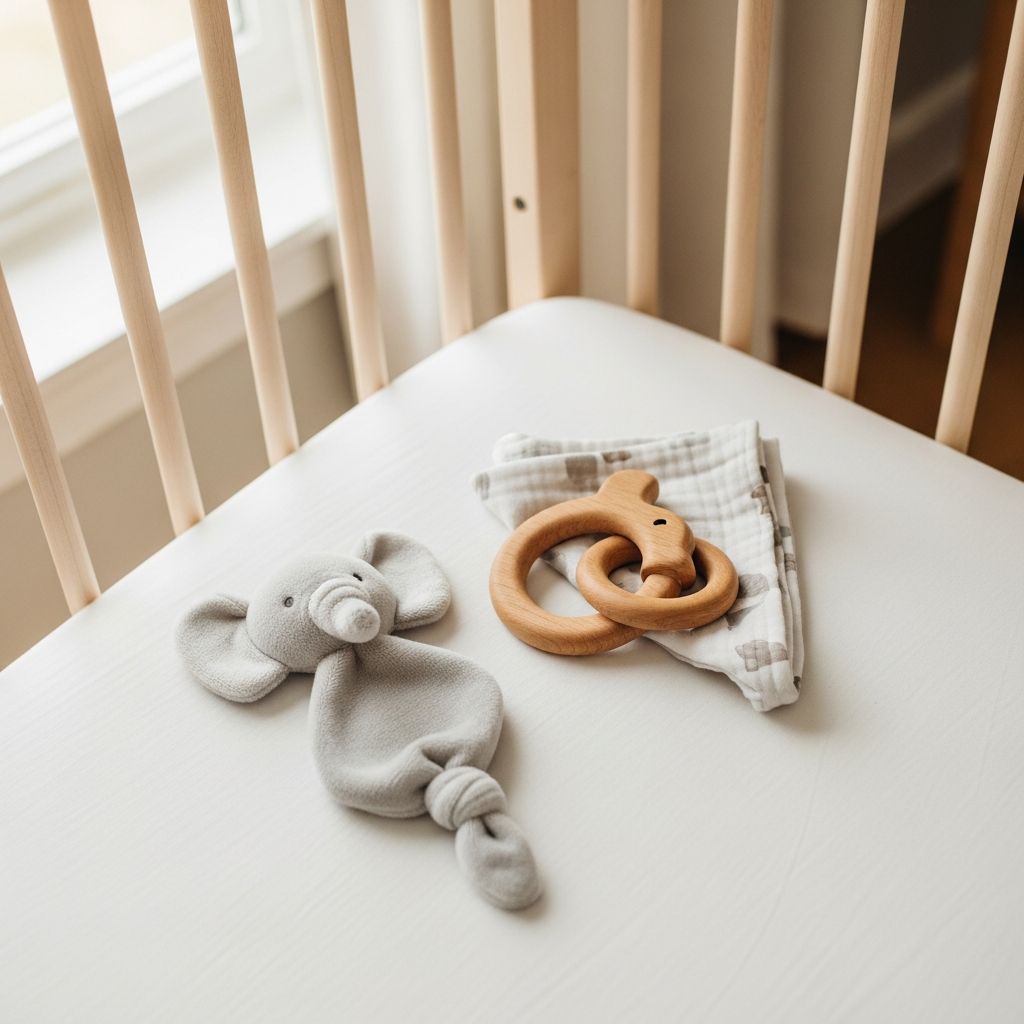
While stuffed animals and soft toys shouldn’t be in your baby’s crib, they certainly can play a role in your child’s comfort and development when kept outside the sleep space. Many children develop attachments to comfort items that help them self-soothe, and this is developmentally normal and healthy.
You might keep a special stuffed animal or blanket in the nursery where your baby can see it before sleep, during play, or after waking. Some families introduce these items as children age and develop the motor skills to manipulate and move objects away from their face. By 12 months and beyond, as babies become toddlers, they can safely use comfort items in their sleep space because they have greater mobility and awareness.
Creating a nighttime routine that involves your baby selecting or holding their comfort item before you place them in the crib can help them feel emotionally secure while maintaining the physical safety of their sleep environment. This approach honors both the developmental need for comfort and the physiological requirements for safe sleep.
Selecting Safe Crib Furniture and Accessories
Beyond what goes inside the crib, parents should carefully evaluate the crib itself. The spacing between crib rails must be no more than 2 and 3/8 inches apart, approximately the width of a standard dollar bill or soda can. This spacing prevents your baby’s head from becoming trapped between bars.
Modern cribs should meet current CPSC safety standards and should not feature drop-side rails, which have been banned due to safety concerns. When assembling your crib, follow manufacturer instructions precisely and ensure all hardware is secure.
Avoid using painted cribs, especially older models, as babies may chew on crib rails and ingest paint that could contain harmful substances. Similarly, ensure no cords from window coverings hang near the crib, as these present strangulation hazards.
Understanding Product Claims About SUID Prevention
The market for baby products includes numerous items claiming to reduce SUID risk. These might include wedges, monitors, mattresses with special features, or wearable devices. It’s important to understand that many such products lack scientific evidence supporting their claims. Medical organizations specifically caution against using non-prescribed home monitors or products without proven safety records.
Stick with recommendations from established pediatric organizations and your pediatrician rather than newer products with anecdotal claims. The evidence-based practices outlined in this article represent what research has actually demonstrated to be effective.
Practical Strategies for Creating a Beautiful and Safe Nursery
The safety requirements for sleep spaces don’t mean your nursery must look clinical or plain. Consider these design approaches that maintain safety while creating an appealing environment:
- Decorate walls with artwork, wall decals, or murals that appeal to you and create visual interest
- Use a combination of organized furniture to create functional storage for baby items
- Select a color scheme and incorporate it through paint, curtains, and non-sleep furniture
- Use a dresser for storing clothes and displaying a few carefully chosen non-crib items
- Incorporate soft furnishings like a comfortable chair for nighttime feeding and bonding outside the sleep surface
- Display stuffed animals on shelves where your child can see and enjoy them during awake times
- Hang a mobile or visual stimulation items from the ceiling where they won’t interfere with sleep safety
Frequently Asked Questions
Q: When can my child safely sleep with a stuffed animal?
A: Once your child reaches 12 months of age and transitions to a toddler bed, soft toys become safer because older children have better motor control and airway awareness. However, even with toddlers, avoid excessive bedding and maintain a relatively clear sleep space.
Q: Is a sleep sack as warm as a blanket?
A: Yes, modern sleep sacks are designed to provide comparable warmth to blankets while eliminating suffocation risks. They come in various weights appropriate for different room temperatures.
Q: What should I do if my baby seems cold at night?
A: Increase the layers your baby is wearing—add a second sleep sack or move to a heavier weight. Ensure the room temperature is appropriate (around 68-72°F is generally recommended) and check that your baby isn’t overheating by feeling their back or chest.
Q: Are mesh crib bumpers safer than padded ones?
A: While mesh bumpers are less hazardous than traditional padded versions, research hasn’t established that any type of bumper pad is necessary or beneficial for safety. The safest approach is to keep the crib empty except for your baby and a fitted sheet.
Q: Can I use a bassinet instead of a full-size crib?
A: Yes, bassinets and portable play yards are approved safe sleep surfaces when they meet CPSC standards. They’re often convenient for room sharing, especially in the early months when you need close access to your baby.
Q: How do I transition my baby away from room sharing?
A: The American Academy of Pediatrics recommends room sharing for at least the first six months, and longer if possible. When you’re ready to transition, do so gradually and ensure your baby’s separate sleep space maintains the same safety standards as your bedroom setup.
References
- Safe Sleep for Babies — Nationwide Children’s Hospital. 2025. https://www.nationwidechildrens.org/family-resources-education/health-wellness-and-safety-resources/helping-hands/safe-sleep-practices-for-babies
- Sleep Safety and Suffocation — Safe Kids Worldwide. https://www.safekids.org/safetytips/field_risks/sleep-safety
- Safe Sleep for Babies — Canadian Paediatric Society. https://caringforkids.cps.ca/handouts/safety-and-injury-prevention/safe_sleep_for_babies
- Providing Care for Babies to Sleep Safely: SUID and SIDS — Centers for Disease Control and Prevention (CDC). 2025. https://www.cdc.gov/sudden-infant-death/sleep-safely/index.html
- The ABCDs of Safe Sleep for Babies — Johns Hopkins Medicine. May 6, 2025. https://www.youtube.com/watch?v=U_B13ZyyeVI
- Infant Sleep — Stanford Medicine Children’s Health. https://www.stanfordchildrens.org/en/topic/default?id=infant-sleep-90-P02237
- How to Keep Your Sleeping Baby Safe: AAP Policy Explained — American Academy of Pediatrics (AAP). https://www.healthychildren.org/English/ages-stages/baby/sleep/Pages/a-parents-guide-to-safe-sleep.aspx
- Safe Sleep Environment for Baby — National Institute of Child Health and Human Development (NICHD), National Institutes of Health (NIH). https://safetosleep.nichd.nih.gov/reduce-risk/safe-sleep-environment