Ear piercing has become a cherished milestone for many children, symbolizing a step toward personal expression or cultural tradition. However, as a procedure involving skin penetration, it carries potential health risks, particularly for young ones whose immune systems and self-care abilities are still developing. This comprehensive guide draws on pediatric expertise to help parents navigate the process safely, from choosing the right time and place to mastering aftercare routines that promote swift healing and minimize complications like infections or scarring.
Understanding the Right Age for Ear Piercing
Determining when to pierce a child’s ears involves balancing cultural practices, emotional readiness, and physical maturity. In some communities, infants receive piercings shortly after birth, but medical professionals often advise waiting until children can actively participate in hygiene maintenance, typically around age 5 or older. This reduces risks from accidental tugging or poor cleaning, which are common in toddlers.
The American Academy of Pediatrics suggests delaying until maturity allows for responsible care, as younger children may inadvertently introduce bacteria by touching the site. For infants, the healing process can be prolonged due to constant movement and saliva exposure, heightening infection chances. Older children, capable of following instructions, experience fewer issues—studies show complications drop significantly post-10 years.
- Infants (under 6 months): High risk due to immature immunity; not recommended unless culturally essential with strict monitoring.
- Toddlers (1-4 years): Possible with professional oversight, but frequent supervision needed.
- School-age (5+ years): Ideal, as kids can assist in cleaning and avoid fiddling.
Consult your pediatrician if your child has conditions like eczema, diabetes, or a keloid history, which amplify risks.
Choosing a Professional and Safe Piercing Method
The piercing venue and technique profoundly impact outcomes. Opt for licensed professionals in sterile environments, such as pediatric clinics or reputable tattoo parlors, over mall kiosks. Needle piercing surpasses gun methods, which cause tissue trauma via blunt force and are hard to sterilize fully.
Guns exert high pressure, leading to microfractures and embedded jewelry, especially in soft lobes. Needles create clean incisions, facilitating faster healing. Verify the piercer uses single-use needles, fresh gloves, and autoclaved tools—ask to see sterilization protocols.
| Method | Pros | Cons | Recommended For |
|---|---|---|---|
| Needle Piercing | Clean cut, low trauma, sterile | Requires skilled piercer | All ages, especially kids |
| Piercing Gun | Quick | Tissue damage, infection risk | Avoid for children |
Earlobe piercings heal quicker (4-6 weeks) than cartilage (months longer with higher infection rates: 41.4% vs. 29.6%). Stick to lobes for kids.
Selecting Hypoallergenic Jewelry Essentials
Jewelry choice prevents 30-50% of complications. Nickel, prevalent in cheap earrings, triggers allergies in sensitive skin, causing redness and itching. Prioritize implant-grade titanium, 14k+ gold, surgical steel, or sterling silver certified nickel-free.
- Stud earrings: Simple posts with secure screw-backs over friction butterfly backs, which trap debris and embed.
- Size: Small (4-6mm) to minimize snagging during play.
- Initial wear: Keep studs in for full healing; changing too soon reopens wounds.
For babies, screw-locks prevent choking hazards. Test for allergies by consulting family history or patch-testing metals.
Common Risks and How to Spot Them Early
Approximately 35% of pediatric piercings encounter issues, from minor irritation to severe infections. Vigilance is key.
Infections
Bacterial entry via unsterile tools or poor hygiene manifests as redness, swelling, warmth, pus, or fever. Local infections affect 65% of complicated cases; cellulitis is rarer but serious. Embedded backs, seen in 79% of pediatric issues, cause pain and require medical extraction (incidence: 25/100,000 visits).
Allergic Reactions and Scarring
Nickel sensitivity leads to chronic dermatitis. Keloids and hypertrophic scars are risks, especially in cartilage or darker skin tones. Hypersensitivity affects soft tissue long-term.
Mechanical Injuries
Active kids snag earrings on clothes, tearing lobes—topical/oral antibiotics may be needed. Avoid cartilage to sidestep prolonged healing and abscesses.
Monitor daily: Normal mild swelling fades in 48 hours; persistent symptoms warrant a doctor visit.
Step-by-Step Aftercare Protocol for Optimal Healing
Healing demands consistency: Earlobes take 6-8 weeks; cartilage longer. Daily routines prevent 80% of complications.
- Hand hygiene: Soap and warm water before every touch.
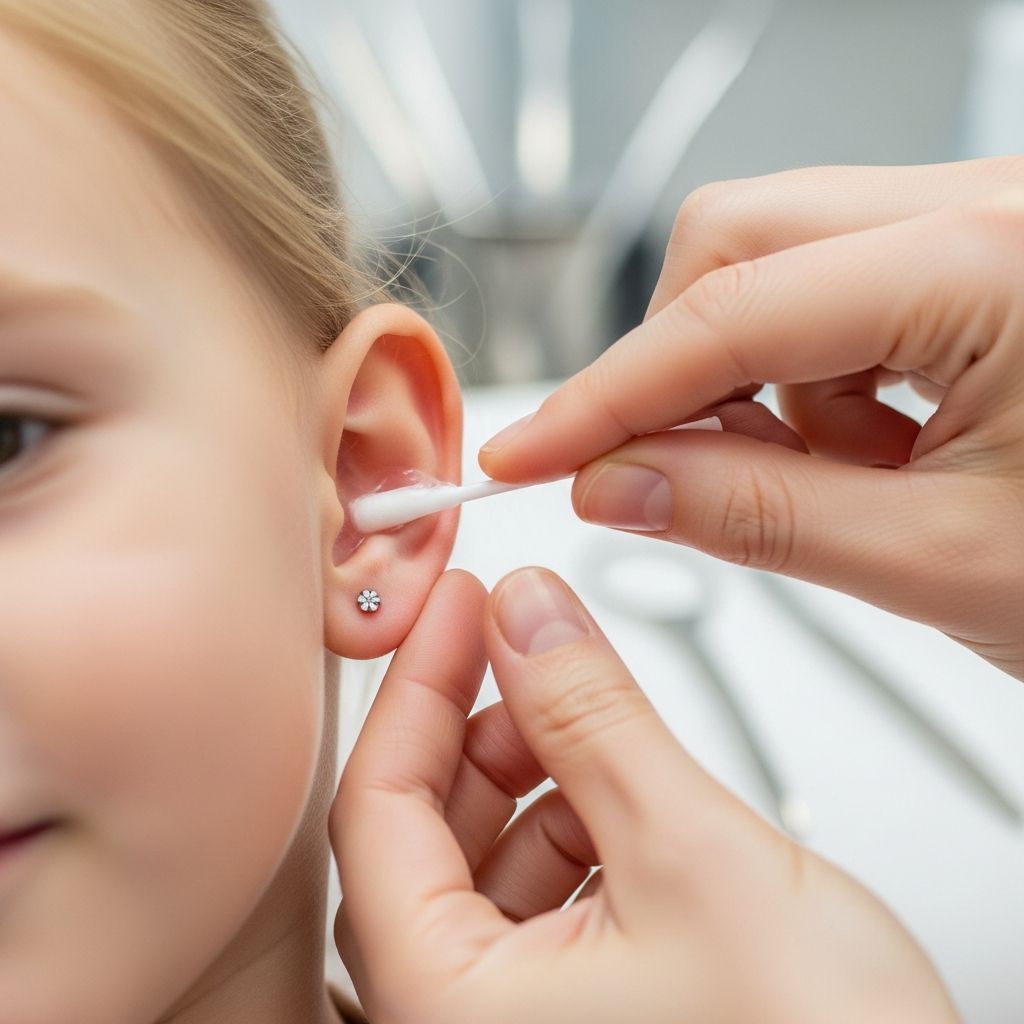
- Cleaning: Twice daily with saline (1/4 tsp sea salt in 1 cup warm water) or mild soap. Soak cotton pads, apply front/back, gently rotate studs. Skip alcohol/peroxide—they delay healing.
- No touching: Deter fiddling; cover with bandages if needed.
- Avoid irritants: No pools, baths, lotions, hair products. Sleep on clean pillowcases.
- Secure check: Ensure backs are tight; don’t change until healed.
Rotate only if advised—over-rotation irritates. Supervise hair brushing/phone use to prevent pulls.
Recognizing When to Seek Medical Help
Don’t delay if seeing pus, fever >100.4°F, spreading redness, or embedded jewelry. Pediatricians may prescribe antibiotics or surgically remove embeds. Early intervention prevents scarring or systemic spread.
- Red flags: Increasing pain post-24 hours, green/yellow discharge, lymph node swelling.
- Urgent: Earlobe tears from yanking—stitch promptly.
Long-Term Maintenance and Style Tips
Post-healing, switch to desired styles gradually. Clean weekly; store in sealed bags. Watch for delayed allergies. For active kids, lightweight hoops reduce snags.
Frequently Asked Questions (FAQs)
What’s the safest age to pierce a baby’s ears?
Pediatricians recommend waiting until at least age 5 for better cooperation, though cultural practices allow earlier with rigorous care.
Can I pierce my child’s ears at home?
No—lacks sterility and precision, skyrocketing infection risks. Always use professionals.
How do I know if it’s infected?
Look for pus, fever, or swelling beyond 48 hours. Contact a doctor immediately.
Are gold earrings always safe?
Only 14k+ solid gold; plated versions contain nickel.
How long until swimming is okay?
Wait full healing (6+ weeks); chlorinated water harbors bacteria.
References
- Ear-piercing complications in children and adolescents — PMC – NIH. 2022-09-01. https://pmc.ncbi.nlm.nih.gov/articles/PMC9470180/
- 5 Signs of Ear Piercing Infection In Children: Here’s What To Do — Omega Pediatrics. 2023. https://www.omegapediatrics.com/signs-ear-piercing-infection-in-children/
- Ear piercing for kids: Safety tips from a pediatrician — Riley Children’s Health. 2023-11-28. https://www.rileychildrens.org/connections/ear-piercing-for-kids-safety-tips-from-a-pediatrician
- Body Piercings, Teens & Potential Health Risks: AAP Report — American Academy of Pediatrics. 2023. https://www.healthychildren.org/English/ages-stages/teen/Pages/body-piercings.aspx
- Piercing Children and Minors — Piercology. 2023. https://www.piercology.com/childrens-ear-piercings/