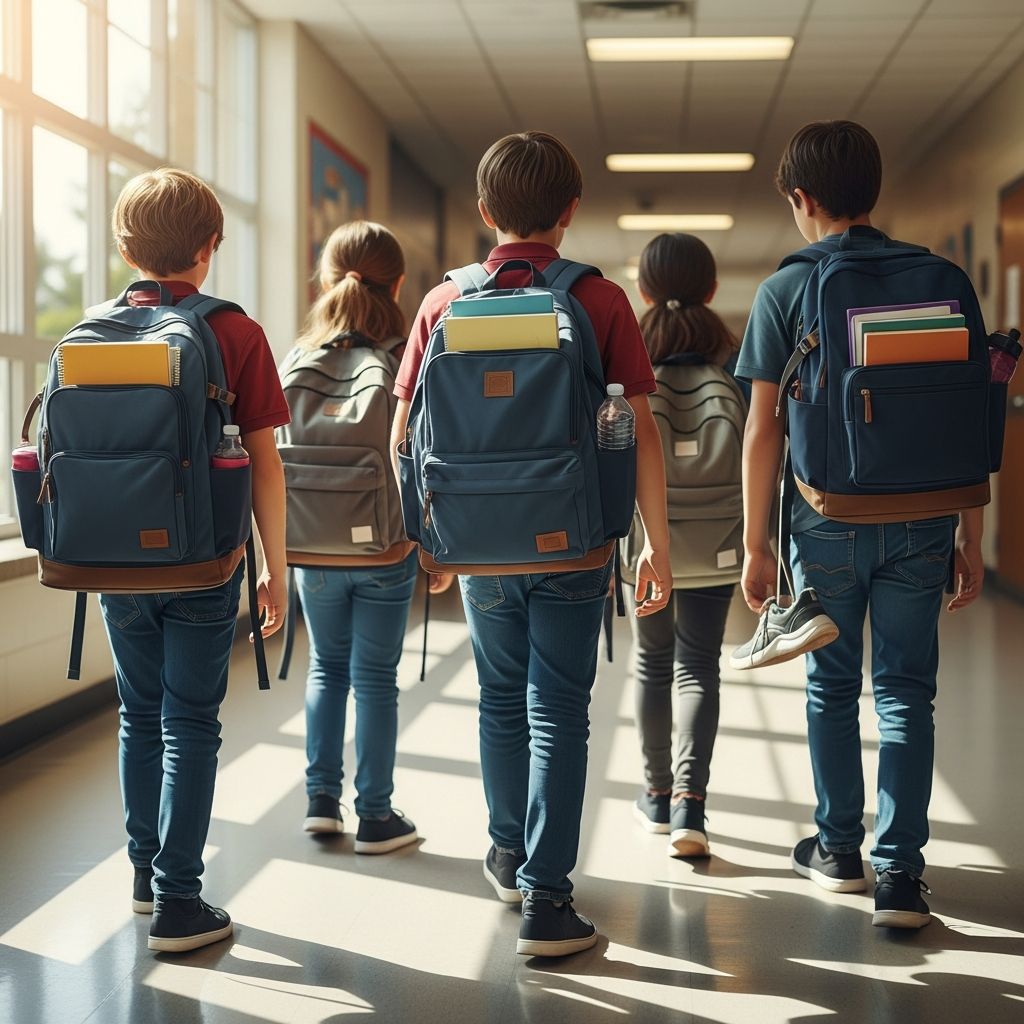
Modern students haul unprecedented weights in their backpacks, from towering textbook stacks to laptops and supplies, sparking concerns over musculoskeletal health. This comprehensive guide delves into the escalating backpack burden, its impact on developing bodies, evidence-based solutions, and gear selections to safeguard young spines during demanding school years.
The Mounting Weight Crisis in Student Backpacks
School backpacks have evolved into mobile storage units overloaded with essentials for extended academic days. Elementary through high schoolers now transport 20-30 pounds routinely, far exceeding recommended limits. Factors driving this trend include denser curricula requiring multiple binders, chromebooks or tablets for every child, and extracurricular gear like instruments or sports uniforms.
Surveys reveal average loads comprising 15-25% of a child’s body weight, with peaks hitting 40% during test weeks or project deadlines. This chronic overload transforms simple commutes to school into endurance tests, subtly eroding posture and vitality over semesters.
Health Hazards of Overpacked School Bags
Excessive backpack weight imposes serious strain on immature skeletal systems. Pediatric orthopedists report surging cases of back pain, neck stiffness, and shoulder discomfort among school-age children, directly linked to daily lugging.
- Spinal Misalignment: Uneven loads force compensatory slouching, compressing intervertebral discs and curving the spine into unhealthy C- or S-shapes over time.
- Muscle Fatigue: Trapezii and rhomboids tire rapidly under constant tension, leading to chronic tension headaches and reduced focus in class.
- Joint Stress: Hips, knees, and ankles absorb shock from imbalanced packs, elevating injury risk during active play or sports.
- Long-Term Risks: Persistent habits may predispose teens to adult-onset scoliosis, herniated discs, or degenerative conditions by age 30.
Growth spurts amplify vulnerability, as rapidly elongating bones and lax ligaments offer minimal natural stability against such forces.
Expert Guidelines for Safe Backpack Weights
Authoritative bodies set clear benchmarks: The American Academy of Pediatrics advises no more than 10-20% of body weight, while the Consumer Product Safety Commission caps at 15%. For a 100-pound child, this translates to 10-15 pounds maximum.
| Child’s Weight (lbs) | Max Safe Load (lbs) | Typical Overload Example |
|---|---|---|
| 80 | 8-16 | 25 lb pack = 31% excess |
| 100 | 10-20 | 28 lb pack = 40% excess |
| 120 | 12-24 | 30 lb pack = 25% excess |
| 140 | 14-28 | 32 lb pack = 14% excess |
Weigh packs weekly with bathroom scales; if exceeding limits, triage contents ruthlessly.
Proven Strategies to Lighten the Daily Load
Content Optimization Techniques
Audit and declutter relentlessly. Scan syllabi to carry only assigned texts, photocopy heavy pages, or upload digital versions to cloud drives. Consolidate notes into single binders by subject, ditching duplicate handouts. Meal prep eliminates lunchbox bulk, while locker use for non-essentials prevents midday accumulation.
Tech Integration for Weight Reduction
E-books and apps slash paper volume: Kindle holds entire libraries weighing ounces. OneNote or Google Classroom centralizes assignments digitally. Invest in slim e-readers under 1 pound to replace 5+ textbooks.
Logistics Hacks for Bulk Relief
- Weekly library returns to swap books.
- Shared class sets during group work.
- Bike panniers or rolling bags for longer treks.
- Parent vehicle drop-offs for heaviest days.
Ergonomic Features in Top School Backpacks
Superior designs distribute weight evenly via padded, contoured shoulder straps, sternum clips linking them across the chest, and hip belts transferring load to hips. Airflow mesh backs prevent sweaty slippage, while multiple compartments prevent sagging.
Key Must-Haves:
- Sizing matches torso length (measure from C7 vertebra to iliac crest).
- 20-35L capacity suits middle/high school without excess sag.
- Reflective accents for visibility.
- Water-resistant fabrics endure rain and spills.
Recommended Backpacks for Middle and High Schoolers
After rigorous testing, these models excel in durability, comfort, and capacity.
| Model | Capacity | Key Features | Best For |
|---|---|---|---|
| Outdoor Gear Lab Top Pick | 30L | Padded laptop sleeve, bottle pockets, ergonomic straps | Daily heavy loads |
| State Bags Large | 28L | Durable for teens, tech compartments, stylish | Middle school style |
| The North Face Teen | 32L | Water bottle holders, laptop protection | High school commuters |
| JanSport Large | 35L | Roomy, adaptable for adventures | Extracurricular haulers |
| SwissGear School | 31L | Airflow back, comfortable straps | All-day wear |
These packs, tested for weeks under real-world abuse, balance function with teen-approved aesthetics.
Wearing and Packing Best Practices
Both straps always buckled, pack centered high on back—not sagging low. Sternum and waist clips engaged to lock load stable. Lift with legs, never twist torso when donning. Empty nightly for inspection and drying.
Train proper form: Bend knees, hug pack first, rise smoothly while keeping spine neutral.
Warning Signs and When to Act
Monitor for red flags like forward head posture, uneven shoulders, complaints of tingling/numbness, or reluctance to wear the pack. Persistent issues warrant pediatrician evaluation, potentially including physical therapy or orthopedic consults.
Frequently Asked Questions
What is the maximum healthy backpack weight for kids?
Limit to 10-20% of body weight; e.g., 12 pounds max for a 100 lb child, per pediatric guidelines.
Should kids use one strap or two?
Always two wide, padded straps for even distribution—single-strap slings imbalance the spine dramatically.
Are rolling backpacks suitable for school?
Yes for upper grades or upstairs-free campuses, but hybrid wheeled/strap models prevent arm strain on stairs.
How often should backpacks be replaced?
Annually if zippers fail, straps fray, or fabric tears; quality lasts 2-3 years with care.
Can heavy packs cause permanent damage?
Chronic overload risks scoliosis or disc issues, but intervention halts progression effectively.
Building a Lighter School Ecosystem
Parents, educators, and districts must collaborate: Advocate digital transitions, provide class sets, install more lockers. Home setups with organizational bins minimize morning rushes packing excess. Strength training like planks and rows bolsters young backs against unavoidable loads.
Ultimately, proactive load management preserves mobility and focus, ensuring students thrive unhindered by their own gear. Implement these steps now for a pain-free academic year ahead.
References
- The Best School Backpacks | Tested & Ranked — Outdoor Gear Lab. 2024. https://www.outdoorgearlab.com/best-school-backpack
- Middle & High School Backpacks — State Bags. 2024. https://statebags.com/collections/kids-backpacks-for-middle-and-high-school
- High School Backpacks for Teens — The North Face. 2024. https://www.thenorthface.com/en-us/explore/teen-backpacks
- Roomy and Stylish Large Backpacks — JanSport. 2024. https://www.jansport.com/collections/large-backpacks
- School Backpacks — SWISSGEAR. 2024. https://www.swissgear.com/collections/school-backpacks