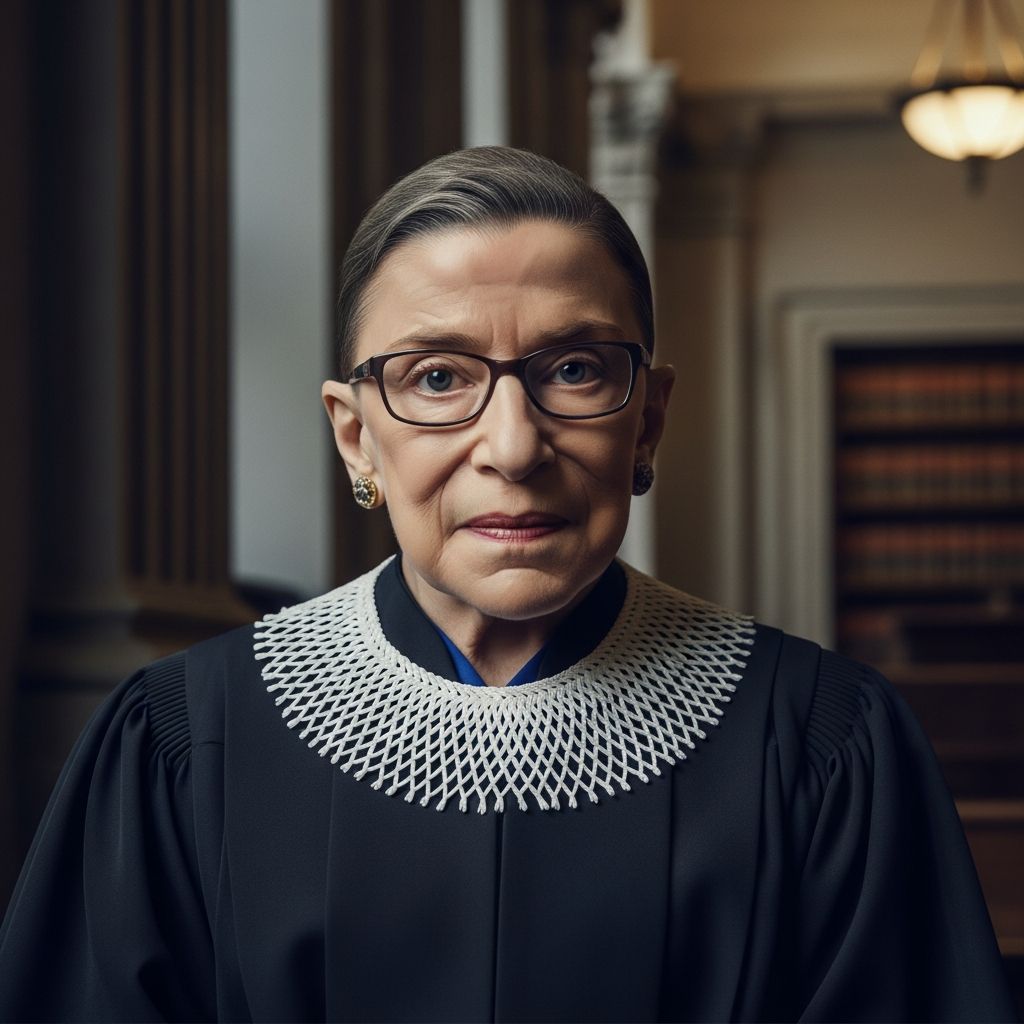
Justice Ruth Bader Ginsburg, who passed away at 87 from complications of metastatic pancreatic cancer, left an indelible mark on American jurisprudence and society. Appointed to the Supreme Court in 1993 by President Bill Clinton, she served until September 18, 2020, becoming the first Jewish woman and second female justice on the nation’s highest bench.
Early Life and Formative Challenges
Born Joan Ruth Bader on March 15, 1933, in Brooklyn, New York, Ginsburg faced early hardships that shaped her resilience. Her mother, Celia, instilled in her a strong work ethic and passion for learning, despite passing away just before Ruth’s high school graduation. Ginsburg excelled academically, attending Cornell University where she met her husband, Martin Ginsburg, a distinguished tax attorney and U.S. Army veteran.
Her pursuit of legal education was marked by gender discrimination. Rejected from several top law schools, she attended Harvard Law School but transferred to Columbia Law after her husband took a job there. Graduating at the top of her class, she still struggled to find employment due to her gender and Jewish heritage, highlighting the systemic barriers she would later dismantle.
Pioneering Gender Equality Litigation
Ginsburg’s legal career ignited as a fierce advocate for gender equality. In the 1970s, as director of the ACLU Women’s Rights Project, she argued six landmark Supreme Court cases, winning five. These victories chipped away at laws perpetuating sex-based stereotypes.
One pivotal case, Weinberger v. Wiesenfeld (1975), challenged Social Security benefits that favored widows over widowers. Ginsburg argued successfully that such distinctions violated equal protection, extending benefits to men caring for children and striking a blow against gender roles.
Her strategy was deliberate: she often represented male plaintiffs to underscore how discriminatory laws harmed everyone, building consensus for change. This approach mirrored Thurgood Marshall’s civil rights playbook, adapting it to pioneer women’s rights law.
Ascent to the Federal Bench
In 1980, President Jimmy Carter appointed Ginsburg to the U.S. Court of Appeals for the District of Columbia Circuit. Over 13 years, she authored measured opinions that influenced constitutional law, earning a reputation as a consensus-builder.
Her appellate work demonstrated a commitment to justice without radicalism, preparing her for the Supreme Court. Chief Justice John Roberts later praised her as a “tireless and resolute champion of justice,” reflecting her impact across ideological lines.
Supreme Court Tenure: Major Contributions
Sworn in on August 10, 1993, Ginsburg authored transformative majority opinions. In United States v. Virginia (1996), she ruled that the Virginia Military Institute’s male-only policy violated the Equal Protection Clause, opening doors for women in elite institutions.
Other key decisions included Olmstead v. L.C. (1999), affirming community integration for people with disabilities, and Friends of the Earth v. Laidlaw (2000), strengthening citizen suits for environmental enforcement.
| Case | Year | Impact |
|---|---|---|
| United States v. Virginia | 1996 | Ended male-only admissions at VMI, advancing gender equity in education. |
| Weinberger v. Wiesenfeld | 1975 | Equalized Social Security survivor benefits regardless of gender. |
| Olmstead v. L.C. | 1999 | Promoted deinstitutionalization for disabled individuals. |
Iconic Dissents and Evolving Influence
As the Court shifted rightward, Ginsburg’s dissents gained fame. Her fiery rebuke in Ledbetter v. Goodyear (2007) criticized pay discrimination rulings, inspiring the Lilly Ledbetter Fair Pay Act of 2009. These opinions, read from the bench, galvanized public support.
Nicknamed “Notorious RBG” after a viral tumblr post likening her to rapper Notorious B.I.G., she became a pop culture phenomenon. Opera lover, fitness enthusiast (with her signature workouts), and collar-wearing style icon, Ginsburg transcended law to inspire generations.
Personal Life and Resilience
Ginsburg’s partnership with Martin was legendary; he supported her career, even publicizing it to counter stereotypes. They raised two children: Jane, a professor, and James, a musician. After Martin’s death in 2010, she lay with his opera scores during services.
Despite five cancer battles—colon in 1999, pancreatic recurrences—she missed no oral arguments post-1999, embodying perseverance. Ginsburg exercised rigorously, crediting it for her endurance.
- Family Support: Martin’s advocacy amplified her voice.
- Health Battles: Overcame multiple cancers while serving.
- Cultural Passions: Avid opera fan, collaborated on Scalia opera.
Lasting Cultural and Legal Impact
Ginsburg’s legacy reshaped law and culture. She opened professions to women, influenced voting rights, healthcare, and beyond. Harvard’s community hailed her as a “champion of equality” and “civil rights hero.”
Buried at Arlington National Cemetery beside Martin in Section 5, her gravesite honors her and his service. Columbia Law, where she was the first tenured female professor, remembers her human-centered jurisprudence.
Key Milestones Timeline
| Year | Milestone |
|---|---|
| 1954 | Graduated from Cornell University. |
| 1959 | Columbia Law degree, top of class. |
| 1972 | Co-founded ACLU Women’s Rights Project. |
| 1980 | Appointed to D.C. Circuit Court. |
| 1993 | Sworn in as Supreme Court Justice. |
| 2020 | Passed away on September 18. |
Frequently Asked Questions
What made Ruth Bader Ginsburg a cultural icon?
Her blend of legal brilliance, dissents, workouts, collars, and the “Notorious RBG” meme turned her into a feminist symbol and pop icon.
How did Ginsburg approach gender discrimination cases?
She strategically used male plaintiffs to show universal harm, winning broad support for equality.
What were her most famous Supreme Court opinions?
Majorities in U.S. v. Virginia and dissents like Ledbetter v. Goodyear defined her tenure.
Did Ginsburg face health challenges during her service?
Yes, surviving colon and pancreatic cancers, she rarely missed work, maintaining a rigorous fitness routine.
Where is Justice Ginsburg buried?
At Arlington National Cemetery, Section 5, with her husband Martin.
Reflections on Her Enduring Principles
Ginsburg’s vision of justice emphasized equality for all, regardless of gender, race, or religion. Her work at the World Justice Project’s inspiration underscores strategic law use for societal good. As Dean Gillian Lester of Columbia noted, her legacy reminds us to keep human impact central.
From unlikely revolutionary to beloved icon, Ginsburg transformed barriers into bridges. Her story continues to motivate advocates worldwide.
References
- Honoring the Life and Legacy of Justice Ruth Bader Ginsburg — Arlington National Cemetery. 2020-09-25. https://www.arlingtoncemetery.mil/Blog/Post/12351/Honoring-the-Life-and-Legacy-of-Justice-Ruth-Bader-Ginsburg
- Harvard community reflects on the life, achievements of Ruth Bader Ginsburg — Harvard Gazette. 2020-09-21. https://news.harvard.edu/gazette/story/2020/09/harvard-community-reflects-on-the-life-achievements-of-ruth-bader-ginsburg/
- Remembering Justice Ruth Bader Ginsburg — World Justice Project. 2020-09-18. https://worldjusticeproject.org/news/remembering-justice-ruth-bader-ginsburg
- Ruth Bader Ginsburg — Wikipedia (primary sources referenced). 2026-04-01. https://en.wikipedia.org/wiki/Ruth_Bader_Ginsburg
- Ruth Bader Ginsburg — National Women’s History Museum. 2020-09-18. https://www.womenshistory.org/education-resources/biographies/ruth-bader-ginsburg
- Remembering the Legacy of Ruth Bader Ginsburg ’59 — Columbia Law School. 2020-09-18. https://www.law.columbia.edu/news/archive/remembering-legacy-ruth-bader-ginsburg-59
- Ruth Bader Ginsburg — OYEZ. N/A. https://www.oyez.org/justices/ruth_bader_ginsburg