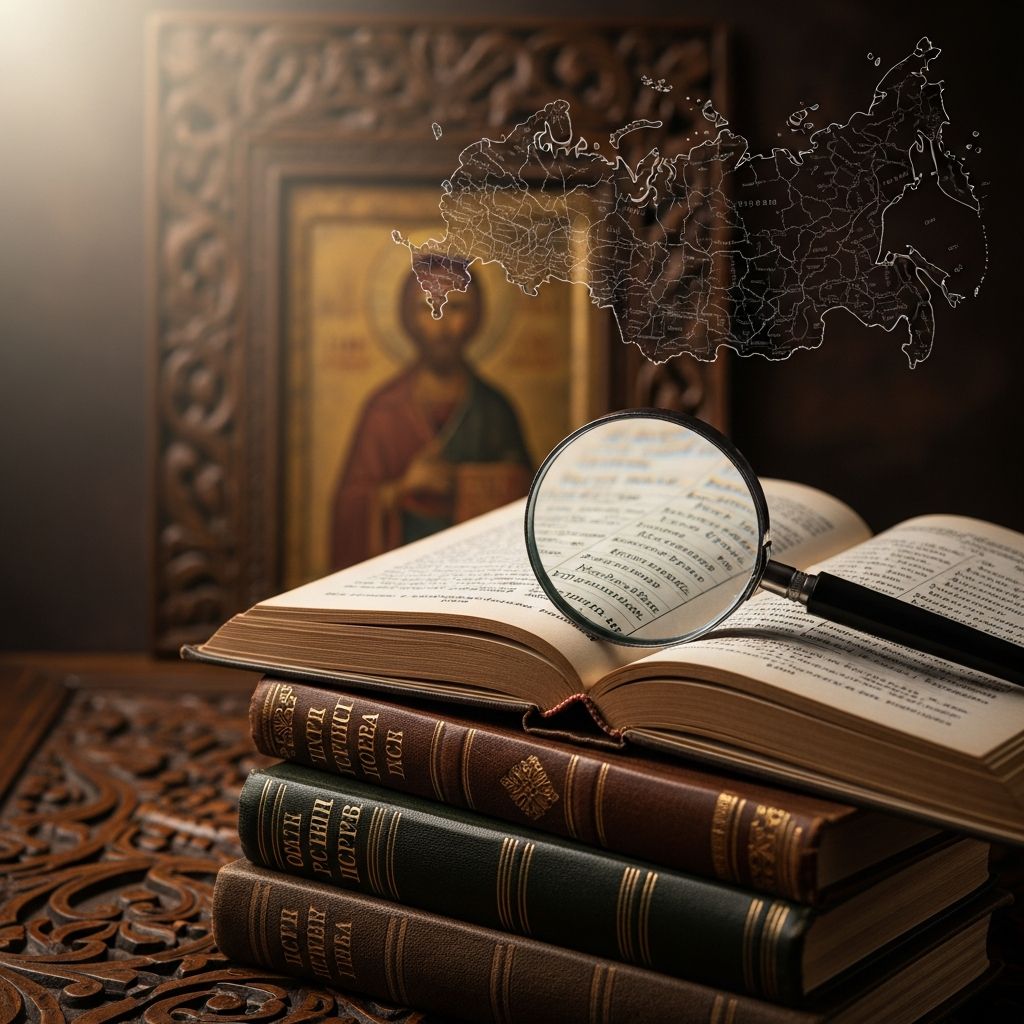
Russian last names are more than simple labels; they are compact stories that encode ancestry, geography, religion, and even old professions. Understanding how Russian surnames work can help you decode family trees, choose meaningful baby names, or simply navigate Slavic culture with more confidence.
The Building Blocks of a Russian Full Name
Most Russian citizens traditionally have three main name elements: a given name, a patronymic, and a family surname. Each component plays a specific role and follows recognizable patterns that reflect Russian history and language.
- Given name (имя) – The personal name chosen by parents, often linked to Orthodox saints, Slavic vocabulary, or international forms such as Aleksandr, Dmitry, Olga, or Natalia.
- Patronymic (отчество) – A middle element based on the father’s first name, typically ending in -ovich or -evich for men and -ovna or -evna for women (for example, Ivan Sergeevich, Anna Sergeevna).
- Surname (фамилия) – The inherited family name, shared across generations, often revealing ancestral origin, occupation, or a characteristic nickname.
Seen together, these elements make Russian names unusually informative to anyone who knows how to read their structure and endings.
How Russian Surnames Emerged Over Time
Unlike some Western European regions where hereditary surnames spread earlier, stable Russian family names appeared relatively late and in uneven stages across social classes. The timeline of adoption highlights the deep connection between naming traditions and political systems.
- Early use among elites – Medieval noble families and urban elites in centers such as Novgorod and Moscow began using hereditary surnames centuries ago to mark lineage, property rights, and political status.
- Gradual expansion to townspeople – Merchants, artisans, and educated urban residents slowly adopted family surnames as record-keeping improved and bureaucratic states demanded clearer identification.
- Mass adoption after serfdom – For many peasants, stable surnames became widespread only after the abolition of serfdom and the expansion of modern civil registration, passports, and censuses in the late imperial and early Soviet periods.
By the twentieth century, nearly everyone within Russian territories had an official surname, turning once-flexible nicknames and descriptors into fixed family identifiers.
Common Surname Endings and What They Reveal
One of the fastest ways to interpret a Russian last name is to look at its ending. Different suffixes often point to different historical origins, such as “son of,” geographical links, or adjectives derived from traits.
| Ending | Typical Meaning | Example (Masculine / Feminine) |
|---|---|---|
| -ov / -ev | “Belonging to” or “descendant of” a person or thing | Ivanov / Ivanova; Petrov / Petrova |
| -in | Possessive form, often from a given name or noun | Nikitin / Nikitina; Kuzmin / Kuzmina |
| -sky / -skiy | Adjectival, often linked to places or noble lines | Volkovsky / Volkovskaya; Smolensky / Smolenskaya |
| -oy / -y | Adjectival forms, frequently from nicknames or traits | Tolstoy / Tolstaya; Sedoy / Sedaya |
| -enko / -ko | Diminutive or patronymic, especially in Ukrainian-influenced regions | Shevchenko; Kovalenko (often unchanging by gender) |
Although there are many exceptions, these endings help you quickly sort surnames into broad groups tied to ancestry, geography, or social origin.
Patronymic-Based Surnames
One of the most widespread types of Russian surnames derives from the personal name of a male ancestor. These names started as descriptions such as “Ivan’s son” and eventually solidified into family surnames used by later generations.
- From common first names – Names like Ivan, Pyotr, Pavel, and Nikita produced Ivanov, Petrov, Pavlov, and Nikitin, each originally signaling “from the family of” that ancestor.
- Using possessive suffixes – The endings -ov, -ev, and -in operate similarly to the English “Johnson” or “Roberts,” converting a given name into a hereditary surname.
- Preserving older name forms – Some patronymic surnames are built on first names that have fallen out of everyday use, allowing family names to preserve archaic forms that would otherwise disappear.
Patronymic-derived surnames remain extremely common, which is why many Russian last names seem to echo familiar given names with predictable endings.
Occupational and Social-Role Surnames
Another large group of Russian surnames grew out of jobs, crafts, and social functions. In small communities, a person’s trade or status often became a convenient nickname, which later transformed into a family name.
- Craft and trade names – Names based on blacksmithing, carpentry, herding, or other skilled work link descendants to the economic backbone of village life.
- Service positions – Some surnames point to roles within estates, monasteries, or the military, such as stewards, scribes, or lower-ranking officers.
- Religious and scholarly roles – Families connected to priestly or educational roles sometimes adopted surnames tied to those vocations, emphasizing literacy and status.
These occupational surnames offer valuable genealogical clues, hinting at how ancestors might have earned their living or where they stood within local hierarchies.
Place-Based and Geographic Surnames
Geographic surnames connect families to a specific village, town, landscape feature, or broader region. They often emerged when people migrated and needed labels identifying where they came from rather than who their father was.
- From towns and regions – Names may be built from settlement names, rivers, or provinces, often with adjectival endings such as -sky, -skoy, or -in.
- Landscape features – Surnames can be rooted in words for forests, fields, marshes, rivers, or hills, reflecting how tightly life was woven into the natural environment.
- Migratory markers – When a family left a homeland, the new community might label them using a geographic nickname that later hardened into a surname.
For modern researchers and descendants, these surnames provide hints about ancestral homelands, especially when combined with historical maps and local records.
Surnames from Personal Traits and Nicknames
Russian village life produced abundant nicknames based on looks, habits, personality traits, and small incidents. Some of these affectionate, humorous, or even unflattering labels entered official documents and turned into hereditary surnames.
- Physical characteristics – Names can allude to height, hair color, body type, or distinctive marks, echoing how neighbors saw a particular ancestor.
- Personality and behavior – Traits such as calmness, stubbornness, quick temper, or humor sometimes inspired family names that still carry a faint trace of the original reputation.
- Animal and object imagery – Village speech often compared people to animals, plants, or simple tools, and these images occasionally crystallized into surnames.
Because of their colorful origins, trait-based surnames are particularly evocative and can reveal the folk imagination of past generations.
Religious and Slavic-Mythic Roots
Russian surnames draw from both Orthodox Christian tradition and older pre-Christian Slavic names. This layering of influences reflects the long, gradual Christianization of the region and the persistence of older naming ideas.
- Christian saint names – Many surnames grow from Christian given names of Greek, Latin, or Hebrew origin, adopted into Russian phonetics over centuries of church use.
- Old Slavic vocabulary – Other surnames preserve words tied to virtues, wishes, or mythic ideas such as love, strength, or fate, often with possessive endings.
- Ambivalent or ironic names – Some pre-Christian names carried deliberately “negative” meanings, intended as protective charms; their surnames preserve this tradition of ironic labeling.
Together, these religious and mythic layers make Russian surnames rich sources for studying shifts in belief systems and cultural identity over time.
Gender Forms of Russian Last Names
Unlike English surnames, many Russian last names change form depending on whether the person is male or female. These differences follow grammatical gender rules in the Russian language, which treats many adjectives and possessive forms as variable.
- -ov / -ev / -in endings – Masculine forms like Ivanov, Petrov, or Nikitin become Ivanova, Petrova, or Nikitina for women, adding an -a or -ina ending.
- -sky / -oy endings – Adjectival surnames such as Smolensky or Tolstoy change to Smolenskaya or Tolstaya in the feminine, following standard adjective agreement rules.
- Invariable forms – Some surnames, especially those ending in consonants, -enko, -ko, or foreign-derived endings, typically remain unchanged regardless of gender.
Understanding these patterns makes it easier to match male and female relatives in records and to recognize when two similar-looking surnames actually belong to the same family line.
Russian Surnames Outside Russia
Historical migration, shifting borders, and diaspora communities mean that “Russian” surnames today appear across Eastern Europe, Central Asia, and immigrant communities worldwide. Over time, these names often adapt to new languages and spelling systems.
- Spelling changes – Emigration frequently leads to altered Latin transliterations, dropped endings, or phonetic spellings, especially in English, German, or French-speaking countries.
- Blended influences – Families in border regions may carry surnames that are linguistically Russian but culturally mixed with Ukrainian, Belarusian, Baltic, or Central Asian roots.
- Identity and tradition – In many diaspora communities, preserving the original form of a surname becomes a way of maintaining a connection to ancestral culture despite distance and linguistic change.
Tracing these transformed surnames often requires comparing historical documents, variant spellings, and local transliteration customs.
Practical Tips for Understanding a Russian Surname
If you encounter a Russian last name and want to make sense of it, a few simple steps can reveal quite a lot about its likely background. Although only detailed archival research can confirm a specific family story, these strategies provide a useful starting point.
- Identify the ending – Note whether the surname ends in -ov, -ev, -in, -sky, -oy, -enko, or another common pattern, then connect it to patronymic, geographic, or adjectival roots.
- Separate the root – Remove the ending in your mind and see whether the remaining root resembles a known first name, a Russian word for an animal, profession, or place, or a Slavic virtue term.
- Check gender variants – Remember that the masculine and feminine forms might look slightly different; matching them will prevent mistaken assumptions that they are unrelated names.
- Consider regional context – Think about where the person or family lived; some endings and roots are more common in specific regions influenced by neighboring languages.
By combining these steps, even non-speakers can often form a reasonable hypothesis about the story behind a Russian surname.
Frequently Asked Questions About Russian Last Names
Are all Russian surnames patronymic in origin?
No. Although many famous and common surnames grew from male given names, a substantial number arise from occupations, places, traits, animals, or older Slavic vocabulary. Patronymic origin is widespread, but it is only one of several major surname types.
Do Russian women always change their surnames after marriage?
Practices vary. Many women adopt their husband’s surname in its feminine form, but others retain their birth surname, use a double surname, or follow different customs depending on personal choice and local legal frameworks. Modern naming practice across Russian-speaking communities is diverse and flexible.
Why do some Russian surnames sound Ukrainian or Belarusian?
Centuries of shared history, shifting borders, and cultural overlap mean that surname patterns spread across Slavic languages. Endings such as -enko or -uk, for example, are often associated with Ukrainian or Belarusian regions but may appear in families that now primarily identify as Russian.
Can two unrelated families share the same Russian surname?
Yes. Because many surnames were created from very common first names or everyday words, different families in different locations could independently adopt identical surnames. Genealogical research must therefore rely on records and context, not just the surname itself, to prove a shared ancestor.
How should Russian surnames be transliterated into English?
There is no single global standard, though libraries, governments, and academic systems often use consistent rules. Common transliteration styles aim to reflect Russian sounds with Latin letters, but family preferences, historical documents, and immigration authorities frequently produce multiple spellings for the same original surname.
Using Russian Surnames for Baby Names and Characters
Beyond genealogy, Russian surnames appeal to parents seeking distinctive middle names and to writers building believable Slavic characters. When used respectfully and accurately, they add cultural depth and texture to naming choices.
- Pair with authentic given names – Combining a Russian surname with a historically or regionally appropriate first name creates a more realistic and respectful name combination.
- Match gender correctly – Ensure that the surname form fits the character’s or person’s gender according to Russian grammatical rules, especially when using -ov/-ova or -sky/-skaya endings.
- Consider symbolism – Selecting surnames whose roots align with a character’s backstory, personality, or setting can subtly reinforce themes and character arcs.
With a basic understanding of endings, roots, and gender forms, Russian last names become powerful tools for storytelling, cultural exploration, and connection to family history.