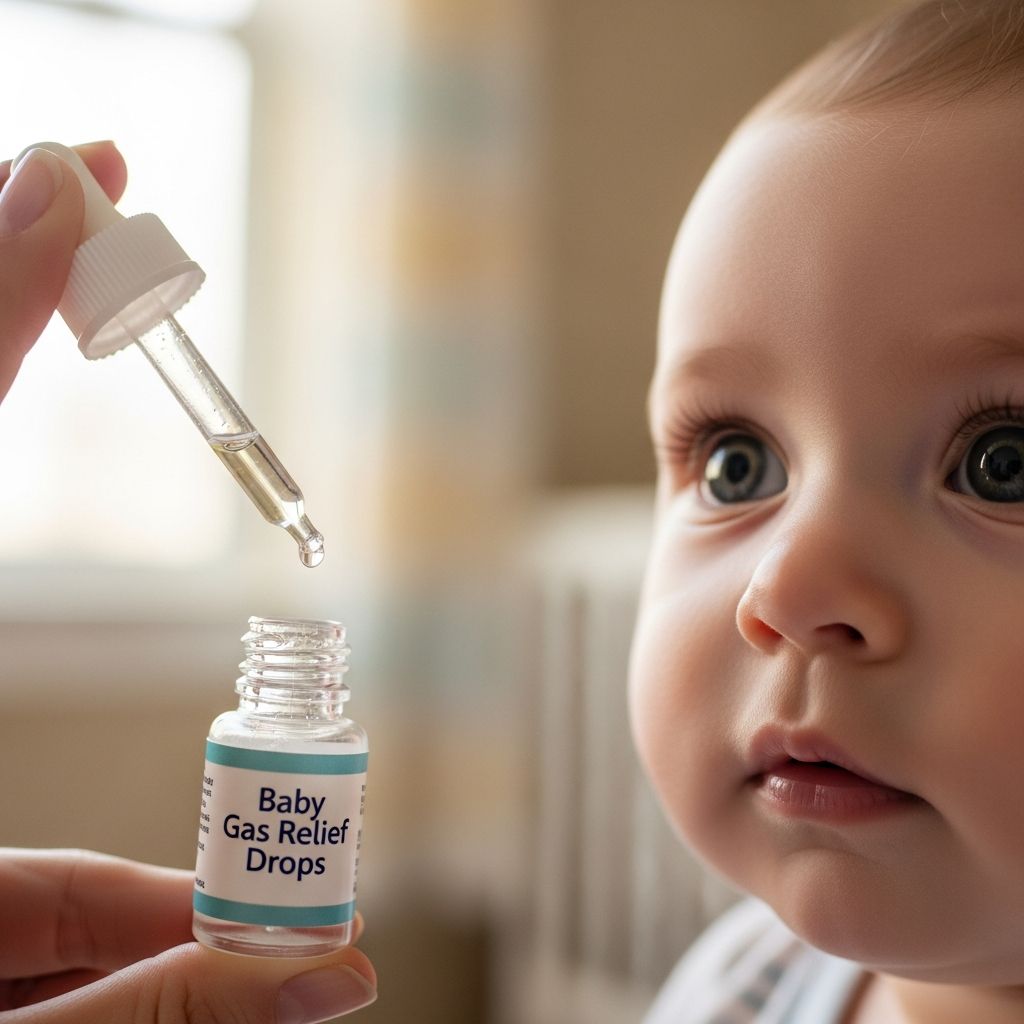
Infants frequently experience gas buildup, leading to discomfort, fussiness, and prolonged crying episodes that challenge new parents. Over-the-counter gas relief drops, primarily containing simethicone, promise quick relief by breaking down gas bubbles in the digestive tract. These products are widely available and marketed as safe for newborns, but parents often wonder about their true benefits and potential risks. This article examines the science behind these drops, their safety for babies, proper administration, limitations, and complementary strategies to soothe gassy infants.
Understanding Gas in Newborns and Infants
Gas forms naturally as babies digest milk or formula, exacerbated by immature digestive systems, swallowed air during feeding, or dietary factors in breastfeeding mothers. Symptoms include bloating, excessive burping, flatulence, arched backs, and intense crying, especially in the evenings. While common, persistent gas can mimic colic, defined as unexplained crying for over three hours daily, three days a week. Distinguishing gas from other issues like reflux or allergies is crucial before reaching for remedies.
Newborns lack fully developed gut flora and sphincter muscles, making gas passage difficult. Factors like rapid feeding, improper latch, or formula intolerance contribute. HealthyChildren.org notes that tummy time aids gas expulsion by applying abdominal pressure, promoting motility without medications.
How Simethicone-Based Gas Drops Function
Simethicone, the active ingredient in brands like Mylicon, works as an anti-foaming agent. It merges small gas bubbles into larger ones, facilitating easier expulsion via burping or passing stool. Unlike absorbed drugs, simethicone passes through the system unchanged, minimizing systemic effects.
Typical formulations are dye-free, allergen-free (lactose, gluten, nuts), and suitable from birth. Drops can be administered directly or mixed with formula, working within minutes. Mayo Clinic confirms simethicone’s general safety, with rare side effects like loose stools.
Safety Profile for Infants of All Ages
Gas drops are deemed safe for newborns to older infants when used as directed. The NHS states no strict duration limit, as simethicone isn’t absorbed. Mylicon specifies up to 12 doses daily at every feeding, with a standard 20mg dose.
Pediatricians recommend consulting before use, especially with additives like sodium benzoate, which some products avoid. No major allergies or interactions are reported, but vigilance for unusual reactions is advised. Studies affirm tolerability, with high caregiver satisfaction.
| Age Group | Recommended Dose | Frequency | Key Safety Notes |
|---|---|---|---|
| Newborns (0-1 month) | 0.3ml (20mg simethicone) | Up to 12 times/day | Safe; consult pediatrician first |
| Infants (1-6 months) | 0.3-0.6ml | With feedings as needed | Not absorbed; monitor stools |
| Older Babies (6+ months) | As per label | Up to 4-12 times/day | Allergen-free options available |
Evidence on Effectiveness for Gas and Colic
While anecdotal reports praise gas drops, scientific evidence is mixed. HealthyChildren.org finds no definitive proof of efficacy for gas or colic, suggesting non-use unless advised. Mayo Clinic echoes that simethicone aids fussiness but lacks strong colic relief data.
Contrasting views emerge from specific studies. A 1989 trial showed Mylicon drops resolved colic symptoms in 86% of infants after seven days, improving family life. A 2022 PMC study on a colic remedy (including simethicone-like components) reduced crying by over 50% in 73-80% of cases, with sustained effects post-treatment. These indicate potential benefits, though not universal.
- Positive Outcomes: Reduced crying time, less flatulence, better sleep in responders.
- Limitations: No effect on all colic cases; gas may not be primary cause.
- Responder Rate: 73-86% see significant improvement within days.
Step-by-Step Guide to Administering Gas Drops
Follow these steps for optimal results:
- Consult Professional: Discuss with your pediatrician to rule out underlying issues.
- Choose Product: Opt for simethicone-only, reputable brands without unnecessary preservatives.
- Measure Accurately: Use the provided syringe; typical dose is 0.3ml per feeding.
- Administer: Place drops on tongue, cheek, or mix with 1oz formula/breast milk cool liquid.
- Combine Techniques: Burp frequently, bicycle legs, and do tummy time post-dose.
- Monitor: Track symptoms; discontinue if no improvement after 48 hours or worsening occurs.
Cleaning: Rinse syringe with warm soapy water after use; avoid heat.
Natural and Non-Medication Strategies
Before or alongside drops, try evidence-backed methods:
- Feeding Adjustments: Slow-paced nipples, upright feeding, frequent burping to minimize air intake.
- Positioning: Tummy time (supervised), leg bicycling, gentle tummy massages clockwise.
- Diet Tweaks: For breastfed babies, maternal avoidance of gassy foods (broccoli, dairy); hypoallergenic formulas if needed.
- Probiotics: Some products like Mylicon Daily may reduce fussiness, supporting gut health.
- Warmth: Warm baths or compresses to relax abdomen.
These often suffice without medications, per pediatric guidelines.
When to Seek Medical Advice
Gas drops aren’t cures; persistent symptoms warrant evaluation. Red flags include:
- Crying >3 hours/day after 2 weeks.
- Vomiting, diarrhea, fever, blood in stool.
- Weight loss, refusal to feed.
- Lethargy or unusual fussiness patterns.
Conditions like gastroesophageal reflux, lactose intolerance, or infections may underlie symptoms. Early intervention prevents escalation.
Common Myths vs. Facts
| Myth | Fact |
|---|---|
| Gas drops cure colic instantly. | They relieve gas-related discomfort; colic often self-resolves. |
| Daily use is unsafe long-term. | Safe indefinitely as directed; not absorbed. |
| All babies need them. | Many outgrow gas without; try natural methods first. |
| They contain harmful chemicals. | Simethicone is inert; check for additives. |
Frequently Asked Questions (FAQs)
Are gas drops safe for newborns?
Yes, simethicone drops are safe from birth, not absorbed into the bloodstream, and approved for use up to 12 times daily.
Do gas drops work for colic?
They help gas-related fussiness and some colic cases (73-86% response rate in studies), but evidence is mixed for all colic.
How quickly do they act?
Effects start in minutes by breaking gas bubbles, with full relief via burping or passage.
Can I use them with probiotics?
Yes, complementary; some brands offer probiotic-gas drop combos for fussiness.
What if drops don’t help?
Consult a doctor; explore reflux, allergies, or feeding issues.
References
- Gas Relief for Babies – HealthyChildren.org — American Academy of Pediatrics. Accessed 2026. https://www.healthychildren.org/English/ages-stages/baby/diapers-clothing/Pages/Breaking-Up-Gas.aspx
- FAQ – Mylicon — Mylicon. Accessed 2026. https://www.mylicon.com/faq/
- Mayo Clinic Q and A: Gas Drops for Fussiness — Mayo Clinic News Network. 2023-10-10. https://newsnetwork.mayoclinic.org/discussion/mayo-clinic-q-and-a-gas-drops-for-fussiness/
- Efficacy and Safety of a Colic Relief Remedy in Infantile Colic – PMC — National Library of Medicine. 2022-08-01. https://pmc.ncbi.nlm.nih.gov/articles/PMC9350493/
- Mylicon drops in the treatment of infant colic – PubMed — National Library of Medicine. 1989-01-01. https://pubmed.ncbi.nlm.nih.gov/3079007/
- How and when to take simeticone – NHS — National Health Service. Accessed 2026. https://www.nhs.uk/medicines/simeticone/how-and-when-to-take-simeticone/