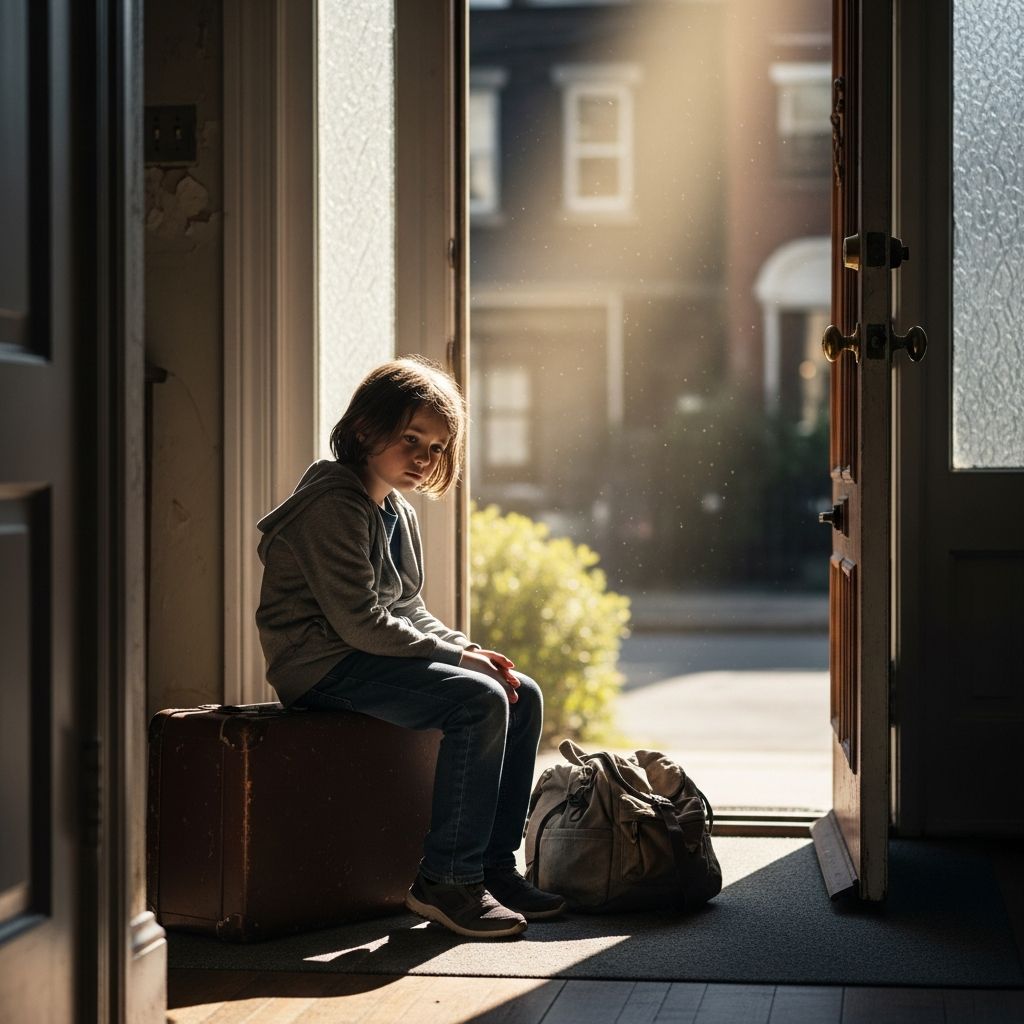
Sometimes home or school can feel so stressful that leaving seems like the only way to make the hurt stop. This guide explains what running away really means, why those feelings show up, and how to stay safe while finding better ways to get help and feel understood.
What “Running Away” Really Means
Running away is when a child or teen leaves home or their caregiver without permission and plans to stay away, not just for a quick walk or a short cool-down. It usually happens when problems feel too big, too confusing, or too painful to handle.
Kids who run away are not “bad kids.” Many are trying to escape situations that feel scary, unfair, or out of control. The choice to leave is almost always a sign of big stress, not of bad character.
Signs You Might Be Thinking About Leaving
Thoughts of running away often start long before someone opens the door and walks out. Noticing these signs early can help you ask for support before things get to that point.
- Imagining what it would be like to disappear, move far away, or live on your own.
- Thinking, “Nobody would miss me” or “They’d be happier if I was gone.”
- Hiding extra clothes, money, snacks, or important items just in case you decide to leave.
- Staying in your room as much as possible and avoiding family or friends.
- Feeling like every argument proves you do not belong at home.
If any of these sound familiar, it does not mean you are broken. It means you are trying to find a way out of pain, and you deserve help with that pain.
Common Reasons Kids Want to Run Away
Kids and teens think about running away for many different reasons. Often, there is more than one thing going on at the same time. Understanding your own reasons can help you find the kind of support that fits best.
Stress at Home
- Constant yelling, arguments, or put-downs between family members.
- Feeling blamed for problems you did not cause.
- A new partner, step-parent, or sibling changing how things feel at home.
- Parents going through separation, divorce, money trouble, or health problems that spill over onto you.
Feeling Unseen or Misunderstood
- Believing your opinions, hobbies, or identity are not respected.
- Hearing comments that make fun of your body, interests, culture, or how you express yourself.
- Having important news or feelings that adults brush off as “no big deal.”
Pressure from School and Friends
- Bullying in person or online that never seems to stop.
- Feeling like grades, sports, or activities have to be perfect all the time.
- Being left out, gossiped about, or betrayed by friends.
Serious Harm or Unsafe Situations
Sometimes the reason is not just stress but actual danger. If any adult or older person is hurting you, touching you in ways that feel wrong, or making you do things you do not want to do, that is never your fault and never okay.
- Physical harm, like hitting, pushing, or being handled roughly.
- Sexual touching or comments that feel uncomfortable or scary.
- Being controlled, threatened, or forced to keep secrets about hurtful things.
- Being left alone without enough food, care, or safety.
If you are in this kind of situation, you still deserve help—but there are safer ways than running away on your own.
What Kids Hope Will Happen If They Run Away
When someone thinks about leaving, they usually imagine a version of life where their problems shrink and they finally feel free. These dreams are understandable and very human.
- Having peace and quiet, away from yelling and pressure.
- Finding people who “get” you and accept you exactly as you are.
- Proving to others that you are strong and can take care of yourself.
- Making parents or caregivers notice how much they hurt you and finally change.
It makes sense to want those things. The challenge is that running away rarely brings them, and often creates new problems that are harder and scarier than the old ones.
What Really Happens After Someone Leaves
Movies or stories sometimes show kids who run away and quickly find a perfect new life. Real life is much more complicated and usually much less safe.
| What kids imagine | What often happens in real life |
|---|---|
| Having endless freedom to go anywhere and do anything. | Spending a lot of time worrying about where to sleep, what to eat, and how to stay warm and safe. |
| Meeting kind people who want to help. | Running into strangers who may be unsafe, controlling, or demanding things in return for help. |
| Feeling less stressed and more relaxed. | Feeling more anxious, lonely, and scared because nothing is certain. |
| School and problems at home just fading away. | Schoolwork, friendships, and family relationships becoming harder to fix the longer you are gone. |
Being on your own means handling health, food, safety, and shelter without the protection of trusted adults. That is a heavy load for any young person to carry, no matter how brave or independent you are.
Hidden Dangers of Being On Your Own
Running away does not just change where you sleep. It also changes the kinds of risks you face every day. Some of these are obvious, but others are easy to overlook when you feel desperate to leave.
- Safety risks: Walking alone at night, staying in public places, or going home with strangers can lead to violence, theft, or exploitation.
- Health problems: Not having regular meals, clean water, or a place to wash up can make you sick or exhausted.
- Pressure to do risky things: You may feel pushed to steal, use substances, or trade your safety just to have food or shelter.
- Deep loneliness: At first, being alone might feel calm, but over time the lack of support and connection can really hurt.
These dangers do not mean your feelings about home are wrong. They mean your safety matters too much to risk it without a better plan and adult help.
If You Feel Unsafe Right Now
If you are in immediate danger—if someone is hurting you, threatening you, or you are afraid to go home—getting safe is the first priority. Running away alone is not the only option for escaping harm.
Consider these steps instead:
- Tell a trusted adult, such as a teacher, school counselor, coach, neighbor, or the parent of a friend.
- Ask that adult to help you contact child protection services, a youth helpline, or local child safety workers.
- If you cannot safely tell someone face to face, use a school computer, library, or a friend’s phone to reach a help line or emergency number in your area.
- If you are ever in immediate, life-threatening danger, contact emergency services right away.
You deserve to be safe from harm. Adults whose job is to protect children are there to help, even if the person hurting you is someone from your own family.
Finding Safer Ways to Deal With Big Feelings
Running away usually comes from feeling trapped, powerless, or deep down sad or angry. While those feelings are real, they do not have to control what you do next. There are healthier ways to cope, even if they take practice.
Step 1: Name What You Feel
It might sound simple, but putting feelings into words can make them feel more manageable.
- Try saying to yourself, “I feel…” and finish the sentence with as many words as you can: angry, scared, embarrassed, lonely, confused, disappointed.
- Write in a journal, type in a document, or draw a picture showing what your feelings look like.
- Use “because” to connect feelings to events: “I feel ignored because no one listens when I talk about school.”
Step 2: Calm Your Body
Big emotions show up not just in your thoughts, but in your body too. Calming your body can make it easier to think clearly.
- Take slow breaths: breathe in through your nose for a count of four, hold for four, breathe out through your mouth for four.
- Move your body in a safe way—walk, stretch, dance, or squeeze a stress ball.
- Use a grounding trick: notice five things you can see, four you can touch, three you can hear, two you can smell, and one you can taste.
Step 3: Plan What You Can Control
You may not be able to change other people’s actions right away, but you can choose some of your own next steps.
- Decide who you can talk to and what you want to say.
- List one small change you’d like at home or school, instead of trying to fix everything all at once.
- Think about what helps you feel even a little bit better and safe in the moment.
How to Talk to Adults So They Listen
One reason kids think about leaving is that they feel nobody really hears them. Talking to adults can be hard, especially if you expect anger or dismissal. A bit of planning can help you feel more ready and more in control.
Choosing the Right Adult
- Think about who has been kind, patient, or fair with you before.
- Consider adults both inside and outside your home—teachers, counselors, school nurses, coaches, faith leaders, neighbors, or relatives.
- If the first person you choose cannot help, it is okay to try someone else. Needing more than one adult is normal.
Finding the Right Moment
- Choose a time when the adult is not rushing, driving, or deeply distracted.
- You can start with, “I need to talk about something important. When is a good time?”
- If face-to-face feels too hard, write a note or message asking for a private conversation.
Using Clear but Respectful Words
You do not have to be perfect with your words. Just try to be honest about what you feel and what you need.
- Start with “I” statements, like “I feel… when… because…” instead of “You always…” or “You never…”
- Example: “I feel really overwhelmed when there is yelling every night because it makes it hard for me to sleep or focus.”
- Tell them what you are worried you might do: “Sometimes I feel like running away, and that scares me.”
Creating a Safety and Support Plan
Having a personal plan for tough moments can give you a sense of control and help keep you safe. You can write it down or keep it in your head, but writing often makes it clearer.
Your Personal Plan Could Include:
- People you can contact: List 3–5 trusted adults and how to reach them.
- Places you feel calmer: A friend’s house (with permission), a library, a park during the day, or another safe public place.
- Things that comfort you: Music, drawing, reading, journaling, playing with a pet, stretching, or a hobby.
- Emergency numbers: Local help lines, crisis services for youth, or emergency services if you are in danger.
What to Do When You Feel Like Walking Out
- Pause and take several slow breaths.
- Use your grounding or calming skill for at least five minutes.
- Contact someone from your list and tell them, “I’m not okay and need help.”
- Go to a safe location that is part of your plan, not somewhere random.
- Ask the adult you trust to help you figure out the next steps.
How Families and Caregivers Can Help
If you are a parent or caregiver reading this, your reaction to your child’s distress can make a big difference. Seeing signs that a child wants to run away can feel scary or upsetting, but it is also an opportunity to rebuild connection.
- Listen without interrupting or jumping straight to solutions or punishments.
- Take your child’s feelings seriously, even if the situation seems small to you.
- Apologize when appropriate and show that you are willing to change certain behaviors or routines.
- Consider family counseling or parenting support to create healthier patterns at home.
When kids feel safe, seen, and respected, they are less likely to feel that running away is the only option left.
Frequently Asked Questions
Is it normal to think about running away?
Many kids and teens have at least one moment where they imagine running away, especially after a big fight or upsetting event. Thinking it does not make you a bad person. It is a sign that your feelings are strong and you may need support.
If I leave just for a few hours, is that still running away?
Leaving without permission can still be unsafe, even if you plan to come back. Adults might worry and call for help, and you could face risks while you are gone. It is safer to tell someone you need space and work out a plan for a walk, a visit with a friend, or time in another room.
What if the adults at home are the problem?
If an adult is harming you, threatening you, or making you feel unsafe, you have the right to seek help outside your home. Talk to a teacher, school counselor, nurse, or another trusted adult and ask them to help you contact child protection services or a youth help line. You are not “betraying” your family by protecting yourself.
Will people be mad at me if I ask for help?
Some adults might react with surprise, frustration, or worry at first, but many will also respect your courage for speaking up. The right helpers will focus on your safety, not on blaming you for having feelings or asking for support.
What if I already ran away and came back?
Coming back takes bravery. It can help to talk with a counselor, trusted adult, or support worker about what led you to leave and what needs to change now. You deserve not just to be home, but to have a home where your voice matters and your safety comes first.
Key Takeaways to Remember
- Wanting to run away usually means your feelings are very big, not that you are a bad kid.
- Running away often creates new dangers and problems that are hard to see ahead of time.
- You deserve to be safe, listened to, and respected—at home, at school, and everywhere else.
- There are safer paths than running away, including talking to trusted adults and building a safety plan.
- Asking for help is a sign of strength, not weakness.