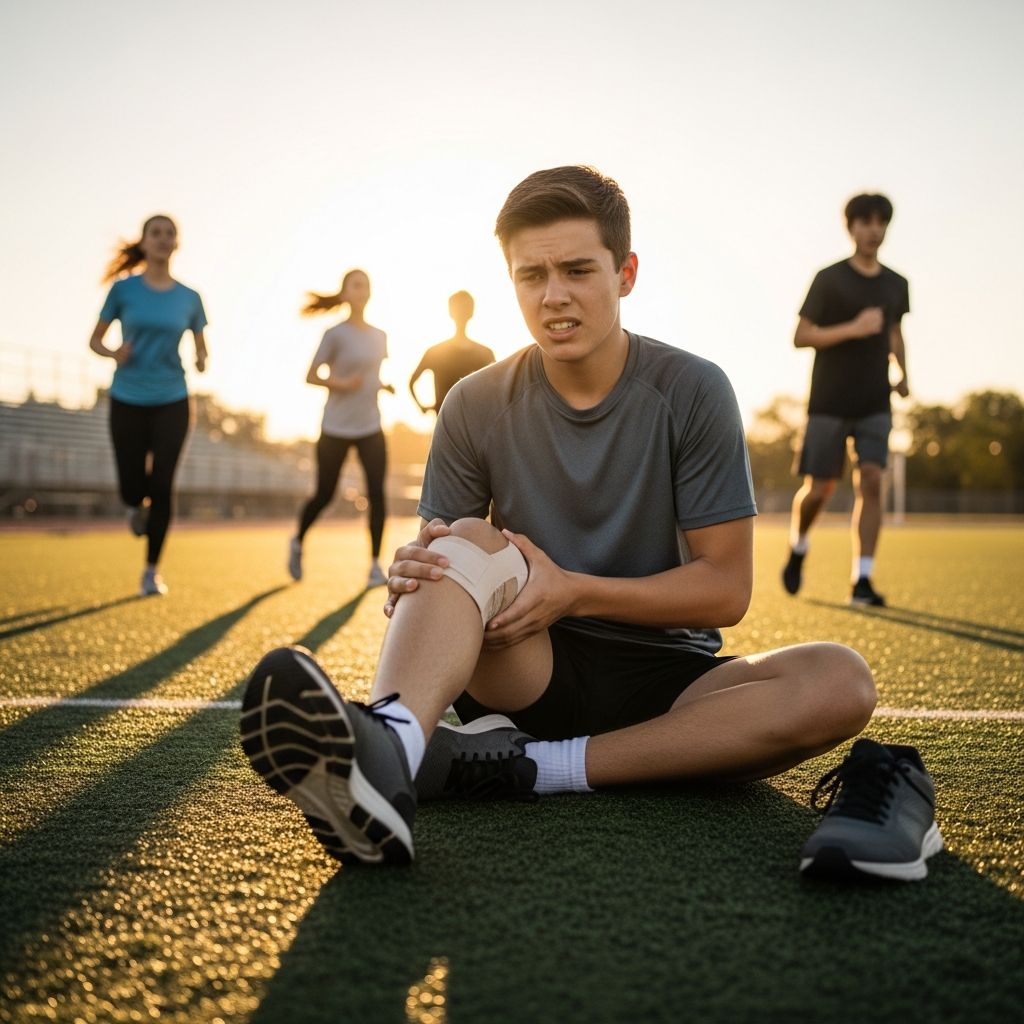
Runner’s knee is a common source of front-of-the-knee pain in active teens, especially those who run, jump, or play sports that involve a lot of bending. It is often linked to irritation around the kneecap rather than a single serious injury, and most teens recover fully with rest, smart training changes, and targeted exercises.
What Exactly Is Runner’s Knee?
“Runner’s knee” is a general term people use for pain around or behind the kneecap, most often related to patellofemoral pain syndrome. This pain usually develops gradually, not from one obvious fall or twist, and tends to flare up when the knee is bent repeatedly. Instead of meaning that something is badly torn or broken, it usually signals that the structures around the kneecap are irritated from overuse, poor alignment, or muscle imbalances.
In many teens, the kneecap may not glide smoothly in its groove at the front of the thigh bone, especially during running, squatting, or going up and down stairs. This uneven movement can stress the cartilage and soft tissues under or around the kneecap, causing aching, stiffness, or sharp twinges with certain motions.
Who Is Most Likely to Get It?
Although the name suggests it only affects runners, runner’s knee shows up in many different types of young athletes and even teens who are just starting to get active. Growth spurts, rapid training changes, and weak core or hip muscles can make the knees more vulnerable to this kind of pain. Certain body mechanics, like knees that cave inward during squats or flat feet that change leg alignment, may add to the risk.
- Teens who run track or cross-country, play soccer, basketball, or volleyball, or do dance and gymnastics often experience this condition.
- Both beginners who suddenly increase their training and seasoned athletes who push through pain can develop symptoms.
Typical Symptoms Teens Notice
Runner’s knee usually feels like aching or soreness in the front of the knee, around the kneecap, or slightly behind it. The discomfort tends to get worse during or after activities that load the bent knee, such as running, jumping, squatting, or climbing stairs. Some teens also complain that sitting with bent knees for a long time—like during a movie or long car ride—makes the knee feel stiff or sore when they stand up.
- A dull ache around or behind the kneecap during activity.
- Pain when going upstairs or downhill, or when squatting and kneeling.
- Stiffness or discomfort after sitting with a bent knee for a long time.
- Occasional popping, grinding, or a feeling of the knee “creaking” when it bends.
- Mild swelling around the front of the knee in some cases.
Common Triggers and Underlying Causes
Runner’s knee usually comes from a mix of training habits and how the body is built and moves. No single factor explains every case, but several patterns show up repeatedly in active teens. Understanding these factors helps explain why rest alone is not enough; correcting strength, flexibility, and technique issues often matters just as much.
- Overtraining: Sudden jumps in mileage, intensity, or practice time put extra stress on the kneecap without giving tissues time to adapt.
- Weak or tight muscles: Weak hips, glutes, or quadriceps, or tight hamstrings and calves, can change how the kneecap tracks during motion.
- Foot and leg alignment: Flat feet, knees that collapse inward, or legs that rotate excessively can increase pressure on the front of the knee.
- Poor footwear or surfaces: Worn-out shoes, lack of cushioning, or always training on hard or slanted surfaces can aggravate symptoms.
- Insufficient warm-up: Jumping straight into intense drills without raising body temperature and loosening muscles makes irritations more likely.
How Runner’s Knee Is Diagnosed
Most of the time, a health professional can diagnose runner’s knee by listening to the teen describe symptoms and by performing a careful knee exam. Imaging tests like X-rays or MRI scans are often normal and are usually used only to rule out other problems, such as significant cartilage damage or a different type of knee injury. The pattern of pain—particularly around the front of the knee with activities like stairs and squats—is often a key clue.
During an exam, the provider may gently press around the kneecap, move it side to side, bend and straighten the knee, and watch how the teen stands, walks, squats, and balances on one leg. Weakness, tightness, or poor control of the hip and thigh muscles can often be seen during these simple tests and help guide the treatment plan.
Home Care in the First Few Days
When knee pain first appears, many teens can ease symptoms with simple home strategies before seeing a specialist. The key early goals are to reduce irritation, protect the knee from further overload, and pay attention to activities that clearly worsen pain. Ignoring symptoms and pushing through intense practices usually makes recovery take longer.
- Relative rest: Cut back or stop activities that cause pain, especially running, jumping, and deep squats, while staying gently active with low-impact options like easy cycling or swimming if they do not hurt.
- Ice: Apply a cold pack wrapped in a thin towel to the front of the knee for about 15–20 minutes at a time, several times per day, to help ease soreness.
- Elevation: Propping the leg on pillows so the knee is slightly above heart level may reduce mild swelling and improve comfort after a busy day.
- Over-the-counter pain relief: When appropriate and with a parent’s guidance, non-prescription pain relievers may be used; always follow package directions and any medical advice given.
Step-by-Step Recovery Plan
Beyond basic rest and ice, recovering from runner’s knee usually involves gradually restoring strength, flexibility, and good movement patterns. Many teens benefit from working with a physical therapist or athletic trainer who can build a personalized plan, but the general stages are similar for most people.
- Pain control and protection: Reduce pain and swelling, avoid painful activities, and possibly use a brace or taping if suggested.
- Gentle motion: Work on pain-free bending and straightening of the knee, along with stretching of tight muscles.
- Strength building: Gradually add exercises for the quadriceps, hamstrings, hips, glutes, and core to improve control and alignment.
- Functional training: Practice movements that mimic sport activities—like controlled squats, step-ups, and short jogs—once pain is much better.
- Return to sport: Slowly reintroduce running, cutting, and jumping in a planned progression, paying attention to any return of symptoms.
Helpful Exercises (General Ideas)
Specific exercises should always be chosen or approved by a qualified professional, but several types are commonly used for runner’s knee. The main focus is usually on strengthening the thigh and hip muscles while avoiding positions that sharply increase kneecap stress at first. Good form matters more than heavy resistance when the goal is to protect and retrain the knee.
- Straight-leg raises: Strengthen the front thigh muscles without deep knee bending.
- Clamshells and side-lying leg lifts: Target the outer hip and glute muscles that help keep the knee from caving inward.
- Bridges: Work the glutes and hamstrings while the feet stay on the ground and the knees bend gently.
- Wall sits (shallow): Build quadriceps strength at a comfortable knee angle once pain is under control.
- Step-ups: Practice controlled movement and alignment when stepping up onto a low platform, keeping the knee aligned over the foot.
Training, Shoes, and Surfaces
Even the best exercises will not fully solve runner’s knee if training routines and gear continue to overload the joint. Teens, parents, and coaches can work together to adjust schedules so the knee has time to adapt. Small changes in how and where a teen trains often lead to big improvements in comfort.
| Factor | Potential Problem | Helpful Adjustment |
|---|---|---|
| Training volume | Rapid increases in mileage or practice time place extra stress on the kneecap. | Increase volume gradually, often no more than about 10% per week, and schedule regular rest days. |
| Intensity | Frequent sprints, hills, or plyometrics increase impact loading. | Limit high-intensity sessions per week and mix with easier workouts. |
| Footwear | Old, worn, or unsupportive shoes may fail to absorb shock or control foot motion. | Replace athletic shoes periodically and choose models that match foot type and sport. |
| Surface | Constant training on concrete or uneven ground can irritate the knees. | Use track, grass, or well-maintained trails when possible, and avoid long slanted surfaces. |
When to See a Doctor or Specialist
Mild, short-lived knee discomfort after a new activity is common, but persistent or worsening pain deserves a professional evaluation. Teens should not feel pressure to hide symptoms to keep a starting spot or finish a season; getting checked early often means a faster, more complete recovery. Parents and coaches can help by listening to complaints and taking them seriously.
- Pain that lasts more than a couple of weeks despite rest and basic care.
- Swelling, locking, or a feeling that the knee might give way.
- Significant pain after a fall, collision, or twist.
- Difficulty putting weight on the leg or straightening the knee.
- Pain that interferes with sleep, daily walking, or school activities.
Long-Term Outlook for Teens
For most teens, runner’s knee improves gradually over several weeks to a few months once the right steps are in place. Staying consistent with exercises, respecting pain signals, and returning to sport slowly are all essential parts of a good outcome. Many teens not only get rid of their pain but actually become stronger and more resilient athletes because they address weaknesses they did not know they had.
Occasionally, knee discomfort can flare up again after a growth spurt, a big jump in training, or a change in sport season. Knowing the early warning signs and having a familiar set of exercises and training adjustments to fall back on makes these flare-ups easier to manage.
Smart Prevention Strategies
Preventing runner’s knee focuses on building strong, well-balanced muscles and avoiding sudden overload. A little planning before each season and some simple habits during the year can dramatically cut down on front-of-the-knee pain. Prevention is especially important for teens who have had symptoms before or who play impact-heavy sports year-round.
- Warm up with light cardio and dynamic stretches before practices and games.
- Include regular strength training for hips, glutes, core, and thighs two to three times per week.
- Avoid instantly doubling mileage, practice time, or intensity from one week to the next.
- Rotate between activities (for example, mix running with cycling or swimming) to vary stress on the knees.
- Pay attention to early knee soreness and scale back before it turns into significant pain.
FAQs About Runner’s Knee in Teens
Is runner’s knee permanent?
No, runner’s knee is rarely permanent in teens when it is addressed early and managed properly. Most young people recover fully by modifying activity, following a strengthening and stretching program, and easing back into sports gradually. The key is to fix the contributing factors rather than just resting until the pain fades and then immediately returning to the same habits.
Can I keep running if my knee hurts?
Continuing to run through noticeable front-of-the-knee pain usually makes recovery take longer and may worsen irritation. Many providers recommend switching to low-impact activities that do not cause pain—such as swimming or using an exercise bike—until knee symptoms calm down. Once you can do daily tasks and simple exercises without discomfort, a gradual and carefully monitored return to running is often possible.
Do I need a knee brace?
Some teens feel more comfortable with a simple knee sleeve or brace that supports the kneecap, especially when they first return to activity. However, braces are usually considered a temporary helper rather than the main solution. Strengthening the surrounding muscles and improving movement patterns remains far more important for long-term success.
Could it be something more serious than runner’s knee?
Front-of-the-knee pain is often due to runner’s knee, but other conditions—such as cartilage injuries, ligament problems, or growing-related issues—can cause similar symptoms. Red flags like significant swelling, a sense of instability, locking, or pain after a specific injury should be evaluated promptly. If there is any doubt, seeing a health professional is the safest way to get a clear diagnosis.
How long until I can play sports again?
Recovery time varies, but many teens begin to feel better over a few weeks and work back to full sports participation over several weeks to a few months. Returning too quickly or skipping the strengthening phase can lead to setbacks, so it is better to think of return as a step-by-step process. Pain-free everyday activities, full range of motion, and good strength are important signposts along the way back to competition.
Key Takeaways for Teens, Parents, and Coaches
Runner’s knee in teens is common, manageable, and usually not a sign of permanent damage. By respecting early symptoms, supporting smart training habits, and emphasizing strength and movement quality, it is possible to protect young knees while keeping teens involved in the sports and activities they love. With patience and a well-rounded plan, most teens can move past runner’s knee and build a stronger, healthier foundation for future performance.