Ruby Bridges, born in 1954, emerged as a pivotal figure in the civil rights movement at just six years old by becoming one of the first African American children to attend an all-white elementary school in New Orleans. Her story highlights not only the triumphs of desegregation but also the profound personal and communal costs that continue to echo in contemporary education.
Early Life and the Path to Integration
Growing up in Tylertown, Mississippi, Ruby was the eldest of five children in a family seeking better opportunities, prompting a move to New Orleans when she was two. The landmark Brown v. Board of Education decision in 1954 declared segregated schools unconstitutional, setting the stage for integration efforts, though resistance persisted in the South.
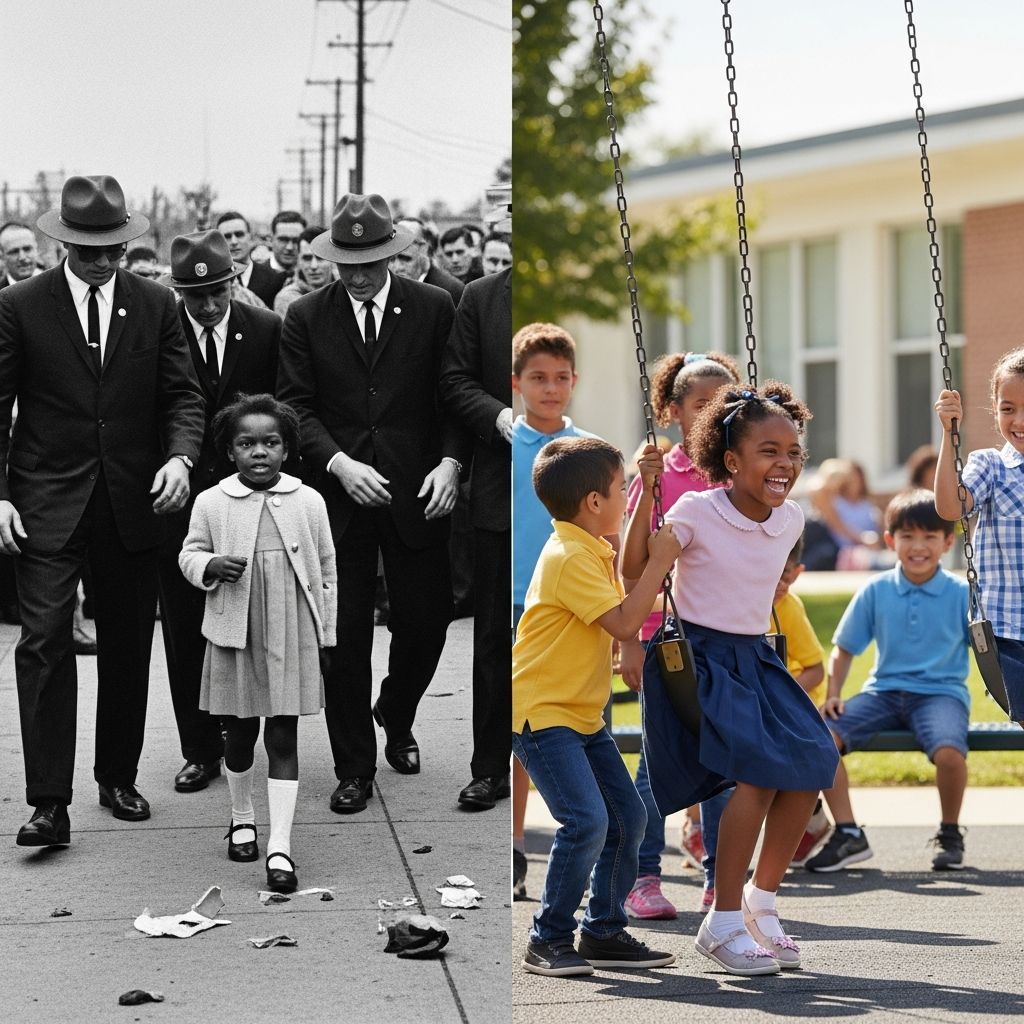
In 1960, following a court order, Ruby was selected through testing to attend William Frantz Elementary School, an all-white institution. On November 14, 1960, she walked through a hostile crowd hurling racial slurs and threats, escorted by four federal marshals—a scene immortalized in Norman Rockwell’s painting The Problem We All Live With Despite the turmoil, Ruby maintained perfect attendance, demonstrating remarkable resilience. The Bridges family paid dearly for this historic step. Ruby’s father, Abon, lost his job due to community backlash. Grocery stores refused service to her mother, Lucille, and Ruby’s grandparents were evicted from their sharecropped farm after 25 years. These economic reprisals isolated the family, forcing them to rely on support from sympathetic Northerners who sent aid. Psychologically, Ruby faced solitude; most white parents boycotted, leaving her alone with teacher Barbara Henry. Protests raged outside, with extreme acts like placing a coffin with a Black doll on the school steps. Yet, a white minister broke the boycott by bringing his daughter, signaling gradual cracks in resistance. Ruby’s experience epitomized the civil rights struggle post-Brown v. Board, where Southern states resisted via ‘massive resistance’ tactics. The movement, rooted in nonviolent protest, sought to dismantle Jim Crow laws enforcing segregation in schools, buses, and public spaces. Key events like the Montgomery Bus Boycott fueled momentum, culminating in the Civil Rights Act of 1964. Norman Rockwell’s 1964 painting captured Ruby’s plight, bringing national attention and symbolizing the moral imperative of integration. As an adult, Ruby Nell Bridges Hall founded the Ruby Bridges Foundation in 1999 to foster tolerance, respect, and diversity in schools. The organization provides resources for educators and students to combat racism, emphasizing unity. She authored books like Through My Eyes, sharing her perspective and inspiring dialogue on equality. Inducted into the National Women’s Hall of Fame, Ruby remains a speaker and advocate, reminding audiences that her story is part of an ongoing fight. Her foundation’s motto urges ending racism “one step at a time.” Over 60 years later, school segregation persists through housing patterns, funding disparities, and policies leading to de facto segregation. Black students often attend under-resourced schools with higher teacher turnover and fewer advanced courses, mirroring historical inequities. Studies show Black children in diverse settings benefit academically and socially, yet many remain in segregated environments. Ruby’s narrative underscores that true integration demands addressing root causes like poverty and policy failures. Contemporary Black students in predominantly white or diverse schools encounter microaggressions, stereotypes, and isolation—echoing Ruby’s experience. Bullying, biased curricula, and lack of cultural representation exacerbate feelings of alienation. Families still sacrifice: longer commutes to better schools, financial strain, and social ostracism in home communities. Ruby’s bravery inspires, but systemic change lags, with achievement gaps persisting along racial lines. Ruby’s legacy calls for renewed commitment to equitable education. Policymakers should prioritize: Her story proves individual courage catalyzes change, but collective action is essential for lasting equity. Ruby was six years old in 1960 when she became the first Black child to attend the all-white school. The family faced job loss, store boycotts, eviction of grandparents, and daily threats requiring marshal escorts. The foundation promotes tolerance, respect, and unity through educational resources to end racism step by step. Yes, de facto segregation via housing and funding creates unequal opportunities for many Black students. Norman Rockwell’s painting and media coverage immortalized her daily walk through protests. Ruby Bridges’ journey from a frightened child to a civil rights icon illuminates the high stakes of desegregation—then and now. Her enduring message urges society to confront educational inequities for a just future.
Immediate Repercussions for Ruby and Her Family
Impact Area Description Source Economic Father’s job loss, store boycotts, grandparent eviction Social Daily marshals escort, racial threats Educational Isolated classroom, single teacher Broader Civil Rights Context
From Child Pioneer to Lifelong Activist
Persistent Challenges in Modern Education
Psychological and Social Toll on Today’s Students
Lessons for Policy and Society
Frequently Asked Questions
What age was Ruby Bridges when she integrated William Frantz Elementary?
What personal costs did Ruby’s family endure?
What is the mission of the Ruby Bridges Foundation?
Are schools still segregated today?
How did Ruby’s story gain national fame?
References