Understanding Rotator Cuff Tendonitis in Young Athletes
Shoulder pain in children and adolescents is increasingly common, particularly among those engaged in sports and recreational activities. Rotator cuff tendonitis represents one of the most prevalent causes of shoulder discomfort in young people, affecting athletes who participate in overhead sports such as baseball, swimming, volleyball, and tennis. This condition develops when the tendons surrounding the shoulder joint become inflamed due to repetitive stress and overuse. Unlike acute injuries that occur from a single traumatic event, rotator cuff tendonitis typically emerges gradually as a result of sustained, repetitive motions that place excessive demands on the shoulder complex.
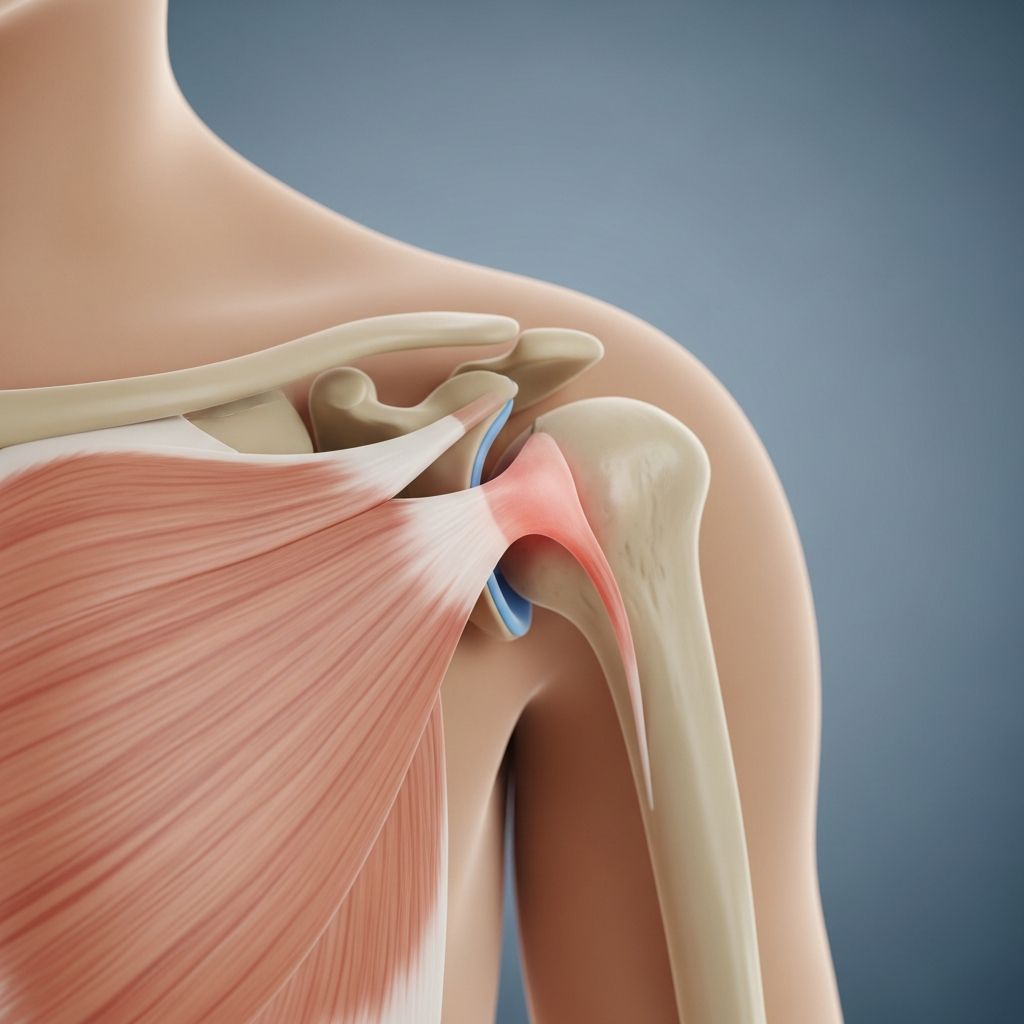
The rotator cuff comprises four distinct muscles and their corresponding tendons that work together to stabilize and move the shoulder joint. When these structures experience inflammation, young athletes often experience pain that interferes with both athletic performance and daily activities. Understanding this condition is essential for parents, coaches, and young athletes themselves, as early recognition and appropriate management can prevent progression to more serious injuries.
Identifying Physical Manifestations and Discomfort Patterns
Rotator cuff tendonitis presents with a characteristic pattern of symptoms that parents and caregivers should recognize. The most obvious indicator is localized pain in the shoulder region, particularly along the front and lateral aspects. This discomfort may begin subtly during activities requiring arm elevation but can progressively worsen if left unaddressed.
Young athletes experiencing this condition frequently report difficulty with specific functional movements. Reaching the arm overhead, a motion required in many sports and daily activities, typically triggers or exacerbates pain. Additionally, children may develop noticeable weakness in the affected shoulder, making it challenging to perform tasks such as throwing, swimming, or even basic grooming activities like brushing hair or washing their face.
The progression and intensity of symptoms often vary throughout the day. Many children report that shoulder pain feels most pronounced during nighttime hours, potentially disrupting sleep and recovery. Some young athletes initially experience only mild discomfort that occurs both during activity and at rest, while others describe sudden, sharp pain triggered specifically by lifting or reaching movements.
Progressive Symptom Development
It is important to recognize that rotator cuff tendonitis does not necessarily remain static. As the inflammatory process continues without proper management, symptoms typically become more severe and limiting. What begins as mild shoulder stiffness can evolve into significant loss of motion and strength, making ordinary daily activities increasingly difficult. Children may find themselves unable to perform self-care tasks, participate in sports, or engage in recreational activities they previously enjoyed without restriction.
Root Causes: From Repetitive Motion to Structural Factors
Rotator cuff tendonitis in children fundamentally stems from repetitive stress placed on the shoulder joint. The condition is classified as a repetitive stress injury, meaning it develops through the cumulative effect of performing the same motions repeatedly over extended periods. Young athletes who engage in overhead throwing sports face particular vulnerability, as the throwing motion places extraordinary demands on the rotator cuff structures.
Several specific activities are strongly associated with rotator cuff tendonitis development in children:
- Overhead throwing in baseball, softball, and cricket
- Swimming with repetitive arm strokes
- Volleyball serving and spiking
- Tennis serves and overhead shots
- Activities requiring sustained repetitive arm elevation
Beyond sport-specific activities, children who engage in household tasks requiring repetitive overhead motion may develop tendonitis. Painting, window washing, or other activities demanding sustained arm elevation can trigger this condition, particularly if performed with poor biomechanical technique.
In addition to repetitive motion, other factors contribute to tendonitis development. Direct trauma to the shoulder, such as falling on an outstretched arm, can cause acute inflammation that may progress to chronic tendonitis if not properly treated. Age-related structural changes and normal wear and tear of tendon tissue, though less common in children than adults, can also increase susceptibility.
Biomechanical Considerations
Poor throwing mechanics represent a significant risk factor in young baseball and softball players. Incorrect form places uneven stress on rotator cuff tendons, concentrating forces in ways the tissues are not designed to withstand. Similarly, inadequate conditioning, muscle imbalances, and insufficient flexibility in the shoulder region predispose young athletes to tendonitis development. These biomechanical factors may be addressed through proper coaching, conditioning programs, and physical therapy.
The Inflammatory Process: What Happens Inside the Shoulder
To understand rotator cuff tendonitis fully, it is helpful to comprehend the physiological changes occurring within the shoulder joint. When tendons experience repetitive stress, the tissue responds with an inflammatory cascade designed to protect and repair the damaged structures. This inflammatory response is actually a natural healing mechanism; however, when stress continues without adequate recovery time, the inflammation becomes problematic rather than protective.
At the microscopic level, tendonitis involves specific tissue changes including the breakdown of organized collagen fiber architecture, fluid accumulation within and surrounding the tendons, and increased blood flow to the affected region. Additionally, the bursa—a fluid-filled sac that cushions the rotator cuff tendons—becomes inflamed alongside the tendons themselves, intensifying discomfort and functional limitation.
The shoulder joint’s anatomy contributes to tendonitis risk. The space between the top of the shoulder blade and the rotator cuff tendons below is relatively narrow. When inflammation develops, the swollen tissues take up more space within this confined area, potentially causing impingement where structures rub against each other, creating additional irritation and pain.
Diagnostic Approaches and Assessment Methods
Accurate diagnosis of rotator cuff tendonitis requires a comprehensive evaluation combining clinical history, physical examination, and potentially imaging studies. A healthcare provider will typically begin by gathering information about the child’s activities, symptom onset, and factors that improve or worsen the discomfort.
The physical examination involves assessing shoulder range of motion, muscle strength, and reproduction of pain with specific movements. The examiner tests the ability to lift the arm to various positions and evaluates pain patterns in response to these motions. Special maneuvers designed to isolate specific rotator cuff muscles may be performed to identify which tendon structures are involved.
Imaging studies, while not always necessary for diagnosis, may be recommended in certain situations. X-rays can reveal structural abnormalities or degenerative changes, while ultrasound or magnetic resonance imaging (MRI) provides detailed visualization of soft tissue inflammation and can identify partial or complete tendon tears. However, many cases of uncomplicated tendonitis can be diagnosed and managed successfully based on clinical presentation alone.
Treatment Approaches: Conservative to Progressive Strategies
The management of rotator cuff tendonitis in children typically progresses through a stepwise approach, beginning with conservative measures designed to reduce inflammation and allow tissue healing. Most cases respond favorably to non-surgical treatment when addressed appropriately and early.
Initial Conservative Management
The foundation of treatment involves activity modification and rest from the aggravating activity. Young athletes must temporarily cease or significantly reduce the sport or activity causing the tendonitis. This does not necessarily mean complete immobilization but rather avoiding movements that exacerbate pain while maintaining general physical activity tolerance.
Ice application during the acute inflammatory phase helps reduce swelling and discomfort. Applying ice for 15-20 minute intervals several times daily can provide significant relief. Anti-inflammatory medications, when appropriate and recommended by a healthcare provider, may further reduce inflammation and pain, facilitating participation in rehabilitation activities.
Gentle range-of-motion exercises preserve shoulder mobility during the healing phase. Carefully graded stretching helps prevent stiffness while avoiding movements that stress the healing tendons. As pain improves, progressive strengthening exercises targeting the rotator cuff and surrounding shoulder stabilizer muscles become increasingly important for long-term recovery.
Physical Therapy and Rehabilitation
Structured physical therapy represents a critical component of effective treatment for most children with rotator cuff tendonitis. A skilled physical therapist designs a program addressing the specific weaknesses, imbalances, and biomechanical issues contributing to the injury. Progressive strengthening of rotator cuff muscles, scapular stabilizers, and core musculature helps restore functional capacity and prevent recurrence.
Rehabilitation typically progresses through distinct phases. The initial phase emphasizes pain reduction and inflammation control. The intermediate phase introduces progressive strengthening as pain permits. The advanced phase incorporates sport-specific training and functional activities preparing the young athlete for return to competition.
Prevention Strategies for Young Athletes
Preventing rotator cuff tendonitis is considerably more effective than treating established injury. Young athletes, parents, and coaches can implement several evidence-based strategies to reduce injury risk.
| Prevention Strategy | Description | Expected Benefit |
|---|---|---|
| Proper Technique Coaching | Teaching correct throwing mechanics and sport-specific form | Distributes forces appropriately, reducing concentrated stress |
| Gradual Activity Progression | Incrementally increasing training intensity and volume | Allows tissue adaptation without overload |
| Adequate Rest and Recovery | Ensuring sufficient recovery between training sessions | Permits tissue repair and reduces cumulative stress |
| Strength and Conditioning | Regular targeted exercises for rotator cuff and core | Improves shoulder stability and injury resilience |
| Flexibility Maintenance | Regular stretching of shoulder and adjacent regions | Reduces biomechanical stress and improves mobility |
| Pitch Count Limitation | Restricting number of throws in young pitchers | Prevents overuse in developing athletes |
Young pitchers in baseball and softball deserve special attention regarding prevention. Growth-related changes in bone and muscle development, combined with the extreme forces generated during overhead throwing, create significant injury risk in developing athletes. Many youth sports organizations now recommend pitch count limitations and mandatory rest periods between pitching appearances to protect developing shoulders.
When Professional Medical Evaluation Is Necessary
While many cases of rotator cuff tendonitis resolve with appropriate home care and conservative management, certain situations warrant prompt medical evaluation. Parents should contact a healthcare provider if the child experiences sudden arm weakness following an injury, as this may indicate a more serious structural problem. Additionally, shoulder pain persisting beyond two weeks, pain that progressively worsens despite home treatment, or pain interfering significantly with sleep or daily activities should prompt professional assessment.
If a young athlete cannot participate in preferred activities due to shoulder symptoms, or if previous conservative treatment has not provided improvement after several weeks, more comprehensive medical evaluation becomes necessary. A healthcare provider can assess whether the tendonitis has progressed to partial or complete tendon tears requiring more aggressive intervention.
Frequently Asked Questions
How long does rotator cuff tendonitis typically last in children?
Recovery time varies depending on injury severity and adherence to treatment. Mild cases may resolve within 2-4 weeks with appropriate activity modification and rest, while more significant inflammation may require 6-12 weeks for complete healing. Consistent adherence to rehabilitation exercises significantly accelerates recovery.
Can my child return to sports while being treated for rotator cuff tendonitis?
Initially, the offending sport should be temporarily discontinued to allow healing. However, children can often participate in non-aggravating activities and should remain generally active. As symptoms improve, gradual return to sport-specific activities under professional guidance is typically appropriate. A structured return-to-play protocol prevents re-injury.
Is rotator cuff tendonitis in children likely to become a chronic problem?
With appropriate early treatment and prevention strategies, most children recover completely from rotator cuff tendonitis without long-term consequences. However, inadequately treated cases or return to activities before full healing can lead to recurrent or chronic problems. Completing comprehensive rehabilitation significantly reduces recurrence risk.
What exercises are safe for my child with rotator cuff tendonitis?
A qualified physical therapist should prescribe specific exercises appropriate to the current healing phase. Initially, gentle range-of-motion and flexibility exercises are emphasized. As symptoms improve, progressive strengthening of rotator cuff and scapular muscles becomes appropriate. Sport-specific training is reintroduced gradually as pain resolves and strength normalizes.
Are there risk factors that make some children more prone to rotator cuff tendonitis?
Yes, participation in overhead sports, inadequate coaching in proper throwing mechanics, rapid increases in training intensity or volume, muscle imbalances, and poor flexibility all increase vulnerability. Additionally, growing adolescents experiencing rapid skeletal changes may face temporarily increased risk during growth spurts.
References
- Rotator Cuff Tendonitis — Nemours KidsHealth. 2024. https://kidshealth.org/en/parents/rotator-cuff-tendonitis.html
- Rotator Cuff Tendonitis – StatPearls — National Center for Biotechnology Information (NCBI). 2024. https://www.ncbi.nlm.nih.gov/books/NBK532270/
- Rotator Cuff Tendinitis: Symptoms & Causes — NewYork-Presbyterian. 2024. https://www.nyp.org/orthopedics/rotator-cuff-tendinitis
- Shoulder Impingement Rotator Cuff Tendinitis — American Academy of Orthopaedic Surgeons (OrthoInfo). 2024. https://orthoinfo.aaos.org/en/diseases–conditions/shoulder-impingementrotator-cuff-tendinitis
- Rotator Cuff Injury – Symptoms and Causes — Mayo Clinic. 2024. https://www.mayoclinic.org/diseases-conditions/rotator-cuff-injury/symptoms-causes/syc-20350225
- Shoulder Impingement Syndrome (Rotator Cuff Tendinitis) — Cleveland Clinic. 2024. https://my.clevelandclinic.org/health/diseases/shoulder-impingement-rotator-cuff-tendinitis