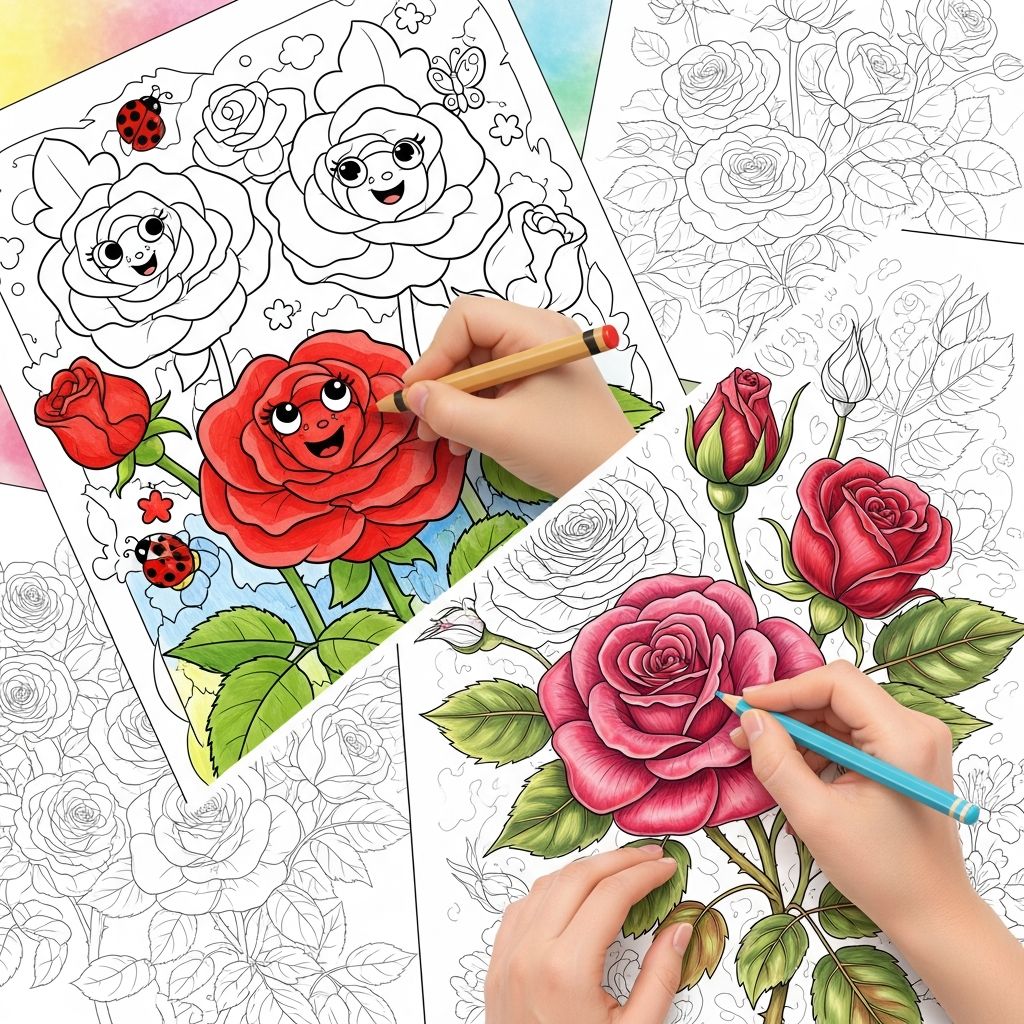
Rose coloring pages combine the timeless beauty of flowers with the simple joy of putting color on paper. Whether used by children learning to control a crayon or adults looking for a mindful break, rose designs can turn a quiet moment into a calming, creative ritual.
This guide introduces a completely fresh way to think about rose coloring pages. Instead of just printing a picture and filling it in, you will discover how to use rose-themed sheets for relaxation, storytelling, science learning, holiday crafts, and even décor.
Why Roses Make Perfect Coloring Subjects
Roses work especially well for coloring because they are instantly recognizable and yet endlessly varied. A single bloom can be drawn in a very simple style for young kids, while layered petals and climbing vines can challenge more advanced colorists.
- Roses come in many shapes, sizes, and stages of bloom, from tight buds to full blossoms.
- The classic petal spiral gives plenty of opportunity to experiment with shading and contrast.
- Different colors can express different moods or meanings, which invites creative choice.
Benefits of Coloring for Children
Coloring rose pages is far more than a way to pass time. For kids, it can support essential skills and emotional growth while still feeling like play. The flower theme also connects art to the natural world.
- Fine motor development: Holding crayons and filling in petal shapes strengthens hand muscles and improves control.
- Early writing foundation: Staying within curved lines helps prepare children for handwriting.
- Color recognition: Kids can practice naming and combining colors beyond the usual “red rose.”
- Emotional expression: Children often use color to express feelings they cannot yet put into words.
Relaxation and Mindfulness for Adults
Rose coloring pages are not just for children. Adults often turn to floral designs as a gentle form of stress relief, because repetitive strokes and smooth curves can be very calming. A quiet coloring session can become a personal ritual at the start or end of the day.
- Slowing down to color petal by petal encourages deep focus and reduces mental noise.
- Choosing color palettes can feel like a low-pressure form of creative decision-making.
- Finished pages can be displayed or used in crafts, adding a sense of completion and pride.
Types of Rose Coloring Pages by Skill Level
Not all rose pages are created for the same audience. Matching the design to the age and skill level of the colorist keeps the activity enjoyable instead of frustrating. Consider these common types when choosing pages for your family or classroom.
| Type of Page | Ideal For | Key Features |
|---|---|---|
| Simple Rose Outline | Preschool and early elementary children | Large shapes, minimal detail, thick lines that are easy to follow. |
| Single Realistic Bloom | Older kids and beginners who want a challenge | Visible petal layers, stems, and leaves without complex backgrounds. |
| Rose Bouquet | Intermediate colorists | Multiple flowers, overlapping leaves, ribbons, or simple patterns. |
| Patterned Rose Mandala | Teens and adults | Repeating rose motifs arranged in circular or geometric patterns. |
| Scene-Based Roses | Story-loving kids and creative adults | Roses combined with objects like vases, teacups, or garden paths. |
Creative Themes for Rose Coloring Pages
Instead of viewing each sheet as a standalone activity, you can group rose coloring pages into themes. This approach works particularly well for lesson plans, seasonal celebrations, and party activities.
- Garden adventures: Combine roses with butterflies, bees, and other blooms to build a full garden scene over several pages.
- Fairy-tale roses: Pair roses with castles, crowns, or enchanted objects to inspire storytelling.
- Celebration roses: Focus on occasions like birthdays, Mother’s Day, or anniversaries with roses wrapped in ribbons or arranged as bouquets.
- Nature study sets: Mix rose pages with diagrams of leaves, thorns, and roots and label the parts together.
Teaching with Rose Coloring Pages
Parents and educators can fold rose coloring sheets into structured learning without losing the playfulness. With a little planning, a single page can bridge art, language, and basic science.
- Ask children to count petals, leaves, or roses on the page to practice basic math skills.
- Introduce vocabulary such as “stem,” “thorn,” “bud,” and “bloom” while pointing to each part.
- Invite kids to write a short sentence or caption beneath their finished page to support early writing.
Color Meanings and Symbolism
Roses are often associated with different meanings depending on their color, making them a useful tool for exploring symbolism and emotion. This can be as simple or as sophisticated as the age group allows.
- Red tones can represent love, courage, or intensity.
- Pink shades often suggest friendship, gratitude, and joy.
- White, cream, or very pale colors can be linked to new beginnings and simplicity.
- Yellow and orange roses can stand for energy, warmth, and cheerfulness.
Materials and Techniques for Better Results
The tools you choose influence both the process and the final appearance of each rose coloring page. Experimenting with different materials can keep the activity fresh, especially for kids who color regularly.
- Crayons: Great for young children due to durability and easy grip.
- Colored pencils: Ideal for detailed pages and soft shading effects.
- Washable markers: Provide bold, vibrant hues but work best on thicker paper.
- Gel pens: Fun for teens and adults, especially for fine lines and highlighting edges.
Project Ideas Using Finished Rose Pages
Once a rose page is complete, it does not have to vanish into a drawer. Turning finished artwork into something useful or decorative validates the time and effort spent coloring.
- Cut out colored roses and glue them onto folded cardstock to create handmade greeting cards.
- Laminate favorite pages and use them as placemats or desk protectors.
- Arrange several completed pages into a “paper garden” display on a bulletin board or bedroom wall.
- Create a simple booklet or coloring portfolio by stapling themed pages together.
Seasonal and Holiday Uses
Roses naturally fit many holidays and special dates throughout the year. Planning a small set of rose pages around these occasions can help build traditions and keep children excited about coloring.
- Valentine’s season: Use hearts, envelopes, and banners alongside roses for cards and décor.
- Spring festivals: Combine roses with rainbows, raindrops, and birds to celebrate new growth.
- Mother’s or Father’s Day: Provide bouquet-themed pages that can be gifted as framed art.
- Birthdays and anniversaries: Personalize pages with names, ages, or short wishes added by hand.
Tips for Organizing and Storing Pages
Keeping rose coloring pages organized makes it easy to pull out an activity without searching through piles of paper. Organization also helps track your child’s progress and preserve special memories.
- Use a three-ring binder with plastic sleeves to store finished pages and protect them from smudges.
- Keep blank pages in labeled folders such as “simple roses,” “bouquets,” or “holiday roses.”
- Date the back of each finished page so you can look back and see how skills have grown.
Frequently Asked Questions
How do I choose rose coloring pages for different ages?
For toddlers and preschoolers, look for large roses with thick outlines and minimal small details. As children grow, you can gradually introduce designs with more petals, backgrounds, and patterns so the challenge keeps pace with their abilities.
What is the best paper to use for rose coloring pages?
Standard printer paper works for quick activities, but heavier paper or light cardstock resists tearing and bleeding, especially when using markers. Choose smoother paper if you prefer colored pencils, because they glide more easily and allow smoother shading.
Can rose coloring pages support school learning?
Yes. You can connect them to lessons in science by identifying plant parts, in math by counting petals, and in language arts by writing short poems or stories about the roses on the page. This turns a simple art activity into a multi-subject learning tool.
Are rose coloring pages suitable for group activities?
Rose pages work well for classrooms, clubs, and family gatherings. Everyone can color their own version of the same design and then compare color choices, or groups can work together on a giant “rose garden” collage assembled from individual pages.
How can adults keep rose coloring interesting over time?
Adults can experiment with advanced techniques such as gradient shading, blending multiple colors on a single petal, and adding metallic accents. Changing the tools, trying new color schemes, or combining coloring with journaling on the same page can keep the hobby fresh.
Final Thoughts
Rose coloring pages offer a flexible, beautiful way to connect creativity, relaxation, and learning. With the right mix of designs, materials, and project ideas, these simple sheets can blossom into keepsakes, gifts, and cherished memories for colorists of every age.