Mastitis affects up to 20% of breastfeeding women, causing painful inflammation and infection in breast tissue that can disrupt nursing routines and maternal well-being. Recent buzz around actress Jenna Dewan’s use of a red light therapy mask has spotlighted this non-invasive treatment as a promising complementary option alongside traditional care.
Understanding Mastitis and Its Challenges for Breastfeeding Moms
Mastitis typically arises from milk stasis, bacterial entry through cracked nipples, or incomplete breast emptying during feeds. Symptoms include breast tenderness, swelling, redness, flu-like aches, and fever, often striking suddenly and intensely. Without prompt management, it risks abscess formation or weaning cessation.
Standard protocols emphasize frequent nursing or pumping, warm compresses, anti-inflammatory drugs like ibuprofen, and antibiotics if infection confirms. Yet, many mothers seek adjunct therapies for quicker relief, leading to interest in light-based interventions.
The Science of Red Light Therapy Explained
Red light therapy (RLT), or photobiomodulation, employs low-level wavelengths (typically 630-850 nm) to penetrate skin up to 5 mm deep. Unlike UV light, it generates no heat, instead stimulating mitochondria—the cell’s energy factories—to boost ATP production. This enhances cellular repair, curbs inflammation via cytokine modulation, and promotes blood flow.
Studies indicate RLT reduces pro-inflammatory markers like TNF-alpha while elevating anti-inflammatory IL-10. For skin conditions, it accelerates wound healing and collagen synthesis. In breastfeeding contexts, its anti-inflammatory prowess could alleviate mastitis swelling without drugs.
How Red Light Therapy May Target Mastitis Symptoms
- Reducing Inflammation: RLT downregulates inflammatory pathways, easing breast engorgement and pain.
- Enhancing Circulation: Improved microcirculation clears stagnant milk and toxins, preventing clogs.
- Promoting Tissue Repair: Faster healing of nipple fissures reduces bacterial ingress risks.
- Pain Management: Endorphin release and nerve calming provide natural analgesia.
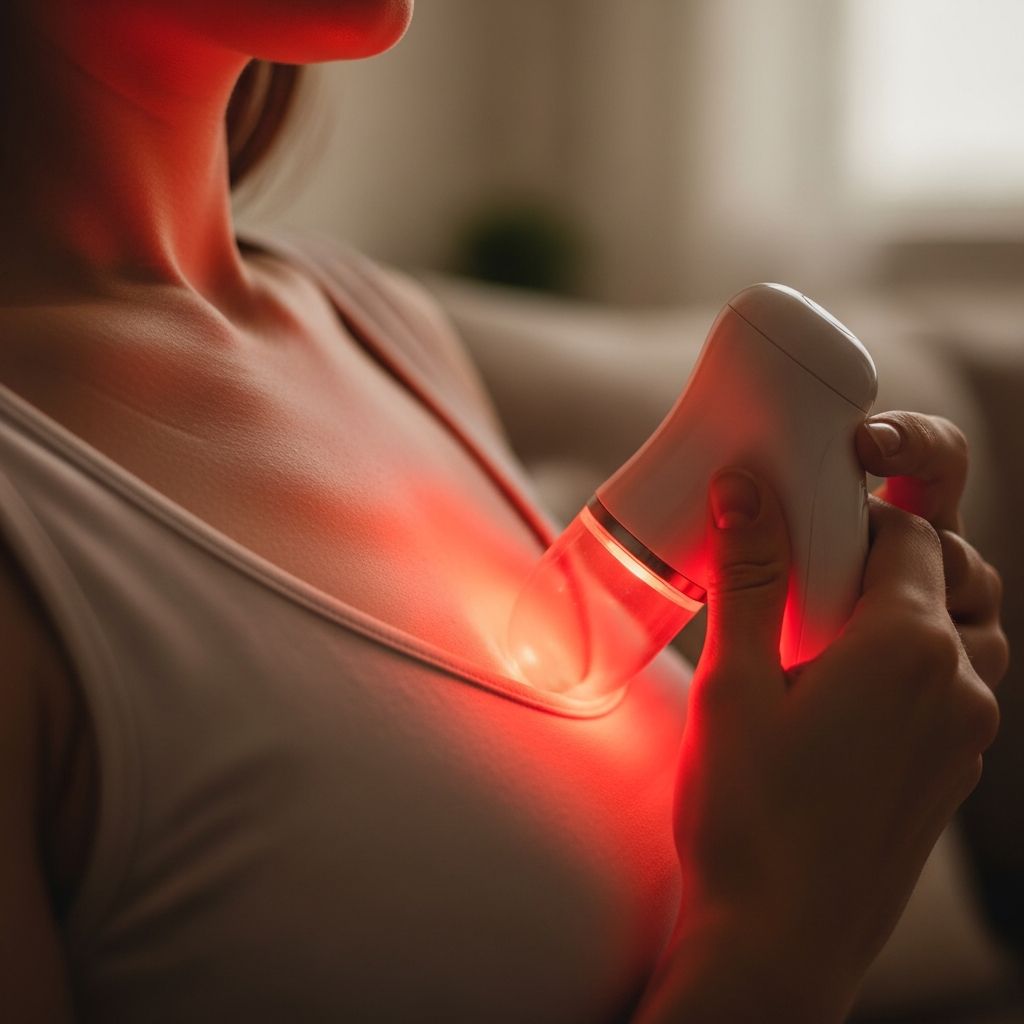
While direct mastitis trials are limited, analogous research on muscle inflammation and post-surgical recovery supports its application. Devices like facial masks, repurposed for breasts, deliver consistent dosing over 10-20 minute sessions.
Celebrity Spotlight: Jenna Dewan’s Innovative Approach
Jenna Dewan, known for roles in Step Up and The Rookie, recently shared her postpartum journey post-third child. Facing severe mastitis—new to her despite prior pregnancies—she experimented boldly. Instagram glimpses showed her adapting a facial red light mask to her chest, praising its soothing effects amid agony.
Dewan combined this with antibiotics, underscoring a holistic mindset: “natural and medicine working together.” Her candor normalizes such trials, empowering moms to explore beyond conventions.
Practical Guide: Using RLT Devices Safely at Home
Selecting FDA-cleared devices ensures safety and efficacy. Look for medical-grade LEDs with verified irradiance (30-100 mW/cm²) and wavelengths in the therapeutic red/near-infrared range.
| Device Type | Key Features | Best For | Session Time |
|---|---|---|---|
| Facial Mask | Hands-free, flexible silicone, 100+ LEDs | Targeted breast application | 10-20 mins |
| Handheld Panel | Portable, adjustable stand | Larger areas, versatility | 5-15 mins |
| Full-Body Bed | Comprehensive coverage | Systemic postpartum support | 20 mins |
Protocol Tips:
- Cleanse skin gently; avoid lotions blocking light.
- Position device 6-12 inches from skin or direct contact if mask-style.
- Daily use for 1-2 weeks, then maintenance 3x weekly.
- Monitor skin response; discontinue if irritation occurs.
Consult lactation experts or physicians pre-use, especially with active infections.
Complementary Natural Remedies to Pair with RLT
Dewan’s potato slice method—rooted in folklore for its starch-drawing properties—pairs well with RLT. Thin slices applied 20 minutes draw fluid, reducing swelling.
- Warm Compresses: 15-minute soaks pre-feed stimulate letdown.
- Cabbage Leaves: Chilled leaves constrict vessels, proven in small trials for engorgement.
- Epsom Salt Soaks: Magnesium aids muscle relaxation.
- Herbal Supports: Lecithin supplements (1,200 mg 4x daily) prevent duct blockages; probiotics bolster immunity.
Integrate these for synergistic relief, always prioritizing hydration (100 oz daily) and rest.
Potential Risks and When to Seek Medical Help
RLT is low-risk: mild redness or eye strain possible (use protective goggles). Contraindications include photosensitivity, epilepsy, or cancer history over treatment sites. No evidence suggests harm to breastmilk or infants.
Escalate care if fever exceeds 101°F, pus drainage, or symptoms persist 48 hours post-antibiotics. Prompt intervention averts complications like chronic issues.
Expert Perspectives on RLT for Postpartum Care
Dermatologists like Dr. Mamina Turegano endorse RLT for collagen boosting and inflammation control, extending to scalp and beyond. Cleveland Clinic notes mitochondrial stimulation underpins broad rejuvenation effects.
Lactation consultants increasingly recommend light therapies, citing noninvasiveness. Ongoing trials may solidify RLT’s role in maternal protocols.
Frequently Asked Questions (FAQs)
Is red light therapy safe during breastfeeding?
Yes, RLT poses no known risks to milk or baby; wavelengths don’t alter composition. Confirm device safety ratings.
How soon can I expect mastitis relief from RLT?
Many note reduced pain within sessions; full resolution varies, often 3-7 days with combined therapies.
Can I use facial masks on breasts?
Devices are skin-agnostic; Jenna Dewan did so successfully, but ensure even coverage and hygiene.
What if antibiotics fail—does RLT replace them?
No, RLT complements, not substitutes, antibiotics for bacterial mastitis. Always follow medical advice.
Are at-home RLT devices as effective as clinical ones?
FDA-cleared home units rival professionals if specs match; consistency trumps intensity.
Empowering Your Postpartum Journey
From Jenna Dewan’s glow-up hack to evidence-backed mechanisms, red light therapy offers new moms a beacon amid mastitis storms. Blending innovation with time-tested remedies fosters resilience, sustaining breastfeeding bonds. Consult providers to tailor approaches, reclaiming comfort and confidence.
References
- Low-Level Laser (Light) Therapy (LLLT) in skin: stimulating, healing, restoring — Journal of Clinical and Aesthetic Dermatology. 2014-01-01. https://www.ncbi.nlm.nih.gov/pmc/articles/PMC4126803/
- Red Light Therapy: Benefits, Side Effects & Uses — Cleveland Clinic. 2023-09-07. https://my.clevelandclinic.org/health/treatments/22106-red-light-therapy
- Photobiomodulation: The Clinical Applications of Low-Level Light Therapy — AAFP (American Academy of Family Physicians). 2021-11-01. https://www.aafp.org/pubs/afp/issues/2021/1100/p465.html
- Mastitis — CDC (Centers for Disease Control and Prevention). 2024-08-15. https://www.cdc.gov/breastfeeding/breastfeeding-special-circumstances/mastitis.html
- Red Light Therapy in Inflammation and Healing — PubMed (NIH). 2022-03-15. https://pubmed.ncbi.nlm.nih.gov/35214781/