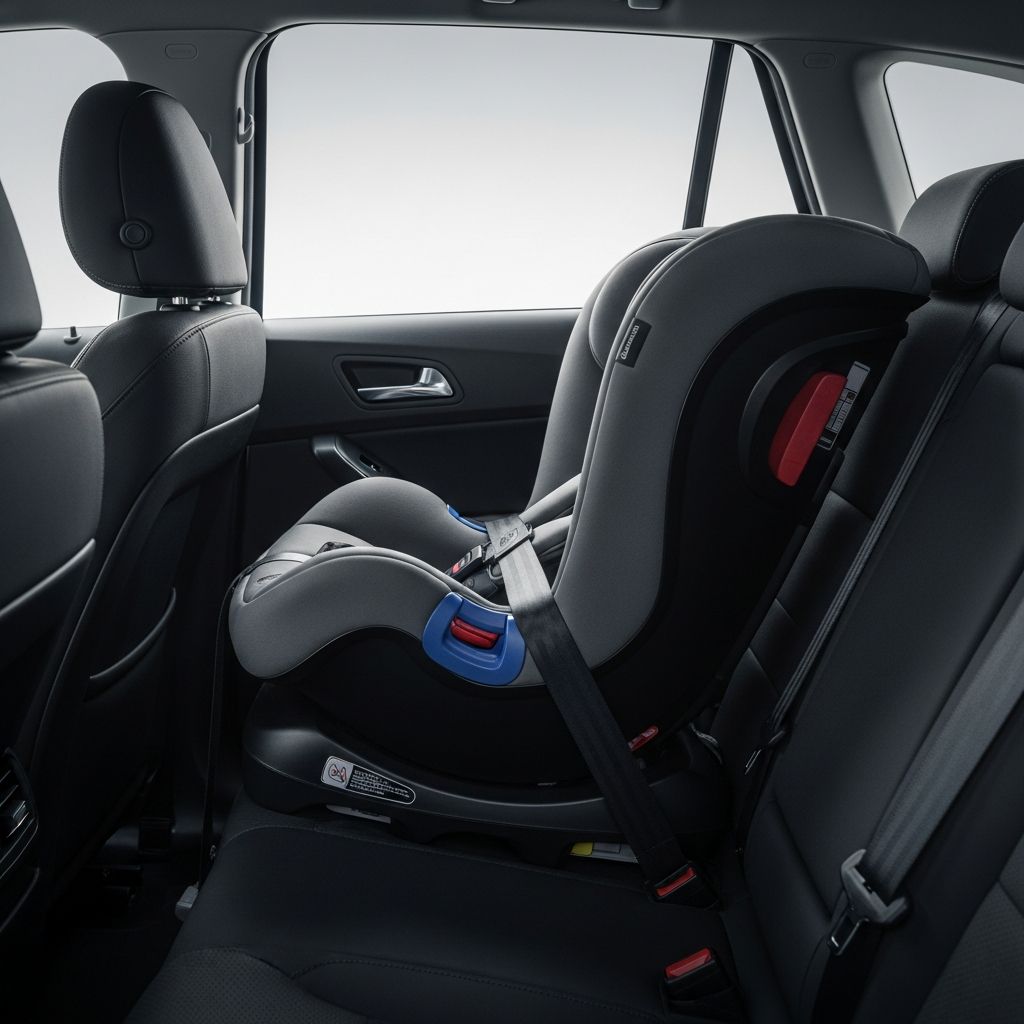
Understanding the Critical Role of Rear-Facing Positioning in Vehicle Safety
When parents buckle their children into vehicles, they entrust their most precious cargo to protective systems designed with scientific precision. Among the most important decisions caregivers make is selecting and maintaining proper rear-facing car seat positioning during a child’s earliest years. This choice profoundly impacts survival outcomes during accidents and sets the foundation for lifelong safe travel habits.
The rear-facing position represents one of the most researched and validated safety interventions in child passenger protection. Unlike forward-facing arrangements, rear-facing seats cradle a child’s developing body in a way that fundamentally alters how crash forces distribute across vulnerable areas. Understanding this distinction transforms how parents approach vehicle safety for their youngest passengers.
The Physics of Crash Protection: Why Rear-Facing Excels
Vehicle collisions generate enormous forces that threaten occupant safety. When crashes occur, the human body experiences sudden acceleration and deceleration that can cause catastrophic injuries. Rear-facing car seats function as sophisticated protective shields that manage these forces through biomechanical principles.
During frontal and side impact collisions—the most severe accident types—rear-facing children benefit from complete body support provided by their car seat shell. This contact area distributes crash forces across the child’s entire back, head, and neck region simultaneously. The seat absorbs and dissipates impact energy that would otherwise concentrate on vulnerable structures like the cervical spine and developing brain tissue.
In contrast, forward-facing positions expose children to forces that throw their head, neck, and shoulders forward with tremendous velocity. A developing spine lacks the muscular and skeletal maturity to withstand such forces. Research demonstrates that children between ages one and two experience significantly enhanced protection in rear-facing seats compared to forward-facing alternatives.
The internal impact mechanism represents another critical consideration. When vehicles collide, multiple sequential collisions occur: the vehicle strikes an object, the child’s body moves within the car, and internal organs experience their own collision. Rear-facing positioning minimizes pressure on developing organ systems during this final internal collision phase.
Recommended Timeline for Rear-Facing Use
Professional organizations specializing in child safety establish clear guidelines for rear-facing duration. The American Academy of Pediatrics recommends that all infants begin rear-facing from their first trip home from the hospital and continue this positioning as long as possible. This recommendation reflects decades of crash test data and epidemiological research.
Most children can remain rear-facing until approximately age four, depending on their individual growth rate and their specific car seat’s manufacturer specifications. Modern convertible and all-in-one car seats accommodate rear-facing positioning for two years or longer, providing extended protection during the developmental window when children are most vulnerable.
The transition point occurs when children reach the maximum weight or height limits established by their car seat manufacturer—not based on arbitrary age thresholds. This distinction matters profoundly because children develop at different rates. Some may reach size limits earlier, while others benefit from extended rear-facing protection.
It is worth noting that leg crowding in rear-facing seats represents expected behavior and poses no safety concern. Children naturally position their legs in various configurations, and the apparent space constraints do not warrant premature transition to forward-facing positioning.
Installation Requirements and Technical Specifications
Proper installation determines whether a car seat functions as designed during actual crashes. Incorrect installation can significantly compromise protection, transforming this critical safety device into an inadequate restraint system. Parents must understand both vehicle-specific and seat-specific installation requirements.
Rear-facing seats must be positioned at approximately 45 degrees from horizontal—neither too reclined nor too upright. This angle prevents the child’s head from tilting forward excessively while maintaining optimal force distribution during impacts. All modern rear-facing seats include built-in angle indicators that guide parents in achieving the correct recline position.
When installing rear-facing seats in outboard positions (behind the driver or front passenger seat), updated safety guidelines now require that the car seat must touch or be positioned as close as possible to the vehicle seat in front of it. This specification reflects new safety research and applies retroactively to all models. This positioning ensures that the seat remains stable and optimizes how crash forces transfer through the vehicle structure.
Lower anchor connections must route through the correct belt path as specified in the car seat manufacturer’s instruction manual. The vehicle owner’s manual provides essential complementary information about anchor locations, weight limits for lower anchors, and any vehicle-specific considerations that affect installation.
Parents should never place rear-facing seats in front seats equipped with active passenger airbags. Should the airbag deploy during a collision, it would strike the back of the rear-facing seat directly against the child’s head, potentially causing severe injury or death. Front seat placement is prohibited by law in several states, including Virginia.
Selecting the Right Rear-Facing Car Seat
Different rear-facing car seat types serve different developmental stages and offer varying protection durations. Understanding these categories helps parents make informed selections aligned with their family’s needs.
Infant-Only Seats: These seats are designed exclusively for rear-facing use and accommodate children from birth until they reach the manufacturer’s maximum weight or height limits—typically around 30-35 pounds or 32 inches. Once children outgrow these specifications, families must transition to convertible seats that support rear-facing positioning with higher capacity limits.
Convertible and All-in-One Seats: These versatile models accommodate both rear-facing and forward-facing positions, with significantly higher rear-facing limits than infant-only seats. Many modern convertible seats permit rear-facing use up to 50 pounds or more, extending the protection window substantially. All-in-one seats typically accommodate three stages: rear-facing, forward-facing, and booster positioning.
Selecting seats with higher rear-facing weight and height limits maximizes the duration of optimal protection during children’s most vulnerable years. Extended rear-facing capacity represents a worthwhile investment in safety.
Critical Installation Safety Checks
Before relying on any car seat during actual vehicle operation, parents should complete a comprehensive safety verification process:
- Consult both the car seat instruction manual and the vehicle owner’s manual for integration requirements
- Verify that the recline angle sits within the 45-degree specification and check the built-in angle indicator
- Confirm that the seat belt or lower anchor webbing routes through the designated belt path
- For front seat airbag vehicles, ensure the rear-facing seat remains in back seat positions only
- Verify that the car seat contacts the vehicle seat in front of it (for outboard positioning)
- Test seat stability by attempting to move the seat side to side and front to back—minimal movement indicates proper installation
- Consider seeking assistance from a certified child passenger safety technician (CPST) to verify proper installation
Transitioning From Rear-Facing: When and How
The decision to transition from rear-facing to forward-facing positioning should never be based on parental preference or the child’s desire to face forward. Instead, transition occurs only when children have reached the maximum weight or height limit specified by their particular car seat model.
Parents should consult their specific car seat’s owner’s manual to identify these exact thresholds, as they vary significantly between manufacturers and models. Some seats permit rear-facing use until children reach 50 pounds, while others have lower limits. Once children outgrow any single criterion—whether weight, height, or specific fit requirements—they have graduated from that rear-facing seat.
Upon transitioning to forward-facing positions, children should use forward-facing seats with harnesses for as long as possible, continuing until they reach the manufacturer’s maximum limits for that stage. This staged progression ensures continuous optimal protection as children grow.
The Evidence Behind Extended Rear-Facing
Extensive crash testing and real-world accident data consistently demonstrate that rear-facing positioning provides superior protection compared to forward-facing alternatives. Children between ages one and two who travel in rear-facing seats experience 500 percent greater safety compared to their forward-facing peers.
Research published in peer-reviewed journals and position statements from leading pediatric and automotive safety organizations converge on a consistent conclusion: keeping children rear-facing as long as possible represents the single most important decision parents can make regarding vehicle safety.
This recommendation transcends cultural preferences or convenience factors. The physics of crash protection and the developmental vulnerability of young children create an overwhelming scientific consensus supporting extended rear-facing use.
Common Concerns and Clarifications
Leg Space and Comfort: Parents frequently worry that leg crowding in rear-facing seats indicates discomfort or safety concerns. In reality, children naturally accommodate varied leg positions, and this positioning poses no physical risk or comfort problem. Children have ridden comfortably in rear-facing seats for extended periods throughout history, and modern car seats include ergonomic designs that support safe positioning.
Visibility and Monitoring: Some caregivers express concern about monitoring rear-facing children during vehicle operation. Modern vehicles offer multiple sightlines through rearview and side mirrors, and parents can observe rear-facing children through these existing viewing angles. Interior cabin mirrors designed specifically for rear-facing seats also provide enhanced visibility options.
Vehicle Seat Contact: Updated guidance specifying that rear-facing seats should touch the vehicle seat in front of them sometimes raises questions about whether this positioning creates tightness or improves safety. This specification reflects research demonstrating enhanced stability and force distribution when seats maintain close contact with vehicle seats. Parents should follow this guidance as updated safety research informs current best practices.
Frequently Asked Questions
Q: At what age can my child transition to forward-facing?
A: Your child should transition to forward-facing only when they reach the maximum weight or height limit specified by your car seat manufacturer—not based on age alone. This typically occurs around age two to four, depending on growth rate and specific seat model.
Q: Is it safe to install a rear-facing seat in the front seat?
A: No. Rear-facing seats should never be installed in front seats with active passenger airbags, as airbag deployment could cause serious injury or death. Some states, including Virginia, legally prohibit this placement.
Q: What angle should a rear-facing seat have?
A: Rear-facing seats should be positioned at approximately 45 degrees from horizontal. Use the built-in angle indicator on your car seat to verify correct positioning.
Q: How do I know if my rear-facing seat is installed correctly?
A: Verify that the seat contacts the vehicle seat in front of it (if in outboard position), routes the belt through the correct path, maintains the proper 45-degree angle, and has minimal movement when tested manually. Consider consulting a certified child passenger safety technician.
Q: Can my child’s legs crowding in a rear-facing seat cause injury?
A: No. Leg crowding is expected and normal in rear-facing seats. Children naturally position their legs in various ways and experience no safety risk or discomfort from this positioning.
Q: What happens after my child outgrows their rear-facing seat?
A: Once your child reaches the maximum weight or height limit for their rear-facing seat, they transition to a forward-facing car seat with a harness, which they should use for as long as possible until reaching that seat’s limits.
Ensuring Lifelong Safe Travel Habits
The choices parents make during their child’s earliest years establish patterns that influence safety behaviors throughout development. Prioritizing rear-facing positioning demonstrates commitment to evidence-based protection and models the importance of following safety guidelines. Children who travel safely during infancy and toddlerhood internalize the principle that vehicle safety represents a non-negotiable priority.
By maintaining rear-facing positioning as long as possible, consulting instruction manuals carefully, verifying proper installation, and seeking professional guidance when uncertain, parents provide their children with the most advanced protection science offers. This foundational investment in safety creates protective advantages that accumulate across every vehicle journey throughout childhood and beyond.
References
- Rear-Facing Car Seats — Car Safety Now. Accessed April 2, 2026. https://www.carsafetynow.org/child-passenger-safety-guide/rear-facing-car-seats/
- Rear-Facing vs Forward-Facing — Safe in the Seat. Accessed April 2, 2026. https://www.safeintheseat.com/post/rear-facing-vs-forward-facing
- New Rear-Facing Car Seat Guidelines — Safety 1st. Accessed April 2, 2026. https://safety1st.com/pages/update-on-rear-facing-car-seats
- Child Passenger Safety — American Academy of Pediatrics, Pediatrics, 142(5):e20182460. 2018. https://publications.aap.org/pediatrics/article/142/5/e20182460/38530/Child-Passenger-Safety
- Car Seat Recommendations for Children by Age and Size — National Highway Traffic Safety Administration (NHTSA). Accessed April 2, 2026. https://www.nhtsa.gov/sites/nhtsa.gov/files/documents/carseat-recommendations-for-children-by-age-size.pdf
- Rear-Facing Car Seats for Infants & Toddlers — HealthyChildren.org, American Academy of Pediatrics. Accessed April 2, 2026. https://www.healthychildren.org/English/safety-prevention/on-the-go/Pages/Rear-Facing-Car-Seats-for-Infants-Toddlers.aspx