For millions of families, the name Raffi instantly calls to mind car sing-alongs, bedtime playlists, and a certain little white whale on the go. Yet behind the gentle voice is a complex story of migration, artistic risk, and activism that has reshaped the way parents, educators, and policymakers think about children.
This article looks beyond the familiar choruses to explore how Raffi became one of the most influential figures in children’s culture, why his approach remains unusual in today’s media landscape, and what parents can learn from his life’s work.
From Cairo to Canada: An Unlikely Path to the Playroom
Raffi Cavoukian was born in Cairo to Armenian parents who had survived displacement and upheaval, and he later emigrated to Canada as a child. That early experience of migration and vulnerability helped shape his sensitivity to safety, belonging, and dignity—values that would later define his work for and with children.
- Armenian heritage: His family fled persecution in the aftermath of the Armenian genocide, part of a broader wave of forced migration recognized by historians and international bodies.
- Musical household: His mother sang to him and his father played accordion, embedding music in daily life rather than treating it as a specialized talent.
- New beginnings in Canada: Settling in Toronto, he absorbed folk, pop, and multicultural influences that would later color his recordings.
Before he ever sang to children, Raffi was a young adult performing folk songs in coffee houses and campus venues, chasing a conventional singer-songwriter career. The idea of becoming a children’s entertainer came later—and not without hesitation.
Discovering Children’s Music by Accident
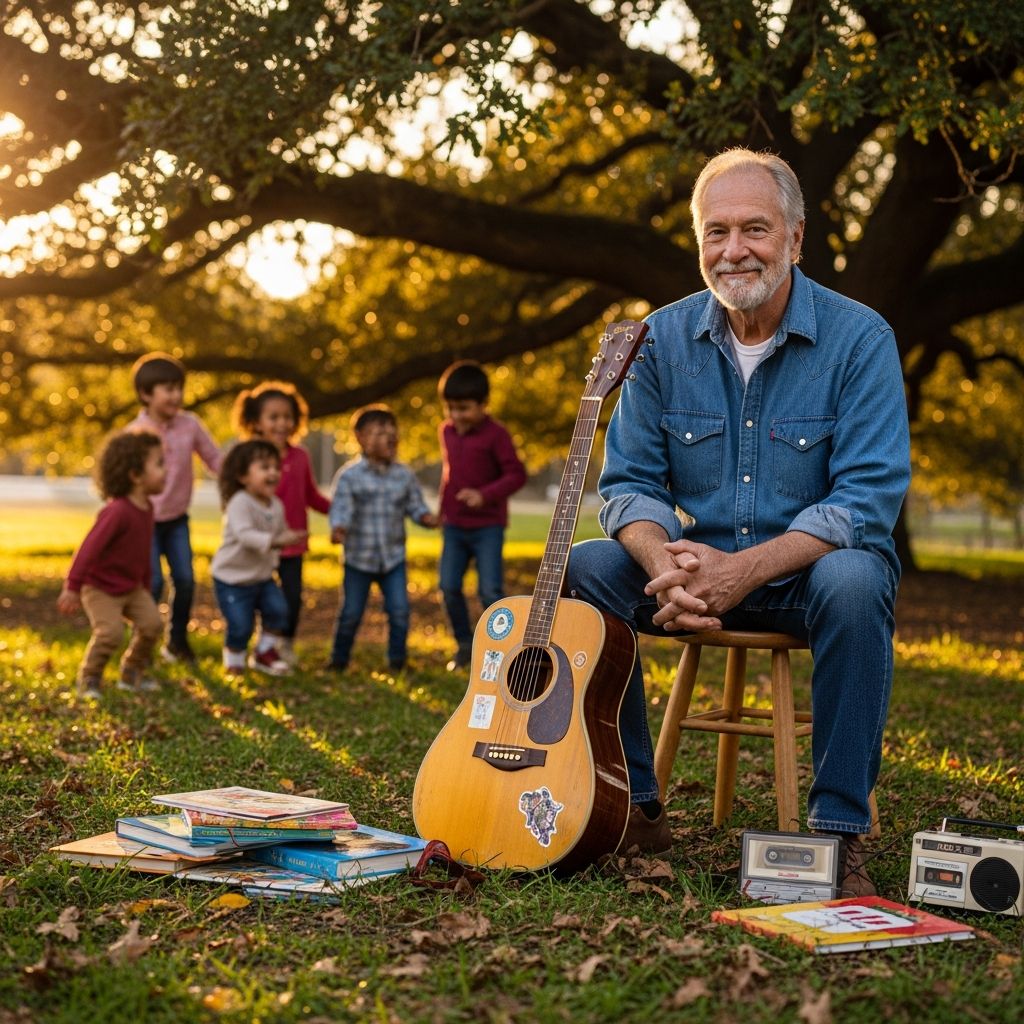
Raffi’s career as a children’s musician began almost by chance. In the 1970s he was performing in small venues in Toronto and Montréal, eventually hitchhiking to Vancouver in search of “fame and fortune.” A request to sing for a local school became a turning point: he discovered that children responded to his simple, melodic style with unusual intensity.
Instead of using children’s music as a temporary detour, he took it seriously as an art form. In an era when kids’ albums were often thinly produced add-ons to TV franchises, Raffi invested in sound quality, musicianship, and lyrical care.
Key early decisions that set him apart:
- Founding an independent label, Troubadour, to maintain creative and ethical control over his recordings.
- Working with respected folk musicians and engineers rather than treating children’s music as a low-budget sideline.
- Choosing acoustic, organic sounds and clear vocals so children could easily hear, follow, and sing along.
Those choices helped elevate the status of children’s music and paved the way for later artists who take kids’ entertainment seriously as craft, not just commerce.
Why Raffi’s Songs Feel Different
Parents often say Raffi’s songs feel unusually calm, kind, and reassuring compared to much of contemporary kids’ media. That effect is not accidental. His music is built on a few simple principles that align closely with what developmental science tells us about young children.
1. Simple, Repetitive Structures
Young children process language and pattern through repetition and predictability. Research in developmental psychology shows that repetition supports language learning and memory formation in early childhood. Raffi’s songs use clear melodic lines, steady rhythm, and repeated phrases that make it easy for a three-year-old to join in.
- Short phrases: Lyrics are concise, concrete, and free of sarcasm.
- Predictable patterns: Call-and-response and recurring lines invite participation.
- Moderate tempo: Energetic but not overwhelming, which helps kids regulate arousal and stay engaged.
2. Warm, Non-Performative Vocals
Instead of theatrical character voices, Raffi sings as himself—gently, consistently, and without vocal gimmicks. This vocal style parallels what early childhood experts describe as “parentese” or infant-directed speech: warm, clear, and emotionally attuned. That tone supports emotional security and can be soothing even when the song is upbeat.
3. Respectful, Non-Mocking Humor
Many children’s properties lean on slapstick or jokes at a child’s expense. Raffi’s humor is observational and playful, often centered on animals, wordplay, or gentle silliness rather than humiliation or put-downs. This aligns with approaches in positive discipline that avoid shaming and instead protect a child’s sense of worth.
4. Values Woven into Lyrics
Underneath the catchy choruses, his songs introduce ideas about kindness, environmental care, and empathy. Rather than explicit moralizing, he uses concrete images and stories—oceans, animals, friends—to hint at bigger themes.
| Musical Element | Raffi’s Approach | What It Supports in Children |
|---|---|---|
| Melody | Simple, singable tunes | Confidence in joining songs; early pitch and pattern recognition |
| Lyrics | Concrete imagery, gentle narratives | Language growth; symbolic thinking |
| Production | Acoustic instruments, clear mix | Auditory focus; reduced overstimulation |
| Emotional tone | Warm, non-ironic, reassuring | Sense of safety; secure attachment cues |
“Baby Beluga” and the Birth of a Generation
No discussion of Raffi is complete without “Baby Beluga,” a song inspired by an actual beluga whale he met in Vancouver in the late 1970s. On the surface, it is a gentle lullaby about a small whale in the deep blue sea. Beneath that, it models a vision of childhood where a young creature is safe, watched over, and free to explore.
The song’s cultural impact has been immense:
- Multi-decade reach: Listeners who grew up with the song now share it with their own children, a group often called “beluga grads.”
- Environmental undertones: The affectionate portrayal of ocean life subtly fosters environmental empathy, a strategy that environmental educators often highlight as effective in early childhood.
- Global resonance: As streaming expanded, “Baby Beluga” reached families worldwide, with Raffi’s music now played in more than 190 countries.
“Baby Beluga” illustrates a core pattern in his work: accessible music that doubles as an introduction to caring about the more-than-human world.
Child Honouring: Turning a Musical Ethic into a Global Idea
Over time, Raffi’s concern for children grew into a comprehensive philosophy he calls child honouring. He founded a dedicated organization to promote it, linking child well-being to environmental health and social justice.
At its heart is a deceptively simple premise: if society truly centered the needs and rights of children, we would organize our economies, media, and politics differently. This view parallels international frameworks such as the UN Convention on the Rights of the Child, which recognizes children’s rights to protection, development, and participation.
Core themes in child honouring include:
- Respect for the whole child: Seeing children as full persons with feelings, ideas, and boundaries.
- Non-violence: Rejecting physical and emotional harm, consistent with global public health evidence linking corporal punishment to negative outcomes.
- Ecological responsibility: Acknowledging that a healthy planet is a prerequisite for children’s flourishing.
- Ethical commerce: Questioning aggressive marketing, especially digital marketing, directed at children.
Raffi’s advocacy connects the intimate world of a parent and child to larger policy debates about climate change, advertising regulation, and sustainable economies—an unusual move for a children’s entertainer.
Why He Walked Away from Bigger Stages
Unlike many performers, Raffi has repeatedly turned down opportunities for larger, more lucrative exposure. He has publicly described declining major arena shows and extensive touring because he believed enormous venues made it harder to maintain a genuine connection with young children.
He has also been cautious about endorsements and merchandising. While many shows for children are now built around toy lines, apps, and branded products, he has argued that treating children primarily as consumers can undermine their well-being and family relationships.
His company, Troubadour Music Inc., is structured as a “triple-bottom-line” business, meaning it considers social and environmental impact alongside financial results. This approach mirrors broader movements in sustainable business that encourage organizations to measure people, planet, and profit together.
From Lullabies to Climate Action
As his original audience grew up, Raffi began speaking and writing more directly about global issues. One consistent theme is climate change. He has collaborated with environmental leaders, including Canadian scientist David Suzuki, and released songs explicitly focused on planetary stewardship.
The logic behind this shift is straightforward: children cannot thrive on a collapsing planet. Major scientific bodies such as the Intergovernmental Panel on Climate Change (IPCC) have documented the disproportionate risks that climate change poses to younger generations. For Raffi, ecological advocacy is a natural extension of caring about children.
Today, his work for adults—books, talks, op-eds—often urges “beluga grads” to bring the same protective instinct they felt as children to their roles as parents, citizens, and voters.
How Parents Can Apply Raffi’s Principles at Home
You do not need to be a musician to learn from Raffi’s approach. His career offers practical lessons for everyday parenting.
1. Choose Media That Respects Children
- Prefer content with gentle pacing over rapid-fire editing and noise.
- Look for songs and shows that avoid mocking, shaming, or frightening children for laughs.
- Notice whether characters model empathy, cooperation, and care for the natural world.
2. Make Music a Shared Activity, Not Just Background Noise
- Sing along, use hand motions, or create simple percussion with household objects.
- Repeat favorite songs; repetition builds comfort and learning.
- Invite your child to request songs and lead the “playlist,” building autonomy and connection.
3. Talk About the Values in Songs
- After a song about animals or oceans, ask open-ended questions like, “How do you think the whale feels?”
- Connect lyrics to real life—for example, water conservation or kindness to classmates.
- Use gentle songs as springboards for conversations about safety, friendship, and care.
4. Protect Childhood from Excessive Commercialization
- Limit exposure to advertising-heavy platforms when possible.
- Discuss marketing messages with older children so they learn to recognize persuasion.
- Focus on experiences—reading, music, outdoor play—over branded merchandise.
Raffi’s Ongoing Influence on Children’s Culture
Decades after his first recordings, Raffi remains a touchstone for artists, educators, and policymakers thinking about the ethics of children’s media. Universities have honored him for his contributions to child-centered culture and ecological awareness.
His work intersects with several contemporary movements:
- Positive parenting: Approaches that emphasize connection, empathy, and nonviolent discipline echo his commitment to child honouring.
- Media literacy: Scholars and advocates now pay increasing attention to how commercial media and digital platforms shape children’s development, a concern Raffi raised early and often.
- Climate justice for youth: Young activists worldwide are demanding climate policies that protect future generations, aligning with his insistence that caring for children means caring for the Earth.
In many ways, his greatest legacy may not be any single song, but the idea that children deserve art—and a world—worthy of their trust.
Frequently Asked Questions (FAQs)
Q: Who is Raffi, in simple terms?
A: Raffi Cavoukian is an Armenian-Canadian singer, songwriter, and advocate best known for gentle, folk-influenced children’s songs like “Baby Beluga.”
Q: Why do so many parents still play his music decades later?
A: Parents often return to his songs because they are calm, respectful, melodically simple, and emotionally reassuring, making them pleasant for adults as well as kids.
Q: What does “child honouring” mean?
A: Child honouring is Raffi’s term for a social ethic that places children’s well-being at the center of decisions about family life, media, economics, and the environment, echoing principles in international children’s rights frameworks.
Q: Is his work only for very young children?
A: While many songs are designed for preschoolers, his later writings, talks, and activism speak directly to adults—especially those who grew up on his music—about issues like climate change, digital culture, and parenting.
Q: How can I introduce my child to his music thoughtfully?
A: Start with a few calm songs, listen together rather than using them only as background noise, and invite your child to sing, move, or draw about what they hear, turning listening into an interactive experience.
References
- Raffi Cavoukian Biography — All American Speakers. 2024-01-01. https://www.allamericanspeakers.com/celebritytalentbios/Raffi+Cavoukian/399952
- Bio – Raffi Cavoukian — RaffiNews (Official Site). 2023-05-01. https://raffinews.com/raffi/bio/
- Raffi Cavoukian – Honorary Degree Citation — Royal Roads University. 2022-06-01. https://www.royalroads.ca/raffi-cavoukian
- Raffi – Music Publishing Roster — Concord. 2021-09-01. https://concord.com/publishing-roster/raffi/
- Raffi Cavoukian — Article including biographical and career details. 2024-03-01. https://en.wikipedia.org/wiki/Raffi