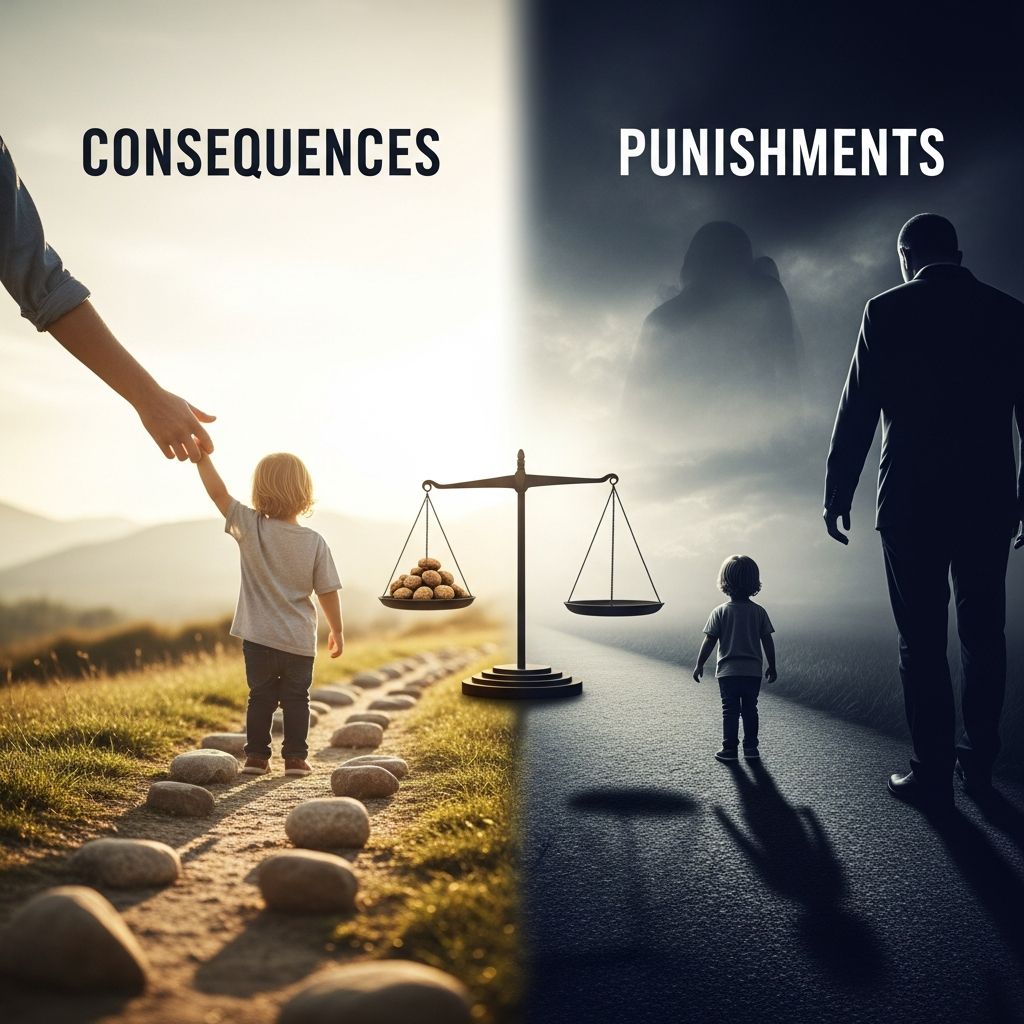
Effective discipline in parenting hinges on understanding the distinction between **punishments** and **consequences**. Punishments often aim to inflict discomfort for control, while consequences teach through real-life outcomes, promoting long-term behavioral growth and emotional health.
Defining Core Discipline Concepts in Family Life
Discipline strategies shape how children learn from mistakes. Punishments typically involve adult-imposed penalties like grounding or privilege loss without direct ties to the misbehavior, focusing on payback rather than learning. In contrast, consequences connect directly to actions, helping kids grasp cause and effect naturally.
Parents frequently confuse these terms, leading to reactive responses that erode trust. Recognizing the difference empowers families to build resilience instead of resistance.
Understanding Punishments: Short-Term Fixes with Long-Term Costs
Punishments provide quick compliance through fear—spankings, timeouts, or gadget bans stop behaviors momentarily. However, they prioritize parental control over child empowerment, breeding resentment and rebellion over time.
Consider a child forgetting homework: a punishment might be extra chores, unrelated to the issue, fostering anger rather than understanding. Research shows such approaches damage relationships, as kids focus on the punisher, not their actions.
- Punishments stem from adult frustration, emphasizing shame.
- They rarely address root causes, leading to repeated issues.
- Long-term, they hinder emotional development and cooperation.
Natural Consequences: Nature’s Built-In Teachers
**Natural consequences** occur without parental intervention, directly resulting from a child’s choices. They offer powerful, unfiltered lessons in accountability.
For instance, if a child refuses shoes before play, cold feet or slips become the teacher—no adult needed. Or, lying erodes friendships naturally, teaching trust’s value organically.
These impacts build wisdom by prompting self-reflection. Parents guide by helping kids notice feelings like guilt, encouraging reconciliation without imposed pain.
| Scenario | Natural Consequence | Learning Outcome |
|---|---|---|
| Staying up late on school night | Tiredness and poor performance next day | Balances rest with fun |
| Not packing lunch | Hunger during school | Prepares essentials independently |
| Rude to friends | Lost playtime invitations | Values relationships |
Logical Consequences: Guided Lessons When Nature Isn’t Enough
When natural outcomes are too delayed (like cavities from candy) or abstract for young minds, **logical consequences** step in. These are parent-set but behavior-related, aiming to restore balance.
Example: Skipping dinner means no dessert, linking nutrition directly. Or, for a messy room blocking play, cleanup precedes fun—teaching responsibility.
Key: Deliver calmly, explaining the link. This shifts focus from blame to problem-solving, fostering heart change over compliance.
- Ensure proportionality to the misbehavior.
- Focus on teaching, not retribution.
- Involve child in solution for ownership.
Real-Life Applications: Discipline in Everyday Scenarios
Applying these transforms family dynamics. For screen overuse, a natural consequence is eye strain or missed sleep; logically, limit access until chores done.
Teen skipping homework? Natural: Low grades; logical: No phone until caught up, with parental support. Avoid punitive grounding, which isolates without teaching.
Bedtime battles: Natural tiredness; logical: Earlier routine next night. Consistency builds habits, reducing conflicts.
Signs You’re Punishing Instead of Consequencing
Self-check your approach: If delivered in anger, with disgust, or unrelated to actions, it’s punishment. Questions to ask:
- Does this mimic real-life outcomes?
- Am I calm and explanatory?
- Will it strengthen our bond?
Punishments embarrass or shame; consequences empower. Prioritize emotional health over control.
Building Resilience Through Empowered Discipline
Consequences cultivate self-regulation and empathy. Kids learn boundaries matter, preparing for adulthood’s realities. Parental modeling—staying calm—reinforces this.
Shift goals: From “stop that now” to “grow wiser tomorrow.” This nurtures cooperation, reducing power struggles.
Overcoming Common Discipline Challenges
Young kids may ignore delayed impacts; use logical bridges. Teens test limits—respond with firm, related responses. Track patterns; address underlying needs like connection.
Consistency is vital, but flexibility allows grace. Combine with praise for positives to balance.
Frequently Asked Questions
What if natural consequences seem too harsh?
Supervise for safety, then guide reflection: “How did that feel? What next time?” This teaches without rescue.
Are logical consequences always immediate?
No—tie to behavior logically. Delay builds anticipation of outcomes.
How do I stay calm during enforcement?
Pause, breathe, remind of teaching intent. Practice scripts ahead.
Do consequences work for strong-willed kids?
Yes, especially with relationship focus. They respond to respect over force.
What’s the role of empathy in this?
Validate feelings first: “I see you’re upset.” Then apply consequence—builds trust.
Long-Term Benefits for Family Harmony
Families using consequences report less drama, more mutual respect. Kids internalize accountability, reducing parental intervention needs. Invest now for independent, resilient futures.
(Word count: 1678)
References
- Consequences vs punishment in parenting – Connected Families — Connected Families. 2023. https://connectedfamilies.org/do-your-consequences-build-up-or-tear-down/
- Punishment versus Consequences — New Jersey Psychological Association. 2024. https://psychologynj.org/page/PunishmentvsConsequences
- Exploring Positive Parenting: Punitive, Natural, and Logical Consequences — Third Eye Family Solutions. 2023. https://thirdeyefamilysolutions.com/exploring-positive-parenting-punitive-natural-and-logical-consequences/
- The Difference Between a Consequence and a Punishment — Psych Central. 2018-09-01. https://psychcentral.com/blog/childhood-behavioral/2018/09/the-difference-between-a-consequence-and-a-punishment
- Consequences vs Threats vs Punishments — Janet Lansbury. 2023-11. https://www.janetlansbury.com/2023/11/consequences-vs-threats-vs-punishments-includes-an-update/
- Consequences vs. Punishments: Why Kids Need Boundaries — Albiona Substack. 2024. https://albiona.substack.com/p/consequences-vs-punishments-why-kids