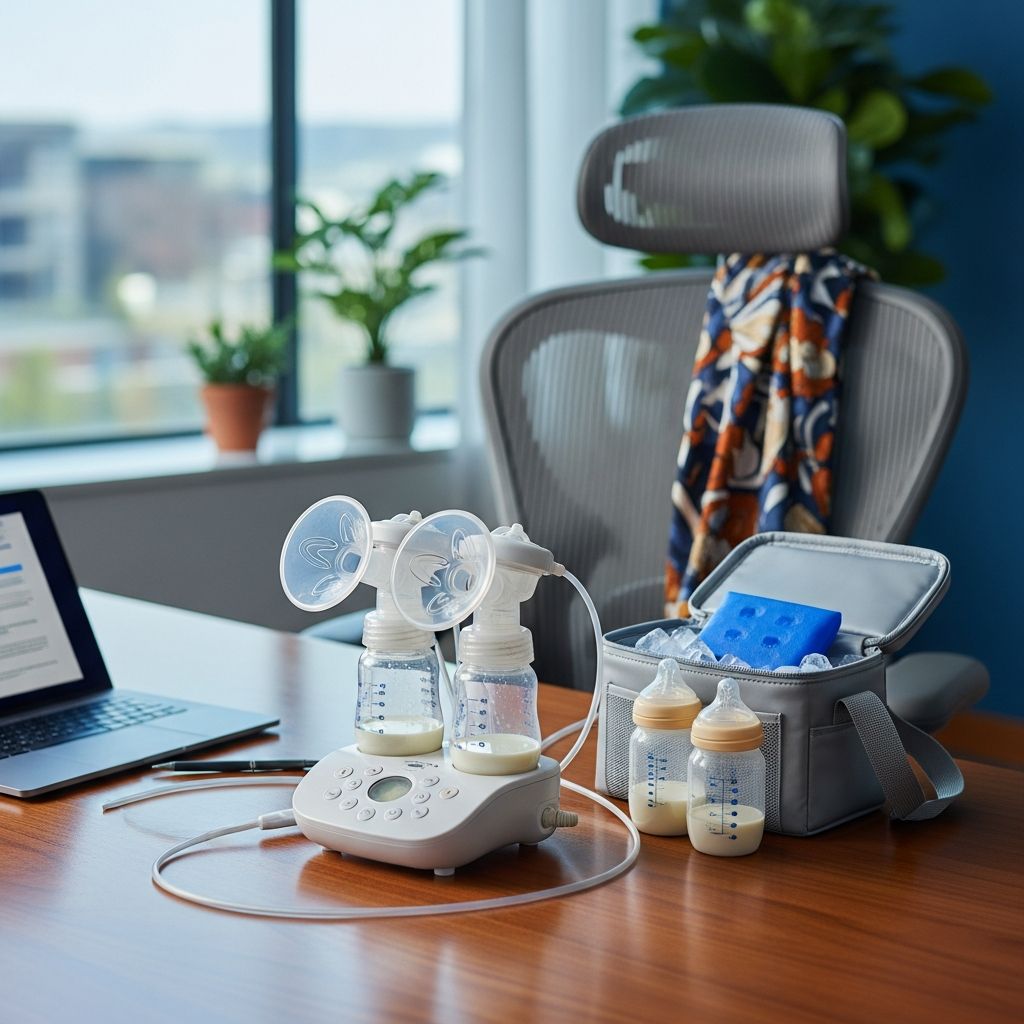
Returning to work after welcoming a new baby presents unique challenges for breastfeeding parents, particularly the task of expressing milk during the workday. With proper preparation, knowledge of legal protections, and practical strategies, pumping can become a manageable part of your routine, ensuring your infant receives the benefits of breast milk while you maintain professional productivity. This guide draws from expert recommendations to help you thrive in this dual role.
Understanding Your Legal Protections
Federal legislation in the United States safeguards breastfeeding parents’ rights in the workplace. The Providing Urgent Maternal Protections for Nursing Mothers (PUMP) Act, effective as of 2022, mandates that most employers provide reasonable break time and a private, non-bathroom space for pumping milk for up to one year after the child’s birth. This space must be shielded from view, free from intrusion, and available when needed.
Some states offer enhanced protections. For instance, Oregon extends these rights until the child is 18 months old and applies to smaller companies with fewer than 10 employees. Employers must also ensure the location includes essentials like a comfortable chair, electrical outlet, flat surface, and ideally a sink for cleaning equipment.
- Key requirements: Break time as needed, private functional space, no bathroom use.
- Duration: Up to 1 year federally (longer in some states).
- Exceptions: Limited for very small businesses, but advocacy can secure accommodations.
Knowing these rights empowers you to discuss needs confidently with supervisors without fear of retaliation. Research indicates that supportive pumping policies benefit employers through improved employee retention and morale.
Developing an Effective Pumping Schedule
A consistent schedule mimics your baby’s feeding pattern to maintain milk supply. Experts recommend pumping every 2-4 hours, aligning with home breastfeeding frequency—typically every 2-3 hours for infants under 6 months and every 3-4 hours thereafter.
Here’s a sample 9-to-5 workday schedule, adjustable based on supply and baby’s needs:
| Time | Activity | Notes |
|---|---|---|
| 7:00 AM | Nurse baby before leaving | Establishes baseline supply |
| 10:00 AM | Pump session (15-20 min) | Morning break |
| 1:00 PM | Pump session + lunch portion | Combine with meal for efficiency |
| 4:00 PM | Pump session | Afternoon break |
| 7:00 PM | Nurse upon return | Replenishes and bonds |
If output is low, increase frequency to every 2 hours; if abundant, extend to 4 hours. Each session requires 30-40 minutes total, including setup, pumping (20 minutes), and cleanup.
Selecting the Best Pumping Equipment
Choosing reliable gear is crucial for efficiency and comfort. Double electric pumps are gold standards for workplace use due to their power and speed in maintaining supply. Wearable options offer discretion but vary in effectiveness—consult a lactation specialist if output declines.
Essential packing list for your daily bag:
- Double electric pump with flanges, valves, tubing, and membranes.
- Batteries or extension cord for power.
- Storage bottles or bags, cooler with ice packs.
- Cleaning supplies: soap, brush, wipes, or extra parts.
- Hands-free bra, cover-up, towel, and baby scent item (e.g., blanket).
Troubleshoot issues by adjusting settings, massaging breasts, or switching models. Insurance often covers pumps—verify with your provider.
Optimizing Your Pumping Sessions
Maximize output with proven techniques. Start with relaxation: view baby photos, smell their clothing, or practice deep breathing to trigger let-down. Warm compresses or hand expression prime flow before pumping.
Avoid watching output levels, as stress reduces production. Focus on routine: wash hands, assemble gear, pump fully (even after flow slows), then store milk promptly in a cooler at 40°F or below.
Workplace adaptations include using break times creatively. Communicate schedule needs early to supervisors for accountability.
Communicating with Employers and Colleagues
Proactive dialogue sets expectations. Initiate a meeting pre-return: outline pumping frequency (e.g., 3 sessions daily), duration, and space requirements. Emphasize benefits like sustained productivity from health maintenance.
Address perceptions head-on—pumping is protected work, not a luxury. Sample script: “To continue providing breast milk, I’ll need three 30-minute breaks daily in a private space per the PUMP Act.” If resistance arises, reference HR or legal resources.
Maintaining Milk Supply and Health
Hydration, nutrition, and rest underpin supply. Aim for 13 cups of fluids daily, balanced meals with galactagogues like oats, and nighttime nursing if possible. Monitor for signs of low supply (fewer wet diapers) and consult professionals.
Self-care prevents burnout: stretch during sessions, prioritize sleep. Studies link workplace support to longer breastfeeding duration, benefiting infant immunity and maternal well-being.
Improvising Pumping Spaces
Not all workplaces have dedicated rooms. Creative solutions include:
- Lockable storage closets with signage.
- Cubicle curtains via rods or clamps.
- Pop-up tents or partitions for open areas.
- Wellness rooms or empty offices—request locks if needed.
Ensure functionality: power access, surfaces, privacy. Test setups in advance.
Frequently Asked Questions
What if my employer denies pumping space?
Reference the PUMP Act and escalate to HR or labor department. Small firms may qualify for exemptions, but advocacy often yields accommodations.
How long should each pump take?
Plan 30-40 minutes: 15-20 for pumping, rest for setup/cleanup.
Can I pump during lunch?
Yes, combine with breaks for efficiency, ensuring total time meets needs.
What if my supply drops?
Increase frequency, power pump, or see a lactation consultant for personalized advice.
Are wearable pumps sufficient for work?
They suit some but may underperform for supply maintenance—test output.
Long-Term Strategies for Success
Practice pumping before return, introduce bottles gradually, and track output weekly. Transition planning around 6-12 months aligns with natural weaning. Support networks—colleagues, consultants—ease the journey.
Ultimately, pumping at work honors your commitment to infant nutrition amid career demands. With these tools, it transforms from hurdle to empowering routine.
References
- Pumping at Work: Example Schedule and Helpful Tips — Cleveland Clinic. 2023. https://health.clevelandclinic.org/pumping-schedule-pumping-at-work
- Pumping at work is hard work! — Oregon Health & Science University (OHSU). 2023. https://www.ohsu.edu/womens-health/pumping-work-hard-work
- Pumping at Work — Breastmilk Counts. 2023. https://breastmilkcounts.com/back-to-work/pumping-at-work/
- What New Moms Need To Know About Pumping Breastmilk At Work — Henry Ford Health. 2023-09. https://www.henryford.com/Blog/2023/09/pumping-at-work
- Pumping at Work is Work: 5 Tips to Make it Easier — Motherly. 2023. https://www.mother.ly/career-money/work-and-motherhood/pumping-at-work-is-work/
- Breastfeeding and Returning to Your Workplace — Centers for Disease Control and Prevention (CDC). 2023. https://www.cdc.gov/infant-toddler-nutrition/breastfeeding/returning-to-your-workplace.html