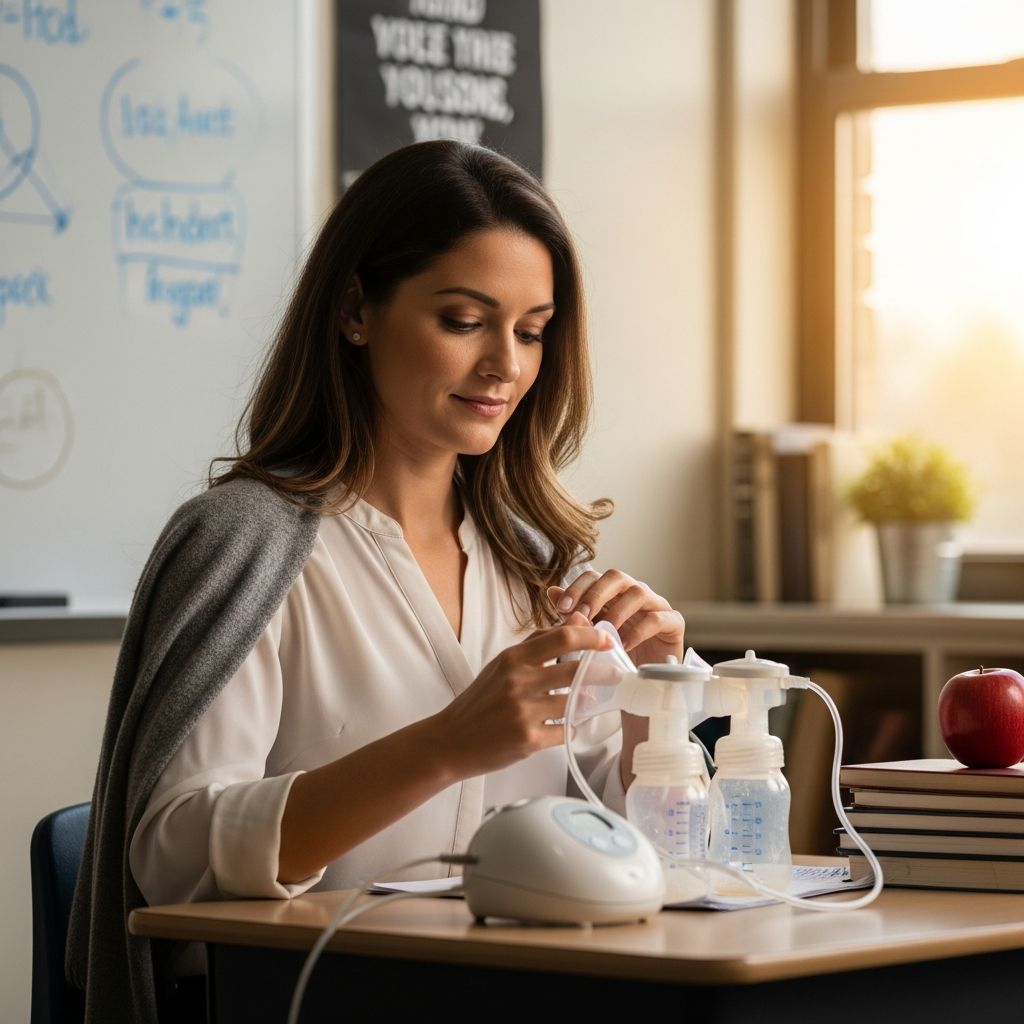
Balancing motherhood and a teaching career presents unique challenges, especially for breastfeeding educators who need to express milk during school hours. Recent federal laws have strengthened protections, yet many face ongoing barriers. This article delves into the legal framework, personal stories, health impacts, and innovative solutions to support lactating teachers.
Understanding Federal Protections for Lactating Educators
The **Providing Urgent Maternal Protections for Nursing Mothers (PUMP) Act**, enacted in December 2022, marks a pivotal advancement in workplace rights for breastfeeding employees, including salaried teachers previously excluded from earlier Fair Labor Standards Act (FLSA) provisions. Employers must now offer reasonable break times and a private, non-bathroom space shielded from view for pumping during the child’s first year.
A 2024 Title IX amendment further bolsters these rights for federally funded schools, mandating lactation breaks and clean spaces for both staff and students, effective August 1, 2024. These laws respond to the rising breastfeeding rates, with over 75% of public school teachers being women of childbearing age.
- Key PUMP Act Requirements:
- Reasonable unpaid break time (unless overlapping paid breaks or state laws require pay).
- Private pumping space free from intrusion.
- Protections against retaliation for requesting accommodations.
- Applies to public/private schools and preschools.
State laws, like California’s Labor Code section 1030, provide additional breaks that may run concurrently with existing ones, though exceeding standard breaks could be unpaid unless causing ‘serious disruption’.
Persistent Challenges in School Environments
Despite legal mandates, implementation lags. A 2024 Education Week poll revealed 40% of 790 respondents reported no accommodations for breastfeeding teachers. Teachers often pump in closets, storage rooms, or even with students present due to inadequate facilities.
| Common Obstacles | Examples from Educators | Legal Violations |
|---|---|---|
| Staffing shortages | Covering classes during breaks leads to guilt or complaints from parents. | Denial of reasonable break time. |
| Inadequate spaces | Pumping in bathrooms, libraries, or unlocked closets. | Space must be private and non-bathroom. |
| Cultural stigma | Fear of retaliation or being seen as ‘rocking the boat’. | Protected against retaliation. |
| Rigid schedules |
One Texas teacher in 2017 was instructed to stop pumping after using a library closet, highlighting pre-PUMP Act struggles that persist. Educators like Christy Krenek only gained accommodations after citing the law, but parental pushback forced her to quit.
Health and Developmental Benefits Driving Advocacy
Breastfeeding is endorsed as a public health priority by leading organizations. The American Academy of Pediatrics advocates exclusive breastfeeding for six months, citing benefits like reduced infection risks, better neurodevelopment, and maternal health gains.
Workplace barriers contribute to early weaning; unsupported pumping leads to discontinuation, forgoing these advantages. For infants of teacher-moms, sustained breastfeeding supports immunity and cognitive growth, while mothers experience lower postpartum depression and cancer risks.
- Proven Benefits:
- Enhanced infant immunity and gut health.
- Improved maternal bonding and hormonal balance.
- Long-term child IQ boosts and obesity prevention.
Laws like PUMP aim to sustain these by removing logistical hurdles, benefiting families and school communities.
Creative Solutions from Progressive Schools
Supportive districts foster an ‘all-hands-on-deck’ culture. Retired principal Michael Kalb in California had administrators, including himself, cover classes for pumping teachers until weaning.
Other strategies include:
- Extra recess staffing to free teachers.
- Floating substitutes or paraprofessionals for coverage.
- Installing dedicated lactation pods (e.g., Mamava units) in private areas.
- Flexible scheduling agreements between teachers and admins.
- Staff training to normalize accommodations and reduce stigma.
Legal advocates like Jessica Lee from the Center for WorkLife Law emphasize that understaffing isn’t a valid excuse; violations invite lawsuits after a 10-day cure period. Remedies include back pay, reinstatement, and damages.
State Variations and Enhanced Protections
Beyond federal baselines, states offer robust support. California’s law ensures concurrent breaks, prioritizing maternal needs. New York and others mandate paid time or permanent spaces.
| State Example | Key Provisions |
|---|---|
| California | Reasonable breaks under Labor Code 1030; unpaid if exceeding standard. |
| General US | PUMP Act applies universally, with state enhancements. |
Employees should consult local laws via resources like the U.S. Department of Labor.
Empowering Teachers: Steps to Secure Rights
Lactating educators can proactively advocate:
- Submit a formal request in writing, citing PUMP Act and Title IX.
- Propose a schedule aligning with class periods.
- Document denials for potential complaints.
- Seek union support or legal aid if needed.
- Report violations to DOL Wage and Hour Division after 10-day notice.
Building alliances with colleagues and parents fosters buy-in, framing accommodations as family-supportive policies.
Frequently Asked Questions (FAQs)
What does the PUMP Act require of schools?
It mandates reasonable break time and a private, non-bathroom space for pumping up to one year postpartum, now covering teachers.
Are pumping breaks paid?
Typically unpaid unless concurrent with paid breaks or required by state law; pumping during paid time must be compensated.
What if my school denies accommodations?
Provide 10-day notice to comply; non-response allows DOL complaints or lawsuits for remedies.
Can teachers pump during class if needed?
While creative (e.g., discreet pumps), laws prioritize breaks with coverage; schools must facilitate without disruption claims unless severe.
How long must schools provide support?
Up to the child’s first year, though best practices extend as needed.
Building a Supportive Future for Working Mothers in Education
As awareness grows, schools adopting lactation policies see benefits like retention of talented female educators and healthier staff. Advocacy from teachers, principals, and parents can drive compliance, ensuring motherhood and profession coexist seamlessly. Resources from DOL and breastfeeding committees empower change.
References
- Legally, Breastfeeding Teachers Can Pump at Work. But Can They Really? — Education Week. 2024-08. https://www.edweek.org/teaching-learning/legally-breastfeeding-teachers-can-pump-at-work-but-can-they-really/2024/08
- Pumping: Teacher Requests to Express Breast Milk During the School Day — Atkinson, Andelson, Loya, Ruud & Romo. N/A. https://www.aalrr.com/EdLawConnectBlog/pumping-teacher-requests-to-express-breastmilk-during-the-school-day
- Labor Department Provides Guidance on FLSA Pump-at-Work Protections for School Employees — Jackson Lewis. N/A. https://www.jacksonlewis.com/insights/labor-department-provides-guidance-flsa-pump-work-protections-school-employees
- Breast Pumping at Work Laws + Lactation Accommodations in the US — Mamava. N/A. https://www.mamava.com/breastfeeding-laws/at-work
- FLSA Protections to Pump at Work — U.S. Department of Labor. N/A. https://www.dol.gov/agencies/whd/pump-at-work
- The PUMP Act Explained — U.S. Breastfeeding Committee. N/A. https://www.usbreastfeeding.org/the-pump-act-explained.html