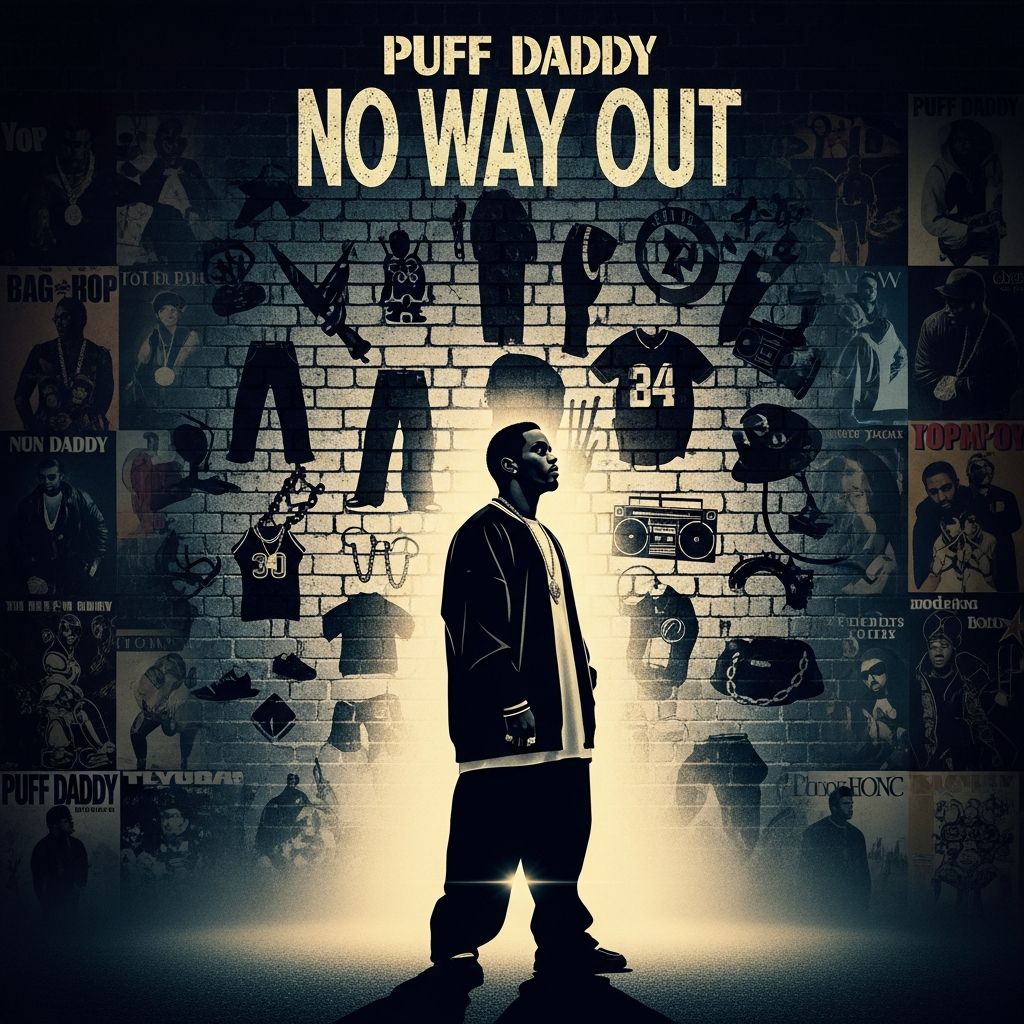
In the late 1990s, a single album helped push hip-hop from a fast-growing genre into a fully mainstream force. That album was “No Way Out”, the debut studio project from Sean “Puff Daddy” Combs, released through Arista and Bad Boy Records in July 1997. It turned a behind-the-scenes producer into a household name and fused glossy commercial ambition with deeply personal grief.
This article explores how No Way Out was made, why it connected so powerfully, and how its sound and success still echo through today’s music industry.
The Road to ‘No Way Out’: From Executive to Frontman
Before No Way Out, Puff Daddy was already a major force in music—but mostly behind the microphone. He worked at Uptown Records, then founded Bad Boy Records in 1993, quickly building a roster that included The Notorious B.I.G., Faith Evans, 112, and Total. His sound blended soulful samples, hard drums, and radio-friendly hooks, helping define mid-90s East Coast hip-hop.
However, mainstream audiences often saw him as the charismatic hype man dancing in other people’s videos rather than a recording artist in his own right. That perception shifted when he decided to step from executive producer to headlining artist, assembling a project credited to “Puff Daddy & The Family.”
Context: A Scene Shaken by Loss
No Way Out emerged in the aftermath of the murders of Tupac Shakur (1996) and The Notorious B.I.G. (March 1997), which intensified national scrutiny of hip-hop and its East Coast–West Coast tensions. Recording sessions reportedly began before Biggie’s death but continued in the shadow of that trauma, giving the album a complex emotional palette that mixes triumph with mourning.
- Commercial ambition: an era of rapidly growing rap sales and MTV exposure.
- Public anxiety: fears that the violence around hip-hop could sink the genre or push it back underground.
- Label momentum: Bad Boy already had multiple platinum acts and several Billboard chart-toppers by 1997.
Into this mix stepped Puff Daddy, determined to both honor his fallen friend and solidify Bad Boy’s mainstream takeover.
Inside the Album: Grief, Glory, and Big Hooks
No Way Out is often remembered for its biggest singles, but the album’s lasting influence comes from how it balances vulnerability, excess, and pop craftsmanship across its tracklist.
Key Themes Running Through the Album
- Mourning and remembrance – Songs responding directly to The Notorious B.I.G.’s death and the emotional fallout.
- Victory and survival – Narratives of making it out of poverty and danger into wealth and celebrity.
- Luxury and spectacle – Celebrations of money, fashion, and status that helped define the late-90s “shiny suit” era.
- Family and collaboration – Heavy involvement from the Bad Boy roster, making the album feel like a label manifesto.
Signature Singles and Their Impact
| Single | Key Features | Chart Highlights | Cultural Impact |
|---|---|---|---|
| “Can’t Nobody Hold Me Down” | Confident, upbeat anthem built on familiar samples and a sing-along hook. | Reached #1 on the Billboard Hot 100 for seven weeks. | Announced Puff Daddy as a legitimate frontman, not just a side figure. |
| “I’ll Be Missing You” | Tribute to B.I.G., interpolating The Police’s “Every Breath You Take,” featuring Faith Evans and 112. | First hip-hop song to debut at #1 on the Billboard Hot 100; stayed there 11 weeks. | Became a global mourning anthem, reaching audiences far beyond rap’s core fanbase. |
| “It’s All About the Benjamins” | Hard-hitting posse cut with The Lox, Lil’ Kim, and others, celebrating wealth and ambition. | Major radio and club success; helped drive album sales worldwide. | Turned “Benjamins” into mainstream slang for money; a defining 90s rap anthem. |
| “Been Around the World” | Slick, globe-trotting fantasy with Mase and B.I.G., built on a lush, radio-ready beat. | Peaked at #2 on the Billboard Hot 100. | Captured the jet-set persona that came to define Puff Daddy’s public image. |
The Sound of ‘No Way Out’: Sampling, Shine, and Criticism
Sonically, No Way Out mirrored and amplified the late-90s trend toward polished, sample-driven production that could dominate both radio and clubs. The album leaned heavily on recognizable hooks from pop and rock songs, reworked into hip-hop frameworks.
Why the Production Stood Out
- Big, cinematic intros and skits that made the project feel like a movie.
- Layered samples from 1970s and 1980s records, combined with live instrumentation in some cases.
- Chant-ready choruses that were easy for casual listeners to latch onto.
- Wide guest list providing contrast to Puff Daddy’s relatively simple delivery.
This approach attracted both praise and criticism. Many fans and critics applauded the album’s lush sound and huge hooks. Others argued that the reliance on well-known samples made it feel overly derivative, a debate noted in contemporary coverage from outlets like Billboard and MTV.
Commercial Performance: From Chart Debut to Grammy Gold
The numbers surrounding No Way Out underline how completely it crossed over into the mainstream.
- The album debuted at #1 on the Billboard 200 with first-week sales of more than 561,000 copies.
- It went on to receive seven-times platinum certification from the Recording Industry Association of America (RIAA), representing 7 million units shipped in the United States.
- Globally, the album topped charts for a combined 24 non-consecutive weeks.
- At the 40th Annual Grammy Awards, No Way Out won Best Rap Album and earned multiple additional nominations.
In Canada, it was the best-selling rap album of 1997, underlining its wide international appeal.
Bad Boy’s 1997 Takeover
No Way Out was part of a larger surge: in 1997, four of the ten songs that hit #1 on the Billboard Hot 100 were tied to Bad Boy Records. That kind of chart presence showed that hip-hop, once seen as a niche or controversial genre, was now at the very center of American pop music.
The Album as a Launchpad: Careers and Collaborations
Although credited to Puff Daddy, the album functions almost like a label compilation, giving enormous visibility to the Bad Boy roster and its close affiliates.
Artists Boosted by the Project
- The Notorious B.I.G. – Appears posthumously on several songs, which helped make the album feel like an unofficial final chapter in his discography.
- Mase – His smooth, understated delivery on singles helped him become one of the era’s standout mainstream rappers.
- Lil’ Kim & The Lox – Their fiery verses on “It’s All About the Benjamins” highlighted the harder edge behind the gloss.
- Faith Evans, 112, and other R&B acts – Their hooks and harmonies softened the album’s hardest moments and helped secure radio play.
Beyond the Bad Boy core, appearances by artists like Jay-Z and Busta Rhymes further tied the project into the broader East Coast rap ecosystem.
From Meme Moments to Lasting Myth
The album’s influence extends beyond its music into awards lore and internet culture. At the 40th Annual Grammy Awards, No Way Out beating a Wu-Tang Clan project for Best Rap Album led to an infamous on-stage interruption by Ol’ Dirty Bastard, a moment that later became a widely shared meme.
That incident captures how controversial the album’s success could feel in more underground-minded circles: to some, Puffy represented a slick, commercial version of hip-hop that clashed with their vision of the culture. Yet those tensions only underscore how central the album had become to discussions of what rap should be.
Why ‘No Way Out’ Still Matters Today
Decades after its release, No Way Out is frequently cited as one of the definitive albums of 1990s hip-hop. Its legacy shows up in multiple ways:
- The artist-mogul template – Puffy’s dual identity as performer and CEO laid groundwork for later figures like Jay-Z and others who blended creative output with business expansion.
- Pop-rap integration – The album proved that rap built on obvious, expensive samples and big choruses could still feel culturally dominant rather than watered down.
- Emotional range in mainstream rap – “I’ll Be Missing You” showed that open grief and vulnerability could top global charts without sacrificing the artist’s credibility.
- Visual aesthetics – Videos and performances from this era helped solidify the “shiny suit” visual identity associated with late-90s commercial hip-hop.
Critical Re-evaluation Over Time
At release, critics were divided on Puff Daddy’s lyrical abilities and the album’s dependence on samples. Over time, however, reappraisals have tended to focus less on technical mic skills and more on curation—his ability to assemble the right beats, guests, and hooks to capture a moment.
Listening now, the album plays like a time capsule of 1997: the fears, the excesses, the mourning, and the optimism all packed into one glossy, maximalist project.
Practical Takeaways for Modern Artists and Fans
For musicians, producers, and fans trying to understand how a project becomes a true cultural event, No Way Out offers several lessons:
- Narrative matters: The album is entwined with a story—Biggie’s death, Bad Boy’s rise, and Puffy’s transformation—that deepened its impact beyond the music alone.
- Collaboration amplifies reach: Featuring a wide cast of artists helped the project feel like a movement, not just a solo album.
- Emotional honesty can coexist with spectacle: The same project that flaunts wealth also delivers a heartfelt global eulogy.
- Business strategy and art can align: Carefully sequenced singles, big-budget videos, and cross-genre hooks all reinforced the album’s commercial success.
Frequently Asked Questions About ‘No Way Out’
Q: When was Puff Daddy’s ‘No Way Out’ released?
A: No Way Out was released in July 1997 through Arista Records and Bad Boy Records as Puff Daddy’s debut studio album.
Q: Why is ‘I’ll Be Missing You’ considered historically important?
A: “I’ll Be Missing You” was the first hip-hop track ever to debut at #1 on the Billboard Hot 100, staying there for 11 consecutive weeks, and it became a global anthem mourning The Notorious B.I.G.
Q: How successful was ‘No Way Out’ commercially?
A: The album debuted at #1 on the Billboard 200 with over 561,000 first-week sales, later receiving seven-times platinum certification from the RIAA for 7 million units shipped in the United States.
Q: Did ‘No Way Out’ win any major awards?
A: Yes, it won the Grammy Award for Best Rap Album at the 40th Annual Grammy Awards and received several additional nominations.
Q: How did the album influence hip-hop’s direction?
A: No Way Out accelerated the shift toward highly polished, sample-heavy, radio-friendly rap, helped normalize the artist-mogul role, and showed that deeply emotional material could succeed on the same scale as party records.
References
- 26 Years Ago, One Album Turned A Major Hip-Hop Player Into A Legend — Fatherly. 2023-07-22. https://www.fatherly.com/entertainment/puff-daddy-no-way-out-1997-retrospective
- No Way Out (Puff Daddy album) — Wikipedia (citing Billboard, RIAA, and Grammy data). 2024-05-15. https://en.wikipedia.org/wiki/No_Way_Out_(Puff_Daddy_album)
- Puff Daddy & The Family – No Way Out (July 1, 1997) — Time Is Illmatic. 2025-04-08. https://timeisillmatic.me/2025/04/08/puff-daddy-the-family-no-way-out-july-1-1997/
- Puff Daddy [feat. Faith Evans & 112] – “I’ll Be Missing You” (Official Music Video) — Bad Boy Entertainment / YouTube. 2011-08-31. https://www.youtube.com/watch?v=NKMtZm2YuBE
- Diddy Reflects on 25th Anniversary of ‘No Way Out’ — Rap-Up. 2022-07-22. https://www.rap-up.com/article/2022/07/22/diddy-reflects-25th-anniversary-no-way-out
- Diddy’s greatest creation “No Way Out” celebrates its 20-year anniversary — Revolt TV. 2017-07-02. https://www.revolt.tv/article/2017-07-02/29333/diddys-greatest-creation-no-way-out-celebrates-its-20-year-anniversary