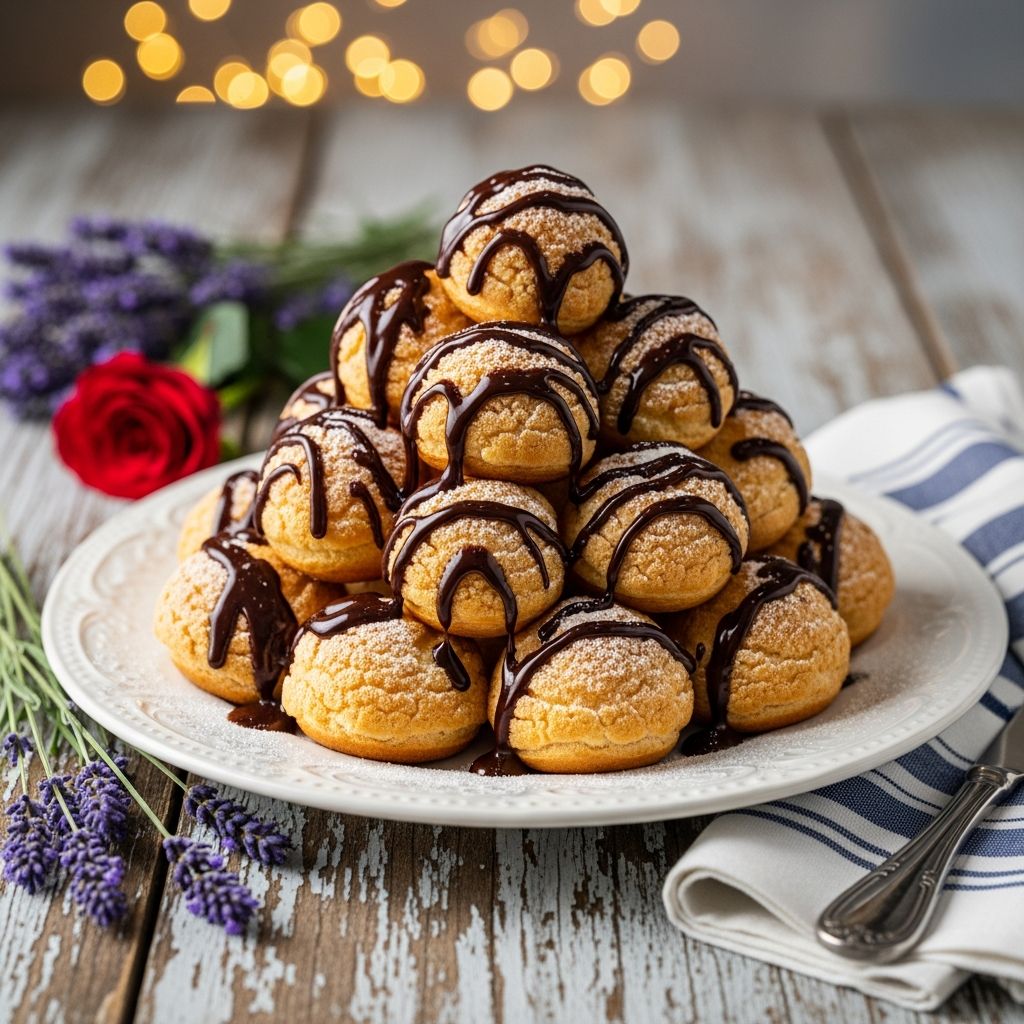
Profiteroles are one of those desserts that look as if they belong in a French pâtisserie window, yet they can absolutely be mastered at home with a bit of guidance and patience. These delicate choux puffs, filled with something creamy and crowned with chocolate, make a spectacular finale to any gathering, from a casual summer dinner to a full French-themed celebration.
This article walks through what profiteroles are, how to make them, how to troubleshoot common issues, and creative ways to turn them into the centerpiece of a festive occasion—no advanced pastry training required.
What Exactly Are Profiteroles?
Profiteroles are small, round pastries made from a dough called choux (or pâte à choux). When baked, this dough puffs dramatically, leaving a hollow interior that is perfect for holding sweet fillings like ice cream, whipped cream, or pastry cream.
The classic presentation involves three elements:
- A crisp, golden choux puff.
- A cool, creamy filling—often vanilla ice cream or custard.
- A generous drizzle of warm chocolate sauce or ganache.
What makes profiteroles especially appealing for celebrations is their flexibility: they can be served as dainty individual bites or stacked high into an impressive tower for the center of the table.
Why Profiteroles Belong at Your Next Celebration
Profiteroles carry a sense of occasion without being fussy, which makes them perfect for themed parties and holidays where you want something special but approachable. Their French roots naturally lend themselves to celebrations that highlight French culture, colors, or cuisine.
Beyond their elegance, they also solve a classic host’s dilemma: you can prepare most components in advance and assemble quickly right before serving, avoiding last-minute kitchen chaos.
Key Benefits for Hosts
- Make-ahead friendly: Choux puffs can be baked in advance and frozen, then crisped in the oven before serving.
- Customizable: Change fillings, sauces, and toppings to suit the season or your party theme.
- Portion control: Small, individual servings make it easy for guests to take as much or as little as they like.
Core Components of Profiteroles
Before diving into the method, it helps to understand the three main elements that come together to create profiteroles. Treat each component as its own little recipe and the process becomes organized and manageable.
| Component | Role in Dessert | What Matters Most |
|---|---|---|
| Choux pastry puffs | Provide a light, crisp shell that holds the filling. | Proper moisture balance and baking time so they puff and stay hollow. |
| Filling | Adds richness, flavor, and contrast in temperature or texture. | Stability, not too runny, and harmonious flavor with the sauce. |
| Chocolate topping or sauce | Finishes the dessert and ties flavors together. | Silky texture, enough intensity to be decadent but not overwhelming. |
Step-by-Step: Making Choux Puffs
Choux pastry seems mysterious at first because it is made by cooking the dough before it ever hits the oven. In reality, it is logical and quite forgiving once the basic steps are understood. Below is a clear breakdown of the process.
Ingredients for the Choux Puffs
- Water (or a mix of water and milk)
- Unsalted butter
- All-purpose flour
- Salt
- Optional: a small amount of sugar for lightly sweet puffs
- Eggs
The combination of moisture, fat, and eggs is what gives choux its signature puff. The water (and milk, if used) turns to steam in the oven and inflates the dough, while the eggs set to hold the structure in place.
Method Overview
Here is the basic workflow laid out in simple terms:
- Cook the liquid and butter: Heat the water, butter, and salt (and sugar, if using) until the butter melts and the mixture just begins to simmer.
- Add flour all at once: Remove from the heat and stir in the flour, mixing vigorously until it forms a thick, smooth paste.
- Dry the dough: Return the pan to low heat and stir for a couple of minutes. The dough will pull away from the sides and leave a thin film on the bottom of the pan.
- Cool slightly before adding eggs: Transfer the dough to a bowl and let it sit a few minutes so it is warm, not hot, before adding eggs.
- Beat in eggs gradually: Add beaten eggs in portions, mixing thoroughly after each addition, until the dough becomes glossy and falls from the spoon in a thick ribbon.
- Pipe or spoon onto a tray: Arrange small mounds on a parchment-lined baking sheet, leaving enough space for them to expand.
- Bake until deeply golden: Start at a moderately high temperature so the puffs rise, then continue baking until they are firm and dry enough to hold their shape.
While these steps look detailed, they become intuitive after a single batch. The dough will visibly transform in texture as eggs are added, giving clear cues that it is ready.
Choosing the Perfect Filling
The filling is where profiteroles invite creativity. Classic versions often use vanilla ice cream or light pastry cream, but nearly any smooth, pipeable filling can work as long as it is not too runny. Aim for something that contrasts nicely with the crisp pastry shell.
Popular Filling Options
- Ice cream: Vanilla is traditional, but coffee, pistachio, and chocolate are equally delicious.
- Whipped cream: Light, airy, and quick to make; can be stabilized slightly with a bit of mascarpone or cream cheese.
- Pastry cream: A rich, custard-style filling that can be flavored with vanilla, citrus zest, or liqueurs.
- Chocolate mousse: For a double-chocolate effect that feels especially indulgent.
When planning for a party, consider offering two complementary fillings, such as vanilla ice cream and a citrus-scented whipped cream, so guests can choose their favorite or mix and match.
Making a Silky Chocolate Sauce
Profiteroles are traditionally finished with a glossy pour of chocolate that pools on the plate. A simple ganache-style sauce works beautifully and requires very few ingredients.
Basic Chocolate Topping Structure
- Dark or semisweet chocolate, chopped
- Heavy cream
- Optional: a bit of butter for extra shine and softness
- Optional flavorings: vanilla, espresso, or a splash of liqueur
The most straightforward approach is to heat the cream until it is steamy, pour it over the chocolate, let it sit briefly, then whisk until smooth. If the sauce thickens too much as it cools, a gentle reheat over low heat or in short bursts in the microwave will bring it back to pouring consistency.
Serving Profiteroles at a French-Themed Party
Once you have the basic components—puffs, filling, and sauce—you can present profiteroles in a variety of ways depending on your event’s style. The same recipe can feel rustic and casual or polished and restaurant-worthy with only a few presentation tweaks.
Presentation Ideas
- Individual plated desserts: Place three puffs on each plate, fill just before serving, and drizzle with warm sauce at the table for a bit of drama.
- Profiterole bar: Set out bowls of puffs, different fillings, and sauces so guests can assemble their own creations.
- Centerpiece tower: Stack filled puffs into a small pyramid on a cake stand and pour chocolate over the top, letting it cascade down the sides.
To echo a French theme, consider adding small flags, blue-white-red ribbons on the serving platter, or a backdrop of French-inspired décor behind the dessert table.
Timing and Make-Ahead Strategy
One of the strengths of profiteroles is how well they adapt to advance preparation. Being strategic about the timeline reduces stress and allows you to enjoy your guests rather than being trapped in the kitchen.
Suggested Timeline
| When | Task |
|---|---|
| 1–2 days ahead | Bake choux puffs, cool completely, and store in an airtight container or freeze. |
| 1 day ahead | Prepare pastry cream or other non-ice-cream fillings; refrigerate until firm. |
| Morning of event | Make chocolate sauce and chill; rewarm gently before serving. |
| Right before serving | Crisp puffs briefly in a low oven if needed, fill, and top with warm sauce. |
If using ice cream, keep the tub in the coldest part of your freezer and work in small batches, returning filled puffs to the freezer on a tray until serving time.
Flavor Variations for Different Seasons
Profiteroles are a blank canvas for flavor. By shifting the filling and toppings, you can match almost any season or party theme without changing the core technique. This makes the recipe a reliable “house dessert” that never feels repetitive.
Ideas to Inspire You
- Summer: Fill with lemon curd whipped cream and top with white chocolate sauce and fresh berries.
- Autumn: Use cinnamon or pumpkin-spice pastry cream and drizzle with a caramel-chocolate blend.
- Winter: Choose peppermint ice cream, dark chocolate sauce, and a sprinkle of crushed candy cane.
- Spring: Pair vanilla pastry cream with a hint of lavender or orange blossom and a milk chocolate glaze.
Adding subtle regional touches, like a splash of anise-flavored liqueur or a layer of roasted nuts, can further personalize the dessert and connect it to your celebration’s story.
Troubleshooting Common Profiterole Problems
Even experienced bakers occasionally encounter a batch of puffs that do not behave. Understanding the typical issues and how to address them makes the process far less intimidating and increases your chance of success on the first try.
Frequent Issues and Fixes
| Problem | Likely Cause | Simple Solution |
|---|---|---|
| Puffs did not rise much | Dough too stiff, not enough egg, or oven temperature too low. | Add eggs gradually until dough forms a thick ribbon; preheat oven fully before baking. |
| Centers are soggy or collapsed | Underbaking or opening the oven door too early. | Bake until deeply golden and firm; avoid opening the door until the puffs are mostly set. |
| Cracked or oddly shaped puffs | Uneven piping or rough peaks on the dough. | Smooth the tops with a damp fingertip before baking for more uniform rounds. |
| Puffs lose crispness quickly | High humidity or storage while still warm. | Cool completely before storing; re-crisp in a low oven for a few minutes before filling. |
Remember that even imperfectly shaped profiteroles still taste delicious. Once filled and crowned with chocolate, minor aesthetic quirks tend to disappear.
Profiteroles and Party Planning Tips
Because profiteroles combine multiple components, a bit of logistical planning makes them much more manageable for hosts balancing several dishes. Think of them as a small project spread over time rather than a last-minute task.
Practical Hosting Pointers
- Scale the recipe realistically: Plan for at least two profiteroles per guest, more if the dessert table is small and they are the main treat.
- Label flavors: If offering multiple fillings or sauces, small tags or labels help guests find what they like (and avoid allergens).
- Prep tools in advance: Set out piping bags, small spoons, and clean plates before guests arrive so assembly goes smoothly.
- Use contrasting textures: Garnish with chopped nuts, crushed cookies, or flakes of sea salt to add crunch.
With these small touches, profiteroles feel less like a single dessert and more like a tailored experience for your guests.
Frequently Asked Questions (FAQs)
Can profiteroles be frozen?
Yes, unfilled choux puffs freeze very well. Cool them completely, arrange on a tray to freeze solid, then transfer to an airtight container or freezer bag. When ready to use, reheat briefly in a moderate oven to restore crispness before filling.
Should profiteroles be served hot or cold?
The puffs themselves are usually served at room temperature or just slightly warm, while the filling is cool and the chocolate sauce is warm. This contrast in temperature is part of their charm, especially when using ice cream.
Do profiteroles have to be filled right before serving?
For best texture, fill them as close to serving time as practical. If filled too far in advance, the moisture from the cream or ice cream can soften the shells. For events, many hosts fill them 30–60 minutes ahead and keep them chilled if needed.
What is the easiest filling for beginners?
Lightly sweetened whipped cream is the most forgiving option for beginners. It comes together quickly, requires no stovetop cooking, and pipes easily into the puffs.
Can profiteroles be made without a piping bag?
Yes. You can use two teaspoons to drop small mounds of dough onto the baking sheet. While the shapes may be a bit more rustic, they will still puff and taste just as good.
Bringing a Touch of France to Your Table
Profiteroles are more than a recipe; they are a simple way to add ceremony and delight to any gathering. Their combination of crisp pastry, cool filling, and warm chocolate feels celebratory even on an ordinary evening, and they shine even more brightly at themed events and special holidays.