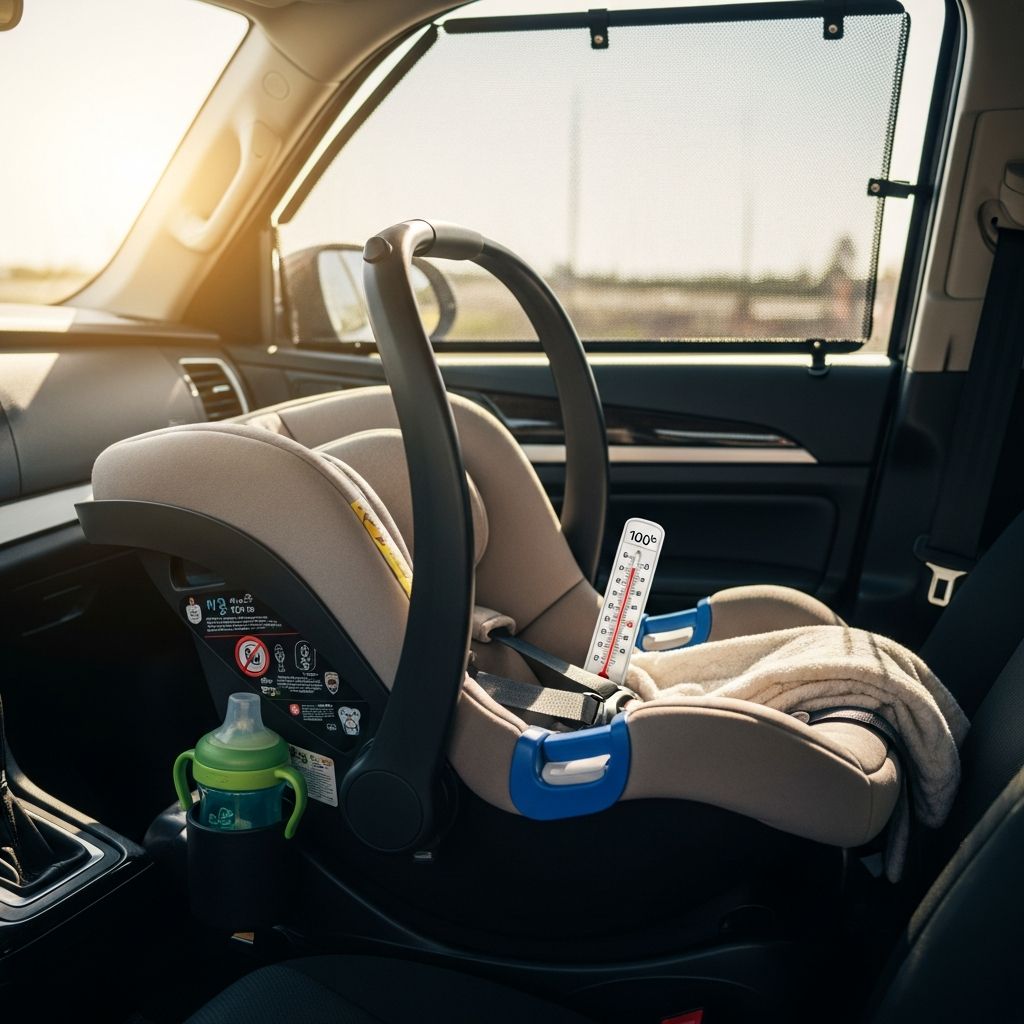
Understanding the Severity of Vehicular Heatstroke in Children
Vehicular heatstroke, clinically known as pediatric vehicular hyperthermia, represents one of the most preventable yet persistent threats to child safety in the United States. Since 1998, approximately 1,041 children have lost their lives to this entirely preventable condition. The tragic reality is that on average, a child dies from heatstroke every 9 days, with the summer months witnessing the most concentrated losses—roughly two children per week during peak season.
The statistics reveal a pattern of consistent loss that impacts families across socioeconomic and demographic boundaries. In 2024, 39 children died from vehicular heatstroke, while the worst years on record—2018 and 2019—each witnessed 53 deaths. What makes these tragedies particularly heartbreaking is their complete preventability. Every single one of these deaths could have been avoided through proper awareness and implementation of safety measures.
Who Is Most Vulnerable: Age and Risk Profiles
Young children carry significantly elevated risk levels when exposed to vehicular heat. More than half of all vehicular heatstroke deaths involve children under 2 years old, with the age range extending from infants as young as 5 days old up to 14 years. This demographic concentration reflects the vulnerability of very young children whose bodies lack the physiological capacity to regulate temperature effectively.
A child’s body temperature rises three to five times faster than an adult’s during heat exposure. This accelerated heat accumulation means that dangerous core body temperatures can develop within minutes rather than hours. The combination of size, metabolic rate, and underdeveloped thermoregulation systems creates a perfect storm of vulnerability in the youngest vehicle occupants.
How Vehicle Temperatures Escalate Rapidly
One of the most critical facts parents and caregivers must understand is the speed at which vehicle interiors heat up. A car can increase in temperature by 19 degrees Fahrenheit in just 10 minutes, even when the outside temperature is moderate. In extreme conditions, such as a 70-degree outside temperature, the interior of a parked vehicle can exceed 115 degrees.
Many caregivers mistakenly believe that cracking a window or parking in the shade provides meaningful temperature reduction. This is dangerously incorrect. Window openings do virtually nothing to regulate internal vehicle temperatures or prevent the greenhouse effect that traps heat inside the metal and glass enclosure. Similarly, shade provides only marginal and temporary relief as the sun shifts position throughout the day.
The Circumstances Behind These Preventable Tragedies
Understanding how these deaths occur is essential for prevention. Research shows distinct patterns in vehicular heatstroke cases that reveal where intervention strategies should focus:
Unintentional Forgetfulness
The leading cause of child hot car deaths involves caregivers unknowingly leaving children in vehicles, accounting for 55% of all cases. This circumstance typically occurs when a caregiver’s routine changes or when distraction disrupts normal patterns. One common scenario involves a parent who normally works from home but must drop a child at daycare, then becomes distracted and inadvertently drives to work instead.
Research reveals that approximately 47% of forgetfulness incidents occur when a caregiver intended to drop the child at daycare or preschool but simply forgot the child was in the vehicle. Thursdays and Fridays show the highest frequency of deaths, suggesting that end-of-week fatigue and schedule variations contribute significantly to incidents.
Unauthorized Vehicle Access
The second leading cause involves children gaining independent access to unattended vehicles, representing 25% of deaths. Young children, driven by curiosity or the desire to play, inadvertently trap themselves in locked vehicles. Once inside, they cannot operate power locks or windows designed with adult-sized mechanisms and strength requirements in mind. A child playing in a parked car may not recognize the danger until heat stress renders them unable to call for help or manipulate escape mechanisms.
Intentional But Dangerous Decisions
Approximately 15% of vehicular heatstroke deaths result from caregivers knowingly leaving children alone in parked vehicles, often for “just a few minutes” to run quick errands. These incidents represent the most preventable category, as they involve a conscious decision that contradicts child safety principles.
Geographic and Demographic Patterns
Vehicular heatstroke deaths occur in nearly every state, though certain regions experience disproportionately higher rates. The 10 states with the most cases include Alabama, Arizona, California, Florida, Georgia, Louisiana, North Carolina, Tennessee, Texas, and Virginia. These states share common characteristics including warm climates, high summer temperatures, and large populations, creating higher statistical probability for incidents.
The geographic distribution underscores that this is not a regional issue but a national public health concern affecting families in urban, suburban, and rural communities alike.
Recognition and Immediate Response
Understanding the physical signs of heat-related distress in children is crucial for emergency response. Children experiencing vehicular heatstroke may exhibit confusion, lack of responsiveness, unusual behavior, or visible signs of heat stress. Core body temperature measurements taken in some documented cases reveal the extreme internal temperatures these children reached before discovery.
If a child is discovered in a locked vehicle, immediate action is necessary. Parents and bystanders should attempt to cool the child through any available means while simultaneously contacting emergency services. Even if a child appears unresponsive, emergency medical professionals may still be able to revive them if rescue occurs quickly enough.
Prevention Strategy 1: Establishing Unbreakable Habits
The foundation of vehicular heatstroke prevention rests on creating automatic behavioral patterns that remove decision-making from moments of distraction. Rather than relying on memory in stressful situations, caregivers should establish non-negotiable routines:
- Always place the child’s belongings—such as a backpack or stuffed animal—in the front passenger seat or directly on the seat next to the driver as a visual reminder
- Establish a specific location for the child’s shoe or small item that remains visible until removal at the destination
- Use phone reminders or alarms set before driving begins
- Arrange with daycare providers to immediately notify parents if a child fails to arrive as expected
- Ask daycare staff to contact parents before pickup if a child seems unusually absent
Prevention Strategy 2: Vehicle Access Control
Preventing children from gaining unauthorized vehicle access requires multiple layers of protection:
- Always lock vehicle doors and trunks immediately after exiting, even in home driveways or residential parking areas
- Never leave vehicles running or with keys accessible in ignition switches
- Keep car keys in secure locations inaccessible to children
- Teach children that vehicles are not play areas and should never be entered without adult supervision
- If a child goes missing, immediately check all vehicles including trunks as part of the search procedure
- Explain the dangers of vehicular heat to older children in age-appropriate terms
Prevention Strategy 3: Never Leaving Children Unattended
The most straightforward prevention strategy is the most critical: children should never be left alone in parked vehicles under any circumstances. The temptation to leave a sleeping child while running a quick errand represents a significant risk factor. Even brief absences create windows of opportunity for tragedy.
If running an errand is unavoidable, children must accompany caregivers. The minor inconvenience of removing a sleeping child from a vehicle is infinitesimal compared to the irreversible consequence of leaving them unattended.
The Role of Technology and Vehicle Innovation
While behavioral changes form the primary defense, technological solutions offer additional layers of protection. Vehicle manufacturers have the capacity to implement systems that detect occupants in parked vehicles, alert caregivers through phone notifications, or activate cooling systems. These technologies could serve as backup systems when human memory fails or distraction occurs.
Organizations like Kids and Car Safety advocate for mandatory implementation of occupant detection technology in all vehicles, noting that the addition of technology to prevent these deaths is “long overdue.” Such systems could revolutionize prevention by removing reliance on caregiver memory and attention.
Understanding Legal Consequences
Parents and caregivers should understand the legal implications of vehicular heatstroke incidents. Research shows that authorities pursue criminal charges in 58% of cases. However, outcomes vary significantly, with approximately 31% resulting in convictions of varying degrees, while 50% of cases do not result in criminal conviction. Legal consequences range from negligence charges to more severe criminal indictments depending on circumstances and jurisdiction.
Creating Community Awareness and Support Systems
Broader prevention requires community engagement and awareness initiatives. Schools, daycare facilities, and community organizations should implement education programs about vehicular heatstroke risks. Parents benefit from conversations with other caregivers who understand the pressures and distractions that can lead to dangerous lapses in attention.
Establishing relationships with daycare providers that include automatic notification systems when children fail to arrive creates an additional safety net. This partnership approach recognizes that prevention requires coordination across multiple touchpoints in a child’s daily routine.
Frequently Asked Questions About Vehicular Heatstroke Prevention
Q: Can I leave my window cracked to keep the car cooler?
A: No. Cracked windows provide virtually no meaningful temperature reduction in parked vehicles. A car’s interior temperature rises rapidly regardless of window position, as the greenhouse effect continues to trap heat inside the vehicle.
Q: What temperature does a parked car reach?
A: A parked vehicle can reach temperatures exceeding 115 degrees Fahrenheit when the outside temperature is just 70 degrees. In extreme heat conditions, interior temperatures can become even more dangerous.
Q: How quickly do children overheat compared to adults?
A: Children’s body temperatures rise three to five times faster than adults’ during heat exposure, making them extremely vulnerable to rapid heat stress and potential heatstroke.
Q: Can this happen to any parent or caregiver?
A: Yes. Research shows that vehicular heatstroke incidents occur across all demographics and socioeconomic groups. Distraction, routine changes, and stress can affect even the most attentive caregivers, making this a universal risk requiring universal prevention strategies.
Q: What should I do if I see a child alone in a hot car?
A: Contact emergency services immediately. If the child appears to be in distress and emergency responders are delayed, attempt to shade the vehicle and cool the child through any available means. Never delay emergency notification to try alternative solutions.
Q: Are there vehicle technologies that can help prevent these deaths?
A: While current technology options exist, they are not yet mandatory across all vehicles. Occupant detection systems and automated cooling features could provide crucial backup protection and are increasingly advocated for by child safety organizations.
Taking Action to Protect Children
Vehicular heatstroke prevention ultimately depends on awareness, habit formation, and commitment to prioritizing child safety above convenience. Every parent and caregiver must internalize that this tragedy can happen to them, understand the mechanisms that lead to these incidents, and implement multiple layers of protective strategies. The loss of over 1,000 children to this entirely preventable condition represents a failure of collective vigilance—a failure that each caregiver can help correct through informed, intentional action.
References
- Children left in hot cars: Data and research on vehicular heatstroke — Journalists Resource, Harvard Kennedy School. 2024. https://journalistsresource.org/health/child-dead-left-hot-car-research/
- You Can Help Prevent Hot Car Deaths — National Highway Traffic Safety Administration (NHTSA), U.S. Department of Transportation. 2025. https://www.nhtsa.gov/child-safety/you-can-help-prevent-hot-car-deaths
- U.S. Child Hot Car Death Data Analysis — Kids and Car Safety, nonprofit organization. 2024. https://www.kidsandcars.org/document_center/download/hot-cars/Child-Hot-Car-Deaths-Data-Analysis.pdf
- Hot Car Deaths — National Safety Council, Injury Facts Database. 2025. https://injuryfacts.nsc.org/motor-vehicle/motor-vehicle-safety-issues/hotcars/
- Hot Cars — Safe Kids Worldwide, child safety advocacy organization. 2025. https://www.safekids.org/heatstroke
- Prevent Vehicular Heatstroke — South Carolina Department of Public Health and Environmental Control (DHEC), state health agency. 2024. https://dph.sc.gov/health-wellness/child-teen-health/prevent-vehicular-heatstroke
- No Heat Stroke — NoHeatStroke.org, pediatric vehicular heatstroke tracking database. 2024. https://www.noheatstroke.org