Back-to-preschool season can feel oddly high-stakes for something that mainly involves elastic waistbands and socks that actually match. The goal is simple: clothes that keep your toddler comfortable, independent, and ready for messy, wonderful days at school. The reality can feel like a confusing mix of sales, sizing charts, and trend-heavy outfits your child will refuse to wear. This guide walks you through how to plan, shop, and organize preschool clothes so you get what your child needs without buying three times as much as they will ever use.
What Toddlers Really Need From Preschool Clothes
Preschool is basically a full-time job in running, climbing, spilling, and occasionally sitting in wet paint. Clothes have to keep up. When choosing pieces, think less about cute photos and more about how your child will move, eat, nap, and use the bathroom in them.
- Comfort over everything: Soft, breathable fabrics and non-itchy seams keep your toddler focused on play instead of tugging at tags.
- Easy on, easy off: Simple closures and elastic waists help with potty training and encourage independence.
- Durability for real life: Clothes should survive playgrounds, art projects, and frequent washing.
How Many Clothes Do You Actually Need?
One of the biggest questions parents face is how much is enough. The right number of items depends on how often you do laundry, your local climate, and whether your preschool spends lots of time outdoors. The table below gives a starting point for a typical week of preschool with laundry done once a week.
| Category | Recommended Quantity | Notes |
|---|---|---|
| Short-sleeve tops | 7–9 | One per preschool day plus a couple of backups for spills and weekend wear. |
| Long-sleeve tops | 4–6 | Adjust depending on season; layer under hoodies or sweaters. |
| Everyday pants/leggings | 5–7 | Include a mix of lighter and heavier fabrics for changing weather. |
| Shorts/skirts | 3–5 | Skirts are easiest when paired with bike shorts or leggings underneath. |
| Dresses/rompers | 2–4 | Choose soft, play-friendly styles, not stiff or fussy party outfits. |
| Sweatshirts/cardigans | 2–3 | Layering pieces to leave at school or keep in the backpack. |
| Jacket/outerwear | 1–2 | One everyday option, plus a warmer coat if your climate requires it. |
| Pajamas | 3–5 | More if your child naps at preschool in pajamas or special nap clothes. |
| Socks | 7–10 pairs | Socks vanish, so extras are never a bad idea. |
| Underwear | 10–12 pairs | Especially important during early potty training stages. |
| Sturdy everyday shoes | 1–2 pairs | Closed-toe, grippy soles, and easy fastenings work best. |
Think of this as a flexible framework, not a shopping commandment. If you do laundry more often, you can buy fewer pieces; if your child is extra spill-prone, you may want a few more shirts and leggings as backup.
Building a Preschool Capsule Wardrobe
A capsule wardrobe is a small collection of clothes that all mix and match easily. For toddlers, this can dramatically simplify mornings, since almost any top can pair with almost any bottom. It also helps you stay focused while shopping instead of clicking on every sparkly thing that pops up.
- Pick a simple color palette: Choose 2–3 main colors and 1–2 neutrals so pieces naturally coordinate.
- Balance basics and “fun” items: Start with plain tees and leggings, then add a few printed or character pieces your child loves.
- Repeat shapes that work: If one style of jogger fits well and moves with your child, buy it in multiple colors instead of experimenting endlessly.
Comfort and Fabric Choices That Make a Difference
Toddlers are surprisingly opinionated about how clothes feel. Fabrics and construction matter more at this age than logos or slogans. It is worth slowing down to check how soft something feels, how much it stretches, and whether it will still feel good at 3 p.m. after hours of play.
- Soft, breathable fabrics: Cotton and cotton-blend knits are usually kinder on sensitive skin than stiff synthetics.
- Stretch is your friend: A little spandex in leggings or waistbands helps clothes move with active bodies.
- Check seams and tags: Look for flat seams and tag-less labels or easily removable tags to avoid scratchy irritation.
Design Features That Help With Independence
Preschool is a wonderful time to encourage your child to dress and undress more independently. Clothes that are easy to manage help teachers and caregivers, reduce bathroom stress, and give your toddler a real sense of accomplishment. A few thoughtful design choices can make a big difference.
- Elastic waistbands: Pull-on pants, shorts, and skirts are ideal for children who are potty training or still need help in the bathroom.
- Minimal buttons and snaps: Reserve tricky closures for occasions, not everyday preschool outfits.
- Simple, wide necklines: Tops that slide easily over the head reduce frustration and tugging.
- Kid-friendly shoes: Look for Velcro straps, elastic laces, or slip-on styles instead of laces your child cannot yet manage.
Dressing for Play, Weather, and Mess
Preschool days often include outdoor play, sensory bins, art projects, and snacks that never quite stay on the plate. Planning for mess and weather changes makes life easier for everyone. Think in layers and expect the unexpected.
- Layering for temperature swings: A lightweight tee, a comfy mid-layer like a hoodie, and a simple jacket cover most school day temperatures.
- Clothes you can “sacrifice”: Keep a few outfits specifically for paint days, gardening, or mud kitchens.
- Weather-ready extras: Consider a packable raincoat, waterproof boots, and an extra pair of socks if your preschool spends time outside in all weather.
Budgeting and Smart Spending Strategies
It is easy to spend more than planned on tiny clothes, especially when sales and limited-time collections are involved. A little structure goes a long way in keeping your spending in line with your real needs. Start with a realistic total budget, then break it down.
- Decide where to splurge: Everyday shoes, outerwear, and favorite jeans or leggings usually deserve better quality.
- Save on fast-grow items: Trendy pieces or items your child may outgrow in a few months can come from more budget-friendly stores or secondhand sources.
- Watch for multipack basics: Undershirts, socks, underwear, and plain tees often cost less in multi-packs and will get heavy use.
Example Budget Breakdown
Here is a sample way to divide a modest preschool clothing budget to cover the essentials without sacrificing comfort and durability.
| Category | Approx. Share of Budget | Reason |
|---|---|---|
| Shoes | 25–30% | Good shoes affect comfort and safety every single day. |
| Pants/leggings/shorts | 20–25% | These take a beating on playgrounds and need to hold up to frequent washing. |
| Tops | 20–25% | Buy a solid base of basics, then add a few fun prints. |
| Outerwear and layers | 15–20% | Coats, hoodies, and cardigans extend the use of lighter clothing. |
| Underwear, socks, accessories | 10–15% | Small items but essential, especially during potty training. |
Balancing Your Taste With Your Toddler’s Opinions
Toddlers are rarely shy about what they want to wear. Some insist on head-to-toe one color, others are devoted to a single character, and some do not care at all. Involving your child in clothing choices helps reduce morning battles while still keeping outfits preschool-appropriate.
- Offer controlled choices: Instead of asking, “What do you want to wear?” try, “Do you want the blue shirt or the striped one?”
- Mix character pieces with neutrals: A favorite character tee pairs well with simple joggers to keep the outfit from feeling overwhelming.
- Respect sensory preferences: If your child hates stiff collars or certain fabrics, skip them. There is no benefit in a cute outfit your toddler refuses to wear.
Online vs. In-Store Shopping: Pros and Cons
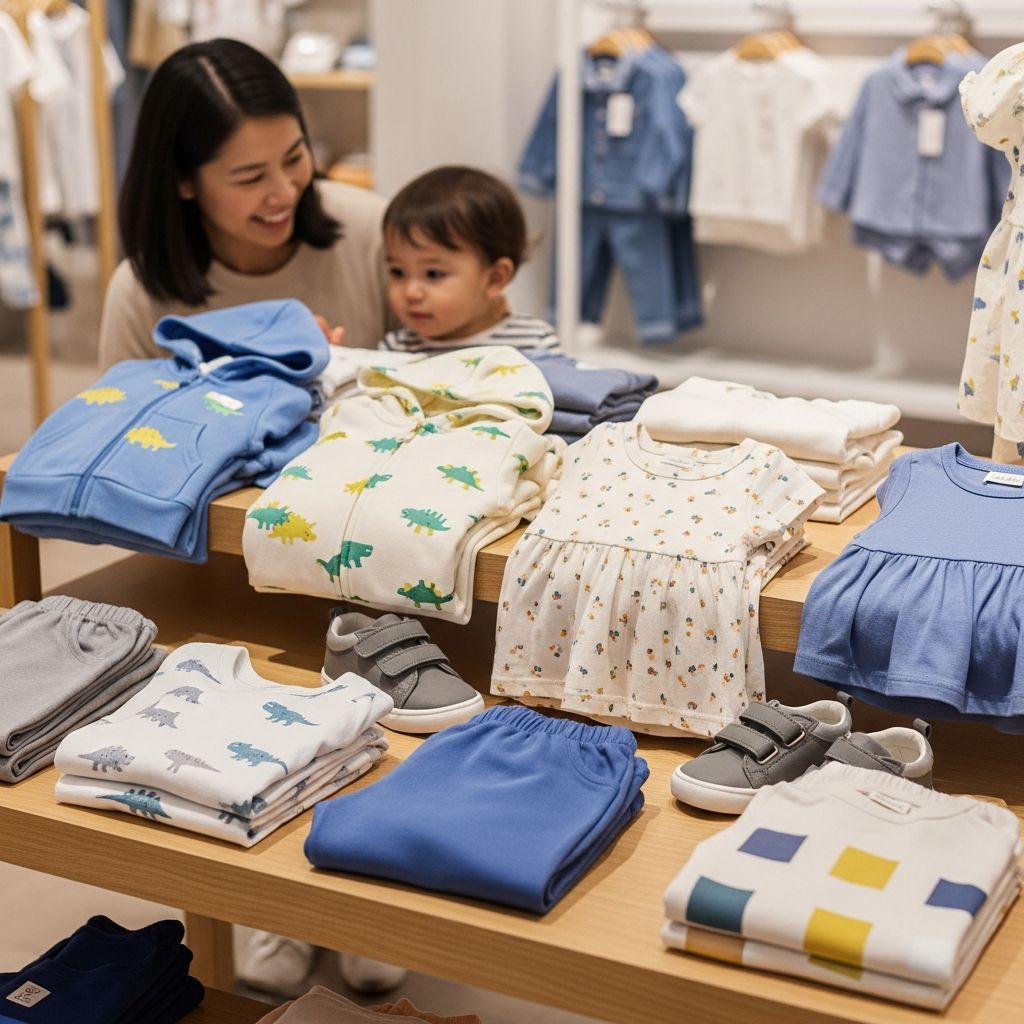
Many parents build preschool wardrobes from a mix of in-store and online shopping. Each approach has strengths and frustrations, and using both strategically lets you get the best of each world. The key is to decide what matters most to you: convenience, price, or the chance to touch fabrics and see colors in person.
| Approach | Advantages | Potential Drawbacks |
|---|---|---|
| Online shopping | Easy price comparison, wider size and color availability, shop during nap time. | Cannot feel fabrics, sizes can vary, returns may take extra time. |
| In-store shopping | Touch and see items, check sizing on the spot, fewer surprises. | Limited stock, more time-consuming, harder with a restless toddler. |
For many families, it works well to choose reliable brands or fits online for basics, then visit a store occasionally for shoes, coats, or to test a new style before committing.
Essential Backup Clothes for the Classroom
Most preschools request an extra set of clothes to keep on site in case of spills, accidents, or surprise water play. Think of this backup set as a spare everyday outfit, not a random pile of old clothes you do not care about. Your child should feel just as comfortable in backups as in their morning outfit.
- Pack a full outfit: Include top, bottom, underwear, and socks; consider an extra pair of leggings or shorts if your preschool uses lots of water or sensory activities.
- Choose season-appropriate pieces: Swap out backups every few months so they match the current weather.
- Label everything: Add your child’s name or initials to clothing tags to reduce mix-ups.
Organizing the Wardrobe for Easier Mornings
Even the best wardrobe will not help much if it is buried in an overflowing drawer. A simple organizing system makes getting dressed faster and helps toddlers learn to choose clothes themselves. The goal is not a picture-perfect closet; it is a setup that works on hectic weekdays.
- Create “grab-and-go” sections: Group preschool-ready clothes together so you are not digging through outgrown or off-season items every morning.
- Use low-reach storage: Keep a few everyday options in a lower drawer or bin where your child can access them.
- Pre-plan outfits: If mornings are especially chaotic, pair tops and bottoms on hangers or in small bins labeled by day.
Care, Laundry, and Making Clothes Last
Preschool clothes cycle through the laundry constantly, so care instructions actually matter. Choosing pieces that wash well and survive the dryer helps your budget and reduces waste. A few simple habits keep things in better shape for longer or for passing down to younger siblings or friends.
- Check labels before buying: If something requires delicate washing or air-drying and you know you will not do that, skip it for everyday preschool wear.
- Pre-treat tough stains: Keep a stain remover near the hamper so you can quickly treat paint, grass, or food marks.
- Rotate favorites: If your child loves one hoodie above all else, consider buying a second similar item to reduce wear and laundry pressure.
Frequently Asked Questions About Preschool Clothes Shopping
How far ahead should I buy sizes?
Buying one size up can work for jackets, roomy tops, and some pants with adjustable waists, but it is risky for shoes and more fitted pieces. Toddlers grow unpredictably, and clothing that is too big can be uncomfortable or unsafe. For most everyday items, aim to buy the size that currently fits with a little room to grow, not several sizes ahead.
Are jeans practical for preschool?
Soft, stretchy jeans or jeggings can absolutely work for preschool, especially if they have elastic waists or plenty of give in the fabric. Very stiff denim or styles with tight waistbands, lots of hardware, or tricky closures are less ideal for bathroom independence and active play. When in doubt, prioritize flexible fabrics over the look of traditional denim.
Do I really need “nice” clothes for preschool?
Most days, comfortable play clothes are more than enough for preschool life. It can still be helpful to have one or two slightly dressier but still practical outfits on hand for school pictures, special events, or family gatherings right after pickup. Even then, try to keep the focus on comfort and easy movement rather than delicate fabrics that cause stress.
How can I avoid power struggles over outfits?
Many clothing battles can be reduced by letting your toddler choose from a curated selection of parent-approved options. Rotate only preschool-appropriate, weather-friendly clothes into the drawer your child can reach, and keep off-season or special-occasion pieces in a separate area. When all choices are acceptable to you, your child gets real control without turning mornings into negotiations.
Is it worth buying “eco-friendly” or organic clothes for preschool?
Organic and eco-friendly clothes can be gentler on sensitive skin and kinder to the environment, but they often cost more. If your budget allows, consider using these options for items worn closest to the skin, like pajamas and underwear, while mixing in more affordable pieces for outer layers. It does not have to be all or nothing; even a few well-chosen sustainable items can be a positive step.
Making Back-to-Preschool Shopping Work for Your Family
Back-to-preschool clothes shopping does not need to be a complete wardrobe overhaul every year. Focus on what your child will wear and enjoy in real life: soft, practical pieces that support independence, hold up to play, and fit your daily routines. With a simple plan, a realistic budget, and a little flexibility, you can create a preschool wardrobe that works hard behind the scenes so your toddler can focus on learning, playing, and growing.