Practicing yoga during late pregnancy can significantly enhance your body’s readiness for labor by promoting flexibility, strength, and relaxation in key areas like the pelvis and pelvic floor. These movements help create space for the baby to descend, reduce tension, and manage contractions effectively.
Why Incorporate Yoga into Labor Preparation
Yoga offers a holistic approach to birth prep, combining breathwork, gentle stretching, and strengthening exercises tailored to pregnancy. Research and expert prenatal instructors emphasize that regular practice improves pelvic mobility, which is crucial for the baby’s passage through the birth canal. Poses focusing on external and internal hip rotations address different pelvic segments, preventing labor stalls often linked to restricted movement. Additionally, these practices foster diaphragmatic breathing, which calms the nervous system and aids in pain relief during active labor.
Start incorporating these 20-30 minutes daily in your third trimester, always listening to your body and consulting your healthcare provider. Modifications with props like blocks, bolsters, and blankets ensure safety as your center of gravity shifts.
Building Pelvic Floor Resilience
A strong yet supple pelvic floor is essential for pushing effectively and recovering postpartum. Begin with breath-focused practices to lengthen these muscles before strengthening them.
Diaphragmatic Side Breathing
Sit comfortably or lie in a supported reclined position. Inhale deeply, directing breath to expand the side ribs like unfolding wings, allowing the diaphragm and pelvic floor to gently stretch. Exhale fully, feeling a subtle lift in the pelvic floor. Repeat for 8-10 breaths. This synchronizes breath with muscle release, vital for labor.
Supported Bound Angle Pose
Lie on your back with knees bent outward, soles of feet together, placing blocks or pillows under outer thighs for support. Relax hips and breathe into the pelvic basin for 2-3 minutes. This opens inner thighs and encourages pelvic floor lengthening without strain.
Strengthening Hip Stabilizers
Gluteus medius and outer hip muscles stabilize the pelvis, supporting efficient contractions. Side-lying exercises activate these without compressing the abdomen.
- Clamshell Lifts: Lie on your side, knees bent at 45 degrees, heels together. Inhale to lift top knee while keeping pelvis stable; exhale to lower. 30 reps per side.
- Straight Leg Raises: Same position; lift top leg straight up to hip height on inhale, lower on exhale. Maintain pelvic neutrality. 30 reps.
- Rotation Lifts: Lift top leg high, then rotate knee inward to tap against bottom knee on inhale. 30 reps for hip socket mobility.
Standing Poses for Endurance
These warrior-inspired poses build stamina in outer hips and thighs, mimicking labor’s demands.
Warrior II Variation
From a wide stance, front knee bent over ankle, back leg straight. Arms extended parallel to floor, gaze over front hand. Engage outer hip muscles by hugging thigh inward. Hold 10 breaths per side. Press back thigh actively to enhance gluteus medius work.
Triangle Pose Adaptation
Straighten front leg, reach forward, place hand on shin or block. Maintain outer hip wrap and back thigh press. 10 breaths. This sustains pelvic stability.
Lifted Leg Balance
From triangle, place hand on hip, lift back leg to hip height with toes pointing down. Hug standing leg’s outer hip inward. 10 breaths per side for unilateral strength.
Opening the Pelvis for Descent
Asymmetric and rotational poses target pelvic inlets, midplanes, and outlets asymmetrically, accommodating the baby’s rotation during birth.
| Pelvic Area | Pose | Benefits | Modifications |
|---|---|---|---|
| Top Pelvis (Inlet) | Malasana Squat | External femur rotation opens upper pelvis | Block under hips, rolled mat under heels |
| Upper Midpelvis | Side Lunge (Skandasana) | One-sided external rotation creates asymmetry | Hand on block for support |
| Lower Midpelvis | Revolved Half Lunge | Internal rotation resolves stalls | Hands on blocks, belly toward thigh |
| Bottom Pelvis (Outlet) | Hero Pose | Internal femur rotation widens outlet | Block between feet or under seat |
Side Lunge Practice
Step wide, bend one knee deeply while straightening the other. Sink hips low, hands to floor or blocks inside bent knee. Breathe deeply, rocking gently. Switch sides. Releases inner thighs and midpelvis.
Child’s Pose with Widening
Kneel wide, fold forward over bolster, arms extended. Focus on sit bones spreading and tailbone softening. Enhances diaphragmatic breath and pelvic floor stretch.
Dynamic Movements for Active Labor
Mobility keeps labor progressing; incorporate these fluid sequences.
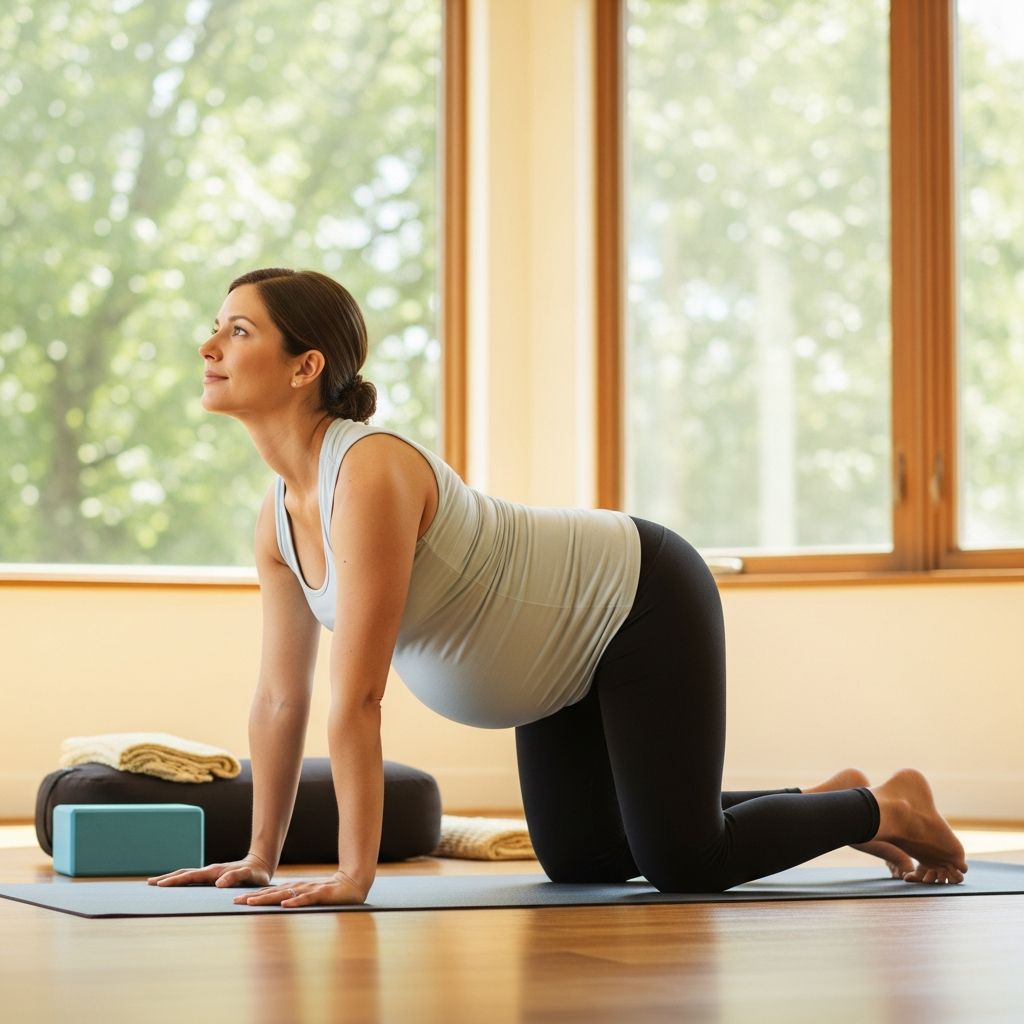
- Rocking Cat-Cow: On hands and knees, alternate arching and rounding spine with pelvic tilts. 1-2 minutes.
- Rocking Squats: Low squat, hands on thighs, circle hips or shift side to side. Builds endurance.
- 90/90 Transition: Sit with front leg bent 90 degrees forward, back leg 90 behind; switch dynamically for hip opening.
Breath and Relaxation Integration
Pair poses with ujjayi breath: soft throat constriction on exhale for calming. Visualize pelvis expanding with each inhale. This reduces fear-tension-pain cycle.
Frequently Asked Questions
What yoga poses should I avoid during late pregnancy?
Avoid deep twists, prone positions, full inversions, and over-stretched backbends due to abdominal compression, balance risks, and ligament laxity from relaxin.
Can these poses induce labor?
While not guaranteed, poses like squats and forward folds may encourage baby’s descent in full-term pregnancies by opening the pelvis.
How often should I practice?
3-5 times weekly, 20-30 minutes. Stop if dizzy, painful, or with medical advice against.
Are props necessary?
Yes for accessibility; blocks elevate hips, bolsters support reclines, preventing strain.
Is yoga safe after 36 weeks?
Yes, with modifications focusing on opening rather than intensity. Prioritize comfort.
Post-Labor Recovery Tips
Continue gentle pelvic floor work postpartum: kegels combined with lengthening poses like supported bridge to rebuild strength safely.
References
- A Pelvic Floor-Focused Yoga Sequence for an Easier Labor & Delivery — Yoga Journal. 2023-05-15. https://www.yogajournal.com/lifestyle/health/womens-health/prenatal-yoga-pelvic-floor-sequence-easier-labor-delivery/
- Prenatal Yoga: Safe Poses, Benefits, and Trimester Guide — My Yoga Teacher. 2024-08-20. https://myyogateacher.com/articles/prenatal-yoga-guide
- 7 Moves To Prepare Your Pelvis For Birth — Prenatal Yoga Center. 2023-11-10. https://prenatalyogacenter.com/7-moves-to-prepare-your-pelvis-for-birth/
- 6 Yoga Poses to Open the Pelvis for Birth — MamasteFit. 2024-02-28. https://mamastefit.com/6-yoga-poses-to-open-the-pelvis-for-birth/
- 5 exercises and techniques to train for childbirth — UT Southwestern Medical Center. 2023-06-12. https://utswmed.org/medblog/prepare-body-labor-delivery/