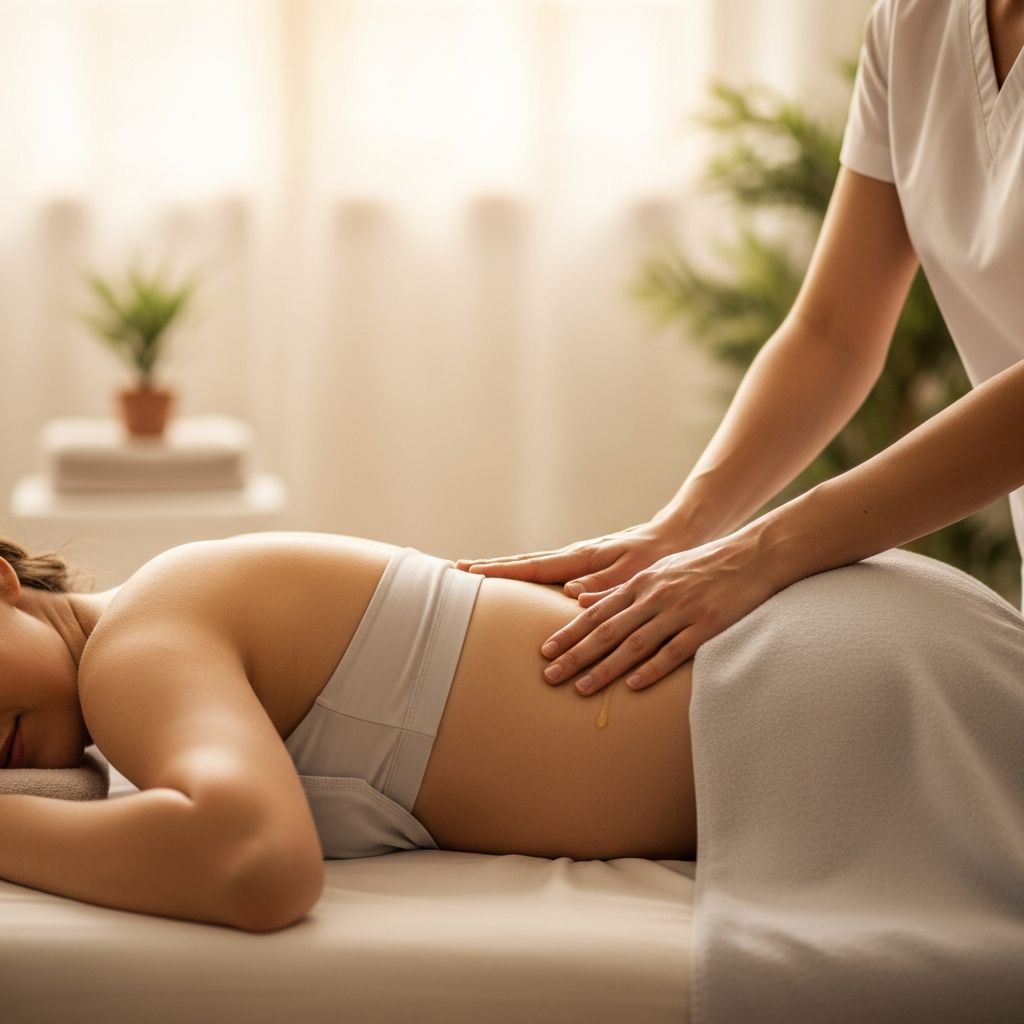
Thoughtful touch can make pregnancy more comfortable, easing physical aches while supporting emotional calm. When done safely, prenatal massage can reduce back and leg pain, lower stress, and even improve some labor outcomes, especially when part of ongoing prenatal care.
This guide offers clear, simple techniques that a partner can use at home, along with safety rules and expert-backed information so you can enjoy massage with confidence.
Why Massage Helps During Pregnancy
As the body changes in pregnancy, joints, muscles, circulation, and hormone levels all shift. Massage gently supports these systems.
Evidence-Based Benefits
- Less pain in back and legs: Studies show regular pregnancy massage reduces lower back and leg pain, areas that work harder as the abdomen grows.
- Improved mood and lower stress: Massage can reduce anxiety and depression scores and lower the stress hormone cortisol.
- Better sleep: Relaxation from massage supports deeper, more restorative sleep, which often becomes harder later in pregnancy.
- Possible better pregnancy outcomes: Research has linked prenatal massage with lower rates of prematurity and fewer complications in some groups of pregnant people.
Emotional and Bonding Effects
- Feeling cared for: Regular, nurturing touch can reduce feelings of isolation and overwhelm in pregnancy.
- Partner connection: A simple massage routine gives partners an active, supportive role and encourages communication.
- Awareness of baby: As tension eases, many people report feeling more tuned in to the baby’s movements and to their changing body.
Safety First: When Prenatal Massage Is (and Isn’t) Appropriate
Before starting any massage routine, it is important to talk to a health care provider. In uncomplicated pregnancies, gentle massage is generally considered safe when proper positioning and pressure are used.
Situations Requiring Medical Approval
Check with your midwife or obstetric provider before massage if you have:
- High-risk pregnancy or history of preterm labor
- Preeclampsia or uncontrolled high blood pressure
- Placenta previa or vaginal bleeding
- Severe swelling, especially in one leg, or suspected blood clots
- Unusual pain, shortness of breath, or chest pain
If any new concerning symptoms appear during massage (dizziness, chest pain, strong abdominal cramps, bleeding, sudden swelling, or decreased fetal movement), stop immediately and seek medical advice.
Areas and Techniques to Avoid
- Deep pressure on the abdomen: The belly should only receive light, superficial touch, and only if it feels comfortable to the pregnant person.
- Strong pressure on inner thighs: These areas house large blood vessels; overly deep pressure may be unsafe in pregnancy.
- Sharp or bouncing movements: Avoid jarring manipulations or intense stretching.
- Overheating: Skip hot tubs, saunas, and very hot packs, which can raise body temperature too much in pregnancy.
Comfortable Positions for Prenatal Massage
Positioning is one of the most important parts of safe prenatal massage. After the first trimester, lying flat on the back for long periods can compress major blood vessels; side-lying or upright positions are safer.
| Position | Best Trimester(s) | What It’s Good For |
|---|---|---|
| Side-lying with pillows | All, especially 2nd & 3rd | Back, hips, shoulders, neck |
| Semi-reclined (propped up) | All | Feet, hands, scalp, neck |
| Seated leaning on table or pillows | All | Upper back, shoulders, arms |
How to Set Up the Space
- Use several firm pillows to support the head, between the knees, and under the belly while side-lying.
- Keep the room warm, with dim lighting if that feels relaxing.
- Use unscented or lightly scented oil or lotion to avoid nausea or headaches from strong smells.
Partner Massage Basics: Communication and Pressure
The most important massage tool is clear, ongoing communication. Encourage the pregnant person to give feedback at any time and to stop the massage if something does not feel right.
Agree on Signals
- Choose a word or phrase (like “lighter,” “stop,” or “move on”) to adjust pressure and areas.
- Check in often: ask, “Is this pressure okay?” or “Do you want more or less here?”
Understanding Pressure Levels
- Light touch: Surface strokes that move the skin gently; ideal for belly, ankles, and when someone feels very sensitive.
- Moderate pressure: Enough to feel muscle contact without pain; suitable for shoulders, upper back, and outer hips.
- Avoid intense deep tissue work during pregnancy unless done by a trained prenatal therapist.
Step-by-Step Prenatal Massage Techniques
The following techniques are designed for home use between partners. Move slowly, breathe calmly, and keep one hand in contact with the body whenever possible so the touch feels predictable and secure.
1. Back and Shoulder Relaxer (Side-Lying)
Goal: Ease upper back and shoulder tightness from postural changes.
- Have the pregnant person lie on their side with pillows under the head, between the knees, and under the upper arm.
- Stand or kneel behind their back. Warm a small amount of oil or lotion between your hands.
- Place both hands on the upper back near the shoulders. Glide your hands in slow, broad strokes from the shoulders down toward the mid-back, then slide out and return to the starting point.
- Use your palms or the soft pads of your fingers to make small circles beside the spine (not directly on it), staying in the muscle tissue.
- Spend extra time where you feel tight bands, always asking whether the pressure feels good.
2. Lower Back and Hip Soother
Goal: Support the lower back and hip region, which often works harder late in pregnancy.
- Maintain the side-lying position with a pillow under the growing belly for gentle support.
- Place one hand on the hip bone and one hand on the lower back.
- Use slow, horizontal strokes across the lower back muscles, moving from the spine outward toward the side of the body.
- With the heel of your hand, make gentle circles over the broad surface of the buttock and outer hip, avoiding deep pressure near the sacrum or tailbone.
- Finish this section with long, sweeping strokes from the mid-back down across the hip, as if smoothing the muscles.
3. Calf and Foot Relief
Goal: Decrease leg tension and mild swelling, and encourage relaxation.
Important: Avoid deep pressure on the inner calf or behind the knee where important blood vessels are located. Keep the work gentle and superficial.
- Have the pregnant person lie on their side or sit semi-reclined with legs supported by pillows.
- Apply a small amount of lotion to your hands. Begin with light strokes from the ankle upward toward the knee, following the direction of blood flow.
- Use your fingertips to make soft, slow circles on the outer calf muscle, avoiding any areas of heat, redness, or pain.
- Move to the top of the foot. With your thumbs, gently glide from the base of the toes toward the ankle.
- Finish by lightly squeezing and releasing each toe if this feels pleasant, then use broad, soothing strokes over the entire foot.
4. Neck and Scalp Unwind
Goal: Reduce headache and neck tension, which are common in pregnancy.
- Have the pregnant person sit upright in a supportive chair or recline with the head elevated.
- Place your hands on the tops of the shoulders. Gently squeeze the muscles between your fingers and palms, then release.
- Use your fingertips to trace small circles along the sides of the neck, from just below the skull down toward the tops of the shoulders, staying off the front of the neck.
- For the scalp, spread your fingers and slide them through the hair, using slow, firm movements as if you were shampooing.
- End by placing your full hand gently over the forehead for several calm breaths.
5. Gentle Belly Connection (Optional)
Goal: Encourage mindful connection with the baby; this is not for pain relief and is optional.
Only use this touch if the pregnant person enjoys belly contact and has medical clearance for a typical physical routine.
- With the pregnant person semi-reclined and fully supported, warm your hands and place them lightly on either side of the abdomen.
- Keep the touch soft and stationary, or make very slow, broad circles following the natural curve of the belly.
- Invite slow breathing—perhaps inhaling for a count of four and exhaling for a count of six.
- If baby moves, pause and simply rest your hands, allowing space to notice the sensations.
When to Choose a Professional Prenatal Massage Therapist
Home massage is helpful, but there are times when a licensed prenatal massage therapist can offer additional support.
Reasons to Seek a Professional
- Persistent or severe back, pelvic, or sciatic pain
- History of injury or surgery that complicates touch in certain areas
- High stress levels or prenatal depression, as massage may help reduce symptoms when paired with medical care.
- Need for regular, structured sessions as part of a pain or stress management plan
How to Find a Qualified Therapist
- Ask whether they have specialized training or certification in prenatal massage.
- Confirm they use appropriate side-lying or specially designed support cushions rather than having you lie flat on your back after the first trimester.
- Share your medical history and any pregnancy complications with both your health care provider and the therapist.
Creating a Relaxing Prenatal Massage Ritual at Home
Short, regular sessions often support well-being better than rare, long ones.
- Keep it simple: Even 10–15 minutes focused on shoulders, back, or feet can be enough.
- Be consistent: Choose one or two evenings each week for massage, making it part of your routine.
- Combine with relaxation techniques: Soft music, slow breathing, and dim lights can deepen the calming effect.
- Respect limits: Some days the pregnant person may be too tired or uncomfortable; listen and adapt.
Frequently Asked Questions (FAQs)
Q1: Is prenatal massage safe in the first trimester?
In many uncomplicated pregnancies, gentle massage that avoids deep pressure and overheating is considered acceptable, but some providers prefer to limit massage during the very early weeks. Discuss your specific situation with your midwife or doctor before beginning any routine.
Q2: How often can I get a prenatal massage?
Research studies have safely used massage one to two times per week over several weeks to reduce stress, pain, and depression. Your ideal schedule depends on comfort, budget, and medical guidance; many people find benefit from weekly or biweekly sessions.
Q3: Can massage bring on labor?
Gentle, general massage used for relaxation has not been shown to trigger labor in otherwise healthy pregnancies. However, some traditional pressure points are avoided in professional settings out of caution. Always consult your provider if you are at risk for preterm labor or have any concerns.
Q4: What type of oil or lotion is best?
Choose a simple, hypoallergenic product without strong fragrance to reduce the chance of skin reactions or nausea. If you have sensitive skin or conditions like eczema, ask your health care provider about suitable options.
Q5: Should I avoid massage if I have swelling in my legs?
Mild, symmetrical swelling of the feet and ankles is common in pregnancy, and gentle upward strokes can sometimes help reduce discomfort. However, sudden or severe swelling, especially in one leg, or swelling accompanied by pain or redness, can signal a serious condition and needs immediate medical evaluation before any massage.
References
- Pregnancy and labor massage — Field T. et al., Journal of Psychosomatic Obstetrics & Gynecology / National Center for Biotechnology Information. 2010-06-01. https://pmc.ncbi.nlm.nih.gov/articles/PMC2870995/
- Pregnancy Made More Comfortable With Prenatal Massage — Intermountain Healthcare. 2017-05-19 (approx.). https://intermountainhealthcare.org/blogs/pregnancy-made-more-comfortable-with-prenatal-massage
- The Benefits of Prenatal Massage for Expecting Mothers — Rocky Mountain Cancer Centers. 2024-06-28. https://rmccares.org/2024/06/28/the-benefits-of-prenatal-massage-for-expecting-mothers/
- Prenatal Massage Benefits: Therapist Guide & Techniques — MASSAGE Magazine. 2018-01-15 (approx.). https://www.massagemag.com/benefits-of-prenatal-massage-3204/
- Prenatal Massage: Benefits and Safety Tips — The Bump. 2020-03-10 (approx.). https://www.thebump.com/a/prenatal-massage-safety
- Prenatal Massage Therapy — American Pregnancy Association. 2022-04-01 (approx.). https://americanpregnancy.org/healthy-pregnancy/is-it-safe/prenatal-massage/
- Benefits of Massage During Pregnancy — American Massage Therapy Association. 2021-05-01 (approx.). https://www.amtamassage.org/resources/massage-and-health/medical-treatments/pregnancy-and-massage/