Pregnancy brings big changes to your body, and your skin is often one of the first places you notice it. Hormones can trigger acne, melasma, dryness, and sensitivity, leaving many expecting parents wondering which products are still safe to use. This guide explains how to care for your skin during pregnancy while prioritizing both safety and comfort.
Why Pregnancy Changes Your Skin
Shifting hormone levels can increase oil production, alter pigmentation, and affect how your skin retains moisture. You might notice new breakouts, patchy dark spots, itchiness, or suddenly reactive skin. While these changes are usually temporary, the products you choose can make a big difference in how comfortable you feel.
The goal is not perfection, but balance: supporting your skin’s barrier, avoiding potentially risky ingredients, and simplifying your routine so it is easy to maintain when you are tired or not feeling well.
Core Principles of Pregnancy-Safe Skincare
- Keep it gentle: Choose fragrance-free, non-irritating formulas designed for sensitive skin.
- Prioritize the basics: A mild cleanser, a hydrating moisturizer, and a broad-spectrum mineral sunscreen form the backbone of a safe routine.
- Check labels for key actives: Pay attention to ingredient lists rather than marketing terms like “natural” or “clean.”
- When unsure, ask: Bring your product list or clear photos of labels to your prenatal appointment or dermatologist visit.
Ingredients Generally Recommended to Avoid
Many topical products never reach the bloodstream in significant amounts, but a few categories raise enough concern that most experts advise avoiding them during pregnancy. Always follow your own clinician’s guidance if it differs from general advice.
| Ingredient group | Where it’s found | Why it’s often avoided | Pregnancy-friendly swap |
|---|---|---|---|
| Retinoids (retinol, tretinoin, adapalene, tazarotene) | Anti-aging creams, acne prescriptions, night serums | Vitamin A derivatives with known links to birth defects when taken orally; topical use is generally discouraged during pregnancy. | Peptides, bakuchiol (with medical advice), niacinamide, gentle exfoliating acids. |
| High-dose salicylic acid | Strong acne spot treatments, peels, some body washes | At high concentrations or in oral form, this beta hydroxy acid raises safety questions, so strong peels and large-area treatments are typically avoided. | Mild salicylic acid cleansers (if approved by your clinician), sulfur, azelaic acid, short-contact benzoyl peroxide if cleared with a doctor. |
| Hydroquinone | Skin-lightening creams for dark spots | Absorbed through the skin in higher amounts than many other actives; often placed on hold until after pregnancy and breastfeeding. | Vitamin C, niacinamide, azelaic acid, sun protection. |
| Strong chemical sunscreens | Some facial sunscreens and everyday moisturizers with SPF | Certain UV filters raise irritation or safety concerns, leading many providers to recommend mineral formulas instead. | Zinc oxide and titanium dioxide–based mineral sunscreens. |
| Certain essential oils | “Natural” skincare, aromatherapy blends, body oils | Some essential oils can irritate the skin or pose theoretical risks at high doses; caution is encouraged, especially with undiluted oils. | Unscented products, or products scented with small amounts of pregnancy-approved botanicals recommended by your provider. |
Important: Do not discontinue any prescription medication without talking to the prescriber who manages your treatment. Adjustments for pregnancy should always be made under professional supervision.
Ingredients Commonly Considered Pregnancy-Friendly
Many effective skincare ingredients remain appropriate for use while you are expecting, especially when applied topically and in cosmetic-strength doses. When in doubt, introduce one new product at a time and monitor how your skin responds.
- Hyaluronic acid: A powerful humectant that attracts water to the skin, helping relieve tightness and dryness.
- Glycerin and squalane: Barrier-supporting moisturizers that help maintain softness without heavy occlusion.
- Niacinamide: A form of vitamin B3 that can calm redness, support the skin barrier, and help minimize the look of dark spots.
- Vitamin C (ascorbic acid or derivatives): An antioxidant that can brighten dullness and support collagen; often used in the morning under sunscreen.
- Ceramides: Lipids that strengthen the skin barrier, reduce moisture loss, and soothe irritation-prone complexions.
- Gentle alpha hydroxy acids (like lactic acid): In low concentrations, these can help with texture and dullness; patch testing is recommended if your skin is sensitive.
A Simple Pregnancy-Safe Skincare Routine
You do not need an elaborate routine to support your skin during pregnancy. In fact, a streamlined approach can be easier to maintain and more comfortable for sensitive or reactive skin.
Morning Routine
- Gentle cleanse (optional if you are dry): Use lukewarm water and a mild, fragrance-free cleanser. If your skin feels balanced upon waking, rinsing with water alone may be enough.
- Targeted serum: Choose one simple, pregnancy-friendly active such as vitamin C for brightness or niacinamide for redness and uneven tone.
- Lightweight moisturizer: Apply a non-comedogenic cream or lotion that matches your skin type (gel for oilier skin, cream for dryness).
- Mineral sunscreen: Finish with a broad-spectrum SPF 30 or higher that uses zinc oxide, titanium dioxide, or both.
Evening Routine
- Thorough cleanse: If you wear sunscreen and makeup, consider a two-step cleanse: first a gentle oil or balm, then a mild foaming or lotion cleanser.
- Treatment step (if needed): This might be a hydrating serum, a low-strength lactic acid product a few times per week, or a pregnancy-compatible acne treatment approved by your clinician.
- Richer moisturizer: At night, a slightly thicker cream with ceramides or squalane can help repair and support your barrier.
Managing Common Pregnancy Skin Concerns
Hormonal Acne
Breakouts along the jawline, chin, and back are common during pregnancy. Because many traditional acne treatments are restricted, management often focuses on gentle, consistent care.
- Use a mild, non-drying cleanser twice daily rather than harsh scrubs.
- Ask your healthcare provider about limited use of benzoyl peroxide or low-dose salicylic acid if breakouts are more severe.
- Avoid picking or squeezing blemishes, which can increase the risk of long-lasting dark marks.
Dryness and Itchiness
Stretching skin on the body and shifts in oil production can leave you feeling uncomfortably dry. Nourishing textures and regular application often matter more than exotic ingredients.
- Look for cream or balm textures with ceramides, shea butter, or glycerin.
- Apply moisturizer immediately after bathing to lock in water.
- Skip very hot showers and heavily fragranced body washes, which can strip the skin’s natural oils.
Dark Spots and Melasma
Brown patches on the cheeks, forehead, or upper lip—often called the “mask of pregnancy”—can appear or worsen during this time. They may fade postpartum, but prevention and gentle management help reduce intensity.
- Use a broad-spectrum mineral sunscreen every morning and reapply when outdoors; UV exposure is a major trigger for darkening.
- Consider a vitamin C or niacinamide serum to help maintain a more even tone over time.
- Save stronger pigment-lightening ingredients and procedures for after pregnancy and breastfeeding, under professional guidance.
Body Care, Hair Removal, and Treatments
Face products are only one part of the picture. Body lotions, stretch-mark oils, and hair-removal methods also deserve a quick review when you are expecting.
- Body moisturizers: Most simple lotions and creams are acceptable, especially fragrance-free formulas designed for sensitive skin. If you are using products labeled as firming or slimming, check labels for strong actives and review them with your clinician.
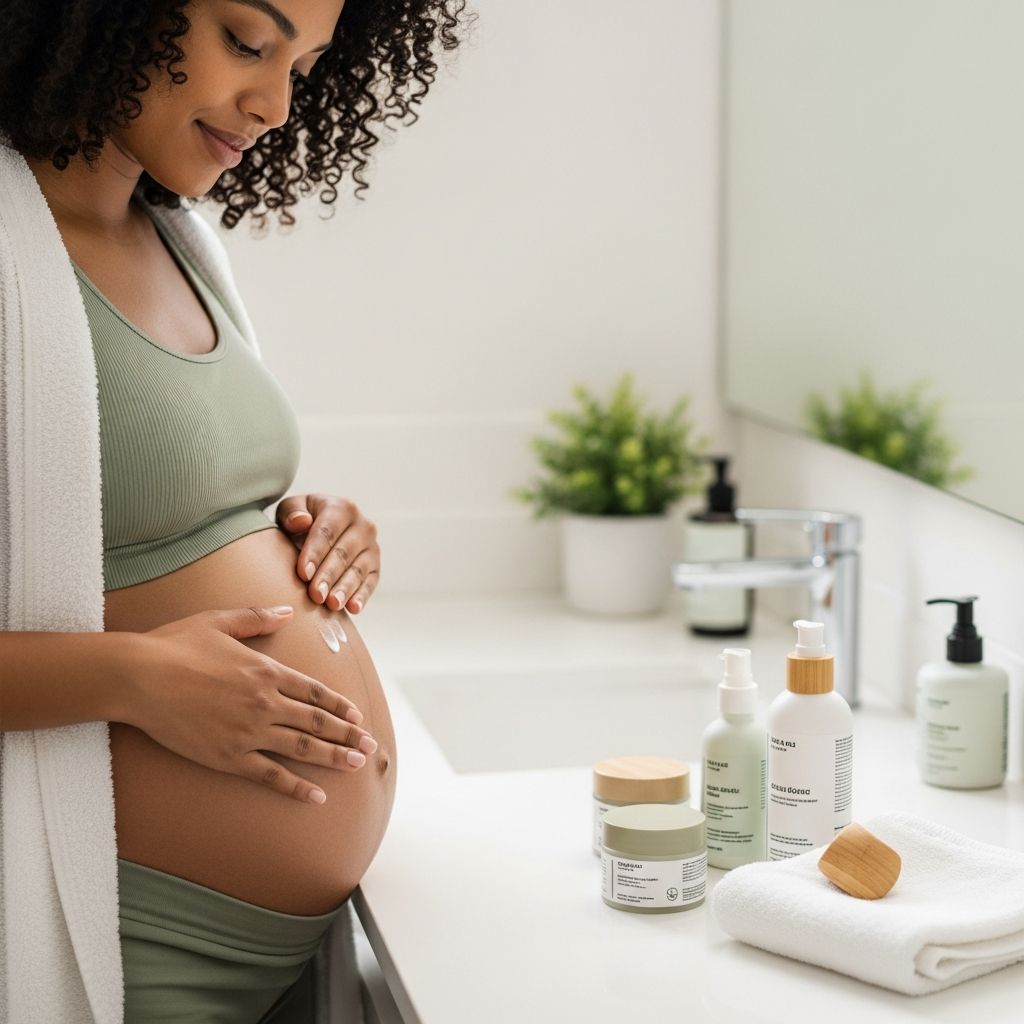
- Stretch-mark oils and creams: These products focus mainly on hydration and massage. While no product can guarantee prevention, regular moisturizing can improve comfort and the look of the skin’s surface.
- Hair removal: Shaving and basic waxing are typically used throughout pregnancy, though sensitivity may increase. For depilatory creams and at-home devices, review the specific product type with a professional.
- In-office procedures: Discuss peels, lasers, and injectables with both your obstetric provider and the treating practitioner. Many elective cosmetic procedures are postponed until after delivery.
Building a Safe Product Checklist
Because labels can be long and confusing, creating a simple checklist can help you evaluate products quickly. You can keep it in your phone or as a note in your bathroom cabinet.
- Scan the ingredient list for retinoids, high-dose salicylic acid, and hydroquinone, and set those products aside to discuss with a professional.
- Favor products labeled “fragrance-free,” “non-comedogenic,” and “for sensitive skin.”
- Limit the number of active treatments you use at once; aim to introduce only one new targeted product every couple of weeks.
- Note how your skin reacts for a full week before deciding whether a product is working for you.
Frequently Asked Questions About Pregnancy Skincare
1. Do I have to replace every product I own once I get a positive test?
Not necessarily. Many basic products—like simple cleansers, moisturizers, and mineral sunscreens—are usually fine to continue using. Focus first on identifying any products that contain restricted actives such as retinoids, strong acne treatments, or skin-lightening creams, and bring those to your provider’s attention.
2. Is it safe to use makeup while pregnant?
Most regular makeup products are considered acceptable when used as intended, especially if you remove them thoroughly at the end of the day. If your skin becomes more sensitive, you might gravitate toward fragrance-free, non-comedogenic foundations and mineral-based powders.
3. Can I still exfoliate my skin?
Yes, but gently and not every day for most people. Soft washcloths, enzyme cleansers, or low-strength lactic acid products can help with texture and dullness, while harsh scrubs or frequent strong peels are better avoided during pregnancy.
4. What kind of sunscreen is best?
Mineral sunscreens that rely on zinc oxide, titanium dioxide, or both are often recommended because they sit on top of the skin and are less likely to cause irritation. Look for broad-spectrum coverage with an SPF of at least 30, and reapply as directed, especially if you are outdoors, swimming, or sweating.
5. Should I stop all acne products as soon as I am pregnant?
Do not abruptly discontinue prescription treatments without guidance, but do notify your healthcare provider as soon as you know you are pregnant. In many cases, treatment plans can be adjusted to safer alternatives or lower-risk options that still help manage breakouts.
6. Is “natural” always safer?
Not automatically. Some botanical ingredients and essential oils can be quite potent or irritating, especially on sensitive, pregnancy-affected skin. The safest option is to evaluate each formula, not just rely on marketing terms, and to check with your provider if you are unsure about an ingredient.
7. Will my skin go back to normal after pregnancy?
Many pregnancy-related changes, such as increased oiliness or mild pigmentation, improve within a few months postpartum. Some issues, including more stubborn melasma or new stretch marks, may linger and benefit from long-term, professionally guided care after pregnancy and breastfeeding end.
Key Takeaways for Confident, Safe Skincare
Skincare during pregnancy does not have to be confusing or overwhelming. A gentle routine, careful ingredient choices, and open communication with your healthcare team can keep you comfortable while supporting your skin through every trimester. Focus on safe basics today, and you will have plenty of time to explore stronger treatments again once pregnancy and breastfeeding are behind you.