The foundation of your baby’s cognitive abilities begins in the womb, where maternal nutrition directly shapes neural growth, structure, and function. Recent studies confirm that a nutrient-rich diet during pregnancy enhances brain volume, IQ scores, and language skills into adulthood.
Why Maternal Diet Shapes Fetal Neurodevelopment
During pregnancy, the fetal brain undergoes rapid development, consuming up to 75% of the fetus’s energy from glucose and requiring specific building blocks like fatty acids and vitamins. Inadequate intake can lead to reduced cerebral volume, altered neural pathways, and increased risks of neurodevelopmental disorders such as ADHD or autism spectrum disorders.
A Danish cohort study linked maternal ‘varied’ diets—high in diverse, whole foods—to larger head circumference (a proxy for brain size) and higher IQ at age 10, while ‘Western’ diets rich in sugars and processed foods correlated with poorer early cognitive scores. Similarly, pro-inflammatory diets during pregnancy alter cortical gyrification, impacting language areas more in males.
To support optimal growth, aim for 20% of pre-pregnancy weight gain, adding about 300 daily calories with 10-12g extra protein.
Key Nutrients for Building a Brilliant Brain
Certain micronutrients act as critical architects for brain cells, synapses, and myelin sheaths. Here’s a breakdown:
- DHA (Docosahexaenoic Acid): Comprises 90% of brain omega-3s; essential for synaptogenesis and visual acuity. Maternal DHA intake boosts neonatal brain volume, especially in males. Aim for 200-300mg daily from seafood or algae supplements.
- Choline: Supports neural tube formation and memory centers. Higher intake links to better cognitive processing in children.
- Folate/Folic Acid: Prevents neural tube defects; supplementation from week 20 enhances conflict resolution and language via mid-cingulate activation. Target 600mcg daily.
- Iron: Prevents hippocampal shrinkage; third-trimester deficiency reduces volumes. Needs double during pregnancy.
- Vitamin B12 and B Vitamins: Promote gray matter growth; interacts with folate for subcortical volumes.
- Vitamin D: Aids overall brain structuring.
| Nutrient | Daily Goal (Pregnancy) | Brain Benefit | Food Sources |
|---|---|---|---|
| DHA | 200-300mg | Larger cortex, better IQ | Salmon, sardines, fortified eggs |
| Choline | 450mg | Memory, neural tubes | Eggs, liver, broccoli |
| Folate | 600mcg | Neural defects prevention | Leafy greens, lentils, citrus |
| Iron | 27mg | Hippocampal growth | Lean beef, spinach, beans |
| Vitamin B12 | 2.6mcg | Attention, gray matter | Dairy, fish, eggs |
Interactions matter: B12 boosts DHA and BDNF levels when paired with fatty acids.
Power Foods to Prioritize in Your Pregnancy Plate
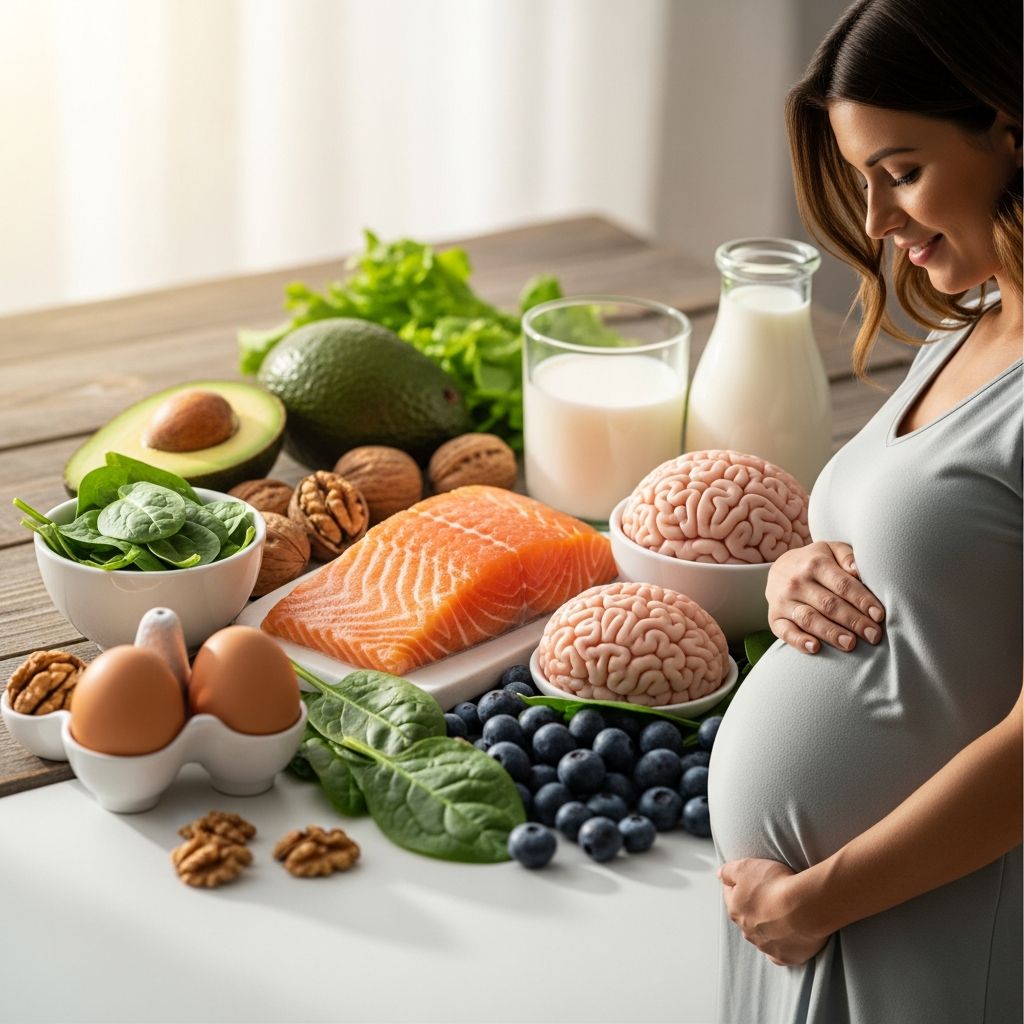
Focus on whole foods over supplements for synergistic effects. Incorporate these daily:
- Fatty Fish: Salmon provides DHA and protein; 8-12oz weekly limits mercury.
- Eggs: Choline powerhouses (147mg per yolk); choose omega-3 enriched.
- Leafy Greens: Folate, iron, B vitamins in spinach and kale.
- Lean Proteins: Beef or alternatives for iron, zinc, B12; supports energy metabolism.
- Nuts and Seeds: Walnuts for omega-3s, almonds for vitamin E neuroprotection.
- Berries and Fruits: Antioxidants combat inflammation; blueberries enhance cognition.
- Whole Grains and Legumes: Steady glucose for brain energy; quinoa for complete protein.
Avoid excessive sugars and processed fats, which promote inflammation and stunt growth.
Dietary Patterns That Deliver Results
Beyond single nutrients, overall patterns count. A ‘varied’ diet with vegetables, fruits, whole grains, seafood, eggs, beans, nuts, and lentils aligns with guidelines and yields better neuroimaging outcomes like increased gray/white matter.
Prolonged breastfeeding amplifies benefits, boosting head growth independently. Genetic factors interact: diet effects are strongest in high-IQ predisposition kids.
Practical Meal Plans for Brain-Boosting Pregnancy
Sample daily intake (approx. 2,200-2,500 calories):
- Breakfast: Choline-packed omelet with spinach, tomatoes, whole-grain toast.
- Snack: Greek yogurt with berries, walnuts.
- Lunch: Salmon salad with quinoa, kale, lentils, olive oil dressing.
- Snack: Orange slices, handful almonds.
- Dinner: Lean beef stir-fry with broccoli, sweet potatoes, brown rice.
- Evening: Fortified milk or kefir for vitamin D, calcium synergy.
Hydrate with 10+ cups water; limit caffeine to 200mg.
Supplements: When and What to Consider
Prenatals cover basics, but extras like DHA (if low-fish diet) or choline may help. Consult providers; folate from week 20 shows sustained benefits. Mayo Clinic recommends focusing on diet first.
Potential Risks of Poor Nutrition
Undernutrition alters proliferation/differentiation; DHA deficits risk visual/motor issues. Inflammatory diets change gyrification, hitting language/memory. Iron anemia shrinks hippocampus.
Frequently Asked Questions (FAQs)
What if I don’t like fish for DHA?
Use algae-based supplements or DHA-enriched eggs; aim for equivalent intake.
Can diet reverse genetic brain risks?
Diet amplifies genetic potential; varied patterns boost outcomes in high-IQ genes.
How much weight gain supports brain growth?
About 20% of pre-pregnancy ideal (e.g., 26lbs for 130lb woman).
Does breastfeeding extend diet benefits?
Yes, prolonged breastfeeding increases head growth regardless of pregnancy diet.
Are vegan diets sufficient?
Possible with B12, DHA, iron supplements; monitor levels closely.
Long-Term Impacts into Adulthood
Prenatal nutrition influences persists: folate aids 11-year-old language processing; varied diets link to adult verbal IQ via cortical structure. Balanced intake fosters resilience against neuropsychiatric risks.
Prioritize quality over quantity; diverse, anti-inflammatory eating patterns yield the best neural architecture for lifelong cognition.
References
- New Research: Maternal Diet During Pregnancy Linked to Child Brain Development and Intelligence — University of Copenhagen Food Institute. 2025-01-15. https://food.ku.dk/english/news/2025/new-research-maternal-diet-during-pregnancy-linked-to-child-brain-development-and-intelligence/
- Maternal Nutrition during Pregnancy and Offspring Brain Development — National Library of Medicine (PMC). 2024-10-01. https://pmc.ncbi.nlm.nih.gov/articles/PMC11478768/
- Maternal Nutrition and Neurodevelopment: A Scoping Review — National Library of Medicine (PMC). 2021-10-01. https://pmc.ncbi.nlm.nih.gov/articles/PMC8538181/
- Maternal diet during pregnancy affects brain structure and language abilities in adult offspring — CEITEC Masaryk University. 2023-05-10. https://www.ceitec.eu/maternal-diet-during-pregnancy-affects-brain-structure-and-language-abilities-in-adult-offspring/t11547
- How does nutrition affect the developing brain? — ZERO TO THREE. 2023-01-01. https://www.zerotothree.org/resource/distillation/how-does-nutrition-affect-the-developing-brain/
- Pregnancy diet: Focus on these essential nutrients — Mayo Clinic. 2024-05-20. https://www.mayoclinic.org/healthy-lifestyle/pregnancy-week-by-week/in-depth/pregnancy-nutrition/art-20045082