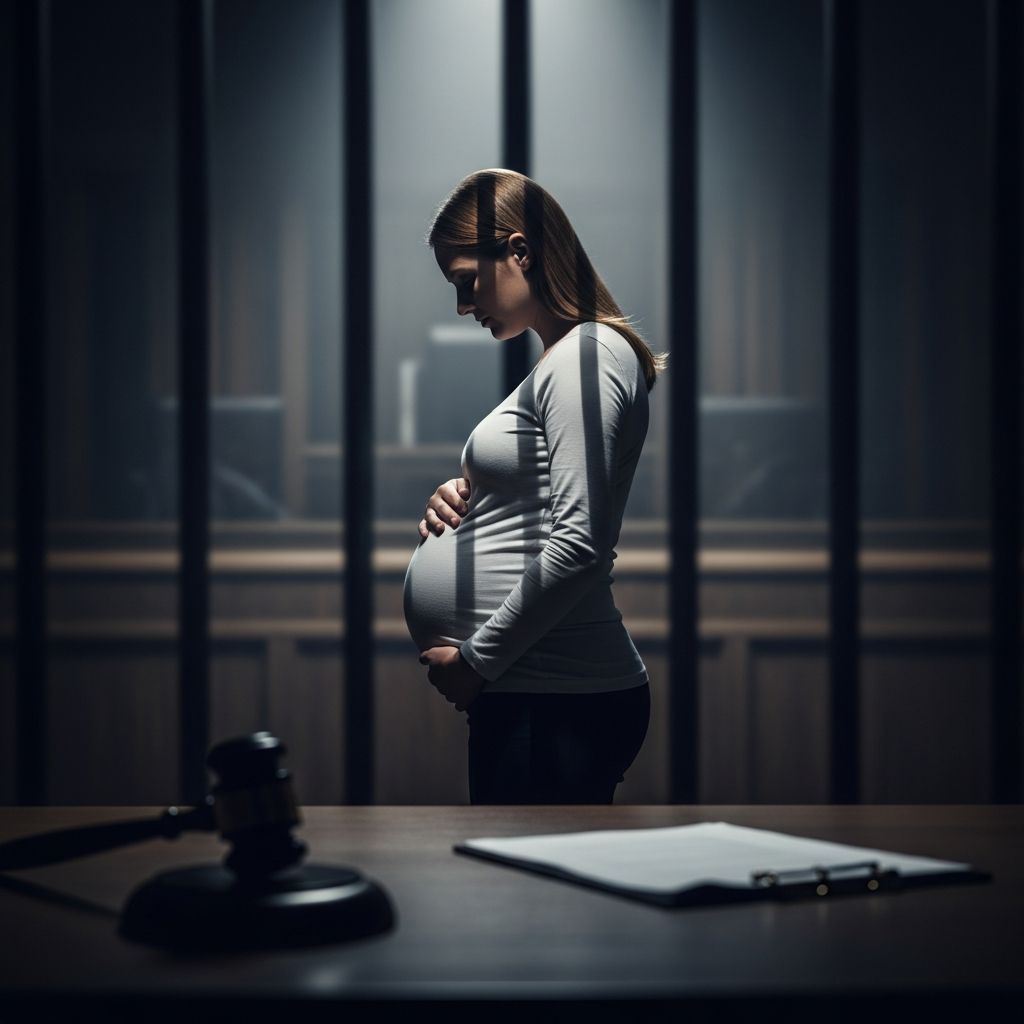
Across the United States, pregnant individuals face unprecedented legal scrutiny, with laws increasingly used to police their bodies and behaviors. From state prosecutors leveraging child endangerment statutes to federal immigration enforcement detaining expectant mothers, the intersection of reproductive status and criminal justice creates a landscape of fear and injustice. This trend, accelerated by concepts like fetal personhood, has led to hundreds of arrests and prosecutions, disproportionately affecting low-income women and communities of color.
The Legal Foundations of Pregnancy Policing
At the heart of this issue lies the doctrine of fetal personhood, which posits that a fetus holds legal rights equivalent to a born child. Promoted by anti-abortion advocates, this concept has been adopted in states like Alabama, Oklahoma, and South Carolina to extend child abuse and neglect laws to prenatal stages. For instance, Alabama’s chemical endangerment law, initially aimed at protecting children from meth lab exposures, now targets pregnant women testing positive for drugs, treating the fetus as a victim.
Prosecutors in these regions argue that drug use during pregnancy constitutes harm to an unborn child, leading to felony charges. In Mississippi, despite lacking explicit fetal personhood legislation, local authorities have filed similar cases. This patchwork of laws creates a “fetal assault” framework, where everyday actions—such as falling down stairs or refusing medical procedures—are criminalized if they risk fetal harm.
Real Stories from the Frontlines
Consider the case of women like Quitney Armstead in Alabama, who, while incarcerated, vowed to stay sober during her pregnancy but faced renewed charges upon relapse. Arrested during a raid, she exemplifies how minor drug possession incidents spiral into severe penalties under expanded statutes. Advocacy reports document women handcuffed en route from hospitals with newborns or charged unknowingly while pregnant.
Since the 1973 Roe v. Wade decision, over 1,800 instances of pregnancy-related arrests have occurred, with 1,400 documented between 2006 and the 2022 Dobbs ruling. These include heightened bail conditions or sentences for unrelated crimes discovered during pregnancy. Post-Dobbs, 412 new cases emerged in just two years across 16 states, mostly in the South, with 300 in Alabama and Oklahoma alone.
Immigration Enforcement and Vulnerable Mothers
Beyond drug-related charges, U.S. Immigration and Customs Enforcement (ICE) policies exacerbate risks for pregnant non-citizens. Detentions often occur without regard for prenatal needs, leading to shackling during labor—a practice federal bills seek to ban. Low-income immigrant women, already facing barriers to healthcare, encounter raids and arrests that separate families and endanger maternal-fetal health.
These actions align with broader child welfare referrals turning criminal. While federal law mandates reporting drug-exposed newborns, most states route cases to social services, not courts. However, fetal personhood states bypass this, opting for prosecution.
Disproportionate Impacts on Marginalized Groups
| Demographic | Impact Statistics | Primary States |
|---|---|---|
| Low-Income Women | Targeted in 90%+ of cases | AL, OK, SC |
| Women of Color | Overrepresented in prosecutions | MS, TN |
| Postpartum Period | Handcuffing incidents reported | National |
Data reveals a stark pattern: Southern states lead, with allegations centering on child endangerment. Homicide charges appear in 16 cases post-Roe fall, underscoring escalation. The American College of Obstetricians and Gynecologists (ACOG) opposes such criminalization, arguing it deters prenatal care and worsens outcomes.
Health Consequences and Public Health Crisis
Criminal penalties drive pregnant individuals underground, avoiding testing or treatment due to arrest fears. Amnesty International notes cases of forced interventions, like cesareans, under these laws. Instead of support, women receive incarceration, where prenatal care is often substandard.
Federal reforms, such as the 2020 Protecting the Health and Wellness of Babies and Pregnant Women in Custody Act, mandate nutrition, high-risk care, and shackling bans—yet implementation lags. Evidence shows treatment programs reduce newborn drug exposure far better than punishment.
Advocacy Efforts and Paths Forward
- Legislative Pushback: Groups like Pregnancy Justice track cases, pushing for decriminalization.
- Medical Opposition: ACOG advocates against prosecuting pregnancy outcomes.
- Policy Reforms: Bans on fetal personhood expansions and improved jail healthcare.
- Community Support: Expanding addiction services over arrests.
Shifts require recognizing pregnancy as a health issue, not a crime. Post-Dobbs acceleration demands urgent action to protect reproductive autonomy.
Frequently Asked Questions (FAQs)
What is fetal personhood and how does it affect pregnant women?
Fetal personhood grants legal rights to fetuses, enabling states to prosecute mothers for behaviors like drug use under child protection laws.
Which states prosecute the most pregnancy-related cases?
Alabama and Oklahoma account for about 300 of 412 post-Dobbs cases, using endangerment statutes.
Are pregnant women shackled during arrest or labor?
Yes, despite federal pushes for bans; incidents include postpartum handcuffing.
How many pregnancy criminalization cases exist?
Over 1,800 since 1973, with 1,400 from 2006-2022.
What reforms address incarcerated pregnant women?
Bills ensure prenatal care, nutrition, and no shackling.
References
- These States Are Using Fetal Personhood to Put Women Behind Bars — The Marshall Project. 2023-07-25. https://www.themarshallproject.org/2023/07/25/pregnant-women-prosecutions-alabama-oklahoma
- Criminalizing pregnancy: policing pregnant women who use drugs — Amnesty International. 2017-05-01. https://www.amnesty.org/ar/wp-content/uploads/2021/05/AMR5162032017ENGLISH.pdf
- APA-supported bill on improving care for incarcerated pregnant women — American Psychological Association. 2020-10-01. https://www.apaservices.org/advocacy/news/incarcerated-pregnant-women-care
- The Rise of Pregnancy Criminalization: A Pregnancy Justice Report — Pregnancy Justice. 2023. https://www.pregnancyjusticeus.org/rise-of-pregnancy-criminalization-report/
- Hundreds of women charged with pregnancy-related crimes since fall of Roe — National Partnership for Women & Families. 2024. https://nationalpartnership.org/news-hundreds-of-women-charged-with-pregnancy-related-crimes-since-fall-of-roe/
- Opposition to Criminalization of Individuals During Pregnancy and Postpartum Period — American College of Obstetricians and Gynecologists. 2020. https://www.acog.org/clinical-information/policy-and-position-statements/statements-of-policy/2020/opposition-criminalization-of-individuals-pregnancy-and-postpartum-period