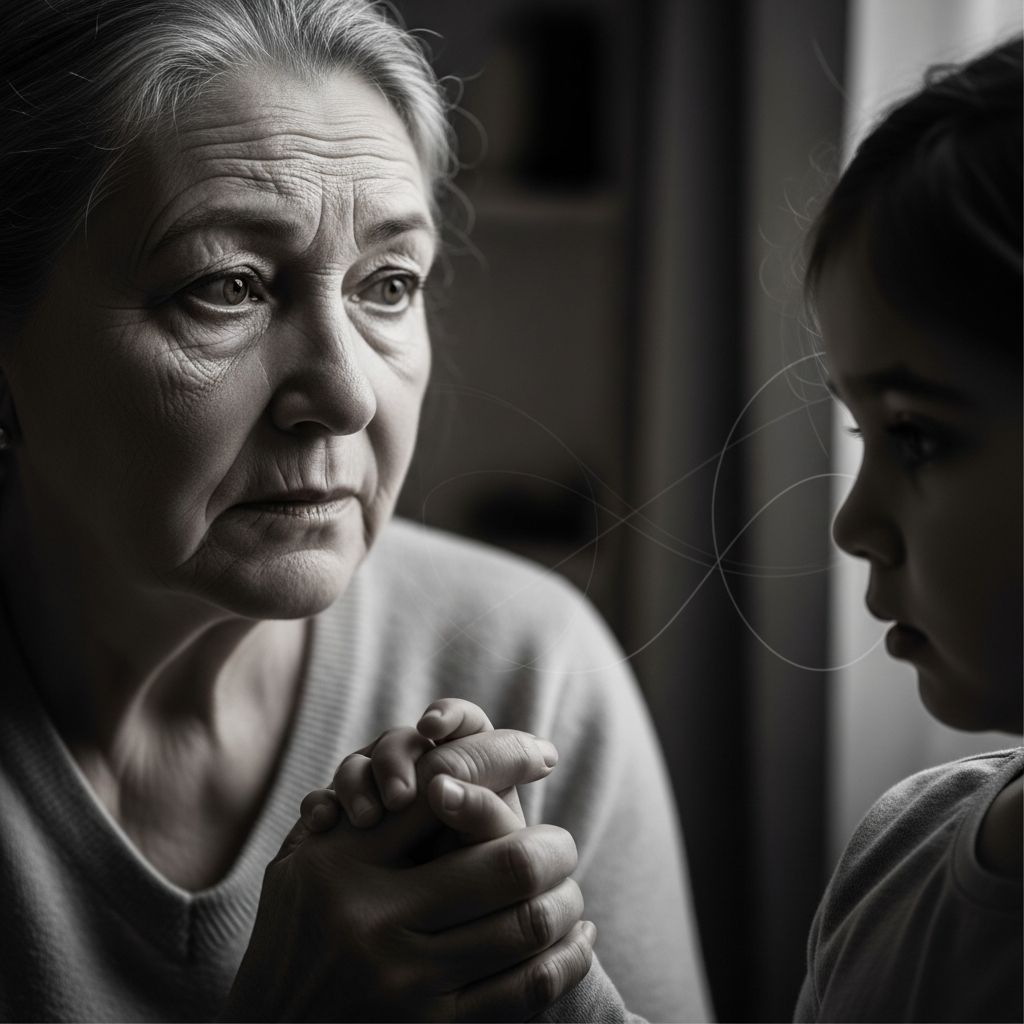
Family mental health patterns often echo across generations, with emerging research highlighting how grandparents’ emotional struggles, such as anxiety, can influence grandchildren’s well-being. Studies reveal both direct and indirect pathways, blending genetic predispositions and environmental influences, yet protective elements like strong social bonds offer hope for disruption.
Understanding Intergenerational Mental Health Patterns
Mental health challenges like anxiety and depression do not exist in isolation; they frequently span multiple family generations. Population-based cohort studies tracking families from fetal life onward demonstrate continuity of psychopathology from grandparents (G1) through parents (G2) to offspring (G3). Lifetime anxiety and depressive disorders in grandparents, assessed via structured interviews like the Family Informant Schedule Criteria, correlate with elevated risks in subsequent generations.
This transmission manifests through additive effects, where grandparental psychopathology increases parental risk by about 6%, culminating in a 23% overall risk elevation for adolescent offspring when both prior generations are affected. Such findings underscore the multi-generational ripple, extending beyond parent-child dynamics to include grandparents’ historical mental health.
Mechanisms Behind Anxiety Transmission
Several pathways explain this phenomenon. Genetically sensitive designs, including twin studies, indicate both heritable and environmental components. Direct environmental transmission appears for traits like anxiety, neuroticism, and depression from parents to adolescents, while three-generation analyses confirm broader continuity.
- Genetic Factors: Inherited vulnerabilities heighten susceptibility, with family history of disorders amplifying odds, particularly when multiple generations are involved.
- Environmental Influences: Prenatal and postnatal parental experiences, shaped by grandparents’ conditions, indirectly affect child development.
- Behavioral Modeling: Children observe and internalize coping styles from elders, perpetuating anxious responses.
Research emphasizes that joint exposure to grandparental and parental psychopathology synergistically boosts offspring risk, consistent across anxiety and depressive spectrums.
Grandparents’ Role: Risk or Resilience Builder?
Grandparents’ involvement in childcare presents a dual-edged sword. While it can transmit stress through generational differences in parenting or unresolved anxieties, positive engagement often fosters resilience. Surveys of three-generation Chinese families with children aged 3-5 years show grandparents’ participation positively predicts young children’s resilience, mediated by reduced maternal parenting stress and enhanced family strengths.
Key mediators include:
- Maternal parenting stress reduction (β = -0.261, p < 0.001), easing burdens and improving parent-child interactions.
- Family strengths amplification (β = 0.200, p < 0.001), bolstering overall cohesion and support networks.
Chain mediation models reveal grandparents’ involvement indirectly promotes resilience via lowered stress leading to stronger family units, with individual paths often stronger than sequential ones.
Quantifying the Risks Across Generations
| Generation Combination | Risk Increase for Offspring Psychopathology | Key Factors |
|---|---|---|
| Grandparents Only (G1) | Small direct effect | Lifetime anxiety/depression history |
| Parents Only (G2) | Moderate | Prenatal/postnatal psychopathology |
| Both G1 & G2 | 23% additive interaction (95% CI: 19-27%) | Synergistic transmission |
| With Social Support | Reduced to 13% (95% CI: 8-17%) | Maternal/child protective factors |
This table summarizes cohort data, illustrating how combined generational risks compound, yet buffers like social support significantly mitigate outcomes.
Protective Factors That Break the Cycle
Not all transmission is inevitable. Maternal perceptions of social support, alongside adolescents’ peer relationships and friendship quality, diminish risks from 23% to 13%. These elements buffer intergenerational continuity, promoting discontinuity in psychopathology patterns.
Grandparental involvement further aids by moderating maternal stress, which in turn enhances family strengths and child resilience. Ecosystem theory supports this, viewing grandparents as key influencers in the family microsystem, capable of either perpetuating or countering stress cycles.
- Strong Relationships: Positive grandparent-grandchild bonds create buffering effects against anxiety transfer.
- Cultural Transmission: Grandparents convey resilience-building family narratives and coping strategies.
- Intimacy Enhancement: Increased family closeness via elder involvement fosters emotional security.
Strategies for Families to Foster Mental Wellness
Parents and grandparents can actively intervene. Awareness of family mental health history prompts early monitoring and support-seeking. Interventions targeting parenting stress, such as mindfulness programs or family therapy, prove effective.
Encourage grandparents’ positive roles:
- Promote open discussions about emotions to model healthy coping.
- Engage in joint activities building secure attachments.
- Support parental boundaries to minimize conflict from differing styles.
Community resources, including school-based peer programs, further bolster child resilience against inherited vulnerabilities.
Research Insights from Longitudinal Studies
Three-generation cohorts provide robust evidence, with assessments from pregnancy through adolescence revealing small but significant effect sizes. Grandparental psychopathology explains limited variance alone but amplifies when combined with parental factors. Consistency with prior literature, like higher disorder rates in children with dual-generation depression histories, reinforces these patterns independent of demographics.
Limitations include reliance on retrospective reports and specific populations, suggesting needs for diverse, prospective designs. Nonetheless, findings advocate for holistic family approaches in mental health prevention.
Frequently Asked Questions (FAQs)
What is the primary risk when both grandparents and parents have anxiety histories?
A 23% increased risk for offspring psychopathology due to additive interactions, reducible with social supports.
Can grandparents’ involvement harm or help grandchild mental health?
It generally boosts resilience by lowering maternal stress and strengthening family bonds, per mediation analyses.
Are genetic or environmental factors more influential in transmission?
Both contribute, with twin studies evidencing direct environmental effects alongside heritability.
How can families interrupt anxiety transmission?
Through enhanced social support, positive grandparent roles, and stress-reduction strategies for parents.
Does grandparent anxiety directly cause grandchild issues?
Not directly; risks arise via combined generational and mediated pathways, with buffers mitigating impacts.
Building Resilient Family Legacies
While anxiety transmission poses challenges, empowered families can cultivate resilience. Prioritizing intergenerational bonds, monitoring stress, and leveraging supports transforms potential vulnerabilities into strengths. Longitudinal evidence empowers proactive steps, ensuring healthier futures for grandchildren despite ancestral patterns.
References
- Intergenerational transmission of psychopathology across three generations: the influence of social support — van Gastel, J. et al. 2024. https://pmc.ncbi.nlm.nih.gov/articles/PMC12000276/
- Effects of grandparents’ involvement on young children’s resilience: The mediating role of mother’s parenting stress and family strength — Authors not specified in excerpt. 2023. https://pmc.ncbi.nlm.nih.gov/articles/PMC12630510/
- The Impact of Grandparents and Intergenerational Living on Child Anxiety — Semantic Scholar PDF. 2023. https://pdfs.semanticscholar.org/969f/83208aa3d9d70edbd99e3fa2b6870c9b219b.pdf